
Pattern mixing intimidates many, yet it’s one of the most expressive tools in fashion. Done well, it elevates an outfit from ordinary to editorial. Done poorly, it overwhelms the eye and distracts from the wearer. The secret isn’t avoiding patterns—it’s understanding how they interact. With the right principles, anyone can confidently pair stripes with florals, checks with geometrics, or animal prints with abstracts. It’s not about luck; it’s about strategy.
Understand the Foundation: Color Harmony
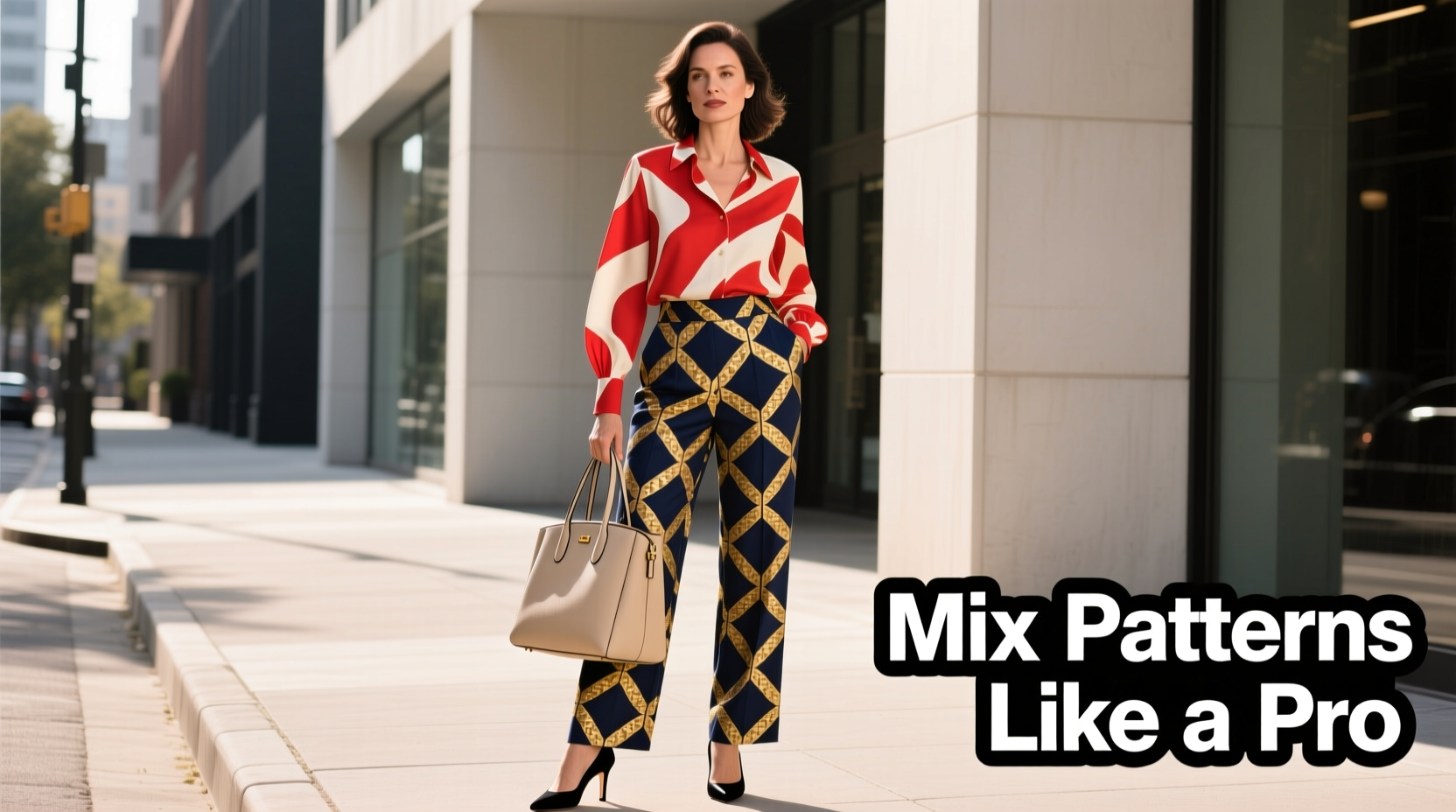
The first rule of successful pattern mixing is shared color. Even wildly different designs can coexist if they share at least one common hue. This unifying color acts as a visual anchor, tying disparate elements together. For example, a navy-and-white striped shirt pairs surprisingly well with burgundy floral trousers when both include a hint of rust in their design.
Start by selecting a dominant color palette—ideally no more than three core colors. Then ensure each patterned piece incorporates at least one of them. Neutrals like black, white, gray, navy, or beige serve as excellent bridges between bolder tones. A leopard print scarf (black, tan, cream) can work with a cobalt geometric dress because both share neutral undertones.
Balance Scale and Intensity
Scale refers to the size of the pattern—how large or small the repeating motifs are. Mixing two large-scale patterns often results in visual competition. Instead, pair one bold, oversized print with a smaller, subtler one. For instance, a wide-plaid blazer works best with a fine polka-dot blouse, not another broad checkered shirt.
Think of pattern intensity as volume. A neon paisley shirt screams louder than a muted houndstooth skirt. Combine high-intensity prints sparingly. If your top is loud, let your bottom be quieter, even if it’s still patterned. The goal is rhythm, not cacophony.
“Fashion is about creating harmony through contrast, not uniformity. The key is knowing when to amplify and when to restrain.” — Lena Moretti, Stylist & Creative Director at Vogue Italia
A Step-by-Step Guide to Confident Pattern Pairing
Mixing patterns doesn’t have to be guesswork. Follow this five-step process to build coordinated, stylish ensembles every time.
- Choose a base pattern. Start with the boldest or most colorful piece—this will set the tone for your look. It could be a floral dress, a striped jacket, or a checked skirt.
- Select a supporting pattern. Pick a second pattern that shares at least one color with the base. Ensure it differs significantly in scale—small dots with large florals, thin pinstripes with wide checks.
- Introduce a neutral buffer. Use solid-colored pieces—like a belt, shoes, or cardigan—to break up busy areas. A camel trench coat over a patterned dress softens the overall effect.
- Anchor with texture or silhouette. Balance visual busyness with clean lines. If both pieces are loose and patterned, add structure—a tailored blazer or straight-leg pants—to ground the outfit.
- Step back and assess. Look in the mirror from a distance. Do the patterns fight each other? Does one dominate appropriately? Adjust by swapping accessories or layering differently.
Do’s and Don’ts of Pattern Mixing
| Do | Don't |
|---|---|
| Pair one dominant pattern with a secondary, smaller one | Wear two equally loud, large-scale patterns together |
| Use a shared color to unify mismatched prints | Combine clashing color families (e.g., cool blues with warm oranges unless intentionally balanced) |
| Layer with solids to break up visual noise | Over-accessorize with additional busy details |
| Stick to 2–3 patterns max in one outfit | Include more than three patterned items |
| Test combinations in natural light before finalizing | Rely solely on artificial lighting, which can distort color perception |
Successful Pattern Combinations to Try
Not all pattern pairings are created equal. Some combinations have stood the test of time because they naturally complement each other. Here are four classic duos worth mastering:
- Stripes + Florals: Nautical stripes with ditsy florals create a fresh, summery vibe. Keep the color story cohesive—navy and white stripes with a floral featuring navy accents.
- Checks + Geometrics: A windowpane blazer over a subtle triangle-print top adds modern sophistication. Stick to monochrome or tonal schemes for elegance.
- Animal Print + Minimalist Pattern: Leopard loafers with pinstripe trousers? Yes—if the pinstripe is narrow and the background neutral. Animal prints act as neutrals when used strategically.
- Polka Dots + Houndstooth: Vintage-inspired and playful. Opt for black-and-white in both, but vary the dot size and houndstooth scale for contrast.
Real Example: From Clashing to Cohesive
Sophie, a marketing executive, once avoided anything beyond plain shirts. She wanted to appear professional but also creative. Her breakthrough came during a client event where she paired a bold teal-and-gold ikat blouse with charcoal pinstripe trousers. At first glance, it seemed risky. But the charcoal in the trousers echoed the dark lines in the ikat, and she added a solid deep teal heel to tie it together. She topped it with a structured black blazer.
The result? Colleagues complimented her “effortless style.” What looked spontaneous was actually deliberate: Sophie had followed the scale rule (small pinstripes vs. large ikat), shared color (charcoal and teal), and used solids (blazer, shoes) to anchor the look. This single outfit shifted her entire wardrobe approach. Now, she regularly mixes gingham skirts with abstract print sweaters—always grounding them with neutral footwear.
Checklist: Before You Wear That Pattern Combo
Use this checklist to evaluate any patterned ensemble before stepping out:
- ✅ Do both patterns share at least one color?
- ✅ Is there a clear dominant pattern?
- ✅ Are the scales noticeably different?
- ✅ Have I included a solid element (shoes, bag, jacket)?
- ✅ Does the outfit feel balanced when viewed from three steps away?
- ✅ Have I avoided more than two major patterns?
- ✅ Are the textures complementary (e.g., silk with cotton, not velvet with sequins unless intentional)?
Advanced Techniques: Breaking the Rules with Confidence
Once you’ve mastered the basics, consider controlled risk-taking. Designers like Diane von Fürstenberg and Thom Browne regularly mix unexpected prints by relying on overarching themes—era, mood, or cultural reference. A 70s-inspired look might combine wide-leg plaid pants with a psychedelic swirl shirt, united by earth-tone colors and vintage silhouettes.
Another advanced method is tonal pattern mixing: using variations of the same color family across different prints. Navy stripes, indigo paisley, and slate herringbone can work together despite differing designs because they live within the same cool-blue spectrum. The lack of chromatic contrast keeps the look sophisticated.
“The most memorable looks aren’t safe. They’re brave—but bravely calculated.” — Marcus Reed, Fashion Editor at GQ
FAQ
Can I mix vertical and horizontal stripes?
Yes, but do so carefully. Pair a vertically striped shirt with horizontally striped pants only if they share a base color and differ in thickness. Thin horizontal lines with thick verticals reduce visual conflict. Alternatively, break them up with a solid mid-layer like a vest or tucked-in blouse.
Is it okay to wear patterned socks with other patterns?
Yes—if the socks are treated as an accent, not a focal point. Small-scale argyle socks with a floral shirt work when the sock color pulls from the shirt’s palette. Avoid pairing bold patterned socks with equally loud pants.
What if I love two large prints I want to wear together?
Create separation. Wear one as a top and the other as a bottom, but insert a solid belt or tucked-in solid blouse to divide them visually. Alternatively, layer a solid jacket over one piece to mute its impact.
Conclusion: Own Your Style with Intention
Mixing patterns isn’t about following rigid rules—it’s about understanding principles so you can bend them with confidence. Clashing happens when elements compete for attention without resolution. Harmony emerges when color, scale, and proportion are thoughtfully aligned. Anyone can throw on two prints; few do it with intention.
Start small. Try a striped tee under a floral shirt, left open. Notice how people respond. Gradually increase complexity as your eye sharpens. Over time, you’ll develop an instinct for what works—not because you memorized formulas, but because you’ve trained your sense of balance.




 浙公网安备
33010002000092号
浙公网安备
33010002000092号 浙B2-20120091-4
Comments
No comments yet. Why don't you start the discussion?