
Mounting floating shelves above a Christmas tree presents a unique challenge: you want the elegant, uncluttered look of wall-mounted storage, but drilling into studs may not be practical or safe during holiday decorating. Whether your tree blocks access to the studs, you're renting and can't drill freely, or you simply want a damage-free solution, there are effective ways to install sturdy shelves without compromising safety or aesthetics.
The key lies in understanding weight distribution, selecting the right hardware, and using alternative mounting systems that distribute load across drywall effectively. With careful planning and the right tools, you can create a beautiful display space for ornaments, candles, or seasonal décor—all while keeping your walls intact and your shelves secure.
Understanding the Challenge: Why Studs Matter (and When You Can Work Around Them)
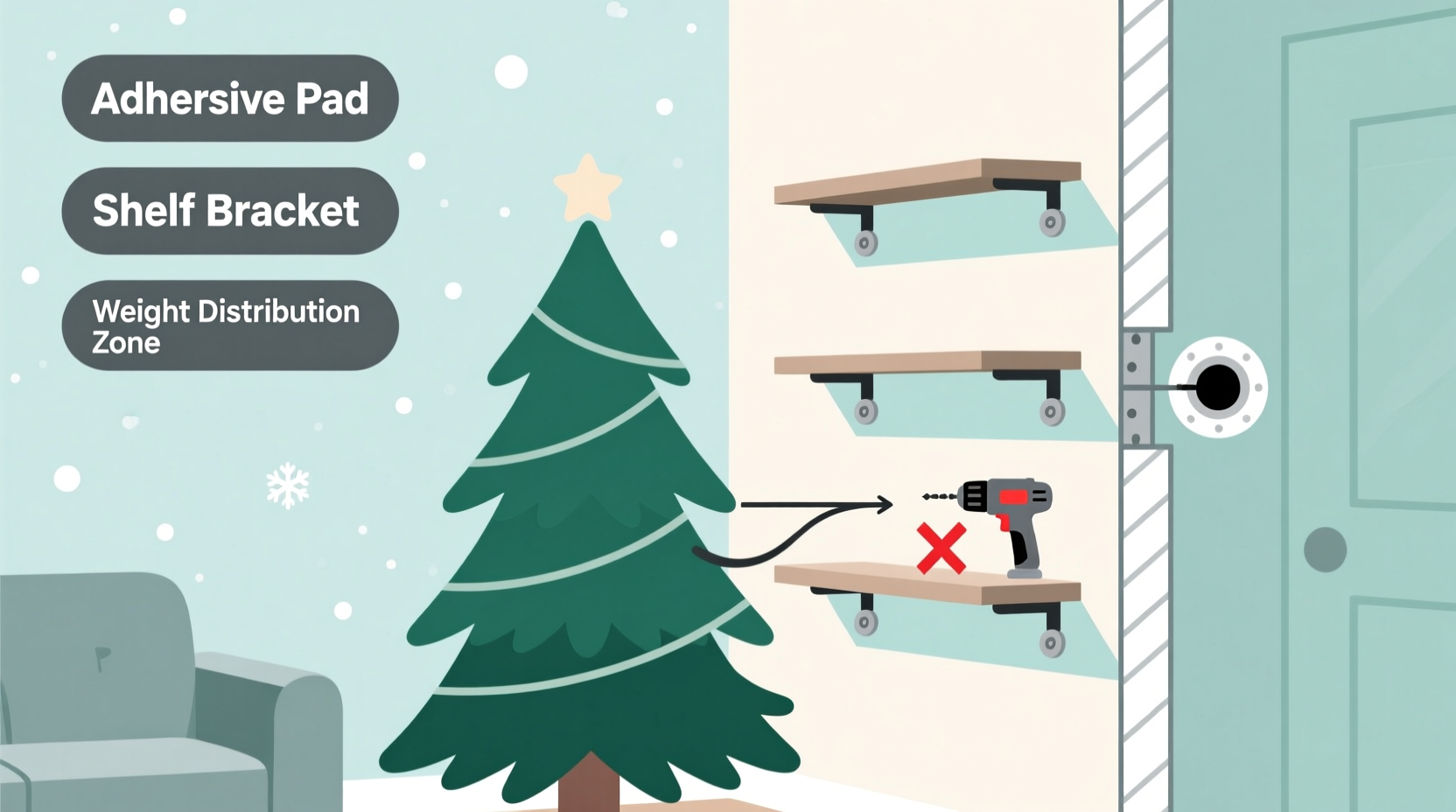
Studs—typically wooden or metal vertical supports spaced 16 or 24 inches apart behind drywall—are the primary anchor points for heavy wall fixtures. They provide structural integrity, allowing shelves to support significant weight without pulling away from the wall. However, locating them precisely can be difficult when a Christmas tree occupies the wall space, and renters often avoid drilling altogether to prevent damage.
Floating shelves, by design, appear to “float” with minimal visible support. Most rely on internal brackets anchored directly into the wall. Without stud engagement, traditional installation methods fall short. Yet modern hardware and mounting innovations have made it possible to achieve comparable strength using drywall-only solutions—provided the load is managed correctly.
“With today’s high-performance anchors and proper technique, drywall-mounted shelves can safely hold up to 50 pounds when installed correctly.” — Jordan Lee, Residential Construction Specialist
The misconception that drywall alone cannot support meaningful weight overlooks advancements in toggle bolts, adhesive systems, and rail-based mounting. The real risk isn’t the absence of studs—it’s improper installation or overloading. By respecting weight limits and choosing the right method, you can confidently mount shelves even above a decorated tree.
Selecting the Right Hardware for Stud-Free Installation
Not all wall anchors are created equal. Standard plastic anchors found in hardware kits are designed for light loads like picture frames. For floating shelves, especially those placed above a Christmas tree where accidental bumps may occur, stronger solutions are essential.
Below is a comparison of common stud-free mounting options suitable for floating shelves:
| Hardware Type | Max Weight Capacity | Best For | Limitations |
|---|---|---|---|
| Toggle Bolts (Snap & Spring) | 30–50 lbs per bolt | Medium to heavy shelves; long-term use | Requires larger hole; tricky behind trees |
| Heavy-Duty Adhesive Strips (e.g., 3M VHB) | 15–25 lbs per strip | Light shelves; temporary or rental setups | Sensitive to surface prep; not for humid areas |
| Rail & Bracket Systems (e.g., French cleat) | 40+ lbs (distributed) | Custom shelves; even load distribution | More complex setup; visible rail if not hidden |
| Drywall Anchors (e.g., TOGGLER Snaptoggle) | 25–40 lbs per anchor | Balanced mix of strength and ease | Installation requires precision |
For most holiday applications, a combination of toggle bolts or Snaptoggles offers the best balance of strength and reliability. If permanence isn’t required, heavy-duty adhesive strips work well for lightweight decorative shelves holding small items like pinecones, LED candles, or miniature figurines.
Step-by-Step Guide: Installing a Floating Shelf Above a Christmas Tree
This process assumes your Christmas tree is already in place and blocking direct access to the wall. The goal is to install a stable shelf without moving the tree or damaging the wall unnecessarily.
- Assess Weight Requirements: Determine what the shelf will hold. Ornaments, lights, and small décor typically weigh less than 20 pounds. Choose hardware rated for at least double that load.
- Measure and Mark Shelf Height: Use a tape measure to find the ideal height above the tree (usually 6–12 inches clearance). Enlist a helper to hold a level across the wall at that height while you mark the ends.
- Locate Studs (If Possible) Near the Area: Even if blocked, knowing stud positions helps plan anchor placement. Use a stud finder on adjacent clear wall sections to estimate spacing.
- Select Anchor Points Between Studs: If no studs align, choose points where multiple drywall anchors can share the load. Avoid placing all anchors in one vertical line.
- Drill Pilot Holes Carefully: With the tree in place, gently move branches aside just enough to access the wall. Drill pilot holes at marked spots, inserting toggle bolts or Snaptoggles as directed.
- Attach Shelf Brackets or Cleat: Secure mounting brackets to the wall using tightened anchors. For French cleats, attach the wall-facing component first, ensuring it’s perfectly level.
- Mount the Shelf: Slide or screw the shelf onto the brackets. Double-check levelness and test stability with light pressure.
- Decorate Thoughtfully: Distribute weight evenly across the shelf. Avoid clustering heavy items on one end.
After installation, monitor the shelf daily for the first week. Slight settling can occur as anchors compress drywall slightly. If wobbling develops, reinforce with additional anchors or reduce load.
Real Example: A Renter’s Holiday Display Solution
Sophie, a tenant in a historic Boston apartment, wanted to display family heirloom ornaments on a floating shelf above her 7-foot tree—but couldn’t drill near studs due to plaster walls and strict lease rules. She opted for a 24-inch walnut-finish shelf supported by a French cleat system.
She mounted a painted wooden cleat to the wall using four TOGGLER Snaptoggles, each rated for 33 pounds. The shelf had a matching cleat routed into its back, allowing it to lock securely onto the wall piece. Total installed weight was under 18 pounds, including six vintage glass ornaments and a string of fairy lights.
The shelf remained stable throughout the season, surviving minor bumps from excited pets. After New Year’s, she removed the shelf cleanly, patching only four small anchor holes—well within her security deposit allowance.
“A little ingenuity goes a long way when you’re working within limits. This shelf became the centerpiece of our holiday memories.” — Sophie M., Apartment Decorator
Pro Tips for Stability and Safety
- Distribute weight evenly: Place heavier items near the center and close to the wall to reduce leverage.
- Avoid overhangs: Keep shelf depth under 10 inches when not anchored to studs to minimize tipping risk.
- Use adhesive-backed felt pads on the shelf’s back edge to increase friction against the wall and reduce vibration.
- Check annually: Even permanent installations benefit from yearly inspections for loosening anchors or shifting.
- Consider magnetic leveling: Use a magnetic stud finder with a built-in level to improve accuracy when hands-free marking is needed.
FAQ: Common Questions About Stud-Free Shelf Mounting
Can I mount a floating shelf without any drilling at all?
Yes, but only for very light loads. Heavy-duty adhesive strips like 3M VHB can support shelves under 15 pounds on clean, smooth surfaces. Success depends on perfect surface preparation—wipe with isopropyl alcohol and let dry completely before application.
What if my shelf starts to pull away from the wall?
Immediately remove all items and inspect the anchors. If drywall has cracked or anchors spin freely, remove them and fill holes with spackling compound. Reinstall using larger toggles or shift the shelf slightly to engage undamaged drywall.
Are there rental-friendly alternatives that leave no damage?
Rail systems with removable wall cleats are ideal. Install the cleat with toggles, then slide the shelf on and off. After removal, patch anchor holes—most landlords accept this as normal wear. Alternatively, use tension rods between ceiling and floor with a shelf mounted to a vertical pole, though this changes the aesthetic.
Final Checklist: Mounting Your Shelf Safely
- ✔️ Determine total shelf load (items + shelf weight)
- ✔️ Choose appropriate drywall-rated anchors (toggle bolts or Snaptoggles recommended)
- ✔️ Drill pilot holes and install anchors securely
- ✔️ Attach brackets or cleat and verify level alignment
- ✔️ Mount shelf and test for stability
- ✔️ Decorate with balanced weight distribution
- ✔️ Monitor for first 7 days for signs of movement
Conclusion: Create Beauty Without Compromising Safety
Mounting floating shelves above a Christmas tree without hitting studs is not only possible—it can be done with confidence when you apply the right techniques. Modern hardware, thoughtful planning, and respect for material limits allow you to enhance your holiday display without risking damage or instability.
Whether you're enhancing a festive scene, displaying cherished décor, or maximizing vertical space in a cozy room, the solutions outlined here offer practical pathways to success. You don’t need a contractor or power tools aimed at studs to achieve a polished, professional result.




 浙公网安备
33010002000092号
浙公网安备
33010002000092号 浙B2-20120091-4
Comments
No comments yet. Why don't you start the discussion?