
Most makeup organization advice focuses on aesthetics—grouping by color, brand, or product type. While visually pleasing, these methods often ignore the reality of daily use. If you're constantly digging through your drawer for your favorite concealer or forgetting where you placed your go-to lip liner, it’s time to rethink your system. Organizing by frequency of use puts practicality first, ensuring your most-used products are instantly accessible while reducing clutter and decision fatigue.
This approach isn’t about perfection; it’s about efficiency. By aligning your storage with your actual routine, you save time every morning and reduce the likelihood of expired or abandoned products. Whether you wear full glam daily or keep it minimal, organizing by usage transforms chaos into clarity.
Why Frequency Trumps Aesthetics
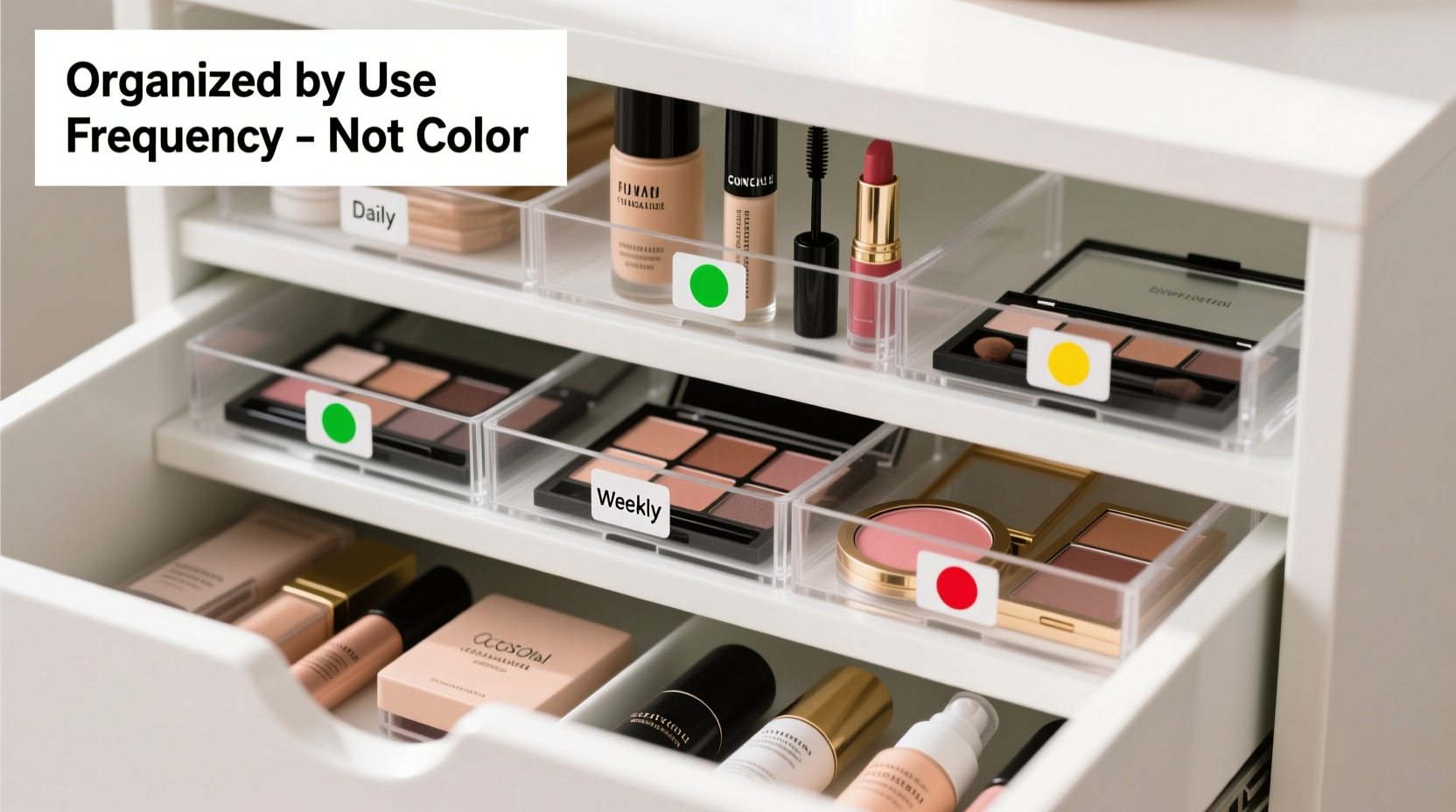
Color-coded drawers look great in photos, but they don’t reflect real-life behavior. A bright red lipstick might sit beside a neutral beige one just because they’re both red—but if you only wear the bold shade once a season, why give it prime real estate?
Frequency-based organization is rooted in behavioral design. It mirrors how we interact with our belongings: frequently used items deserve easy access, while occasional ones can be stored more remotely. This method reduces friction in your routine and encourages consistency in your self-care habits.
“Efficiency in beauty routines starts with accessibility. The fewer decisions you have to make before applying foundation, the more likely you are to stick with a consistent regimen.” — Dana Lee, Professional Makeup Organizer & Beauty Coach
When everything has a place based on how often you reach for it, you eliminate the “Where did I put that?” moments. You also become more aware of what you actually use versus what you just own.
Step-by-Step Guide to Reorganizing by Use
Switching to a frequency-based system takes about 30–60 minutes and requires no special tools. Follow this sequence to build a functional, personalized layout.
- Empty the entire drawer. Remove all products, trays, and dividers. Lay everything out on a clean surface.
- Clean the drawer. Wipe down the interior with a disinfectant wipe or damp cloth. Let it dry completely.
- Categorize by usage frequency. Sort items into three groups:
- Daily: Foundation, concealer, mascara, brow pencil, moisturizer with SPF.
- Weekly: Eyeshadow palettes, blush, highlighter, lip liners.
- Occasional: Statement lipsticks, glitter, seasonal products, travel minis.
- Check expiration dates. Discard anything expired—especially liquid products like mascara (replace every 3 months) and foundation (6–12 months).
- Select appropriate organizers. Use shallow trays for daily items, stackable bins for weekly, and labeled boxes for occasional pieces.
- Assign zones based on access. Place daily-use items front and center. Weekly items go behind or below. Occasional ones belong at the back or in a separate compartment.
- Label if needed. Use small tags or sticky notes to mark sections, especially if sharing the space.
Real Example: Sarah’s Morning Routine Transformation
Sarah, a 32-year-old project manager, used to spend 10 minutes each morning searching for her tinted moisturizer and favorite black eyeliner. Her drawer was neatly arranged by color—blushes together, lipsticks in rainbow order—but her go-tos were buried under rarely used glitter shadows and holiday palettes.
After reorganizing by frequency, she placed her five daily products in a low-profile acrylic tray at the front of the drawer. Everything else was grouped behind it: weekly eye kits in a divided case, seasonal items in a labeled pouch at the back. She kept a mini trash bin nearby to dispose of expired samples immediately.
The result? She now gets ready in half the time. “I’m not frustrated anymore,” she said. “I see what I need the second I open the drawer. It feels like my makeup works for me instead of against me.”
Optimize Storage with Smart Layouts
Your drawer’s physical layout should support your usage patterns. Consider depth, visibility, and reach when placing items.
A shallow front section ensures daily products are visible and grabbable without rummaging. Deeper areas can house backup stocks or seasonal collections. If your drawer lacks built-in dividers, use adjustable organizers or repurpose household items like cutlery trays or soap dishes.
| Usage Level | Recommended Placement | Ideal Container Type |
|---|---|---|
| Daily | Front third of drawer, top layer | Low-profile tray or open dish |
| Weekly | Middle section, behind dailies | Divided organizer or stackable bin |
| Occasional | Back section or bottom tier | Labeled box or sealed pouch |
For double-layered drawers, reserve the top for daily and weekly items, and use the lower level for backups, tools, or expired-but-not-yet-discarded products. Vertical stacking should never require digging—anything under another item should be used less frequently.
Checklist: Build Your Frequency-Based System
Use this checklist to ensure a smooth transition to a usage-driven drawer:
- ✅ Empty and clean the drawer completely
- ✅ Remove expired or dried-out products
- ✅ Sort all items into Daily, Weekly, and Occasional categories
- ✅ Choose containers that match your space and usage levels
- ✅ Place daily-use items in the most accessible zone
- ✅ Group weekly products just behind or below dailies
- ✅ Store occasional or seasonal items out of immediate reach
- ✅ Label sections if shared or hard to remember
- ✅ Reassess every 3 months to adjust for changing routines
This isn’t a one-time fix. As your lifestyle changes—say, switching from office wear to remote work or adopting a skincare-first routine—your frequency categories will shift. Regular check-ins keep the system relevant.
Common Mistakes to Avoid
Even with the right intention, missteps can undermine your progress. Watch out for these pitfalls:
- Over-organizing: Too many compartments create complexity. Stick to three main zones unless you have an unusually large collection.
- Ignoring expiration dates: Old products harbor bacteria. Toss anything suspicious—even if it looks fine.
- Keeping “someday” items: That neon green eyeshadow you bought for a party five years ago? If you haven’t used it, let it go.
- Placing infrequent items up front: Just because something is pretty doesn’t mean it deserves prime placement.
- Forgetting tools: Clean brushes and sponges should be stored separately but still within easy reach if used daily.
Remember, the goal is ease, not perfection. A functional drawer supports your life as it is—not as you wish it to be.
Frequently Asked Questions
How do I decide what counts as “daily” versus “weekly”?
Track your usage for one week. Note which products you apply every day (e.g., sunscreen, brows, mascara) versus those used two to four times a week (like contour or colored eyeliner). Be honest—if you only wore that gold shadow once, it’s not a daily.
What if I have limited drawer space?
Maximize vertical space with stackable trays or magnetic strips on the inside of the drawer lid for lightweight items like lip glosses. Prioritize daily items and store backups elsewhere, like a bathroom cabinet or vanity shelf.
Should I still group similar products together within frequency zones?
Yes—but secondarily. Within your daily tray, keep foundations together and concealers nearby. But don’t sacrifice accessibility for categorization. If your most-used blush fits better next to your SPF than with other powders, that’s okay.
Expert Insight: The Psychology of Access
Organization isn’t just logistical—it’s psychological. When essential items are easy to find, you’re more likely to use them consistently. This applies to skincare, sun protection, and even confidence-boosting makeup.
“When your routine is frictionless, you remove the mental load of getting ready. That small reduction in effort can improve self-care adherence over time.” — Dr. Lena Torres, Behavioral Psychologist specializing in habit formation
Conversely, if applying concealer feels like a treasure hunt, you’ll skip it. Over time, skipped steps become abandoned habits. Frequency-based organization removes that barrier.
Conclusion: Make Your Makeup Work for You
Organizing a makeup drawer by frequency of use is a simple shift with lasting impact. It turns a chaotic space into a streamlined tool that supports your daily life. No more wasted time, lost products, or guilt over unused purchases. Instead, you gain clarity, speed, and confidence in your routine.
Start today: empty your drawer, sort by how often you actually use each item, and rebuild with intention. You don’t need fancy organizers or a minimalist collection—just honesty about your habits and a commitment to making them easier.




 浙公网安备
33010002000092号
浙公网安备
33010002000092号 浙B2-20120091-4
Comments
No comments yet. Why don't you start the discussion?