
Living with limited space doesn’t mean sacrificing organization or style. For many urban dwellers, renters, or those simply working with a compact bedroom, the challenge of a tiny closet is real. The good news? You don’t need expensive storage systems or custom-built solutions to transform your cluttered closet into an efficient, functional space. With a little creativity and smart shopping, you can completely reorganize your closet using only items available at your local dollar store.
Dollar stores offer surprisingly versatile products—from clear bins to adhesive hooks, shelf dividers to over-the-door organizers—that can be repurposed for closet organization. When combined with strategic planning, these budget-friendly tools can deliver results rivaling high-end organizational brands. This guide walks through a complete transformation plan, offering practical steps, real-life examples, and expert-backed tips to help you reclaim every inch of your small closet—without spending more than a few dollars.
Assess Your Space and Needs
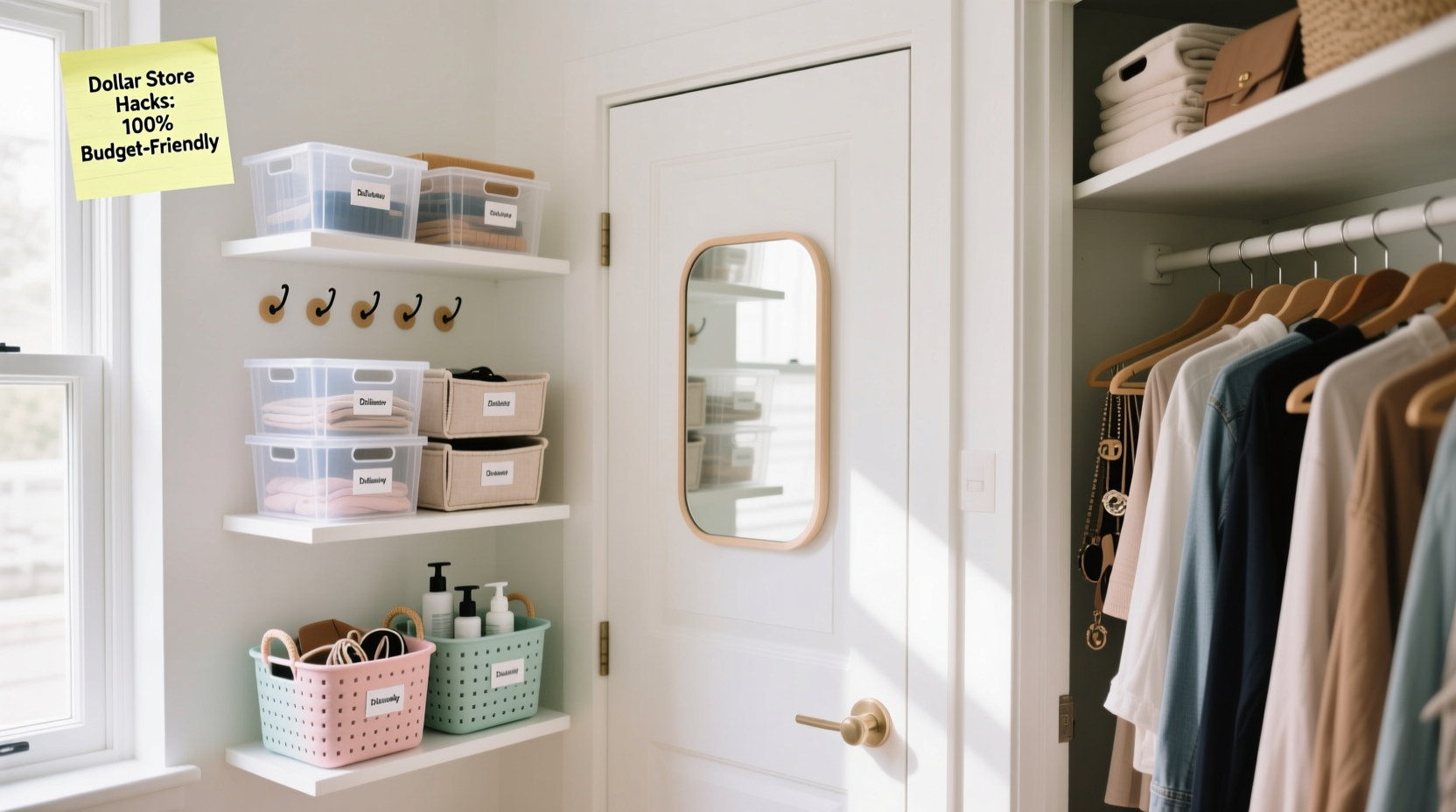
Before purchasing any organizing supplies, take time to evaluate your current closet setup. A successful organization system starts not with products, but with understanding what you own and how you use the space.
Begin by removing everything from your closet. Yes, everything. Lay clothes, shoes, accessories, and miscellaneous items out on your bed or floor. This allows you to see exactly what you have and identify duplicates, unworn pieces, or forgotten items that no longer serve you.
Sort your belongings into categories: tops, bottoms, dresses, outerwear, shoes, belts, scarves, and so on. As you sort, ask yourself:
- Have I worn this in the past year?
- Does it fit well and make me feel confident?
- Is it damaged or beyond repair?
- Do I have multiple similar items?
If an item fails these questions, consider donating, selling, or recycling it. Reducing clutter is the first and most impactful step toward maximizing a small space.
Step-by-Step Closet Reorganization Plan
Once you’ve decluttered, follow this six-step process to rebuild your closet using only dollar store finds:
- Measure your closet dimensions. Note the height, width, depth, and shelf spacing. This ensures you buy organizers that actually fit.
- Purchase adjustable shelving or stackable bins. Dollar stores often carry plastic stacking drawers or bins in various sizes—ideal for folded clothes, underwear, or accessories.
- Add over-the-door organizers. These are perfect for shoes, hats, scarves, or jewelry. Choose clear pockets to easily see contents.
- Install adhesive hooks or command strips. Use them inside doors or on side walls to hang robes, bags, or frequently worn items.
- Use shelf dividers. Originally meant for kitchen pantry organization, these work equally well for separating stacks of sweaters or jeans.
- Label everything. Use sticky labels or masking tape to mark bins and baskets. This keeps the system sustainable long-term.
This methodical approach ensures that every purchase serves a specific purpose. Avoid impulse buys—even at $1 each, unnecessary items create visual clutter and waste space.
Budget-Friendly Dollar Store Hacks That Work
The key to effective dollar store organizing is repurposing. Many products aren’t marketed for closets, but with a little imagination, they become game-changers.
| Dollar Store Item | Closet Use | Pro Tip |
|---|---|---|
| Plastic cutlery organizer | Drawer divider for socks, underwear, or charging cables | Place vertically to separate rolled t-shirts or tank tops |
| Shoe boxes with lids | Storage for seasonal accessories or folded garments | Label lids and stack horizontally on shelves |
| Spice rack | Wall-mounted belt or tie holder | Mount horizontally inside door for slim items |
| Clear shower curtain rings | Double hanging space by hanging a second rod from existing one | Clip lightweight rods or S-hooks through rings |
| Ice cube trays | Jewelry or earring organizer | Place in a drawer and line with felt for protection |
One creative solution involves using a plastic produce bag dispenser as a scarf or tie caddy. Hang it from a hook, thread scarves through the slots, and enjoy easy access without tangling. Similarly, a wire mesh basket—often sold for bathroom toiletries—can hold handbags or clutches when mounted on the wall.
“Small spaces demand smart systems, not more stuff. The best organizers are invisible—they keep things accessible without adding visual noise.” — Lena Ruiz, Interior Organizer & Minimalism Advocate
Real-Life Example: Transforming a 3x4 Foot Closet
Samantha, a teacher living in a studio apartment in Chicago, struggled with a narrow reach-in closet measuring just 3 feet wide and 4 feet deep. Her clothes were piled on the floor, shoes spilled out, and she spent extra minutes each morning searching for matching outfits.
She set a $15 budget and visited her local dollar store with a checklist. She purchased:
- One over-the-door shoe organizer ($1)
- Two stackable plastic bins ($2 each)
- Adhesive hooks (pack of 6, $1)
- Shelf dividers (pack of 3, $1)
- Plastic clip-on hangers (pack of 10, $1)
- Label maker tape and marker ($1)
- Ice cube tray for earrings ($1)
- Two tension rods ($2 each)
After clearing and sorting her wardrobe, Samantha installed the over-the-door organizer for shoes and scarves. She used one bin for folded jeans and another for workout clothes. The shelf dividers kept sweater stacks neat. She added a second clothing rod below the original using clip-on hangers and a tension rod, doubling hanging space. Adhesive hooks held her robe and tote bags. Finally, she labeled each bin and placed the ice cube tray in her dresser drawer.
The total cost: $13. The result? A fully functional, visually clean closet that saved her time and reduced daily stress.
Do’s and Don’ts of Dollar Store Closet Organization
To get the most out of your dollar store haul, avoid common pitfalls. While affordability is a major advantage, durability and functionality should not be sacrificed.
| Do | Don’t |
|---|---|
| Choose clear containers to see contents easily | Buy opaque bins unless you’re diligent about labeling |
| Test-fit items before finalizing placement | Overload shelves or hangers beyond weight limits |
| Group like items together (e.g., all tank tops in one bin) | Mix categories (e.g., storing shoes with scarves) |
| Use vertical space wisely with stackable or hanging solutions | Leave empty space above bins that could be utilized |
| Reassess your system every 3–6 months | Set it and forget it—needs change over time |
Remember, not all dollar store products are created equal. Inspect materials before buying. Sturdy plastic bins with reinforced edges will last longer than flimsy ones. If possible, press on the corners or bend a shelf divider slightly to test rigidity. Investing a little extra attention during selection pays off in longevity.
Frequently Asked Questions
Can dollar store organizers really hold heavy clothes like sweaters or denim?
Yes—but with caution. Most plastic bins from dollar stores support moderate weight, especially when placed on a solid shelf. Avoid overfilling, and consider folding heavier items like sweaters instead of hanging them to prevent stretching. For extra support, place bins directly on closet floors or reinforce lower shelves with cardboard inserts.
What if my closet has no shelves or rods?
You can still organize effectively. Use freestanding options like stackable cubes or rolling garment racks (if within budget). Alternatively, install a single tension rod across the width for hanging clothes. Combine with under-bed storage bins stored inside the closet footprint to maximize floor use. Even without built-ins, structure can be created affordably.
Are there eco-friendly ways to use dollar store items?
Absolutely. Choose reusable containers over disposable bags. Repurpose packaging—like sturdy cardboard boxes—for drawer liners or temporary dividers. When items eventually wear out, recycle plastics where possible. The minimalist mindset behind small-space organization naturally aligns with sustainable living by reducing consumption and waste.
Final Checklist: Your Dollar Store Closet Makeover
Before you head to the store, review this essential checklist to ensure a smooth, effective transformation:
- ✅ Empty and assess your entire closet
- ✅ Declutter ruthlessly—donate or discard unused items
- ✅ Measure closet dimensions (height, width, shelf spacing)
- ✅ Categorize remaining items (tops, pants, shoes, etc.)
- ✅ Create a shopping list based on needs (no impulse buys!)
- ✅ Purchase only necessary organizers from the dollar store
- ✅ Install shelves, hooks, bins, and hanging systems
- ✅ Group like items and label all containers
- ✅ Test accessibility and adjust layout if needed
- ✅ Schedule a maintenance check in 3 months
This checklist keeps the project focused and outcome-driven. It turns what could be a chaotic weekend task into a structured, satisfying upgrade.
Start Small, Think Smart
Organizing a tiny closet isn’t about achieving perfection—it’s about creating a system that works for your lifestyle. Dollar store solutions prove that effective organization doesn’t require luxury price tags. With thoughtful planning, resourceful repurposing, and consistent habits, even the smallest closet can become a model of efficiency.
The goal isn’t just tidiness, but ease. When your clothes are visible, accessible, and neatly arranged, getting dressed becomes simpler, faster, and even enjoyable. And because these solutions are low-cost, you can experiment, adapt, and refine your system over time without financial pressure.




 浙公网安备
33010002000092号
浙公网安备
33010002000092号 浙B2-20120091-4
Comments
No comments yet. Why don't you start the discussion?