
In compact living spaces, every inch counts—especially in the closet. When square footage is limited, traditional storage solutions like shelves or built-in drawers often aren’t viable. Yet, with clever use of affordable, non-permanent tools like tension rods and over-the-door hooks, even the smallest closet can become highly functional. These simple, tool-free organizers offer surprising versatility for maximizing vertical and hidden space. Whether you're in a studio apartment, a dorm room, or just dealing with a cramped reach-in closet, this guide reveals how to transform disarray into order using only two inexpensive items.
Why Tension Rods and Over-the-Door Hooks Work So Well
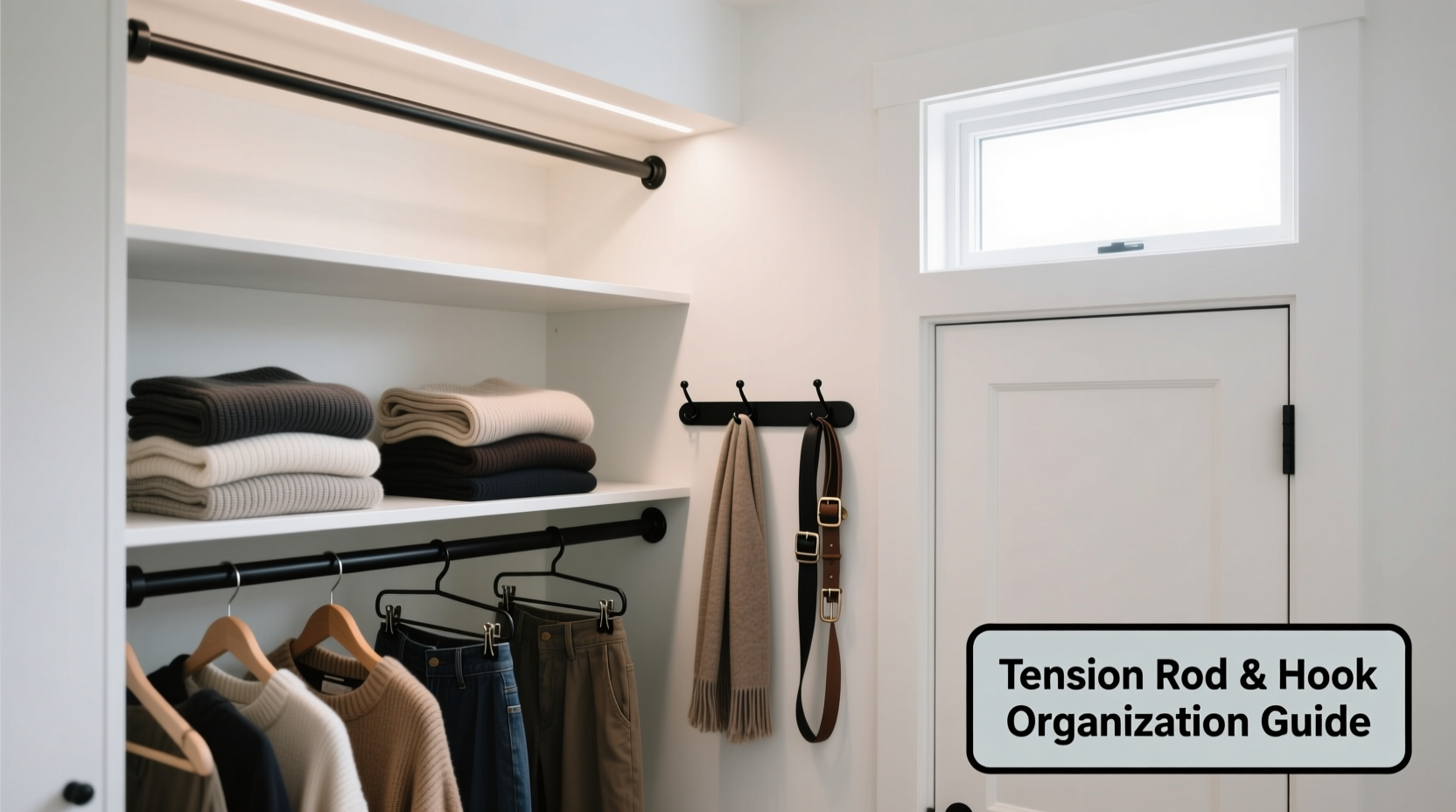
Tension rods and over-the-door hooks are ideal for small-space organization because they require no drilling, leave no damage, and can be installed in minutes. Unlike permanent fixtures, they adapt easily to changing needs and rental restrictions. Their real power lies in leveraging underused areas: vertical walls, back of doors, and narrow gaps between hanging clothes.
Tension rods create instant horizontal dividers that can support lightweight items without sagging. Meanwhile, over-the-door hooks utilize the most overlooked surface in any closet—the back of the door. Together, they turn dead zones into productive storage real estate.
“Space isn’t lost to size—it’s lost to poor utilization. In micro-storage, every surface must pull double duty.” — Lena Tran, Urban Living Organizer & Author of *Small Space, Big Impact*
Step-by-Step Guide to Organizing Your Tiny Closet
Follow this structured approach to reorganize your closet efficiently and sustainably using only tension rods and over-the-door hooks.
- Empty and assess: Remove everything from the closet. Sort items into categories: tops, pants, dresses, accessories, shoes, etc. Discard or donate anything unworn in the past year.
- Measure key dimensions: Note the height between floor and rod, depth of the closet, and width of the door frame. This ensures you buy correctly sized tension rods and compatible hooks.
- Install over-the-door hooks first: Hang them on the closet door before adding rods. Choose multi-tiered or cascading styles to maximize hook count.
- Position tension rods strategically: Install horizontally at various heights depending on storage goals—below hanging clothes, near the floor, or vertically along side walls if depth allows.
- Distribute weight evenly: Avoid overloading one rod. Distribute heavier items across multiple supports and reserve lower rods for bulkier pieces.
- Label and maintain: Use small tags or mental zones to remember where items are stored. Reassess monthly to prevent clutter buildup.
Creative Uses for Tension Rods in a Small Closet
Most people think of tension rods as makeshift curtain holders or shower liners—but their potential in closets is vast. Here are five innovative applications:
- Double-hang shirts or blouses: Install a second rod beneath the main clothing rod to hang shorter garments like shirts or folded scarves. This creates a two-tier system without altering structure.
- Create a shoe rack: Mount a tension rod near the base of the closet (about 6–8 inches off the ground). Slide shoes heel-first over the rod so pairs dangle side by side.
- Store rolled belts or scarves: Place a short rod vertically in a corner or horizontally behind the door. Roll accessories and slide them onto the rod like hangers.
- Hang handbags by straps: Position a low rod across the bottom third of the closet. Drape purses by their straps to keep shape and avoid stacking.
- Separate sections visually: Use rods diagonally or vertically to divide zones—e.g., workwear vs. casual wear—without installing shelves.
Pro Tip: Vertical Rod Hack
If your closet has depth (at least 14 inches), install a tension rod vertically between the floor and ceiling in the back corner. Wrap lightweight fabric bins or mesh bags around it to hold socks, underwear, or charging cables.
Maximizing Over-the-Door Hooks for Maximum Storage
The back of a closet door typically goes unused, yet it offers up to 20 extra linear feet of hanging potential. Over-the-door hooks come in single, double, triple, and cascading designs. Choosing the right type determines how much you can store.
| Hook Type | Ideal For | Weight Capacity | Installation Tip |
|---|---|---|---|
| Single Hook | Belts, robes, reusable shopping bags | 5–10 lbs | Use on smooth doors; avoid textured surfaces |
| Dual-Tier Hook | Hats, jackets, tote bags | 8–15 lbs | Hang heavier items on lower hooks for balance |
| Cascading Multi-Hook | Scarves, necklaces, pajamas | 10–20 lbs (total) | Ensure door clearance when opening |
| Over-the-Door Rack with Arms | Shoes, slippers, folded jeans | 15–25 lbs | Check arm length fits inside closet depth |
Avoid These Common Mistakes
- Overloading hooks: Even heavy-duty models have limits. Exceeding weight causes slippage and door damage.
- Blocking door swing: Make sure extended arms or hanging items don’t interfere with closing the closet.
- Using mismatched rod diameters: Standard rods fit 28–40 inches; measure your space first to avoid returns.
- Ignoring air circulation: Don’t pack items too tightly—allow airflow to prevent musty odors.
Mini Case Study: Transforming a Dorm Closet in Under an Hour
Sophie, a college sophomore living in a 10x12 dorm room, struggled with her 24-inch-deep closet. It held all her clothes but left no room for shoes, bags, or accessories. After seeing a TikTok hack involving tension rods, she decided to try it herself.
She purchased a $7 adjustable tension rod and a $10 six-hook over-the-door organizer. First, she installed the tension rod 12 inches below the main clothing bar to create a secondary hanging zone for shirts and lightweight sweaters. Then, she mounted the hook organizer on the closet door. She used the top hooks for hats and scarves, middle ones for her two crossbody bags, and bottom arms for ballet flats and flip-flops.
The result? Her floor cleared of shoe boxes, her bags stopped getting crushed, and she gained visual access to all her outfits. “I didn’t think two cheap items could make such a difference,” Sophie said. “Now I actually enjoy getting dressed.”
Expert Tips for Long-Term Success
To ensure your tension rod and hook system lasts and remains effective, consider these expert-backed strategies:
- Rotate seasonally: Store off-season clothes in under-bed bins so current items get full access to rods and hooks.
- Use uniform hangers: Slim, non-slip velvet hangers save space and prevent clothes from sliding off.
- Label zones: Assign areas mentally or with sticky notes—e.g., “Work Shirts,” “Gym Layers”—to maintain consistency.
- Reinforce high-load rods: For rods holding heavier items (like denim), place adhesive felt pads where the rod touches the wall to reduce pressure marks.
“Organization isn’t about owning more—it’s about accessing what you have efficiently. Simplicity often outperforms complexity in small spaces.” — Marcus Reed, Interior Designer & Host of *Minimalist Home* Podcast
Checklist: Your Tiny Closet Transformation Plan
Use this actionable checklist to implement your new system step by step:
- ☐ Empty the closet completely
- ☐ Sort and declutter clothing and accessories
- ☐ Measure closet width, depth, and door thickness
- ☐ Purchase 1–2 adjustable tension rods (28–40 inch range)
- ☐ Buy a multi-tier over-the-door hook organizer
- ☐ Install over-the-door hooks first
- ☐ Position tension rods based on intended use (shoes, scarves, doubled hanging)
- ☐ Rehang clothes with consistent spacing
- ☐ Hang accessories, bags, and shoes on designated rods/hooks
- ☐ Test stability and adjust placement if needed
- ☐ Review layout weekly for the first month to refine zones
Frequently Asked Questions
Can tension rods hold heavy clothes like coats?
Tension rods are best suited for lightweight to medium-weight garments. While some reinforced models claim to hold up to 20 pounds, it's safer to reserve them for shirts, blouses, scarves, and folded items. Heavy coats should remain on the main closet rod or be hung on sturdy over-the-door hooks rated for higher weight.
Will over-the-door hooks damage my closet door?
Most modern over-the-door hooks are designed with padded or rubberized arms to prevent scratches. However, frequent opening and closing can cause friction over time. To minimize wear, choose hooks with wide, cushioned grips and avoid using them on delicate finishes like lacquered wood or painted MDF.
What if my closet is too narrow for a tension rod?
If your closet is less than 28 inches wide, look for mini tension rods (available in 12–24 inch sizes) typically marketed for shower corners or under-sink storage. Alternatively, use adhesive hooks or command strips for lightweight items like jewelry or sleepwear.
Final Thoughts: Small Tools, Big Impact
Organizing a tiny closet doesn’t require renovation, expensive units, or complex systems. Sometimes, the most powerful solutions are the simplest. Tension rods and over-the-door hooks prove that smart design beats square footage. By thinking vertically, repurposing forgotten surfaces, and using flexible, removable tools, anyone can achieve a functional, clutter-free closet—even in the tightest of spaces.
The beauty of this method lies in its adaptability. As your wardrobe changes, your storage can shift with it. No nails, no mess, no permanence—just practical, immediate improvement. And because both tools cost under $20 combined, there’s almost no barrier to starting today.




 浙公网安备
33010002000092号
浙公网安备
33010002000092号 浙B2-20120091-4
Comments
No comments yet. Why don't you start the discussion?