
Every holiday season, the moment you pull out your Christmas lights often comes with frustration—tangled strands, mismatched colors, missing bulbs, and no clear idea which box holds what. A well-organized system for storing and categorizing Christmas lights by color and function can transform this annual headache into a seamless, even enjoyable, part of your festive routine. Beyond saving time, proper organization extends the life of your lights, reduces waste, and makes decorating more creative and less chaotic.
The key is not just labeling boxes but designing a logical, sustainable storage strategy that reflects how you use your lights. Whether you're illuminating a large outdoor display or adding cozy ambiance indoors, organizing by both visual characteristics (like color) and practical application (like function) ensures every strand is easy to find and ready to use.
Sort Lights by Color First: Build a Visual Inventory
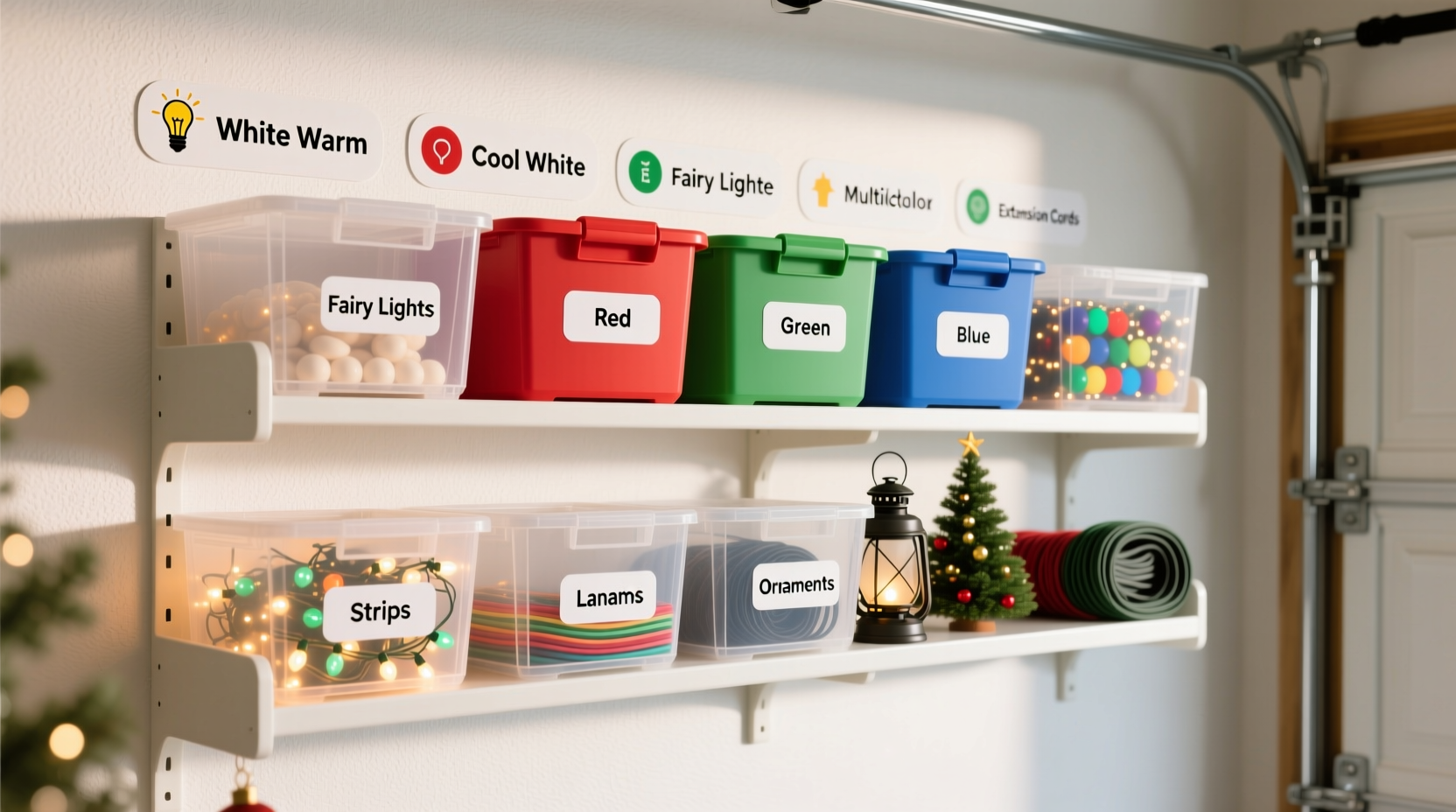
Color is the most immediate way to differentiate Christmas lights. Before storing anything, begin by sorting all your strands into distinct color groups. Common categories include warm white, cool white, multicolor, red, blue, green, purple, and specialty hues like amber or pink. This step creates a visual inventory, helping you assess what you own and identify gaps or duplicates.
Lay out all your lights on a clean surface. Uncoil each strand carefully and check for broken bulbs, frayed wires, or loose connections. As you inspect, place each strand into its respective color pile. If a string has mixed colors but fits a theme—such as red and green for Christmas—consider creating a “theme” category instead of forcing it into a single-color group.
This initial sort isn’t just about aesthetics—it’s the foundation of an efficient retrieval system. When you know exactly how many warm white strands you have, you can plan your roofline lighting with confidence, avoiding last-minute trips to the store.
Categorize by Function: Match Storage to Purpose
After sorting by color, the next level of organization is functional categorization. Not all lights serve the same purpose. Some are designed for outdoor durability, others for indoor ambiance; some are battery-powered for wreaths, while others are long extension-ready strings for trees. Grouping by function ensures you’re grabbing the right tool for the job.
Common functional categories include:
- Outdoor Roofline Lights: Weather-resistant, longer strands (50+ bulbs), often in warm or cool white.
- Tree Lights: Smaller bulbs, tighter spacing, usually mini-lights in various colors.
- Indoor Accent Lights: Battery-operated, flexible wire, used for mantels, shelves, or centerpieces.
- Pathway & Landscape Lights: Staked or net-style, often white or amber for visibility and safety.
- Decorative Stringers: Icicle lights, curtain lights, or shaped LEDs (stars, snowflakes).
- Specialty Displays: RGB programmable strips, animated sequences, or projector lights.
By combining color and function, you create precise categories—like “Outdoor Warm White Roofline” or “Indoor Multicolor Tree Lights.” This dual-layer system eliminates guesswork during setup.
Step-by-Step Guide to Efficient Organization
Follow this six-step process to organize your Christmas light boxes effectively and sustainably:
- Gather and Unpack Everything: Bring out all light boxes from storage. Open each one and unplug every strand for inspection.
- Test Each Strand: Plug in every set to verify functionality. Replace burnt-out bulbs or retire dead strands.
- Sort by Color and Function: Create labeled zones on the floor or table for each combination (e.g., “Cool White – Outdoor,” “Multicolor – Indoor”).
- Coil and Secure Strands: Wrap each light around a piece of cardboard, a spool, or a commercial light winder. Avoid twisting; wrap loosely to prevent wire fatigue.
- Label Boxes Clearly: Use weatherproof labels indicating both color and function. Include length and bulb count if helpful.
- Store in a Structured System: Place boxes on shelves, in bins, or in a dedicated storage cabinet with sections for quick access.
Create a Master Inventory List
To take organization further, maintain a written or digital inventory. This list should include:
- Color
- Function (e.g., tree, roofline)
- Length (in feet or meters)
- Bulb type (LED, incandescent, C7, C9)
- Quantity of strands
- Storage location (e.g., “Red Bin – Shelf 2”)
An inventory helps you plan displays year after year, avoid redundant purchases, and quickly locate replacements. For larger collections, consider using a spreadsheet with filters for color and function.
| Color | Function | Length | Bulb Type | Count | Storage Box |
|---|---|---|---|---|---|
| Warm White | Roofline | 50 ft | LED C9 | 3 | Box A |
| Multicolor | Tree | 25 ft | Mini LED | 5 | Box B |
| Cool White | Icicle | 7.5 ft | LED | 4 | Box C |
| Blue | Accent | 10 ft | Battery LED | 2 | Box D |
This kind of structured tracking turns holiday prep into a predictable process rather than a scavenger hunt.
Checklist: Preparing Your Light Boxes for Next Season
Use this checklist at the end of each holiday season to ensure your system stays effective:
- ✅ Test every strand before storage
- ✅ Discard damaged or non-functional lights
- ✅ Coil each strand neatly using a winding tool or cardboard
- ✅ Label each strand’s plug or end with color/function tag
- ✅ Place only like items in each box (no mixing colors or functions)
- ✅ Label each box clearly on multiple sides
- ✅ Update your master inventory list
- ✅ Store boxes upright in a dry, temperature-stable area
Real Example: How the Thompson Family Streamlined Their Display
The Thompsons decorate their home extensively every December, with over 80 strands of lights across the roof, trees, walkways, and porch. In past years, setup took two full weekends due to tangled wires and mismatched colors. After adopting a color-and-function system, they cut setup time in half.
They began by sorting all lights into nine categories—three colors (warm white, cool white, multicolor) across three functions (roofline, tree, accent). Each was stored in a clear plastic bin labeled with bold tape and a small sample swatch glued to the lid. They also created a simple grid map of their house, noting which areas used which box.
Last season, their oldest daughter—who had never helped before—was able to handle the entire front yard setup solo using the labeled system. “It wasn’t magic,” said Mark Thompson. “It was just finally having a plan that made sense.”
Expert Insight: Why Functional Sorting Matters
“Most people organize by where the lights go, but that changes year to year. Organizing by function—what the light is built to do—is far more durable. A warm white C9 string will always be suited for outdoor structural lighting, whether it’s on the eaves this year or the fence next year.” — Laura Mendez, Holiday Lighting Designer & Author of *Brighter Holidays*
Mendez emphasizes that function-based systems adapt to changing displays while maintaining efficiency. She also recommends keeping a “test kit” box with spare bulbs, fuses, and a multimeter for quick field repairs.
Avoid These Common Storage Mistakes
Even with good intentions, poor habits can undo your organization. Watch out for these pitfalls:
- Mixing types in one box: Never combine warm and cool white, or indoor and outdoor lights, even if they look similar.
- Using rubber bands or twist ties: These degrade and can damage wires. Use soft fabric ties or velcro straps instead.
- Storing in damp or hot areas: Basements and attics with humidity fluctuations shorten lifespan. Opt for climate-controlled spaces.
- Over-packing boxes: Crowding causes pressure damage. Leave room for airflow and easy removal.
- Skipping the label update: If you replace a strand, update the label immediately—don’t rely on memory.
Frequently Asked Questions
Can I use the same box for different colors if they’re the same function?
It’s not recommended. Even if both are outdoor roofline lights, mixing warm and cool white leads to confusion during setup. Keep colors separate for precision.
How do I organize lights that change colors (RGB or programmable)?
Treat them as a unique functional category. Label them as “Programmable RGB” and store with accessories like controllers or apps notes. Consider dedicating one box exclusively for smart lighting gear.
Should I keep original packaging?
Only if it’s durable and clearly labeled. Most original boxes aren’t designed for long-term reuse. Invest in sturdy, reusable plastic bins with transparent lids for better protection and visibility.
Conclusion: Turn Chaos Into Celebration
Organizing Christmas light boxes by color and function isn’t just about tidiness—it’s about reclaiming your time, reducing seasonal stress, and enhancing the joy of decorating. With a clear system, you can move from unwrapping chaos to executing a beautiful display with confidence and creativity.
The effort you invest now pays dividends every holiday season. You’ll spend less time troubleshooting and more time enjoying the glow. Start this spring or summer when the pressure is low, and you’ll be amazed at how smooth December becomes.




 浙公网安备
33010002000092号
浙公网安备
33010002000092号 浙B2-20120091-4
Comments
No comments yet. Why don't you start the discussion?