
Living in a small apartment with children brings undeniable joy—but also unique challenges. One of the most persistent? Managing an ever-growing collection of toys in limited square footage. Without a dedicated playroom or basement storage, it’s easy for stuffed animals, building blocks, and art supplies to take over your living room, kitchen table, and even your bed. The result is constant tidying, frustration, and the feeling that your home belongs more to Play-Doh than to you.
The good news: with thoughtful planning and consistent systems, you can maintain order, reduce visual clutter, and create a functional environment where both kids and adults thrive. This guide offers real-world solutions tailored specifically for compact urban living. No magic tricks, just practical, sustainable methods used by families in studios, one-bedrooms, and two-bedroom apartments across major cities.
Assess and Edit Your Toy Collection
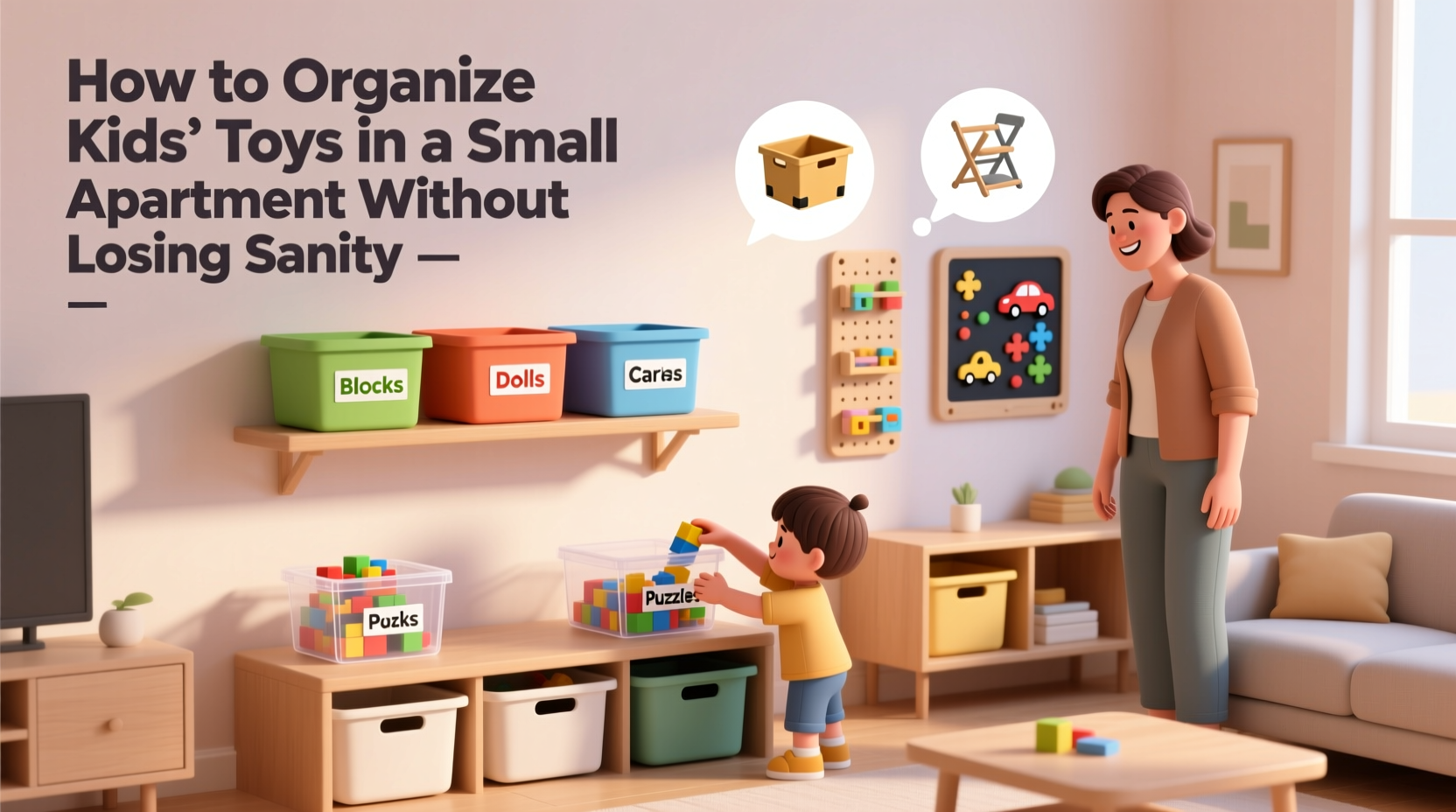
Before organizing, you must edit. Most families have far more toys than their children actually use. A 2023 study from the University of Sussex found that children engage with only about 20% of their toys on a regular basis. The rest contribute to visual noise, overwhelm, and decision fatigue—even for toddlers.
Start with a toy audit. Remove every toy from shelves, bins, and closets and lay them out in one area (if space allows) or sort through them in batches. As you go, ask three questions:
- Has this been played with in the last 4–6 weeks?
- Is it developmentally appropriate for my child right now?
- Does it serve a purpose—educational, imaginative, physical?
If a toy fails these criteria, consider donating, storing seasonally, or discarding. Be especially critical of duplicates (multiple sets of magnetic tiles), broken items, or gifts that never sparked interest.
Use Vertical Space and Multi-Functional Furniture
In a small apartment, floor space is sacred. The key to toy organization lies in looking up—not out. Walls, doors, and furniture with dual purposes are game-changers.
Install low-to-the-ground wall shelves at child height for books, figures, and frequently used toys. Use cubby systems like cube organizers mounted securely to the wall to prevent tipping. Over-the-door shoe organizers work surprisingly well for small items like action figures, dolls’ clothes, or craft supplies.
Furniture that doubles as storage eliminates the need for extra cabinets. Consider:
- Bench seating with lift-up lids for blocks or plush toys
- Bed frames with built-in drawers for larger items
- Nesting ottomans that store puzzles or dress-up clothes
- Coffee tables with hidden compartments
One New York City family transformed a narrow hallway into a mini play zone using a vertical pegboard system. Hooks hold baskets for cars, figurines, and crayons. At night, everything is tucked away, restoring the passage to its original function.
“Maximizing vertical space isn’t just about saving floor area—it reduces tripping hazards and gives children clear boundaries for where toys belong.” — Dr. Lena Torres, Child Development Specialist and Urban Family Consultant
Create Zones Within Shared Spaces
You don’t need a playroom to have a play zone. Define areas within your living room, bedroom, or kitchen nook where toys are welcome—and contain them there.
Use rugs to visually mark a “play corner.” Choose a colorful mat that’s easy to clean and anchors the space. Pair it with a small bookshelf and a labeled bin for quick cleanup. When playtime ends, the rug signals that toys go back “home.”
For open-plan layouts, use low bookshelves or room dividers to separate zones without blocking light. IKEA’s KALLAX units are popular for this—they’re modular, affordable, and sturdy enough to double as benches when topped with cushions.
Labeling is essential. Use pictures and words so even pre-readers know where things belong. A photo of a doll glued to a bin helps a 3-year-old return it independently. This builds responsibility and reduces parental nagging.
| Zone Type | Ideal For | Suggested Storage |
|---|---|---|
| Reading Nook | Books, puppets, quiet toys | Wall-mounted shelf, fabric basket |
| Building Zone | Blocks, LEGO, magnetic tiles | Stackable trays, drawer unit |
| Art Station | Crayons, paper, stickers | Over-the-door organizer, rolling cart |
| Dress-Up Corner | Clothes, hats, accessories | Hanging organizer, under-bed bin |
A Step-by-Step System for Daily Management
Organization isn’t a one-time project—it’s a habit. Implement this daily routine to keep chaos at bay:
- Morning Reset: After breakfast, quickly scan common areas. Return stray toys to their zones. This prevents accumulation throughout the day.
- Playtime Boundaries: Limit toy access to designated areas. If your child wants to play with blocks, they do so at the building zone—not on the dining table.
- 5-Minute Cleanup Rule: Before meals or bedtime, set a timer for five minutes. Play upbeat music and challenge your child to beat the clock. Make it fun, not punitive.
- Nighttime Tidy: Store any remaining toys out of sight. Close cabinet doors, slide bins under furniture, fold up mats. This restores the space for adult use.
- Weekly Rotation: Every Sunday, swap out 2–3 bins of toys. Store the old ones in under-bed containers or high shelves. This keeps play fresh and minimizes clutter.
This system works because it’s predictable. Children thrive on routine, and parents benefit from knowing exactly when and how cleanup happens. Consistency beats perfection.
Real Example: How a Brooklyn Family Organized Toys in 400 Square Feet
The Rivera family lives in a 400-square-foot Brooklyn studio with their 4-year-old daughter, Sofia. With no separate bedroom or closet space, toys were constantly underfoot. Their turning point came after Sofia started resisting cleanup and meltdowns became frequent.
They began by reducing their toy count by 60%. Out went duplicate puzzles, broken ride-ons, and outdated baby toys. What remained was sorted into categories: creative, sensory, imaginative, and educational.
Next, they installed two KALLAX cubes along one wall, each assigned to a category. Bins were labeled with photos. A fold-down table from the wall served as an art station—used only during scheduled times. At night, it flipped up, freeing floor space.
Toys not in rotation were stored in flat plastic bins under the Murphy bed. Every Sunday, Sofia helped choose which bin to open. Her excitement for “new” toys returned—even though they weren’t new at all.
Within three weeks, the apartment felt larger, and daily conflicts decreased. “We didn’t need more space,” said Maria Rivera. “We needed better systems.”
Toy Organization Checklist
Follow this checklist to get organized and stay that way:
- ✅ Audit all toys and remove unused, broken, or age-inappropriate items
- ✅ Sort remaining toys into categories (e.g., blocks, dolls, art)
- ✅ Designate a specific zone for each category
- ✅ Install wall shelves, cubbies, or over-door organizers
- ✅ Label bins with pictures and words
- ✅ Invest in multi-functional furniture with hidden storage
- ✅ Establish a daily 5-minute cleanup ritual
- ✅ Rotate toys every 2–3 weeks to maintain novelty
- ✅ Involve your child in sorting and cleanup to build independence
- ✅ Reassess monthly—adjust zones and storage as your child grows
Frequently Asked Questions
What if my child resists putting toys away?
Resistance often comes from feeling overwhelmed. Break cleanup into smaller tasks (“Let’s put all the red blocks away first”) and use timers or songs to make it engaging. Praise effort, not just completion. Over time, consistency builds cooperation.
How many toys should I keep out at once?
A general rule is 3–5 activity stations at a time—for example, a block bin, a dress-up basket, a puzzle, a book stack, and a sensory tray. Too many options lead to distraction; too few limit creativity. Adjust based on your child’s attention span and available space.
Can I organize toys without spending money?
Absolutely. Repurpose household items: oatmeal containers for crayons, shoeboxes for figurines, mason jars for LEGO pieces. Use masking tape and markers for labels. Rearranging existing furniture can also create zones without buying anything new.
Conclusion: Small Space, Big Peace of Mind
Organizing kids’ toys in a small apartment isn’t about achieving Pinterest-perfect shelves. It’s about creating a livable, functional home where joy and calm coexist. By curating your collection, using space intelligently, and establishing simple routines, you reclaim not just square footage—but mental bandwidth.
Your apartment doesn’t need to be big to feel spacious. With clear systems and realistic expectations, you can enjoy your child’s creativity without sacrificing your own peace. Start small: pick one shelf, one bin, one zone. Build from there. The goal isn’t perfection—it’s progress.




 浙公网安备
33010002000092号
浙公网安备
33010002000092号 浙B2-20120091-4
Comments
No comments yet. Why don't you start the discussion?