
Every holiday season, the joy of decorating can quickly turn into frustration when ornaments are tangled, broken, or impossible to find. The solution isn’t buying more storage boxes—it’s rethinking how you organize what you already have. By sorting ornaments not just by type, but by room or theme, you streamline the entire decorating process. This method reduces setup time, prevents mismatched styles, and makes takedown just as efficient.
For homeowners who decorate multiple rooms or host seasonal gatherings, a strategic storage system pays dividends year after year. Instead of digging through generic bins labeled “Christmas,” imagine pulling out one clearly marked container that holds everything needed for your dining room tree, mantel, and centerpiece. That’s the power of thematic or room-based organization.
Why Room or Theme-Based Organization Works
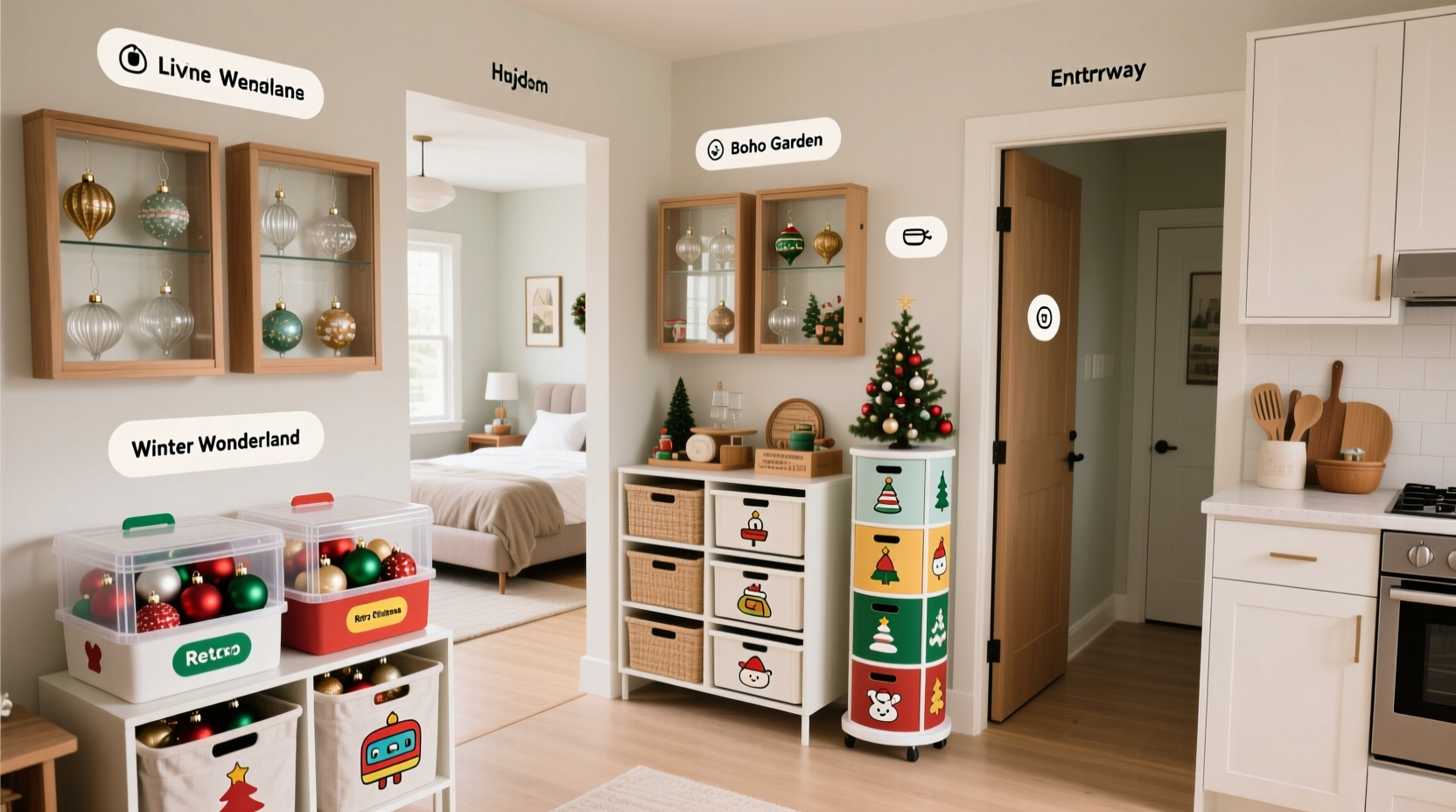
Most people store ornaments by type: all glass balls together, all wooden figures in another box. While logical at first glance, this approach forces you to visit multiple containers every time you decorate a single space. You end up carrying five different boxes into the living room just to finish one tree.
Organizing by room or theme eliminates that inefficiency. When each storage unit contains every ornament, garland, and topper meant for a specific location or aesthetic—like “Farmhouse Kitchen” or “Kids’ Tree”—you reduce trips to the attic, minimize decision fatigue, and maintain visual consistency.
This system also helps preserve design intent. If you’ve spent years curating a Scandinavian-themed tree with minimalist white and silver accents, mixing those pieces with bright red retro balls stored nearby increases the risk of accidental mismatches. Keeping themes self-contained protects your vision.
“Decorating should feel like unfolding a story, not solving a puzzle. When ornaments are grouped by where they belong, the holiday experience becomes intentional and joyful.” — Laura Simmons, Interior Stylist & Seasonal Design Consultant
Step-by-Step Guide to Reorganize Your Ornament Storage
Start this process after the holidays, while your setup is still fresh in memory. Use downtime in January or February to audit, sort, and rebuild your storage system.
- Unpack all ornament storage containers in a large, well-lit space such as a garage or living room floor. Lay everything out so you can see what you own.
- Assess condition and keep only what you love. Discard broken pieces, outdated items, or decorations that no longer fit your style. Donate duplicates or gently used ornaments to local charities or schools.
- Identify your primary decorating zones. List each room or area you typically decorate—e.g., entryway, living room, staircase, kids’ bedroom, outdoor porch.
- Define themes for each zone. Assign a cohesive look to each space: “Vintage Glamour,” “Rustic Woodland,” “Winter Wonderland,” etc. Themes can be color-based, material-based, or narrative-driven (e.g., “Nutcracker Suite”).
- Gather all ornaments associated with each theme or room. Pull from existing collections to build complete sets. Be ruthless—if an ornament doesn’t belong to any current theme, consider retiring it.
- Select appropriate storage containers. Use clear, stackable bins with dividers for delicate items. Label each bin prominently with both room name and theme.
- Store supporting decor with ornaments. Include mini lights, ribbon, tree toppers, and even small signs or figurines used in that space. This creates an all-in-one decorating kit.
- Create a master inventory list. Note which ornaments go where, either digitally or on paper. Update it annually as your collection evolves.
Designing Thematic Collections: Real-Life Example
Sarah M., a mother of three in Portland, used to spend two full weekends unpacking, sorting, and reassembling her holiday decor. Her old system had ornaments grouped by type: one bin for handmade crafts, another for heirloom glass, and several more for novelty items.
After switching to a room-and-theme model, she created four dedicated kits:
- Main Tree (Living Room) – “Mid-Century Modern Holiday”: Gold geometric shapes, walnut-finish wood ornaments, black cable-knit stockings.
- Kitchen – “Cozy Baking Days”: Mini rolling pins, cookie-shaped ornaments, cinnamon stick bundles, red gingham ribbon.
- Children’s Room – “Toyland Express”: Train cars, stuffed animal ornaments, battery-powered twinkling stars.
- Entryway – “Frosted Evergreen”: Pinecone clusters, faux snow-dusted branches, silver icicles.
Each kit lives in its own labeled bin with foam inserts to protect fragile pieces. Now, Sarah decorates each room in under an hour by pulling only the relevant container. Takedown is equally fast—everything goes back together, reducing loss and confusion.
She also added a small laminated checklist inside each lid listing contents and suggested placement ideas. “It’s like having my past self guide me through the process,” she says. “Even my husband can decorate now without asking me every five minutes where things go.”
Storage Solutions Compared: Do’s and Don’ts
Not all storage methods support a room-or-theme system. The wrong choice can lead to crushed ornaments, lost pieces, or inefficient access. Use this comparison to select the best options.
| Storage Method | Do Use For | Don’t Use For |
|---|---|---|
| Clear plastic bins with adjustable dividers | Delicate glass ornaments, themed sets requiring separation | Very large trees or bulky inflatables |
| Cardboard boxes with compartment trays | Budget-friendly short-term storage, lightweight ornaments | Long-term storage in damp areas (attics, basements) |
| Ornament storage boxes with individual slots | High-value or heirloom pieces needing maximum protection | Themed kits with mixed sizes and types |
| Hanging garment bags with pockets | Fragile bulb ornaments, preventing tangling | Heavy items or non-bulb decorations |
| Stackable under-bed drawers | Small-space living, frequently accessed rooms | Extreme temperatures or high humidity |
Checklist: Build Your Room-Based Ornament System
Follow this actionable checklist to implement a seamless, lasting organization strategy.
- ☐ Inventory all ornaments and discard damaged or unused items
- ☐ Map out decorated rooms and assign a theme to each
- ☐ Group ornaments, lights, and accessories by designated room/theme
- ☐ Choose durable, clearly labeled storage containers with protective interiors
- ☐ Store one complete decorating kit per container
- ☐ Add a printed checklist or photo guide inside each bin lid
- ☐ Store containers near their destination rooms if possible (e.g., kids’ tree bin in playroom)
- ☐ Update your master list and take photos of each finished display for next year
Common Challenges and How to Solve Them
Even with a solid plan, practical obstacles arise. Here’s how to handle frequent issues:
Limited storage space? Prioritize multi-functional containers. Use vertical stacking and under-bed solutions. Rotate themes annually if you have too many collections—keep two active themes per year instead of five.
Shared decorating duties? Make the system intuitive. Use color-coded labels, include simple instructions, and photograph final displays so everyone knows the intended outcome.
Changing tastes over time? Allow your themes to evolve. Keep one “transitional” bin for ornaments being phased out or tested in new combinations. Re-evaluate themes every 2–3 years.
Heirloom ornaments that don’t fit current themes? Create a separate preservation-grade archive box for family pieces. Display one or two meaningful items each year within active themes to honor tradition without clutter.
Frequently Asked Questions
Can I combine room and theme organization if I have a small home?
Absolutely. In smaller spaces, group by theme rather than room. For example, use “Warm Hearth” for all cozy winter elements used throughout the house. This maintains consistency and reduces the number of kits you need to manage.
What if I redecorate a room—do I have to change the ornament theme too?
Not necessarily. Your holiday theme can contrast intentionally with everyday decor. A modern minimalist living room might feature a lush traditional red-and-green tree as a festive counterpoint. Only change the theme if it no longer brings you joy or clashes severely with new furniture.
How do I label bins so I remember what’s inside years later?
Use descriptive labels that include both room and theme: “Guest Bedroom – Nordic Stars Theme.” Add the year if you rotate collections. Include a QR code linking to a digital photo album of last year’s setup for instant reference.
Conclusion: Turn Decoration Into a Seamless Ritual
Organizing ornament storage by room or theme transforms a chaotic chore into a smooth, enjoyable ritual. No more searching for matching snowflakes across three different boxes. No more realizing too late that you’re missing the star topper because it was packed separately. With everything grouped by purpose and place, your holiday setup becomes faster, more consistent, and deeply satisfying.
The initial effort pays off every December. What once took days now takes hours. What used to cause arguments now invites collaboration. And each year, your system grows smarter—refined by experience, tailored to your life.




 浙公网安备
33010002000092号
浙公网安备
33010002000092号 浙B2-20120091-4
Comments
No comments yet. Why don't you start the discussion?