
A well-organized closet does more than look appealing—it saves time, reduces decision fatigue, and extends the life of your clothing. While many people focus solely on tidiness, the most effective systems combine visual logic with behavioral insight. Organizing by color and frequency of use is one of the most powerful dual-strategy approaches. It merges aesthetic clarity with practical functionality, making it easier to find what you need while ensuring your most-worn items are accessible and underused pieces don’t get forgotten.
This method isn't about rigid rules or perfection; it’s about creating a system that reflects how you actually live and dress. Whether you have a walk-in closet or a compact reach-in space, this guide delivers actionable steps, expert-backed insights, and real-world strategies to transform your wardrobe into a streamlined, intuitive resource.
Why Combine Color and Frequency?
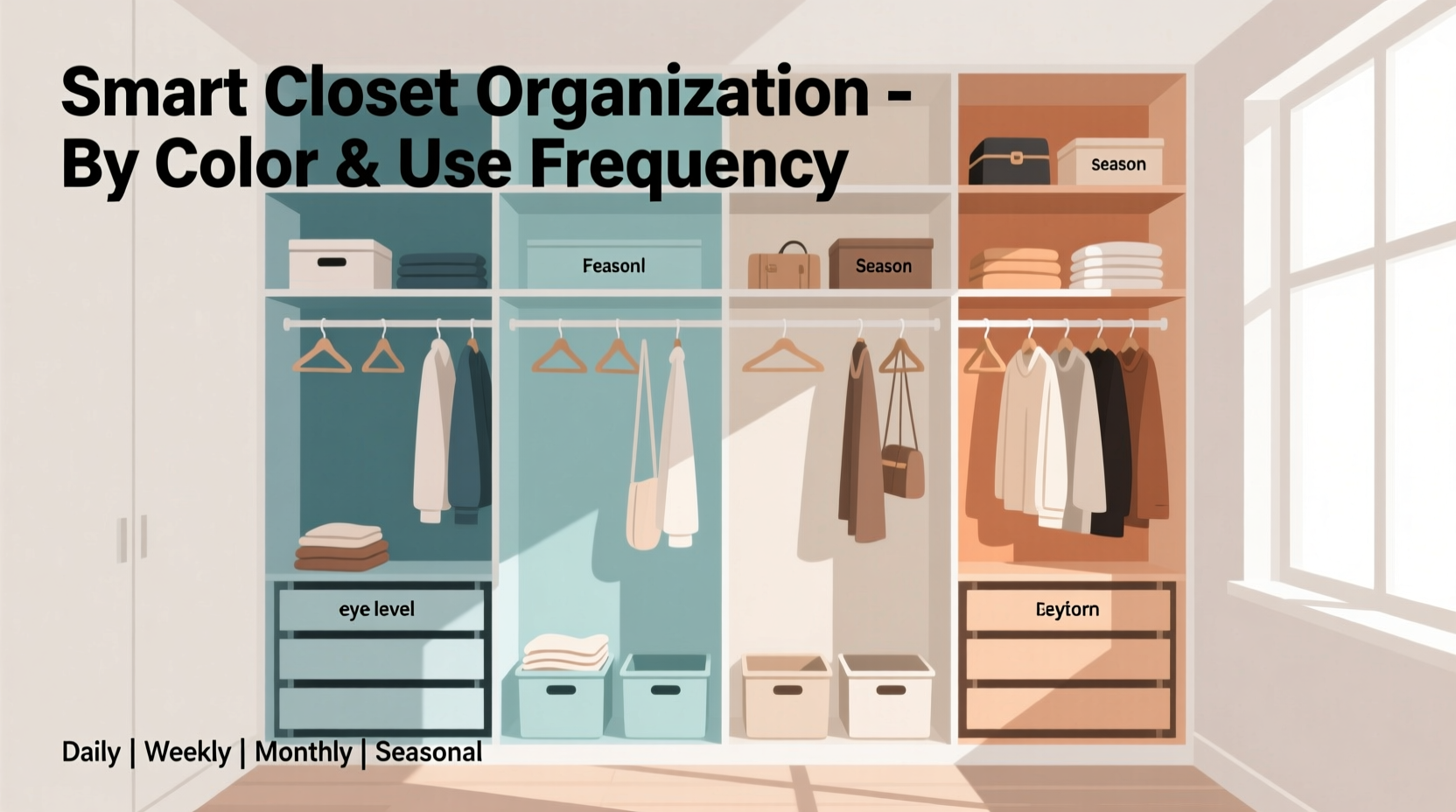
Sorting clothes by color provides immediate visual order. When garments are arranged in rainbow sequence—blues next to blues, reds grouped together—the closet becomes instantly navigable. But aesthetics alone aren’t enough. Without considering how often you wear each item, you risk burying daily essentials behind rarely used formalwear or seasonal outliers.
Frequency of use adds a behavioral layer. By identifying which shirts, pants, or dresses you reach for most, you can position them front and center. This combination reduces friction in your morning routine and promotes better clothing rotation, preventing overuse of some items while others gather dust.
“Closet organization should reflect lifestyle patterns. A system based on both appearance and usage ensures sustainability.” — Laura Bennett, Organizational Psychologist & Home Efficiency Consultant
Step-by-Step: Building Your Dual-System Closet
Transforming your closet requires planning, patience, and a few simple tools. Follow this timeline to implement a lasting system:
- Empty the closet completely. Remove every item and place it on your bed or floor. This allows full visibility and prevents oversight.
- Categorize by type. Separate clothes into groups: tops, bottoms, dresses, outerwear, etc. This simplifies the next steps.
- Evaluate frequency of use. For each piece, ask: When did I last wear this? How often do I realistically wear it? Label items as “Daily,” “Weekly,” “Occasional,” or “Rarely Worn.”
- Sort by color within categories. Within each category, arrange items in chromatic order: whites, beiges, pinks, reds, oranges, yellows, greens, blues, purples, blacks, grays. Stick to a consistent direction (left to right or top to bottom).
- Assign zones based on frequency. Reserve prime hanging or folding space (eye-level shelves, front of rack) for Daily and Weekly items. Move Occasional and Rarely Worn pieces to higher shelves, back sections, or storage bins.
- Label if needed. Use discreet tags or shelf dividers to mark zones, especially helpful in shared closets.
- Maintain monthly. Reassess once a month. Swap seasonal items, re-evaluate frequency, and adjust color flow as needed.
Smart Tips for Long-Term Success
The initial organization is just the beginning. Sustaining the system requires thoughtful habits and minor adjustments. These proven strategies help prevent regression and keep your closet functional year-round.
- Rotate seasonally but don’t banish. Store off-season items out of prime real estate, but keep them accessible. Vacuum-sealed bags work for bulky winter layers; breathable cotton bins are better for delicate fabrics.
- Adopt the “one in, one out” rule. Every time you add a new clothing item, remove one. This prevents clutter from creeping back and forces mindful consumption.
- Use lighting to enhance color visibility. Install LED strip lights inside the closet or ensure overhead lighting is bright and neutral (3500K–4000K). Poor lighting distorts colors and undermines the sorting system.
- Fold knits, hang structured pieces. Sweaters and knits should be folded to prevent stretching. Shirts, blazers, and dresses benefit from hanging—but only if they retain their shape.
- Group similar hues strategically. Neutrals like beige, cream, and tan can be grouped together. Similarly, separate navy from royal blue if they serve different purposes in your wardrobe.
Do’s and Don’ts: Common Pitfalls to Avoid
| Do | Don’t |
|---|---|
| Arrange colors in a continuous spectrum for smooth visual flow | Break up color groups with unrelated items (e.g., placing a black jacket between pastel sweaters) |
| Place everyday work shirts at eye level and easy reach | Bury frequently worn jeans behind formal dresses |
| Use drawer dividers for socks, underwear, and accessories | Let small items roll around loose in drawers |
| Reassess frequency every 3 months | Assume your wearing habits stay the same year-round |
| Store delicate or formal items in garment bags | Expose silk blouses or wool coats to dust and light without protection |
Real-Life Example: Transforming a Cluttered Wardrobe
Sarah, a marketing manager in Chicago, struggled with a packed closet despite owning only 70 pieces. She’d often spend 15 minutes searching for a simple blouse, and her favorite jeans were always buried behind coats she wore twice a year.
After applying the color-and-frequency method, she began by removing everything and categorizing her clothes. She discovered that 40% of her wardrobe hadn’t been worn in over six months—mostly event-specific dresses and outdated trends. She donated 22 items and kept the rest.
She then sorted tops by color: white tees on the left, moving through soft pinks and blues to darker denim shirts on the right. Her most-worn button-downs and blouses were placed at eye level. Seasonal cardigans went into labeled bins on the top shelf. Within a week, Sarah reported cutting her morning routine by nearly half and felt more confident in her outfit choices.
“It’s not just about looking neat,” she said. “Now my closet actually helps me instead of slowing me down.”
Checklist: Your Closet Organization Action Plan
Follow this concise checklist to ensure no step is missed during your reorganization:
- ☐ Remove all clothing from the closet
- ☐ Sort items by category (tops, bottoms, outerwear, etc.)
- ☐ Evaluate each item’s frequency of use
- ☐ Declutter: donate, sell, or discard unworn pieces
- ☐ Clean shelves and vacuum the space
- ☐ Choose uniform hangers and storage bins
- ☐ Arrange each category by color (ROYGBIV or neutrals-to-dark)
- ☐ Assign prime locations to high-frequency items
- ☐ Store seasonal or rare-use items in designated zones
- ☐ Add labels or dividers for clarity
- ☐ Schedule a monthly maintenance check
- ☐ Test the system for one week and adjust as needed
Frequently Asked Questions
How do I handle neutral-colored clothing like white, black, or gray?
Neutrals form the backbone of most wardrobes. Group whites and creams together, then progress through grays (light to dark), followed by black. Alternatively, integrate neutrals within their respective categories—e.g., a white blouse stays with other blouses, sorted between light pink and pale yellow. The key is consistency across your system.
What if my closet space is very limited?
In small closets, maximize vertical space and prioritize frequency even more. Use double-hang rods for shorter items like shirts and skirts. Fold bulky sweaters and store them in stackable bins beneath hanging clothes. Keep only your most versatile, frequently worn pieces visible. Rotate others monthly to keep variety without overcrowding.
Can this system work for shared closets?
Absolutely. In shared spaces, designate separate sides or sections for each person. Apply the same color-frequency logic individually. Use color-coded hangers or labels (e.g., blue tags for Person A, green for Person B) to avoid confusion. Agree on common zones for shared items like loungewear or travel outfits.
Conclusion: Turn Your Closet Into a Functional Asset
An organized closet isn’t a luxury—it’s a productivity tool. When you align visual harmony with real-life behavior, you create a space that supports your daily rhythm rather than disrupts it. Sorting by color brings clarity; organizing by frequency ensures efficiency. Together, they form a system that’s not only beautiful but deeply practical.
The effort you invest today pays dividends every morning. No more rummaging, no more forgotten favorites, no more frustration. With a few hours of focused work and ongoing maintenance, your closet can become a source of calm and confidence.




 浙公网安备
33010002000092号
浙公网安备
33010002000092号 浙B2-20120091-4
Comments
No comments yet. Why don't you start the discussion?