
Mornings don’t have to be chaotic. One of the most effective ways to streamline your daily routine is by rethinking how you store your clothes. When your closet is organized by both color and style, getting dressed becomes intuitive rather than overwhelming. No more staring into a cluttered space, pulling out half your wardrobe only to put it all back. A well-structured closet reduces decision fatigue, saves time, and even helps you appreciate what you own. This isn’t about perfection—it’s about practicality, clarity, and creating a system that works with your lifestyle.
The Science Behind Visual Organization
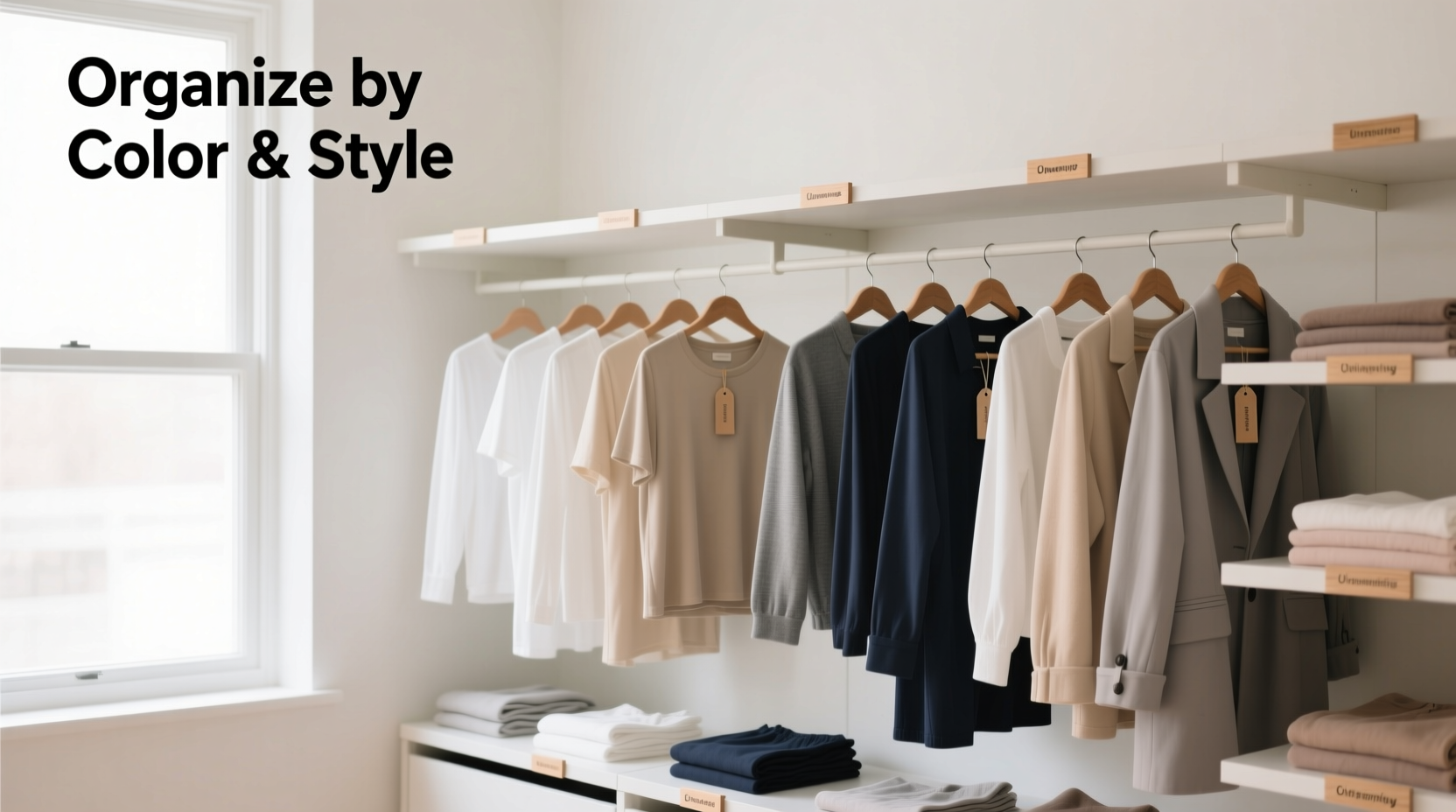
Human brains process visual information faster than text or memory recall. That’s why color-coded systems are used in schools, offices, and hospitals—they reduce cognitive load. When applied to your closet, this principle means you can instantly locate a navy sweater or a white blouse without digging through layers of mismatched hangers.
Organizing by style adds another layer of logic. Separating workwear from casual wear, activewear from evening attire, ensures that each category serves its purpose efficiently. Combine color and style, and you create a dual-indexing system: one based on appearance, the other on function.
“Closet organization isn’t just aesthetic—it’s behavioral design. When your environment supports quick decisions, you’re less likely to default to old habits like overbuying or wearing the same three outfits.” — Dr. Lena Torres, Behavioral Psychologist & Lifestyle Systems Researcher
Step-by-Step Guide to a Color-and-Style Organized Closet
Transforming your closet doesn’t require a full renovation or expensive tools. It does require intention and consistency. Follow these steps to build a functional, sustainable system.
- Empty Your Closet Completely
Take everything out. Yes, everything. This forces you to confront what you actually own and eliminates the habit of shoving items into forgotten corners. - Sort by Category First
Create piles: tops, bottoms, dresses, outerwear, activewear, formalwear, accessories. This establishes the foundation for style-based grouping. - Declutter Ruthlessly
Use the “one-year rule”: if you haven’t worn it in the past 12 months, let it go. Also discard anything stained, ill-fitting, or emotionally charged (e.g., “I’ll wear it when I lose weight”). Be honest—your future self will thank you. - Subdivide by Style Within Categories
Break down larger groups. For example:- Tops → T-shirts, blouses, button-downs, sweaters
- Bottoms → Jeans, trousers, skirts, shorts
- Dresses → Casual, work, cocktail, formal
- Arrange Each Subcategory by Color
Follow the visible light spectrum: red, orange, yellow, green, blue, indigo, violet. For neutrals, place whites and creams first, then grays, blacks, and browns. If you have many shades of one color (like blue), arrange them from light to dark. - Use Uniform Hangers
Switch to slim, non-slip velvet hangers. They save space, prevent slippage, and create visual continuity. Avoid mismatched wire or plastic hangers—they disrupt flow and waste rod space. - Label Sections (Optional but Helpful)
If you share your closet or frequently rotate seasonal items, small labels or fabric bins can reinforce the system. Use discreet tags or shelf dividers.
Optimizing Storage by Garment Type
Not all clothing should be hung. Over-hanging stretches shoulders and wastes vertical space. Use a mix of hanging, folding, and drawer storage based on fabric and structure.
| Garment Type | Best Storage Method | Avoid |
|---|---|---|
| Suits, Blazers, Dresses | Hung on padded or wide hangers | Folding—creates creases and misshapes shoulders |
| T-Shirts, Knits, Sweaters | Folded on shelves or in drawers | Hanging—stretches fabric over time |
| Jeans, Chinos, Skirts | Folded or hung by waistband | Overcrowding hangers—causes wrinkles |
| Undergarments, Socks | Drawer organizers or small bins | Loose piles—leads to mismatched pairs |
| Accessories (Belts, Scarves) | Roll in bins or hang on hooks | Buried at the back of drawers |
For folded items, use the KonMari folding method: fold into small rectangles that stand upright. This allows you to see every piece at a glance, maximizing drawer efficiency.
Real-Life Example: Sarah’s Morning Transformation
Sarah, a marketing director and mother of two, used to spend 20 minutes every morning choosing an outfit—often ending in frustration and last-minute jeans. Her closet was full, but nothing felt “right.” After organizing her wardrobe by style and color, she grouped her workwear into a dedicated section: neutral blouses arranged left to right (white, beige, gray, black), followed by colored silk tops in rainbow order. Below, tailored pants and pencil skirts were sorted similarly.
The change was immediate. She now selects coordinated outfits in under five minutes. More importantly, she noticed she owned seven nearly identical black turtlenecks—prompting her to donate three and invest in higher-quality versions. “It’s not just faster,” she says, “I feel more confident because I actually *see* my options.”
Common Mistakes to Avoid
Even with good intentions, people often undermine their closet systems. Watch out for these pitfalls:
- Ignoring Seasonal Rotation: Storing off-season clothes in under-bed bins or high shelves keeps your everyday closet lean and focused.
- Skipping the Purge Step: Organizing over clutter just creates a prettier mess. Declutter first, organize second.
- Using Inconsistent Hangers: Mismatched hangers break visual flow and waste space. Invest in one type.
- Forgetting Frequency of Use: Place frequently worn items at eye level. Reserve top shelves and low drawers for occasional wear.
- Overcomplicating the System: Don’t create 17 subcategories. Stick to broad, usable divisions: work, casual, exercise, special events.
Checklist: Building Your Color-and-Style Closet
Use this checklist to ensure you cover every step:
- ☐ Empty entire closet contents
- ☐ Sort into main categories (tops, bottoms, dresses, etc.)
- ☐ Discard or donate unworn, damaged, or ill-fitting items
- ☐ Break categories into style-based subgroups
- ☐ Choose uniform hangers and storage bins
- ☐ Arrange each subgroup by color (ROYGBIV + neutrals)
- ☐ Fold knits and tees; hang structured garments
- ☐ Store off-season clothing separately
- ☐ Label sections if needed
- ☐ Test the system for one week and adjust as necessary
FAQ: Your Closet Organization Questions Answered
What if I have a lot of black or neutral clothing?
Group neutrals together but sort them by shade and texture. For example: ivory, cream, beige, taupe, charcoal, black. Within black, separate matte from shiny fabrics. You can also group by formality—work blacks vs. casual blacks—to improve usability.
Should I organize by season or keep everything accessible?
Rotate seasons unless you live in a climate with minimal temperature variation. Storing off-season clothes frees up space and mental bandwidth. Use breathable cotton bags or vacuum-sealed packs for bulky winter items.
How do I maintain the system long-term?
Put clothes back in their designated spot immediately after washing. Schedule a 15-minute weekly reset to straighten hangers and refold stacks. Every three months, do a quick audit: remove anything you haven’t worn and reassess categories.
Final Thoughts: Design a Morning You Can Trust
An organized closet isn’t a luxury—it’s a tool for better living. When your clothes are arranged by color and style, you eliminate friction from one of your first daily decisions. That saved time and mental energy compound over weeks and months, leading to calmer mornings, fewer impulse purchases, and a deeper connection to your wardrobe.
The goal isn’t a Pinterest-perfect closet. It’s a personalized system that makes your life easier. Start small: tackle one category today. Fold your t-shirts, group your blouses, or clear out that pile of “maybe” shoes. Progress beats perfection every time.




 浙公网安备
33010002000092号
浙公网安备
33010002000092号 浙B2-20120091-4
Comments
No comments yet. Why don't you start the discussion?