
A cluttered closet doesn’t just make mornings stressful—it reflects a deeper disconnect between what you own and what you actually wear. The solution lies not in buying more storage bins or doubling your closet space, but in rethinking the very foundation of your wardrobe. By applying minimalist capsule wardrobe principles, you can transform your closet into a streamlined, intentional collection that simplifies dressing, reduces decision fatigue, and aligns with your personal style.
A capsule wardrobe is a curated selection of versatile, high-quality clothing items that work together seamlessly across seasons. Rooted in minimalism, it emphasizes quality over quantity, intentionality over impulse, and functionality without sacrificing style. When applied to closet organization, this approach does more than tidy up space—it reshapes your relationship with fashion.
Understanding the Capsule Wardrobe: Less Is More
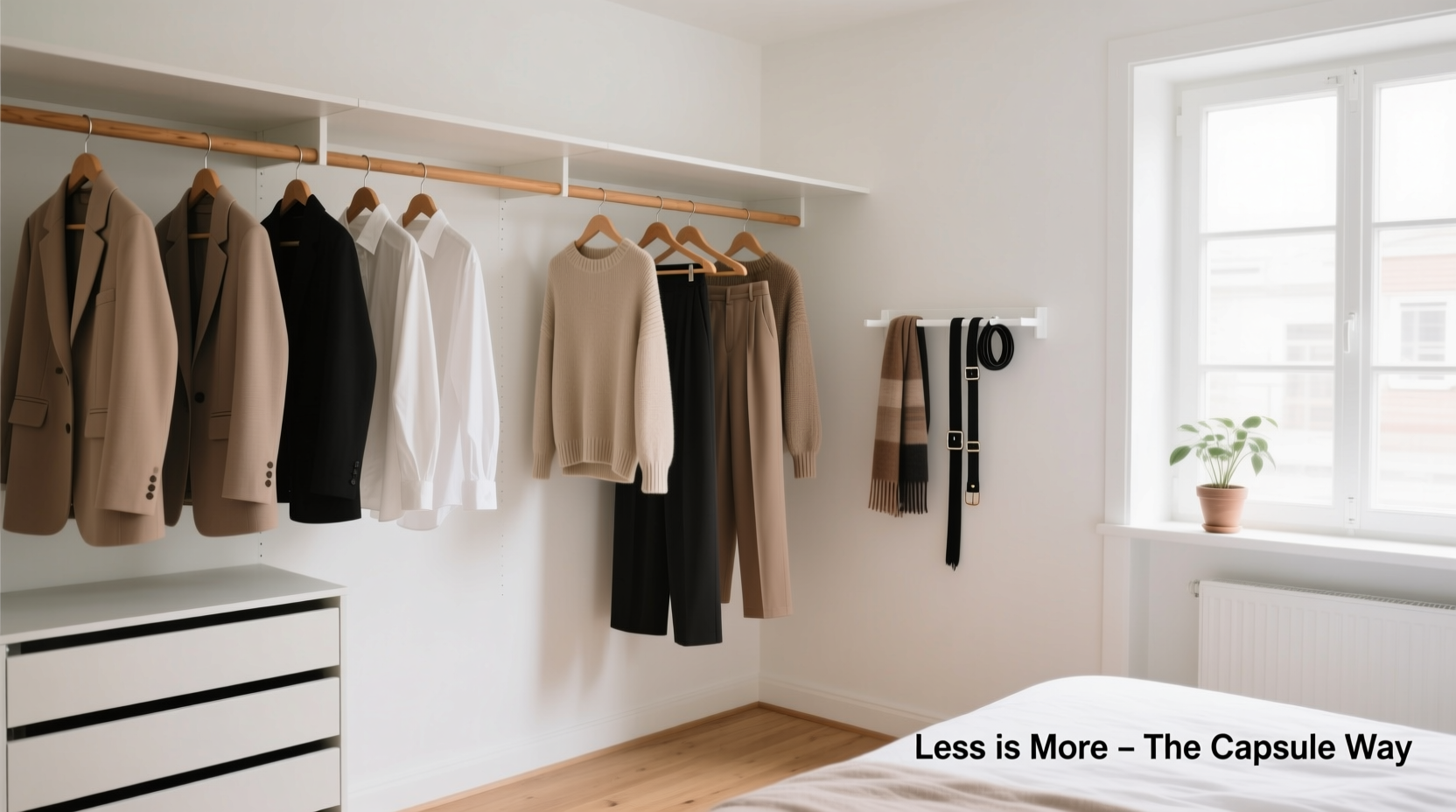
The concept of a capsule wardrobe originated in the 1970s with London boutique owner Susie Faux, who defined it as a small collection of essential pieces that could be mixed and matched throughout the year. It gained wider popularity through designer Donna Karan’s “seven easy pieces” philosophy and has since evolved into a cornerstone of minimalist living.
At its core, a capsule wardrobe challenges the fast-fashion mindset by promoting mindful consumption. Instead of chasing trends or accumulating clothes you rarely wear, you build a wardrobe around items that reflect your lifestyle, climate, and aesthetic preferences. Most capsule wardrobes contain between 30 and 50 pieces—including tops, bottoms, dresses, outerwear, and shoes—excluding undergarments, sleepwear, and workout clothes.
“Minimalism isn’t about deprivation; it’s about making room for what truly matters.” — Joshua Becker, author of *The More of Less*
This mindset shift is critical when organizing your closet. You’re not simply decluttering—you’re curating. Each piece earns its place by serving a purpose, fitting well, and bringing confidence when worn.
Step-by-Step Guide to Building a Minimalist Closet
Organizing your closet using capsule principles requires a methodical process. Follow these steps to create a functional, sustainable system:
- Empty Your Closet Completely
Remove every item from your closet and lay them out where you can see them. This creates psychological distance from ownership and makes evaluation easier. - Sort by Category
Group items into categories: tops, bottoms, dresses, jackets, shoes, accessories. This helps identify imbalances (e.g., too many black sweaters, no neutral pants). - Evaluate Each Item
Ask yourself: Does it fit? Is it in good condition? Have I worn it in the past year? Does it align with my current style? If not, it’s a candidate for removal. - Define Your Personal Style
Identify recurring colors, silhouettes, and fabrics you gravitate toward. Create a mood board or use Pinterest to clarify your aesthetic. - Select Core Pieces
Choose timeless staples: a white button-down, dark jeans, tailored blazer, little black dress, neutral coat. These form the backbone of your capsule. - Add Complementary Items
Include a few statement pieces or seasonal items that coordinate with your core. Limit accessories to those that enhance multiple outfits. - Store Off-Season Items
Rotate clothing based on weather. Store off-season garments in breathable containers, labeled clearly for easy retrieval. - Arrange Strategically
Hang frequently worn items at eye level. Fold knits and tees on shelves. Use uniform hangers for visual cohesion.
Do’s and Don’ts of Capsule Wardrobe Organization
| Do’s | Don’ts |
|---|---|
| Invest in high-quality natural fabrics like cotton, wool, and linen | Buy trendy pieces just because they’re on sale |
| Limit color palette to 3–5 core neutrals plus 1–2 accent tones | Mix too many competing patterns or clashing hues |
| Use slim, non-slip hangers for consistent spacing | Overcrowd rods or stack folded clothes too high |
| Label storage bins for scarves, belts, or seasonal items | Leave accessories loose or tangled in drawers |
| Review and refresh your capsule every 3–6 months | Let unworn items linger “just in case” |
Real Example: Transforming Sarah’s Overstuffed Closet
Sarah, a 34-year-old marketing professional, had a walk-in closet filled with over 120 clothing items. Despite this, she often felt she had “nothing to wear.” Her mornings were chaotic, and she spent money regularly replacing pieces she thought were lost in the clutter.
After learning about capsule wardrobes, Sarah committed to a 30-day reset. She pulled everything out and sorted by category. She discovered she owned 18 black tops—many unworn—and only two pairs of well-fitting trousers. Using the evaluation criteria, she kept only 42 core pieces: 10 tops, 6 bottoms, 3 dresses, 4 outerwear items, and 5 pairs of shoes, plus coordinated accessories.
She organized her closet by outfit type—work, casual, weekend—and used matching velvet hangers. Within two weeks, she reported saving 15 minutes each morning and reduced her weekly laundry load by half. Six months later, she hadn’t purchased any new clothes, having realized most of her previous buys were impulsive and ill-fitting.
Sarah’s experience illustrates a key truth: abundance doesn’t equal choice. True freedom comes from curation.
Essential Checklist for a Minimalist Closet
Use this checklist to ensure your capsule wardrobe is both functional and sustainable:
- ☐ Removed all clothing from closet for full visibility
- ☐ Sorted items into clear categories (tops, bottoms, etc.)
- ☐ Discarded or donated anything damaged, ill-fitting, or unworn in 12 months
- ☐ Identified 3–5 dominant colors in your preferred palette
- ☐ Selected 5–7 foundational core pieces (e.g., white tee, navy blazer)
- ☐ Ensured every top coordinates with at least two bottoms
- ☐ Limited shoes to 4–5 versatile pairs (e.g., loafers, boots, sneakers)
- ☐ Stored off-season items in labeled, breathable containers
- ☐ Arranged closet by frequency of use and outfit type
- ☐ Scheduled next review date (in 3–6 months)
Expert Insight: Why Simplicity Works
Fashion psychologist Dr. Jen Makare emphasizes that our wardrobes influence mental clarity. “When your closet is overloaded, your brain treats each item as a decision,” she explains. “A minimalist capsule reduces cognitive load, which translates to lower stress and increased confidence.”
“A well-edited wardrobe acts like a visual anchor. You know exactly what you have, what works, and how to put it together.” — Dr. Jen Makare, Fashion Psychologist
Additionally, sustainability expert Mara Hoffman notes that capsule wardrobes support ethical fashion. “The average person wears only 20% of their wardrobe regularly. By focusing on fewer, better-made pieces, we reduce waste and support slower, more responsible production cycles.”
Frequently Asked Questions
Can a capsule wardrobe work in variable climates?
Absolutely. Adapt your capsule seasonally rather than annually. Maintain a base of layerable neutrals (like merino tees or trench coats), then rotate mid-layers and outerwear. For example, swap cotton shirts for flannel in winter and add a puffer vest. Many people maintain two 30-piece capsules—one for warm months, one for cold—with 60–70% overlap in core items.
Won’t I get bored wearing the same clothes?
Most people find the opposite happens. With fewer choices, they become more creative with combinations. Accessories like scarves, jewelry, or footwear can dramatically change an outfit’s look. Plus, when every piece fits well and reflects your style, getting dressed becomes enjoyable rather than exhausting.
What if my job requires varied attire?
Tailor your capsule to your lifestyle. A corporate professional might include three blazers in different textures (tweed, wool, linen) that pair with two pairs of trousers and four silk blouses. A teacher might focus on durable, washable knits in coordinating colors. The key is versatility within context—not rigid rules.
Final Thoughts: Design a Wardrobe That Serves You
Organizing your closet using minimalist capsule wardrobe principles isn’t about strict limits or sacrificing style. It’s about designing a system that works for your life—where every piece has a purpose, fits perfectly, and brings joy when worn. The result is more than a tidy closet; it’s a daily ritual of ease, confidence, and intention.
You don’t need dozens of outfits to feel put together. You need a handful of well-chosen ones that reflect who you are and how you live. Start small: empty your closet this weekend, ask the hard questions, and keep only what truly serves you. In doing so, you’ll reclaim time, reduce stress, and create space—for your clothes, and for yourself.




 浙公网安备
33010002000092号
浙公网安备
33010002000092号 浙B2-20120091-4
Comments
No comments yet. Why don't you start the discussion?