
Packing a suitcase efficiently isn’t just about fitting more in—it’s about arriving with your clothes looking sharp, organized, and ready to wear. Whether you're preparing for a weekend getaway or a month-long business trip, the way you pack can make a significant difference in both comfort and convenience. Most travelers waste valuable space by tossing items haphazardly into their luggage, only to arrive with wrinkled shirts, lost accessories, and an overstuffed bag that barely zips. With the right techniques, however, you can maximize every inch of space while keeping your garments crisp and easily accessible.
The key lies in understanding garment behavior, mastering folding and rolling methods, and using strategic layering. Beyond technique, it’s also about planning and mindset: packing with intention rather than impulse. This guide breaks down proven strategies used by frequent flyers, professional organizers, and travel industry insiders to help you transform your packing process from chaotic to seamless.
Choose the Right Suitcase and Plan Your Outfits
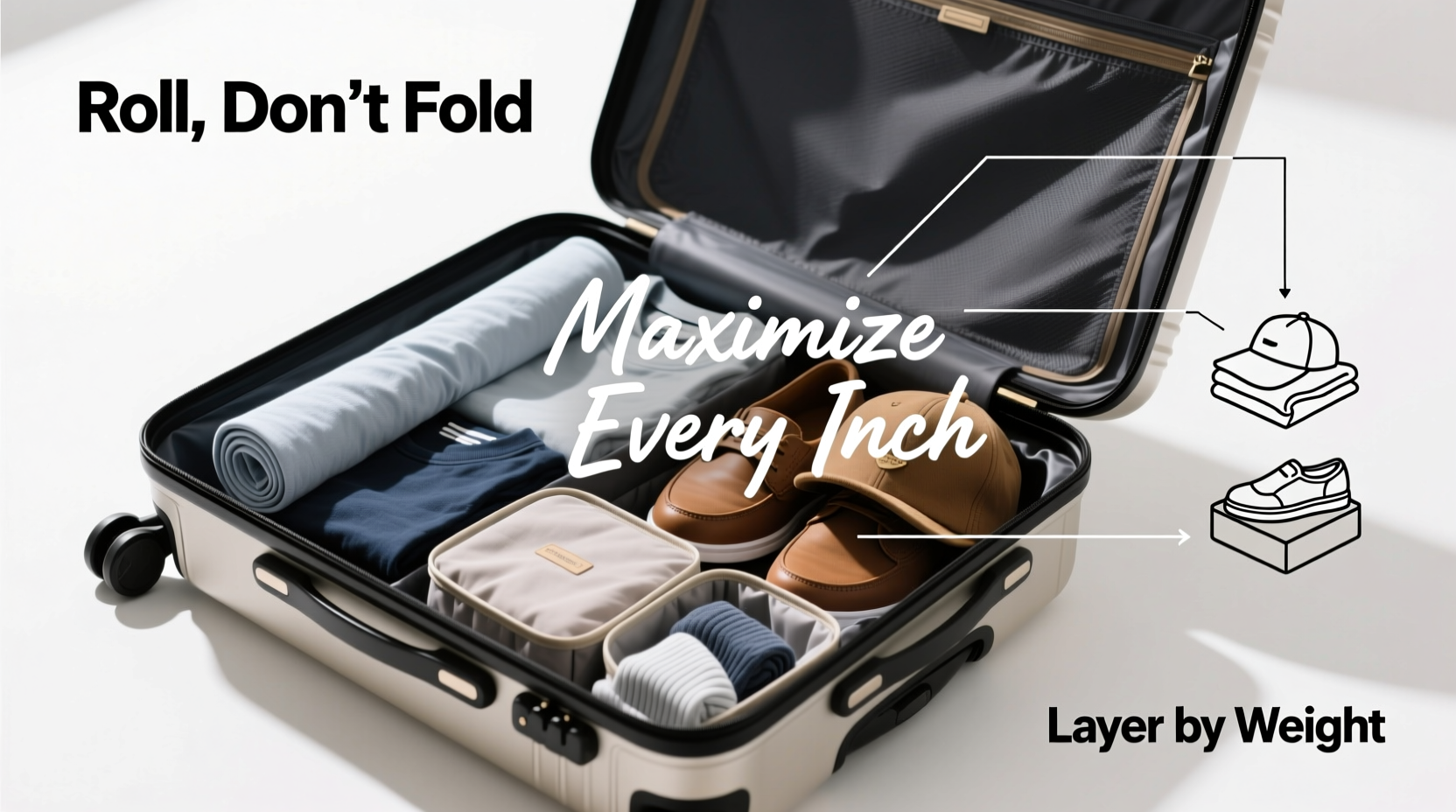
Before you even begin placing clothes inside your suitcase, success starts with two foundational steps: selecting the appropriate luggage and planning what you’ll wear. A hard-shell spinner with internal compression straps offers structural support and smooth maneuverability, while soft-sided bags provide slight expandability—ideal for return trips with souvenirs. Regardless of style, ensure your suitcase has a well-designed interior with compartments or at least one zippered mesh pocket for small essentials.
Equally important is outfit planning. Instead of packing individual pieces, think in terms of complete outfits. Limit yourself to a color-coordinated capsule wardrobe—typically 5–7 mix-and-match combinations. This reduces decision fatigue during your trip and minimizes excess clothing. For example, pair neutral bottoms (black trousers, navy jeans) with versatile tops (white blouse, gray sweater) and one statement piece (patterned scarf, blazer). Shoes should be limited to three pairs maximum: walking shoes, dress shoes, and sandals or boots if needed.
Master the Art of Folding vs. Rolling
One of the most debated topics in packing is whether to fold or roll. The answer depends on fabric type, suitcase layout, and wrinkle sensitivity.
Folding works best for structured garments such as dress shirts, blazers, and button-downs. Use the military roll method—not actually a roll, but a precise folding technique where you lay the shirt face-down, fold the arms across the back, then fold the sides inward and the bottom up. This creates a compact rectangle that resists wrinkles when stacked flat.
Rolling, on the other hand, is ideal for casual wear: t-shirts, pajamas, socks, underwear, and knits. It eliminates horizontal folds that cause creases and saves space by reducing air pockets. Start from the narrow end and roll tightly toward the top. Stack rolled items vertically like files in a drawer—this allows you to see everything at a glance and prevents crushing.
| Fabric Type | Best Method | Why |
|---|---|---|
| Cotton Shirts | Fold | Minimizes collar and shoulder creases |
| Silk/Blouses | Fold + Tissue Wrap | Prevents snags and static friction |
| T-Shirts | Roll | Saves space; no visible crease lines |
| Wool Sweaters | Fold Flat | Prevents stretching; retains shape |
| Jeans | Fold or Roll | Durable fabric handles either method |
“Rolling clothes can save up to 30% more space than traditional folding, especially for soft fabrics.” — Lisa Tran, Travel Organizer & Author of *The Packing Blueprint*
Use Compression and Organization Tools Strategically
Space efficiency isn’t just about how you place clothes—it’s also about managing volume. Compression is your greatest ally. Packing cubes are not just trendy accessories; they’re functional tools that compartmentalize your suitcase and allow for vertical organization. Use separate cubes for tops, bottoms, undergarments, and workout clothes. Choose ones with zippers that compress further when pressed down.
Vacuum compression bags work well for bulky items like jackets, hoodies, or winter layers. Simply place the item inside, seal the zipper, and roll out the air. These are especially useful when returning home with extra purchases or laundry. However, avoid over-compressing delicate fabrics like wool or cashmere, which may lose loft and texture.
For wrinkle prevention, consider using tissue paper between layers of clothing—especially between dark and light garments to prevent dye transfer. Another pro move: place stiffer items like denim or structured skirts along the inner walls of the suitcase to create a supportive shell that protects softer garments in the center.
Step-by-Step: The Pro Packing Sequence
Follow this logical sequence to build a wrinkle-resistant, space-smart suitcase. This method is used by flight attendants and international consultants who pack weekly:
- Layer 1 – Base (Bottom of Suitcase): Place shoes toe-to-toe in plastic bags to protect clothing from dirt. Position them along one short edge. Add toiletry bag or electronics case here if lightweight.
- Layer 2 – Heavy Bottom Layers: Fold jeans, pants, or skirts and lay them flat over the shoes. Smooth out any wrinkles before placing.
- Layer 3 – Packing Cubes (Middle Zone): Insert filled cubes containing rolled t-shirts, underwear, and socks. Position them side by side to form a stable platform.
- Layer 4 – Delicate Garments: Lay dress shirts, blouses, or dresses face-down on a sheet of tissue paper. Fold in thirds lengthwise, then place flat on top. Avoid stacking anything above them.
- Layer 5 – Final Fill & Compression: Add sweaters or outerwear loosely on top. Gently press down to settle contents. Zip up compression cubes if applicable. Leave a 1-inch gap at the top to allow for closing without strain.
If your suitcase has a lid with a mesh compartment, reserve it for dry-clean-only items laid flat. Never stuff the lid aggressively—that’s a primary cause of permanent creases.
Avoid Common Packing Mistakes
Even experienced travelers fall into traps that compromise efficiency and garment care. Recognizing these pitfalls can dramatically improve your results.
- Overpacking “just in case” items: Extra shoes, duplicate accessories, and rarely worn outfits consume space and add weight. Stick to your pre-approved list.
- Packing too early: Waiting until the last minute leads to rushed decisions and forgotten essentials. But packing more than 48 hours ahead invites last-minute additions. Aim for the sweet spot: 24–36 hours before departure.
- Ignoring laundry options: Unless you’re traveling somewhere remote, assume you can wash a few items mid-trip. This reduces the need to pack full wardrobes.
- Mixing dirty and clean zones: Keep gym clothes or beachwear separate using a dedicated cube or sealed bag to avoid contaminating clean attire.
“The average traveler packs 30% more than they actually use. Precision beats abundance every time.” — Mark Rivera, Frequent Flyer & Productivity Coach
Real-World Example: Business Trip Done Right
Sarah, a marketing executive based in Chicago, travels biweekly for client meetings. Her previous method involved stuffing a carry-on with ten blouses, four pairs of heels, and enough makeup to fill a vanity. She often arrived with wrinkled clothes and had to spend precious time at the hotel ironing or buying new items.
After adopting a capsule approach, she now packs only five mix-and-match outfits centered around a navy blazer. She rolls her cotton-blend shirts, uses a single packing cube for accessories, and places her dress shoes in a shoe sac at the base. By following the layering method described above, she fits everything into a carry-on—including laptop, charger, and toiletries—without exceeding airline size limits. More importantly, her clothes arrive unwrinkled, and she’s saved over $800 annually in checked baggage fees.
Her rule: “If I haven’t worn it in the past month, I don’t pack it.” This simple filter keeps her suitcase lean and purposeful.
Packing Checklist: Your Pre-Flight Must-Dos
Use this checklist the night before departure to ensure nothing is overlooked:
- ✅ Confirm weather forecast for destination
- ✅ Finalize 5–7 coordinated outfits
- ✅ Wash and fully dry all packed clothing
- ✅ Charge devices and pack cords in labeled pouch
- ✅ Pack travel-sized toiletries in leak-proof container
- ✅ Roll soft items; fold structured garments
- ✅ Use packing cubes for category separation
- ✅ Place heaviest items at the bottom
- ✅ Leave 10% empty space for souvenirs
- ✅ Weigh suitcase to avoid airline fees
FAQ: Wrinkle-Free & Efficient Packing
Can I pack dress suits without wrinkles?
Yes. For single-breasted suits, keep the jacket on a hanger until departure. Fold it along natural seams: bring one shoulder to the center back, then fold the other over it. Place it on top of the suitcase, ideally in a dry-cleaning bag for added protection. Pack the trousers folded lengthwise beneath the jacket. If flying carry-on only, consider wearing the suit.
How do I prevent clothes from getting musty?
Ensure all items are completely dry before packing. Include a silica gel packet or a small sachet of cedar chips to absorb moisture. Avoid sealing damp towels or swimsuits directly into fabric-lined compartments—wrap them in a quick-dry microfiber towel first.
Is it better to check or carry on my luggage?
Carry-ons give you control over your belongings and reduce handling, which helps prevent wrinkles and loss. However, if you're packing fragile items or formal wear, checking a well-packed suitcase with TSA-approved locks may be safer. Just ensure it's tagged properly and insured if valuable.
Final Thoughts: Elevate Your Travel Experience
Packing like a pro isn’t about perfection—it’s about preparation, precision, and respect for your time and belongings. When you invest a little effort upfront, you gain freedom on the road: no frantic unpacking, no steam sessions before meetings, no lugging oversized bags through train stations. You arrive composed, confident, and ready.
The techniques outlined here—strategic folding, smart layering, disciplined editing—are accessible to anyone. They don’t require expensive gear or hours of effort. What they do require is consistency. Try this method on your next trip. Refine it. Make it your own. Soon, you’ll wonder how you ever traveled any other way.




 浙公网安备
33010002000092号
浙公网安备
33010002000092号 浙B2-20120091-4
Comments
No comments yet. Why don't you start the discussion?