
Painting walls is one of the most cost-effective ways to transform a room, but nothing undermines the effort faster than visible roller marks. Streaks, lap lines, and textured patches can make even the most carefully chosen color look amateurish. Achieving a smooth, professional-grade finish isn’t reserved for contractors—it’s within reach for any homeowner or DIYer who understands the right tools, techniques, and timing. The key lies not just in how you roll the paint, but in surface preparation, product selection, and workflow consistency.
A flawless painted wall reflects light evenly, enhances space perception, and elevates the overall aesthetic of your interior. This guide walks through every critical phase—from choosing the correct roller nap to mastering cutting-in—and reveals the subtle details that separate an okay paint job from a truly seamless one.
Choose the Right Tools and Materials
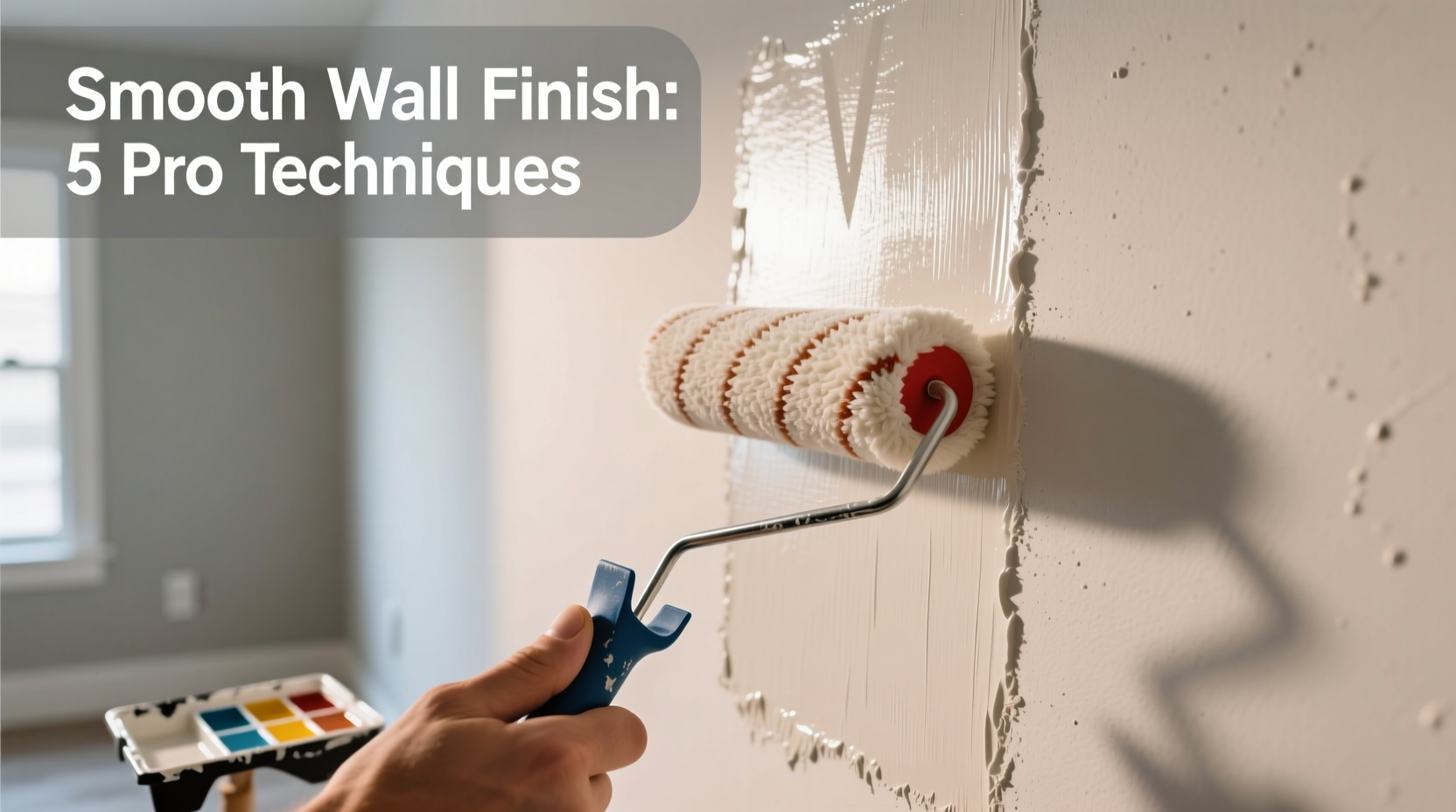
The foundation of a mark-free finish starts long before the first stroke. Using inappropriate brushes or rollers is one of the leading causes of texture inconsistencies. The wrong tool absorbs too much paint, deposits it unevenly, or leaves behind ridges that dry into permanent flaws.
For smooth walls like drywall or plaster, use a roller with a short nap—typically 3/8 inch. This length holds enough paint for even coverage while minimizing stippling. For slightly textured surfaces, a 1/2-inch nap may be necessary, but avoid anything longer unless dealing with heavy textures like orange peel or knockdown finishes.
Opt for high-quality synthetic or microfiber roller sleeves. These materials release paint more uniformly than cheaper woven counterparts. Pair them with a sturdy extension pole to maintain consistent pressure across high and low areas.
Brushes matter just as much. Use a 2–3 inch angled sash brush made from nylon or polyester for cutting in along edges. These hold their shape well and allow precision without dripping.
Paint Selection for a Smooth Finish
Not all paints are created equal when it comes to self-leveling properties. Higher-quality paints contain better binders and resins that help the coating flow smoothly and reduce brush and roller marks. Look for labels indicating “smooth finish,” “low luster,” or “self-leveling.”
Eggshell and satin finishes tend to hide imperfections better than flat paints while still offering a soft sheen. Avoid matte or flat finishes if your walls have minor flaws—they highlight texture variations more than anticipated. Semi-gloss works well in kitchens and bathrooms but demands near-perfect application due to its reflective nature.
“Professional painters swear by premium paints because they level out naturally. You spend less time correcting errors and more time admiring the result.” — Michael Tran, Residential Painting Contractor with 18 years of experience
Prepare the Surface Thoroughly
No technique can compensate for poor surface prep. Dust, grease, and uneven patches will telegraph through paint, especially under direct lighting. Begin by removing switch plates, outlet covers, and hardware. Clean walls with a mild detergent solution and rinse with clean water. Let them dry completely—paint applied over damp residue won’t adhere properly.
Fill nail holes, dents, and hairline cracks with spackling compound. Sand repairs smooth using 120-grit sandpaper, then wipe away dust with a tack cloth. If there are significant texture differences between patched and original areas, feather the edges gradually.
If painting over glossy surfaces (such as previously painted trim or semi-gloss walls), lightly sand to dull the shine. This improves adhesion and prevents peeling later on.
Prime When Necessary
Priming is essential when making drastic color changes (e.g., dark to light), covering stains, or painting new drywall. A quality primer seals the surface, evens out porosity, and provides a uniform base for topcoats. Without it, paint absorption varies, causing blotchiness and forcing you to apply extra coats—each increasing the risk of roller marks.
Use a primer compatible with your paint type (latex over latex, oil-based for oil). Apply with the same roller you’ll use for paint to mimic texture and ensure consistency.
Master the Cutting-In Technique
Cutting in refers to hand-brushing paint along edges where the roller can’t reach—corners, ceiling lines, baseboards, and around windows and doors. Done poorly, this step creates lap marks when the roller meets the dried edge.
To prevent this, cut in a manageable section—about 3 to 4 feet wide—then immediately roll that area while the brushed paint is still wet. This allows the roller to blend seamlessly into the edge, eliminating hard lines.
Dip only the lower third of the brush into the paint. Tap gently against the can to remove excess—overloading leads to drips and thick buildup. Hold the brush at a slight angle and draw steady strokes parallel to the edge. Don’t go back over a stroke once it’s laid; retracing pulls paint and creates ridges.
Work in Manageable Sections
Paint one wall at a time, starting from the top and working down. Divide large walls into vertical zones approximately 3–4 feet wide. Complete each zone from cutting in to rolling before moving on. This maintains a \"wet edge,\" which is crucial for avoiding lap marks.
A wet edge means the newly applied paint overlaps slightly with still-damp adjacent sections, allowing them to merge during drying. If you let a section dry before continuing, the seam becomes visible as a darker or lighter band.
Roll with Precision and Consistency
The rolling process itself requires rhythm, pressure control, and pattern discipline. Follow a structured \"W-M-Z\" method to distribute paint evenly and minimize reworking.
- Pour paint into a tray and load the roller evenly, rolling it back and forth without dripping.
- Starting near the top corner, roll a small \"W\" pattern about 2x2 feet in size. Do not press hard—let the roller’s weight do the work.
- Without lifting the roller, fill in the gaps between the arms of the W with vertical and horizontal passes, maintaining slight overlap.
- Reload the roller as needed, always overlapping into the wet edge of the previous section.
Maintain consistent speed and pressure. Rushing causes thin spots; lingering creates puddles that sag into streaks. Move in straight lines rather than random zigzags for uniform texture.
| Do’s | Don’ts |
|---|---|
| Use a high-quality microfiber roller cover | Use a worn or low-grade roller sleeve |
| Keep a wet edge between sections | Let one area dry before connecting to the next |
| Apply two thin coats instead of one thick one | Overload the roller with paint |
| Sand lightly between coats if needed | Skip sanding between coats on imperfect surfaces |
| Work in natural or balanced artificial light | Rely solely on overhead lighting that hides flaws |
Dry Time and Second Coat Application
Allow the first coat to dry fully—usually 2 to 4 hours for latex paint—before applying the second. Rushing leads to dragging, pulling, and uneven film formation. Lightly sand the entire surface with 220-grit sandpaper to knock down any raised fibers or tiny bumps left by the roller. Wipe clean with a microfiber cloth.
The second coat should go on just like the first: cut in a section, roll immediately, maintain wet edges, and follow the same rolling pattern. This reinforces coverage and further blends any minor inconsistencies.
Real-World Example: From Patchy to Perfect
Jamie, a homeowner in Portland, attempted her first living room repaint using leftover paint and a discount roller kit. After completion, she noticed pronounced horizontal bands near the ceiling and corners where the roller had stopped and restarted. Under afternoon sunlight, the texture resembled corduroy.
She consulted a local painter who diagnosed the issue: low-nap roller used on slightly porous drywall, combined with breaking the wet edge. Jamie repainted using a 3/8-inch microfiber roller, high-quality eggshell paint, and strict adherence to the W-pattern method—cutting in no more than 3 feet at a time before rolling. She also primed the wall first. The result was indistinguishable from a professional job, with zero visible marks.
Her takeaway? “I thought the roller was just a delivery tool. I didn’t realize technique and timing mattered so much.”
Essential Checklist for a Mark-Free Paint Job
- ✅ Remove wall fixtures and tape off trim and ceilings (if desired)
- ✅ Clean walls with mild soap and water; let dry completely
- ✅ Repair holes and sand smooth; wipe with tack cloth
- ✅ Prime if changing color drastically or painting new drywall
- ✅ Select a 3/8” or 1/2” high-quality microfiber roller cover
- ✅ Use an angled sash brush for cutting in
- ✅ Pour paint into a roller tray and load roller evenly
- ✅ Cut in a 3–4 foot section, then immediately roll that area
- ✅ Use the \"W\" or \"M\" rolling pattern with consistent pressure
- ✅ Maintain a wet edge at all times
- ✅ Allow first coat to dry fully (2–4 hours)
- ✅ Lightly sand with 220-grit paper and clean dust
- ✅ Apply second coat using the same method
- ✅ Inspect under natural and angled light before declaring done
Frequently Asked Questions
Why do roller marks appear even when I use a smooth roller?
Roller marks often occur due to improper technique rather than equipment alone. Common culprits include letting the paint dry before blending into the next section (breaking the wet edge), applying uneven pressure, using too much or too little paint on the roller, or skipping surface prep. Even with a good roller, these factors can leave visible texture.
Can I fix roller marks after the paint has dried?
Yes, but not by simply painting over them. Lightly sand the affected area with 220-grit sandpaper until smooth. Wipe away dust, then prime if necessary. Repaint using proper technique—cutting in and rolling immediately with a wet edge. In severe cases, consider repainting the entire wall for uniformity.
Is spraying better than rolling for a smooth finish?
Spraying delivers the smoothest possible finish and eliminates roller marks entirely. However, it requires extensive masking, specialized equipment, and skill to avoid overspray. For most homeowners, a high-quality roller with correct technique offers nearly identical results with far less setup and cleanup.
Final Tips for Flawless Results
Lighting plays a bigger role than many realize. View your work from various angles, especially at eye level and under natural daylight. Glare from overhead bulbs often masks texture issues that become obvious later.
Temperature and humidity affect drying time. Ideal conditions are 65–75°F (18–24°C) with moderate airflow. High humidity slows drying, increasing the chance of runs; low humidity speeds drying, reducing your window for blending.
Invest in reusable roller trays and liners. Disposable trays warp and restrict paint flow, making it harder to reload evenly. A rigid tray ensures consistent roller saturation.
Conclusion
A smooth, mark-free paint job is achievable with attention to detail, the right materials, and disciplined execution. It’s not about speed—it’s about consistency. From surface prep to final brushstroke, every decision influences the outcome. By selecting appropriate tools, maintaining wet edges, and applying thin, even coats, you can achieve a finish that looks professionally done.




 浙公网安备
33010002000092号
浙公网安备
33010002000092号 浙B2-20120091-4
Comments
No comments yet. Why don't you start the discussion?