
Personalizing a phone case is more than just an aesthetic choice—it’s a way to express individuality in a world where nearly everyone carries the same sleek black rectangle. Yet, many people hesitate to customize their cases, fearing that stickers, paint, or added embellishments might weaken structural integrity or interfere with drop protection. The truth is, personalization and protection don’t have to be mutually exclusive. With thoughtful techniques and the right materials, you can transform a standard case into a unique extension of your personality—without putting your phone at risk.
The key lies in understanding both the function of your case and the limitations of customization. Whether you own a rugged military-grade model or a slim silicone sleeve, every case serves as a first line of defense against drops, scratches, and daily wear. The challenge is enhancing its look without undermining its job. This guide walks through practical, tested strategies to make your case stand out while preserving—or even enhancing—its protective qualities.
Choose the Right Base Case for Customization
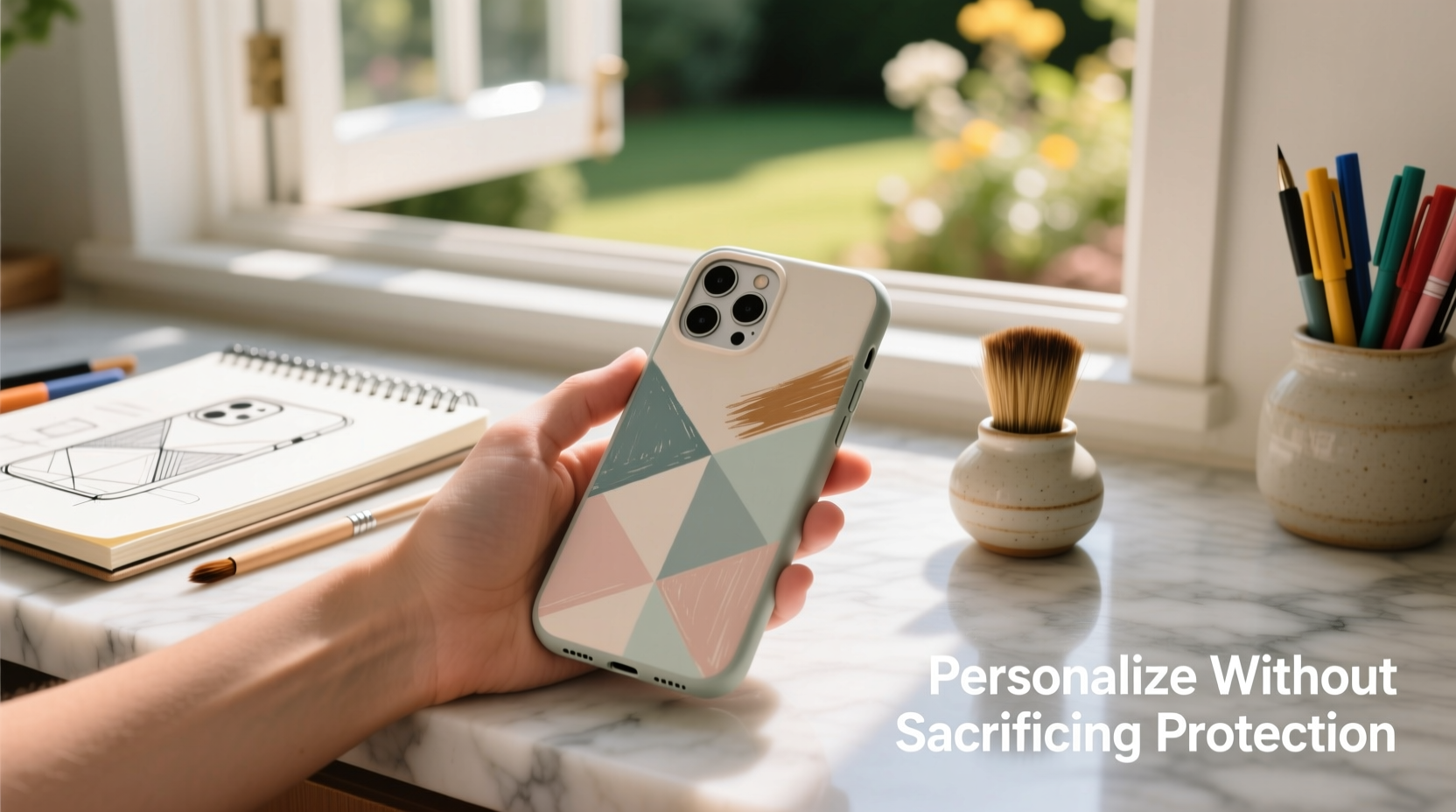
Not all phone cases are created equal when it comes to personalization. Before applying any design elements, consider the material, thickness, and structural features of your base case. A well-chosen foundation makes all the difference between a long-lasting custom piece and one that peels, cracks, or compromises safety within weeks.
Rigid polycarbonate or hybrid cases (combining hard outer shells with soft inner linings) offer excellent durability and provide a smooth surface ideal for decals or paint. Silicone cases are flexible and grippy but may not hold adhesives as well over time. Avoid ultra-thin TPU cases if heavy modifications are planned—they lack structural depth and can warp under layered materials.
If you're planning extensive artwork or 3D attachments, select a case designed with modularity in mind. Some brands now offer \"designer-ready\" models featuring flat surfaces, removable panels, or textured zones specifically intended for safe customization.
Safe Personalization Techniques That Preserve Protection
There are multiple ways to add flair to your phone case, but only some respect its primary purpose: safeguarding your device. Below are five proven methods that balance creativity with functionality.
1. Use Removable Vinyl Decals
High-quality vinyl decals are among the safest options for personalization. They adhere cleanly, resist moisture, and can be removed without residue. Look for weather-resistant, UV-protected vinyl designed for outdoor use—it's built to last on curved surfaces like car bumpers, so it performs well on phone cases too.
Apply decals to the back panel only, avoiding seams, buttons, and ports. This ensures no interference with shock absorption or access to controls. You can layer multiple decals for a collage effect, but avoid overlapping excessively, which adds bulk and creates weak points during impact.
2. Paint with Flexible Fabric Paint
Standard acrylic paint will crack and flake on a flexible case. Instead, use fabric or leather paint formulated for elasticity. These paints bond with silicone and TPU while maintaining stretch and resilience.
After cleaning the case with isopropyl alcohol, apply thin, even coats using a fine brush or sponge applicator. Allow full curing time (usually 72 hours) before reattaching your phone. For added protection, seal the painted surface with a clear, flexible matte varnish designed for rubberized materials.
3. Embed Dried Botanicals Under a Clear Layer
A popular trend involves sealing pressed flowers or leaves inside transparent cases. While tempting, this should only be done with two-part cases where the decorative element sits beneath a rigid outer shell.
Place dried botanicals between the phone and a snap-on clear back cover. Ensure nothing protrudes beyond the edge of the phone to prevent uneven pressure during drops. Never glue organic material directly onto a flexible case—the moisture and uneven surface promote cracking.
4. Attach Magnetic Accessories Instead of Permanent Add-Ons
Instead of gluing charms or studs, consider magnetic accessories. Some cases come with built-in metal plates or rings; others allow adhesive metal stickers (placed safely inside the case). Once installed, you can attach interchangeable magnetic clips, popsockets, or minimalist jewelry pieces.
This method keeps the exterior clean and functional while allowing frequent style changes. It also avoids drilling holes or weakening stress points—a common failure mode in heavily modified cases.
5. Print a Custom Skin Instead of Modifying the Case
For maximum safety, skip altering the case altogether. Apply a custom-printed skin—a thin, self-adhesive film—to the outside of a high-protection case. Skins are available in glossy, matte, or textured finishes and can feature photos, patterns, or typography.
Because they conform tightly and add negligible thickness, skins don’t affect drop performance. And since they’re replaceable, you can change your phone’s look monthly without ever compromising the underlying case.
“Customization should enhance user experience, not endanger the device. The safest designs are those that work *with* the case’s engineering, not against it.” — Dr. Lena Torres, Product Durability Analyst at MobileShield Labs
Step-by-Step Guide: Personalizing a Rugged Case Safely
Follow this sequence to decorate a durable case without sacrificing its drop-test rating:
- Disassemble the case (if modular). Work only on the outer shell.
- Clean thoroughly with rubbing alcohol to remove oils and dust.
- Design your layout on paper or digitally. Test placement using tape or a dry transfer sheet.
- Apply vinyl decals or paint in a controlled environment (low humidity, no wind).
- Allow full cure time—do not reassemble until surfaces are completely dry.
- Inspect edges and corners for lifting or excess buildup that could catch on surfaces.
- Reattach and test fit on your phone, ensuring buttons remain responsive and ports unobstructed.
Do’s and Don’ts of Phone Case Customization
| Do’s | Don’ts |
|---|---|
| Use flexible, non-toxic adhesives rated for plastics | Glue heavy beads, stones, or metal directly to flexible areas |
| Keep decorations centered and away from edges | Add bulk near corners—this redirects impact energy unpredictably |
| Seal painted surfaces with flexible clear coat | Use nail polish or craft sealants—they become brittle over time |
| Choose skins or decals with antimicrobial coatings | Layer thick epoxy resin—it creates pressure points and heat traps |
| Store decorated phones in breathable pouches when not in use | Expose customized cases to prolonged sunlight or extreme temperatures |
Real Example: A Student’s Sustainable Style Upgrade
Maria, a graphic design student, wanted her phone to reflect her eco-conscious values. She purchased a recycled polycarbonate case known for its MIL-STD-810G drop rating. Rather than painting or gluing, she ordered a biodegradable vinyl decal featuring a line-art forest scene, printed with soy-based ink.
She applied the decal to the back panel, aligning it precisely to avoid the camera cutout. To extend usability, she laminated the decal with a thin, compostable cellulose film available from her university’s materials lab. Two years later, the case remains intact, the design vibrant, and the phone undamaged despite multiple falls.
Her approach succeeded because she respected the original case’s engineering, used compatible materials, and avoided irreversible alterations. “I didn’t want to sacrifice safety for style,” she said. “This way, I get both—and feel good about what I’m using.”
Checklist: Preparing Your Case for Safe Personalization
- ☐ Select a case with proven drop protection (look for certified ratings)
- ☐ Confirm compatibility between your chosen decoration method and case material
- ☐ Clean the surface with isopropyl alcohol before applying anything
- ☐ Avoid covering vents, speakers, charging ports, or button mechanisms
- ☐ Limit added thickness to under 0.5mm to preserve pocket fit and drop dynamics
- ☐ Test adhesion by gently peeling a corner after 24 hours
- ☐ Inspect monthly for lifting, cracking, or wear that could compromise protection
Frequently Asked Questions
Can I use nail polish to paint my phone case?
No. Nail polish lacks flexibility and becomes brittle over time, especially on silicone or TPU cases. It will crack with normal handling and may yellow when exposed to UV light. Use fabric paint or specialized rubber coating instead.
Will adding a sticker void my case’s warranty?
In most cases, yes. Manufacturers typically exclude damage caused by modifications. However, simply applying a removable decal or skin usually doesn’t void protection unless it causes warping or delamination. Always check the warranty terms before altering your case.
How do I remove old decals without damaging the case?
Gently warm the decal with a hairdryer on low heat to soften the adhesive. Peel slowly using tweezers or a plastic card. Remove residue with rubbing alcohol and a soft cloth. Avoid sharp tools that could scratch the surface.
Conclusion: Style and Safety Can Coexist
Your phone case doesn’t have to be generic to be protective. By choosing the right base, using compatible materials, and respecting structural limits, you can create a truly one-of-a-kind accessory that reflects your taste without leaving your device vulnerable. The most enduring designs aren’t the flashiest—they’re the ones that thoughtfully integrate form and function.




 浙公网安备
33010002000092号
浙公网安备
33010002000092号 浙B2-20120091-4
Comments
No comments yet. Why don't you start the discussion?