
Sleep is not just about duration—it’s about quality. One of the most overlooked factors in achieving restful, pain-free sleep is choosing the right pillow. While many people select pillows based on softness or brand popularity, the real key lies in matching your pillow to your sleeping position. The wrong choice can lead to neck strain, shoulder pain, disrupted breathing, and poor spinal alignment. By understanding how your body interacts with your pillow depending on whether you sleep on your back, side, or stomach, you can make an informed decision that supports your anatomy and enhances recovery each night.
Why Your Sleeping Position Matters
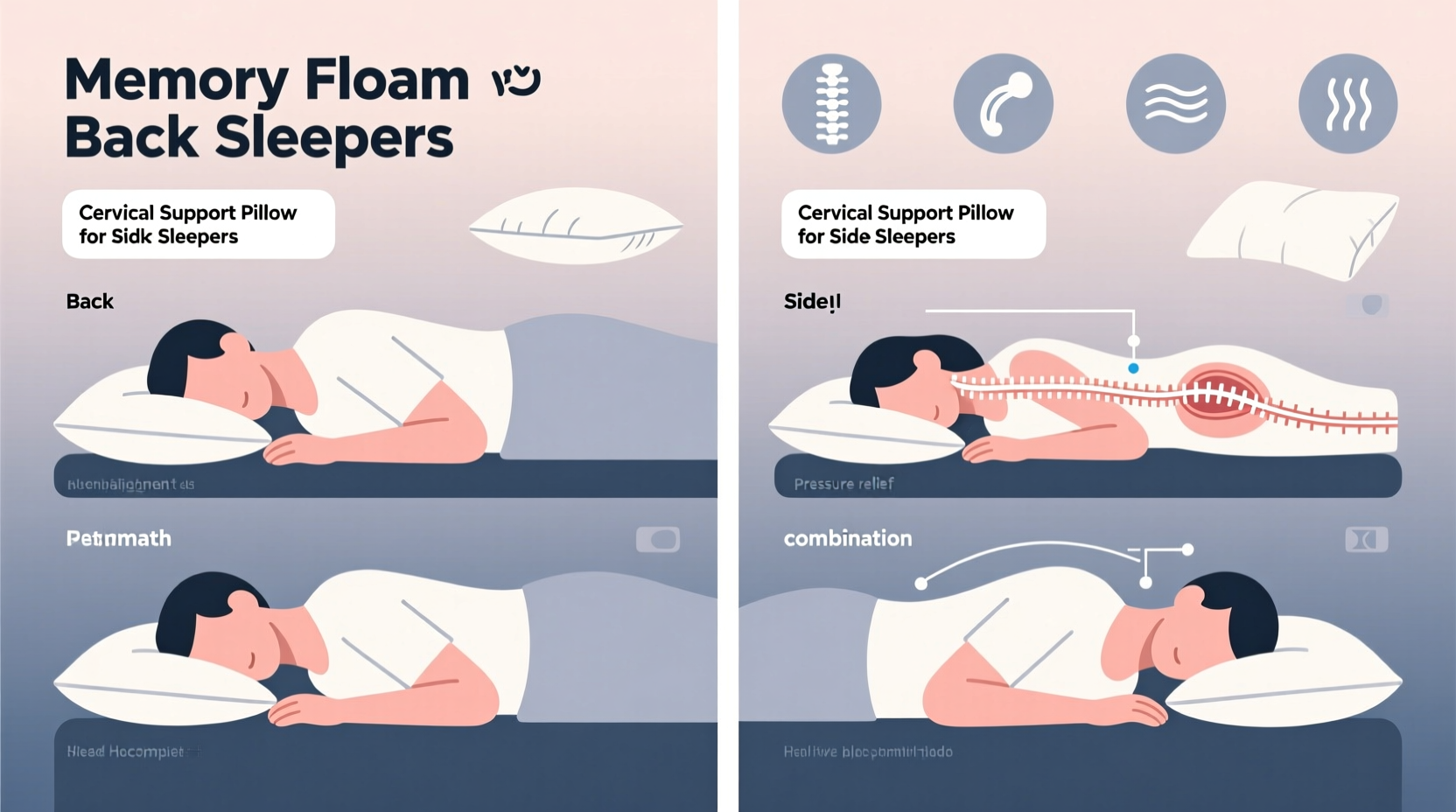
Your spine has a natural curvature that should be maintained during sleep. When you lie down, your head and neck must remain in neutral alignment with your spine—neither tilted too far forward nor stretched upward. A pillow's primary function isn’t just comfort; it’s structural support. The height (loft), firmness, and material all influence how well your cervical spine is supported.
Different sleeping positions place varying demands on the neck and shoulders:
- Side sleepers need higher loft to fill the gap between shoulder and head.
- Back sleepers require moderate loft to maintain the natural curve of the neck without overextending.
- Stomach sleepers benefit from very low or even no pillow under the head, as excessive elevation strains the neck.
Choosing incorrectly can result in chronic discomfort. According to Dr. Rebecca Stone, a board-certified sleep specialist: “A misaligned neck during sleep triggers muscle tension and nerve compression, often leading to morning stiffness and headaches.”
“The best pillow doesn’t feel the softest—it feels invisible because it perfectly supports your natural posture.” — Dr. Michael Tran, Chiropractic Sleep Consultant
Choosing the Right Pillow by Sleep Position
For Side Sleepers: Support Through Height and Density
Side sleeping is one of the most common positions, but it creates the largest gap between the ear and outside shoulder. Without proper filling, the head tilts downward, collapsing the cervical spine out of alignment.
Ideally, side sleepers should choose a high-loft pillow—typically 4 to 6 inches tall—with medium-firm to firm support. This keeps the head level with the spine. Materials like memory foam, latex, or dense shredded foam work well because they resist compression and provide consistent support throughout the night.
Wider-framed individuals or those with broader shoulders may need even taller pillows. Some specialty side-sleeping pillows come with contoured designs or extra shoulder cutouts to enhance ergonomics.
For Back Sleepers: Balance Comfort and Spinal Curve
Back sleeping offers the most natural spinal alignment—if supported correctly. However, using a pillow that’s too thick forces the chin toward the chest, straining neck muscles. Too thin, and the head sinks backward, flattening the cervical curve.
Aim for a medium-loft pillow (about 3 to 5 inches) with gentle support. Memory foam or hybrid models with responsive fill offer both cushioning and structure. Look for pillows labeled “contoured” or “cervical,” which feature a dip for the head and raised edges to cradle the neck.
Back sleepers also benefit from placing a small pillow under the knees to reduce lower back pressure, allowing the full spine to relax evenly.
For Stomach Sleepers: Minimize Elevation, Maximize Safety
Stomach sleeping is biomechanically challenging. It typically requires rotating the head sharply to one side all night, increasing stress on neck joints and discs. Experts often recommend transitioning away from this position when possible.
If you continue to sleep on your stomach, use the thinnest pillow available—or none at all. A feather or down-filled pillow less than 2 inches high allows minimal lift while still offering some surface comfort. Alternatively, consider a flat gel-infused foam pad designed specifically for stomach sleepers.
Pillow Materials Compared: Pros and Cons
Beyond loft and shape, the fill material significantly affects breathability, durability, and responsiveness. Here’s a breakdown of the most common types:
| Material | Best For | Pros | Cons |
|---|---|---|---|
| Memory Foam | Side & back sleepers needing firm support | Excellent contouring, motion isolation, long-lasting | Can retain heat; slower response time |
| Shredded Memory Foam | Adjustable comfort seekers | Customizable loft, breathable, moldable | May settle over time; needs fluffing |
| Latex | Eco-conscious users wanting resilience | Natural, durable, cooling, hypoallergenic | Heavier; higher price point |
| Down/Feather | Stomach sleepers or softness lovers | Plush feel, lightweight, compressible | Lacks support; requires frequent fluffing; not vegan |
| Polyester Fiberfill | Budget buyers or kids | Affordable, soft, widely available | Flattens quickly; poor support; traps heat |
| Buckwheat | Cooling and adjustable support needs | Highly breathable, fully adjustable, eco-friendly | Noisy; heavy; firm texture not for everyone |
Hybrid options—such as foam core with down overlay—combine benefits but often come at a premium. Always consider temperature regulation: if you sleep hot, prioritize breathable covers (like Tencel or bamboo) and open-cell foams.
Step-by-Step Guide to Testing and Selecting Your Ideal Pillow
Finding the perfect pillow isn’t instant. Follow this methodical process to ensure long-term satisfaction:
- Assess your primary sleep position. Use a sleep tracker or ask a partner to observe you over several nights. Most people are consistent in their dominant posture.
- Measure your shoulder width and frame size. Broad shoulders = higher loft needed for side sleeping. Petite frames may need less volume.
- Test loft suitability. Lie on your mattress (not a showroom bed) and place potential pillows under your head. Your chin should stay roughly parallel to the floor, not pointing up or down.
- Check neck support. Run your hand behind your neck. There should be snug contact—no gaps indicating lack of support, and no excessive pressure.
- Sleep-test for at least three nights. Many retailers offer 30-night trial periods. Use the pillow consistently before judging its effectiveness.
- Evaluate morning symptoms. Are you waking with neck pain, jaw tension, or tingling? These are signs of misalignment.
- Adjust or replace as needed. Bodies change over time due to age, weight fluctuation, or injury. Reassess every 1–2 years.
Real-Life Example: Transforming Sleep Through Proper Pillow Selection
Jamie, a 38-year-old software developer, had suffered from chronic neck stiffness and morning headaches for over five years. She identified as a side sleeper and used a plush down pillow she bought for its “luxurious softness.” Despite expensive sheets and a high-end mattress, her sleep remained restless.
After consulting a physical therapist, Jamie learned her pillow was too flat and compressible. Her head sank below shoulder level, straining her trapezius muscles nightly. She switched to a shredded memory foam pillow with adjustable loft, building it up to 5.5 inches. Within two weeks, her headaches vanished, and she reported deeper, uninterrupted sleep.
“I didn’t realize how much my pillow was sabotaging me,” she said. “Now I wake up feeling reset instead of wrecked.”
Essential Checklist Before Buying a New Pillow
Use this checklist to avoid costly mistakes and ensure compatibility with your sleep habits:
- ✅ Identify your main sleeping position (side, back, stomach)
- ✅ Measure current pillow height and compare to recommended loft
- ✅ Consider allergies—choose hypoallergenic materials like latex or synthetic fibers
- ✅ Check return policy and trial period (minimum 30 days preferred)
- ✅ Match pillow type to mattress firmness (firm mattresses increase space for side sleepers)
- ✅ Prioritize removable, washable covers for hygiene
- ✅ Avoid overspending on gimmicks—cooling gels or magnetic inserts lack scientific backing
Frequently Asked Questions
How often should I replace my pillow?
Most pillows should be replaced every 1 to 2 years. Signs it’s time include lumps, loss of shape, yellowing, or waking with more aches than usual. Down and fiberfill degrade faster than foam or latex.
Can one pillow work for multiple sleeping positions?
Yes—shredded foam or adjustable buckwheat pillows allow you to add or remove fill depending on your nightly position. These are ideal for combination sleepers who shift frequently.
Is a firmer pillow always better for support?
No. Firmness must match both sleeping position and personal preference. Overly firm pillows can create pressure points, especially for back and stomach sleepers. Support comes from proper alignment, not hardness alone.
Final Thoughts: Invest in Alignment, Not Just Comfort
Selecting a pillow shouldn’t be a guesswork decision based on touch or trend. It’s a personalized health choice. The right pillow aligns your spine, reduces strain, and contributes to deeper, more restorative sleep. Whether you're a committed side sleeper needing substantial loft or a stomach sleeper minimizing elevation, there’s a solution tailored to your biomechanics.
Don’t underestimate the cumulative impact of nightly micro-misalignments. Small changes today—like switching to a properly sized contoured foam pillow or adjusting fill volume—can prevent years of discomfort. Your neck will thank you in the mornings. Your energy levels will reflect it during the day.




 浙公网安备
33010002000092号
浙公网安备
33010002000092号 浙B2-20120091-4
Comments
No comments yet. Why don't you start the discussion?