
Choosing the right running shoes isn’t just about brand loyalty or cushioning feel—it’s about biomechanics. The shape of your foot arch plays a critical role in how your weight distributes during each stride. Wearing shoes that don’t match your arch type can lead to discomfort, inefficiency, and even long-term injuries like plantar fasciitis, shin splints, or knee pain.
The good news? You don’t need a podiatrist appointment or expensive gait analysis to make an informed decision. With a few simple observations, at-home tests, and knowledge of key shoe features, you can confidently select running shoes tailored to your foot structure. This guide walks you through identifying your arch type, understanding what kind of support you need, and making smart buying decisions—all from home.
Step 1: Determine Your Foot Arch Type at Home
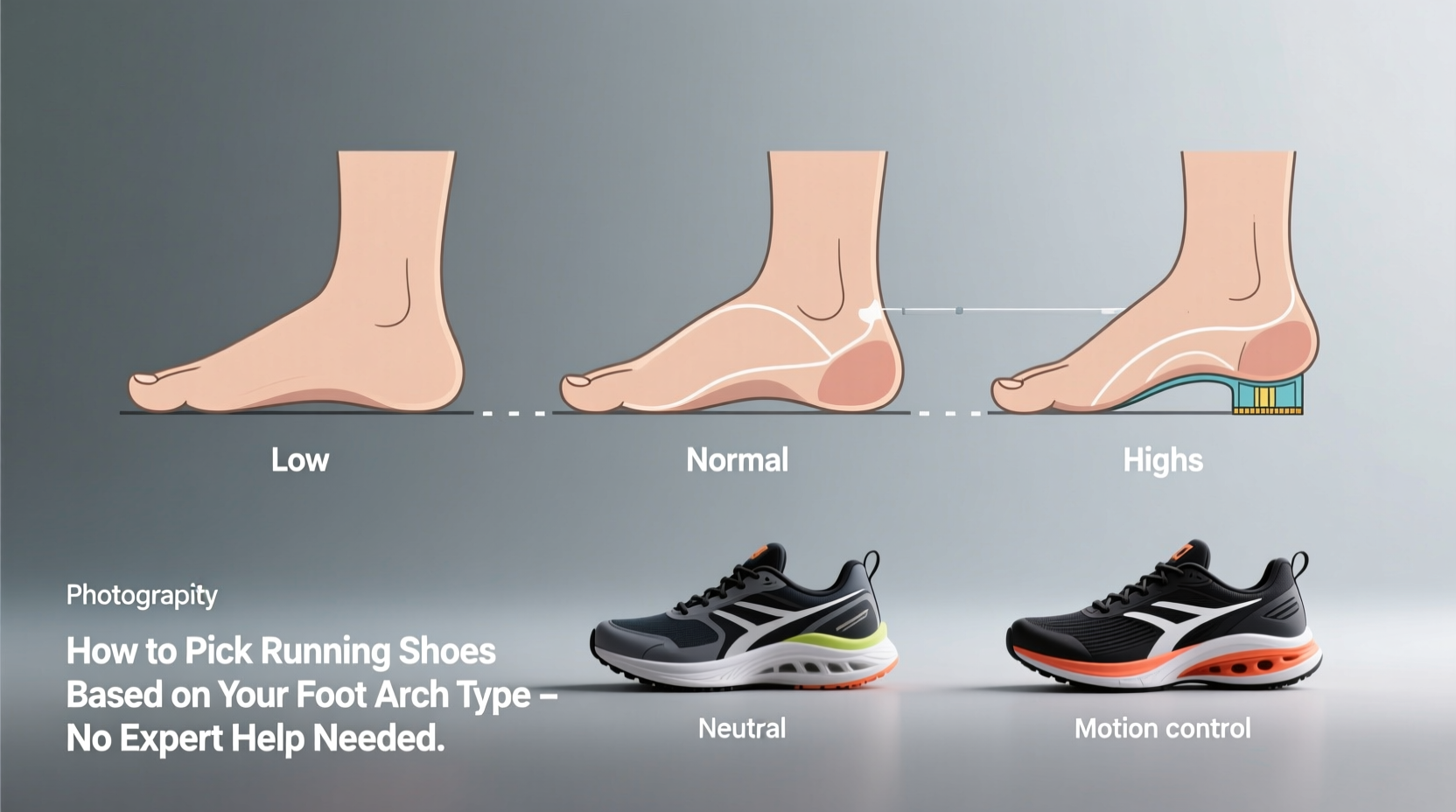
The foundation of choosing the right running shoe is knowing whether you have low (flat), medium (neutral), or high arches. While professional assessments exist, a reliable self-test takes only minutes and requires nothing more than water, paper, and your bare foot.
The Wet Test: A Simple Way to Identify Your Arch
- Wet the sole of your bare foot—either by stepping into a shallow tray of water or using a damp towel.
- Step onto a surface that will show your footprint clearly—a brown paper bag, cardboard, or concrete driveway works best.
- Step off and examine the imprint left behind.
Analyze your footprint using these guidelines:
- Flat Arch (Low Arch): If nearly the entire sole of your foot is visible, with little to no inward curve along the inside edge, you likely have flat feet. This often correlates with overpronation—your foot rolls inward excessively when walking or running.
- Neutral Arch (Medium Arch): A distinct curve along the inside of the foot, but not extreme. About half of the middle section touches the ground. This typically indicates a neutral gait pattern.
- High Arch: Only a narrow band connects the heel and forefoot, with most of the inner side missing from the print. High arches are usually rigid and absorb less shock, leading to underpronation or supination.
This method has been validated across multiple sports medicine studies as a surprisingly accurate starting point. According to Dr. Irene Davis, director of the Spaulding National Running Center, “The wet test may seem rudimentary, but it aligns closely with clinical assessments for initial classification.”
Step 2: Understand How Arch Type Affects Shoe Needs
Your arch determines how your foot interacts with the ground—and therefore, what kind of support your shoe must provide. Each arch type benefits from different levels of stability, cushioning, and flexibility.
What Each Arch Type Needs in a Running Shoe
| Arch Type | Common Gait Pattern | Recommended Shoe Features | Why It Matters |
|---|---|---|---|
| Flat / Low Arch | Overpronation | Stability or motion control shoes with firm midsoles and structured arch support | Prevents excessive inward roll, reducing strain on ankles, knees, and hips |
| Neutral Arch | Neutral gait | Cushioned or neutral shoes with balanced flexibility and moderate arch support | Allows natural foot motion without restricting or overcorrecting movement |
| High Arch | Underpronation (Supination) | Well-cushioned, flexible neutral shoes with excellent shock absorption | Compensates for lack of natural shock dispersion due to rigid foot structure |
Shoe manufacturers design models specifically around these categories. For example, brands like Brooks label their shoes as “GuideRails” (for overpronators), while Hoka offers maximalist cushioning ideal for high-arched runners who need extra impact protection.
“Matching your shoe to your arch isn’t about comfort alone—it’s about injury prevention. A mismatched shoe forces your body to compensate, which over time leads to breakdown.” — Dr. Jordan Metzl, Sports Medicine Physician, Hospital for Special Surgery
Step 3: Use Wear Patterns to Confirm Your Gait
Beyond the wet test, inspect your current running shoes. The wear pattern on the outsole reveals how your foot strikes the ground and moves through the gait cycle.
How to Read Your Sole Wear
- Take out an old pair of running shoes used for at least 50–100 miles.
- Place them on a flat surface and view them from behind and below.
- Check where the rubber is most worn down.
- Excessive wear on the inner side (big toe to arch): Indicates overpronation—common in flat-footed runners. Look for stability shoes.
- Even wear across the ball of the foot and heel: Suggests a neutral gait. Neutral or lightweight stability shoes work well.
- Wear concentrated on the outer edge: Points to supination—typical in high-arched runners. Prioritize soft, cushioned shoes with flexibility.
A runner named Marcus, 34, had persistent shin pain despite increasing his mileage gradually. After doing the wet test and examining his worn-out trainers, he noticed heavy inner-edge wear—indicating overpronation. He switched from a neutral model to a stability shoe (Brooks Adrenaline GTS) and reported significant improvement within three weeks. “I didn’t realize my shoes were working against me,” he said. “It wasn’t my training—it was my gear.”
Step 4: Shop Smart—Key Features to Look For
Now that you know your arch type and gait tendencies, focus on specific shoe characteristics. Don’t be swayed by flashy colors or celebrity endorsements—look for engineering details that matter.
Checklist: What to Evaluate Before Buying
- Heel Counter: Press on the back of the shoe. It should be firm to stabilize the heel, especially if you overpronate.
- Midsole Density: Twist the shoe gently. Stability shoes resist twisting more than neutral ones. High-arched runners want some torsional flexibility.
- Arch Profile: Run your finger along the inside arch. Does it rise to meet your foot? Flat-footed runners need higher, supportive arches; high-arched runners benefit from softer contours.
- Cushioning Level: Press your thumb into the midsole. If you have high arches, go for plush materials. If you're flat-footed, avoid overly soft foams—they can encourage collapse.
- Toe Box Width: Ensure your toes have room to splay naturally. Narrow boxes increase pressure, especially during longer runs.
Try shoes later in the day when your feet are largest. Wear the same socks you’d use while running. Walk or jog around the store—or better yet, test them on a treadmill if available.
Online shoppers can take advantage of free return policies from retailers like Zappos, REI, and Running Warehouse. Order two sizes or models, try them at home, and send back the one that doesn’t fit.
Step 5: Avoid Common Mistakes When Choosing Shoes
Even informed runners make missteps. Here are frequent errors—and how to avoid them:
Do’s and Don’ts Based on Arch Type
| Arch Type | Do | Don’t |
|---|---|---|
| Flat Arch | Choose shoes with dual-density foam or medial posts | Buy ultra-cushioned \"maximalist\" shoes without stability features |
| Neutral Arch | Opt for versatile, balanced-performance shoes | Overcorrect with motion-control shoes unless diagnosed with severe overpronation |
| High Arch | Prioritize responsive cushioning and lightweight construction | Select stiff, rigid-soled shoes that limit natural foot motion |
Another common mistake is assuming all models within a brand are the same. For instance, Asics offers both the Gel-Kayano (stability) and Gel-Nimbus (neutral/cushioned). Confusing the two can undermine your efforts—even if the brand is reputable.
Also, avoid clinging to a favorite shoe model indefinitely. Manufacturers update designs every 1–2 years. A shoe that worked for you five years ago may no longer exist in its original form. Always reassess fit and function with new versions.
Frequently Asked Questions
Can I switch from stability to neutral shoes if my arches improve?
Yes—but cautiously. Strengthening exercises can reduce overpronation over time. If you’ve been injury-free for months and your wear patterns show improved alignment, consider transitioning gradually. Try a lightweight stability shoe first before moving fully to neutral.
Do orthotics change what kind of shoe I need?
Absolutely. If you use custom orthotics, choose shoes with removable insoles and ample depth in the midsole. You won’t need as much built-in support since the orthotic provides correction. In such cases, prioritize fit and upper comfort over stability features.
Are minimalist shoes suitable for any arch type?
Generally, no. Minimalist shoes work best for runners with strong intrinsic foot muscles and neutral to high arches. They offer little support and can exacerbate issues for flat-footed runners. Transition slowly if attempting minimalism, regardless of arch type.
Final Steps: Putting It All Together
Here’s a practical timeline to follow when selecting your next pair of running shoes:
- Week 1: Perform the wet test and examine your current shoes’ wear patterns.
- Week 2: Research 2–3 shoe models aligned with your arch type (e.g., Saucony Guide for overpronators, Nike Pegasus for neutrals, Hoka Clifton for high arches).
- Week 3: Order or visit a store to test-fit top contenders. Focus on heel lockdown, arch contact, and toe space.
- Week 4: Take short test runs (1–2 miles). Note any pressure points, slippage, or discomfort.
- Ongoing: Monitor performance and foot health. Replace shoes every 300–500 miles.
Conclusion: Take Control of Your Running Experience
You don’t need a lab or specialist to find the right running shoe. By understanding your foot’s natural structure and how it interacts with the ground, you can make empowered, intelligent choices. The wet test, wear pattern analysis, and targeted feature evaluation give you more insight than many assume requires professional tools.
Your feet carry you mile after mile. Treating them with the right support isn’t a luxury—it’s foundational to performance, endurance, and long-term joint health. Start today: pull out a piece of cardboard, step in water, and see what your footprint reveals. Then, use that knowledge to build a smarter shoe rotation. The difference might not show up in your pace immediately—but it will in how your body feels tomorrow, next month, and years down the road.




 浙公网安备
33010002000092号
浙公网安备
33010002000092号 浙B2-20120091-4
Comments
No comments yet. Why don't you start the discussion?