
A throw blanket is more than just a cozy accessory—it’s a functional piece of decor that adds warmth, texture, and personality to your living space. But too often, people buy one only to find it’s either comically oversized or frustratingly small. The solution? Stop guessing. With the right approach, you can choose a throw blanket that fits your sofa perfectly, drapes elegantly, and enhances your room’s aesthetic.
The key lies in understanding dimensions, proportions, materials, and usage patterns. This guide walks you through every step—from measuring your sofa to selecting fabric based on function—so you can make an informed decision with confidence.
Understand Standard Throw Blanket Sizes
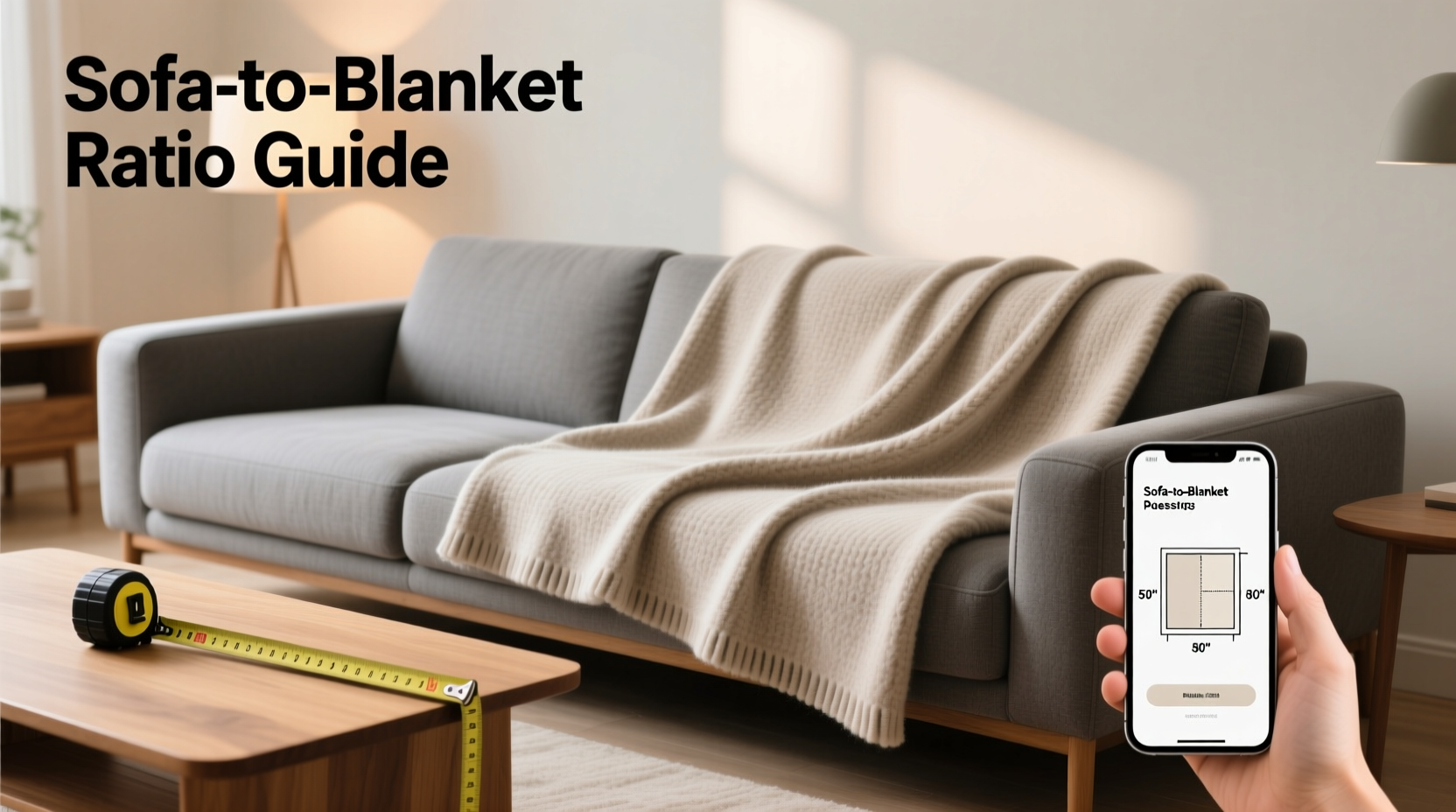
Throw blankets come in various sizes, but most fall within a predictable range. Knowing these standard dimensions helps set realistic expectations before you even measure your sofa.
| Blanket Type | Average Dimensions (inches) | Best For |
|---|---|---|
| Small Throw | 40\" x 50\" | Dolls, accent chairs, or decorative folding |
| Standard Throw | 50\" x 60\" | Most sofas, loveseats, twin beds |
| Oversized Throw | 60\" x 80\" | Larger sectionals, full-body coverage |
| Lapghan / Travel Size | 30\" x 40\" | Personal use, recliners, car rides |
While “standard” is typically 50\" x 60\", always check product specifications. Some brands stretch definitions, especially online. A blanket labeled as a \"throw\" might actually be closer to a baby blanket if sourced from a non-standard manufacturer.
Measure Your Sofa Accurately
Guessing leads to mismatched proportions. Instead, take precise measurements using a flexible tape measure. Focus on three key areas: width, depth, and desired drape.
- Width: Measure across the front of the sofa seat from armrest to armrest. For sectionals, measure the widest seating section where the throw will live.
- Depth: From the back cushion seam to the front edge of the seat, measure horizontally. This determines how far the blanket will hang over the side.
- Drape Preference: Decide how much overhang you want. Most people prefer 8–12 inches of fabric cascading down each side and front.
For example, if your sofa seat is 70 inches wide and you want 10 inches of drape on each side, you’ll need a blanket at least 90 inches wide (70 + 10 + 10). However, throws wider than 60 inches are rare. So instead, aim to center the blanket so it drapes evenly when folded or casually tossed.
Proportional Guidelines for Drape
- Minimalist look: 6–8 inches of side drape
- Balanced comfort: 10–12 inches of side drape
- Generous, luxurious fold: up to 15 inches (requires larger throws or folding techniques)
Remember, throws are usually folded lengthwise when placed over a sofa back. That means a 50\" wide blanket becomes roughly 25\" wide when doubled—a perfect fit for draping down the middle of most couches.
Choose Fabric Based on Function and Fit
Size isn’t the only factor. The material affects weight, drape, and perceived fit. A lightweight cotton throw may seem smaller because it doesn’t fill space like a chunky knit wool blanket.
Consider these common fabrics and how they influence both appearance and usability:
- Cotton or Cotton Blend: Lightweight and breathable; ideal for warm climates or decorative use. Tends to lie flat and may require tucking to stay in place.
- Fleece: Soft and warm, with moderate bulk. Drapes well and stays put. Great for families with kids or pets.
- Wool or Wool Blend: Naturally insulating and heavy. Provides excellent coverage and structure. Can feel bulky on small sofas.
- Acrylic Knit: Affordable and durable. Mimics wool but lighter. Often used in chunky cable-knit styles that add visual volume.
- Chenille: Luxurious sheen and softness. Holds shape well and resists slipping. Adds elegance without excessive weight.
“People underestimate how much fabric type changes the way a throw interacts with furniture. A thick weave fills space faster than a thin one—even at the same size.” — Lena Reyes, Interior Textile Consultant
If your sofa is narrow (under 70 inches seat width), avoid ultra-bulky knits unless you plan to fold them tightly. On larger sectionals, heavier textures help balance scale and prevent the throw from looking lost.
Step-by-Step Guide: How to Pick the Perfect Throw
Follow this five-step process to eliminate guesswork and ensure a flawless fit every time.
- Assess Your Sofa Type
Identify whether you have a loveseat (typically 50–60\"), standard sofa (70–85\"), or sectional (90\"+). Note arm height and back depth, as taller backs allow for longer vertical drapes. - Measure Seat Width and Depth
Use a tape measure to record exact dimensions. Write them down. Include preferred drape length on sides and front. - Determine Primary Use
Is the throw mainly decorative? For occasional naps? Or daily use by children or pets? Function dictates material and durability needs. - Select Size Range
Match your measurements to standard sizes:- Sofa under 60\": Small throw (40\"x50\") or folded standard
- Sofa 60\"–85\": Standard throw (50\"x60\")
- Sectional or oversized sofa: Oversized throw (60\"x80\") or multiple throws
- Test Before Buying (If Possible)
In-store, hold the throw against your sofa. Online, compare product photos with similar furniture setups. Look for lifestyle images showing full context.
This method removes emotion from the decision and replaces it with data—ensuring your throw complements rather than overwhelms your space.
Real-Life Example: Matching a Throw to a Mid-Century Sofa
Sarah owns a mid-century modern two-seater sofa with clean lines and low arms. The seat measures 62 inches wide and 20 inches deep. She wanted a throw that looked intentional but not overstuffed.
She considered a 60\" x 80\" wool blanket but realized it would overwhelm the delicate frame. Instead, she chose a 50\" x 60\" chenille throw in a muted teal. By folding it vertically along the back, she achieved a tailored look with about 10 inches of drape on each end—just enough to echo the sofa’s symmetry without hiding its design.
When guests sit, the lower half remains accessible for leg coverage. The medium-weight fabric holds its shape between uses, requiring only light shaking to reset. Sarah’s success came from respecting proportion and prioritizing harmony over maximum coverage.
Checklist: Picking the Right Throw Blanket
Use this quick-reference checklist before purchasing:
- ✅ Measured sofa seat width and depth
- ✅ Determined preferred drape (short, medium, long)
- ✅ Identified primary use (decoration, warmth, family use)
- ✅ Selected appropriate fabric (lightweight, plush, durable)
- ✅ Confirmed blanket dimensions (not just “throw size”)
- ✅ Checked care instructions (machine washable? dry clean only?)
- ✅ Reviewed return policy (in case sizing feels off in person)
This checklist prevents impulse buys and ensures every throw serves both form and function.
Common Mistakes to Avoid
Even with good intentions, mistakes happen. Here are the most frequent errors—and how to sidestep them.
- Buying purely by color or texture: A beautiful mustard knit may clash with your sofa’s scale. Always prioritize fit first, aesthetics second.
- Ignoring maintenance needs: Hand-wash-only cashmere isn’t practical for a dog-friendly living room. Match care requirements to lifestyle.
- Overestimating coverage: A 50\" wide throw won’t fully cover a 90\" sectional. Consider layering two smaller throws or investing in a custom size.
- Forgetting about storage: Bulky blankets take up space. If closet room is limited, choose compact, foldable materials.
“A throw should enhance your sofa, not fight it. Proportion is everything.” — Marcus Tran, Residential Stylist & Home Editor, *Living Space Quarterly*
FAQ: Common Questions About Throw Blanket Sizing
Can I use a twin-sized blanket as a throw?
Twin bed blankets (approx. 66\" x 90\") are significantly larger than standard throws. While they offer full coverage, they can look oversized on most sofas. If used, fold them lengthwise or tuck excess fabric neatly behind cushions to maintain balance.
How do I keep my throw from slipping off the sofa?
Choose textured or heavier fabrics like chenille, wool, or quilted fleece—they grip better than smooth materials. Alternatively, place a non-slip rug pad underneath the folded throw to anchor it discreetly.
Should the throw match the sofa color?
Not necessarily. Contrasting throws add visual interest. Use a color wheel to select complementary tones. For neutral sofas, introduce color or pattern through the throw. For bold upholstery, opt for solids or subtle textures.
Final Thoughts: Confidence Over Guesswork
Picking the right throw blanket doesn’t require interior design training—just attention to detail. By measuring your sofa, understanding standard sizes, choosing suitable fabrics, and following a clear selection process, you transform what once felt arbitrary into a deliberate design choice.
Your sofa deserves a throw that fits just right: one that invites touch, supports comfort, and completes the room’s story. No more folding awkwardly, no more slipping onto the floor. Just effortless style and lasting coziness.




 浙公网安备
33010002000092号
浙公网安备
33010002000092号 浙B2-20120091-4
Comments
No comments yet. Why don't you start the discussion?