
A minimalist kitchen is more than just an aesthetic choice—it’s a functional philosophy. When designed thoughtfully, a minimal space can dramatically improve your cooking experience by reducing clutter, streamlining workflow, and enhancing accessibility. The goal isn’t to sacrifice utility for style, but to merge both into a seamless, intuitive environment where every tool, surface, and cabinet serves a purpose. In today’s fast-paced world, a kitchen that supports efficiency without excess is not just desirable—it’s essential.
Planning such a kitchen requires deliberate decisions about layout, storage, appliances, and daily habits. This guide walks through the principles of minimalist kitchen design with a focus on real-world usability. Whether you're renovating, building from scratch, or reorganizing your current space, these strategies will help you create a kitchen that feels open, calm, and highly efficient.
1. Understand the Core Principles of Minimalist Kitchen Design
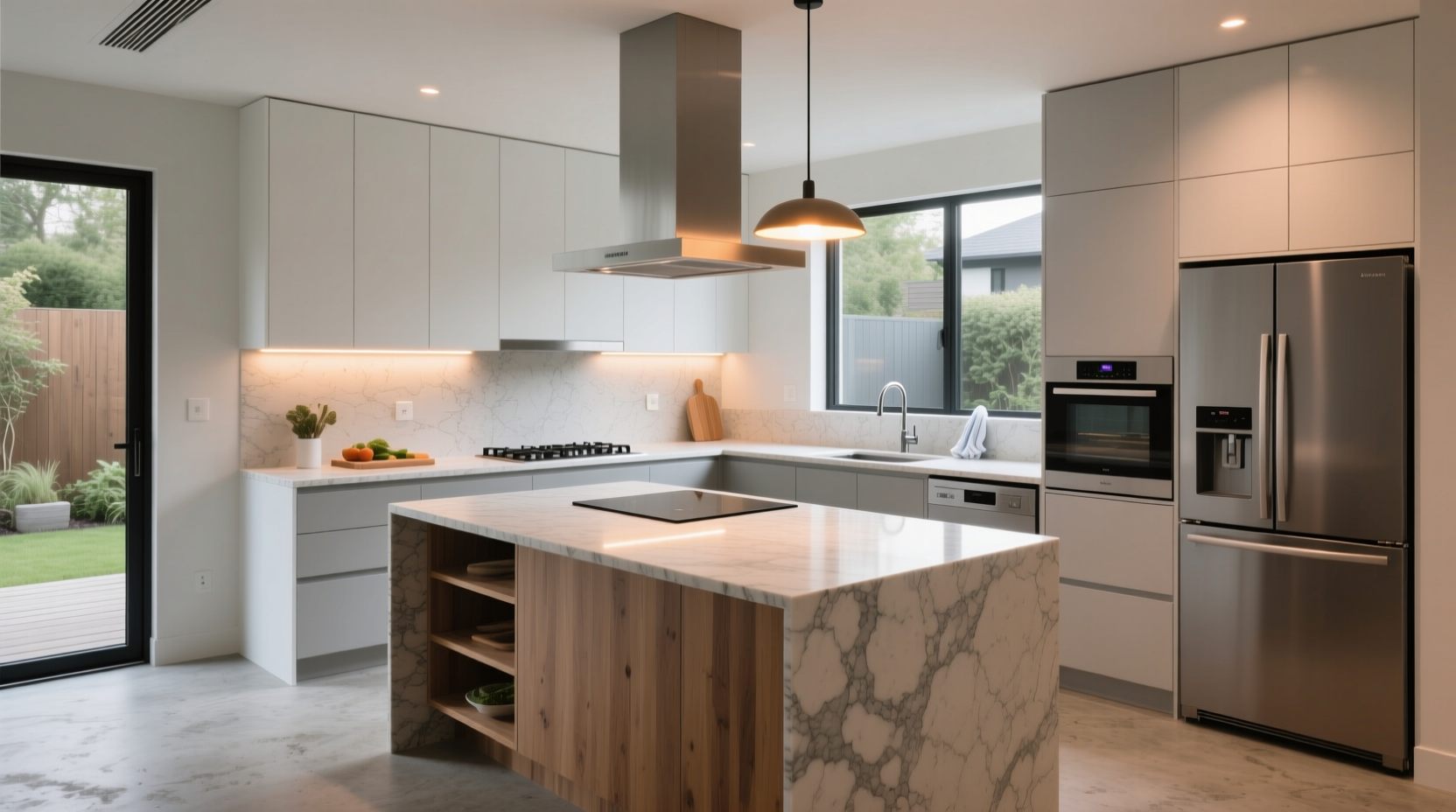
Minimalism in the kitchen doesn’t mean empty countertops or doing without. It means intentional curation—keeping only what you use regularly and designing the space so everything has a logical place. The foundation of an effective minimalist kitchen rests on three pillars: simplicity, functionality, and flow.
- Simplicity: Remove visual noise. Choose clean lines, neutral colors, and uncluttered surfaces.
- Functionality: Every item should serve a clear purpose. If it's used less than once a month, question its necessity.
- Flow: Arrange zones to support natural movement during food prep, cooking, and cleanup.
These principles align closely with the \"work triangle\" concept—a decades-old design standard that positions the sink, stove, and refrigerator at key points to minimize unnecessary steps. In a minimalist layout, this triangle becomes even more critical, as inefficient movement quickly undermines the benefits of simplicity.
2. Optimize Layout for Maximum Workflow Efficiency
The shape and arrangement of your kitchen determine how easily you can move between tasks. While several standard layouts exist, not all are equally suited to minimalism. The best minimalist kitchens prioritize proximity, reduce redundancy, and eliminate wasted space.
Common Kitchen Layouts and Their Minimalist Potential
| Layout Type | Best For | Minimalist Advantages | Potential Drawbacks |
|---|---|---|---|
| Galley | Small to medium spaces | Narrow footprint, high efficiency, easy to keep tidy | Limited counter space if poorly designed |
| L-Shaped | Corners and open-plan areas | Flexible zoning, good workflow, accommodates multiple cooks | Can leave corner space underutilized without smart storage |
| U-Shaped | Medium to large kitchens | Maximum counter and storage, excellent work triangle | Can feel closed-in if not well-lit |
| Single Wall | Tiny homes, studios | Ultra-compact, forces discipline in selection | Very limited workspace; requires careful planning |
For a minimalist approach, the galley and L-shaped layouts often perform best because they naturally guide movement and limit unnecessary wandering. A U-shaped layout works well if you resist the temptation to overfill cabinets. Single-wall kitchens demand the strictest adherence to minimalism but can be incredibly efficient when executed correctly.
“Efficiency in the kitchen isn’t about having more tools—it’s about having the right ones in the right place.” — Sarah Lin, Interior Designer & Culinary Space Consultant
3. Create Functional Zones with Purposeful Storage
In a minimalist kitchen, storage must be invisible yet accessible. Open shelving may look appealing, but it contradicts minimalism if it leads to visual clutter. Instead, divide your kitchen into dedicated zones based on activity, each with tailored storage solutions.
Essential Kitchen Zones
- Prep Zone: Centered around the main countertop near the sink. Store cutting boards, knives, mixing bowls, and peelers here.
- Cooking Zone: Adjacent to the stove. Keep pots, pans, oils, spices, and utensils within arm’s reach.
- Cleaning Zone: Around the sink and dishwasher. Store sponges, dish soap, trash bins, and cleaning cloths out of sight.
- Storage Zone: Pantry, fridge, and dry goods cabinets. Use uniform containers to maintain visual consistency.
- Beverage Zone (optional): If you frequently make coffee or tea, designate a small area with mugs, filters, and kettle—ideally away from main prep areas.
Use pull-out drawers, deep pan organizers, and labeled bins to maximize cabinet usability. Avoid stacking items haphazardly—vertical dividers for baking sheets and drawer inserts for utensils ensure everything is visible and reachable.
4. Step-by-Step Guide to Planning Your Minimalist Kitchen
Creating a truly efficient minimalist kitchen is a process, not a single decision. Follow this step-by-step timeline to ensure every element supports your goals.
Week 1: Assess & Declutter
Begin by removing everything from cabinets, drawers, and countertops. Sort items into four categories: daily use, occasional use, rarely used, and duplicates. Donate or discard anything you haven’t used in the past six months. Be ruthless—minimalism thrives on elimination.
Week 2: Map Your Workflow
Spend a few days observing how you move through the kitchen. Note where you pause, stretch, or backtrack. Track common sequences: retrieving ingredients, prepping, cooking, plating, and cleaning. Identify bottlenecks—these reveal where layout improvements are needed.
Week 3: Define Zones & Sketch Layout
Using graph paper or digital tools like SketchUp or Roomstyler, sketch your ideal layout. Position the sink, stove, and fridge to form a balanced work triangle. Assign each zone its designated storage. Limit countertop appliances to two essentials (e.g., coffee maker and toaster), and plan for built-in outlets if possible.
Week 4: Select Materials & Finishes
Choose durable, low-maintenance materials. Quartz or solid surface countertops resist stains and require no sealing. Flat-panel cabinetry in matte finishes hides fingerprints better than glossy options. Stick to a monochromatic palette—white, gray, or warm wood tones—to enhance spaciousness.
Week 5: Install & Organize
During installation, prioritize concealed storage: soft-close drawers, deep pull-outs, and toe-kick drawers add capacity without visual weight. After construction, organize items by frequency of use. Daily tools go front and center; seasonal items (like holiday bakeware) belong in higher or deeper cabinets.
Month 2: Refine & Adjust
Live in the space for two weeks. Notice what feels awkward or inaccessible. Adjust drawer layouts, relocate frequently used items, and remove any remaining clutter. A minimalist kitchen evolves—it should feel increasingly intuitive over time.
5. Real-World Example: Transforming a Cluttered Galley Kitchen
Consider Maria, a home cook living in a 700-square-foot apartment with a narrow galley kitchen. Her original setup had mismatched cabinets, a crowded countertop with five appliances, and a pantry filled with expired spices and duplicate utensils. Cooking felt stressful and inefficient.
She began by clearing everything out and donating 60% of her kitchenware. She kept only one knife set, three saucepans, two skillets, and a single blender. She installed a pull-out trash bin, added a magnetic knife strip to free up drawer space, and replaced bulky cabinet doors with soft-close models.
Maria relocated her coffee maker to a side shelf outside the main prep zone and mounted a slim spice rack next to the stove. She used identical glass jars for pantry staples and labeled them clearly. Under-cabinet lighting made the space feel larger and improved task visibility.
After the redesign, her cooking time dropped by nearly 20%. She reported feeling calmer and more focused while preparing meals. The streamlined layout eliminated distractions and made cleanup faster. What started as a space she avoided became her favorite room in the apartment.
Checklist: Building a Minimalist, Efficient Kitchen
- ✅ Audit all kitchen items—keep only what you use monthly or more often
- ✅ Measure your work triangle (sink, stove, fridge) for optimal spacing
- ✅ Choose a layout that fits your space and cooking style (galley, L-shaped, etc.)
- ✅ Designate five core zones: prep, cooking, cleaning, storage, and optional beverage
- ✅ Invest in high-quality, multi-functional tools (e.g., chef’s knife, cast-iron skillet)
- ✅ Use hidden storage: pull-out drawers, under-cabinet racks, toe-kick compartments
- ✅ Limit countertop items to two essential appliances
- ✅ Select cohesive materials and a neutral color palette
- ✅ Label pantry containers for quick identification
- ✅ Test and refine the layout after one month of use
Frequently Asked Questions
Can a minimalist kitchen still be family-friendly?
Absolutely. Minimalism doesn’t mean childproofing is compromised. Use durable materials like quartz countertops and shatter-resistant dinnerware. Designate a lower cabinet for kids’ dishes and snacks. The clarity of a minimalist layout actually makes it easier for children to learn kitchen routines and put things away properly.
What if I love cooking but have limited space?
Focus on quality over quantity. A single high-performance knife, a versatile Dutch oven, and a reliable non-stick pan can handle most tasks. Use wall-mounted racks or magnetic strips to free up drawer space. Fold-down tables or rolling carts can expand prep area when needed and tuck away afterward.
How do I maintain a minimalist kitchen long-term?
Adopt a “one in, one out” rule: whenever you buy a new tool, donate an old one. Schedule quarterly reviews to reassess what you’re using. Wipe down surfaces nightly and reorganize drawers monthly. Consistency prevents clutter from creeping back in.
Final Thoughts: Less Isn’t Lack—It’s Liberation
A minimalist kitchen isn’t defined by what it lacks, but by what it enables: focus, speed, and joy in cooking. By stripping away excess and organizing with intention, you create a space that supports your lifestyle rather than complicating it. Efficiency emerges not from gadgets or square footage, but from thoughtful design and disciplined habits.
The most powerful kitchens aren’t the largest or most expensive—they’re the ones where everything has a purpose and a place. When you open a drawer and find exactly what you need, when your workflow flows without interruption, you experience the true benefit of minimalism: freedom.




 浙公网安备
33010002000092号
浙公网安备
33010002000092号 浙B2-20120091-4
Comments
No comments yet. Why don't you start the discussion?