
Potty training a puppy should be a straightforward process, but when your pup seems determined to ignore the rules, it can feel like you're battling a tiny, furry rebel. Stubbornness in puppies isn’t defiance—it’s often confusion, fear, or lack of routine. The key to success lies not in punishment or frustration, but in unwavering consistency and positive reinforcement. When executed with patience and structure, this method transforms even the most resistant puppy into a reliable, house-trained companion.
Dogs are creatures of habit. They thrive on predictability and respond best to clear signals about what is expected of them. A puppy that repeatedly has accidents indoors isn't being “bad”—they simply haven’t learned where and when elimination is appropriate. By establishing a consistent schedule, reinforcing desired behaviors with meaningful rewards, and eliminating opportunities for mistakes, you create an environment where your puppy can succeed.
The Science Behind Consistency and Rewards
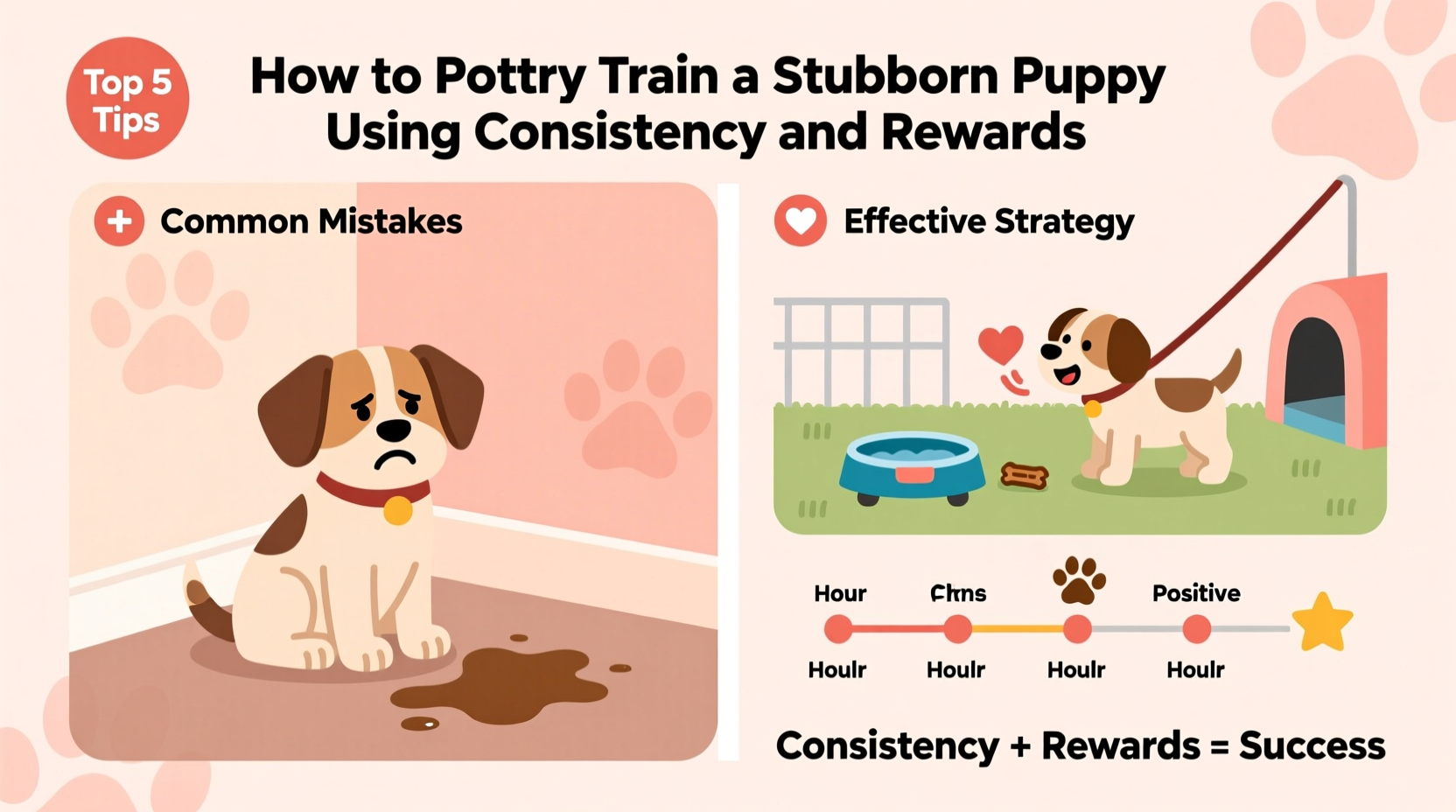
Dog behavior is shaped largely by operant conditioning—a psychological principle where actions followed by positive outcomes are more likely to be repeated. When a puppy eliminates outside and immediately receives praise, treats, or playtime, their brain links that behavior with reward. Over time, this builds a strong preference for outdoor elimination.
Consistency amplifies this effect. Puppies learn fastest when routines are predictable. Feeding at the same times each day, taking them out after meals, naps, and play sessions, and using the same door and spot outside creates mental cues. These patterns reduce anxiety and help your puppy anticipate bathroom breaks before accidents occur.
“Dogs don’t generalize well. If you let your puppy go potty on grass one day and concrete the next, they may not understand that both are acceptable. Consistency in location and timing is crucial.” — Dr. Karen Becker, DVM, Canine Behavior Specialist
Stubborn puppies often resist change or repeat behaviors that have previously been rewarded—even unintentionally. For example, if a puppy relieves itself on the kitchen floor and then gets attention (even scolding), that interaction can still reinforce the behavior. Positive attention must be reserved only for correct actions.
Step-by-Step Guide to Potty Training a Stubborn Puppy
Follow this structured timeline to build reliable habits over 4–8 weeks. Adjust based on your puppy’s age, breed, and temperament, but never compromise on consistency.
- Establish a Fixed Schedule: Feed your puppy at the same times daily (typically 3 meals for young pups). Most puppies need to eliminate within 15–30 minutes after eating. Use this window as your first training opportunity each day.
- Create a Cue Phrase: Choose a short phrase like “Go potty” or “Do your business” and say it every time your puppy begins to eliminate outside. This helps them associate the words with the action.
- Take Them Out Frequently: Young puppies can hold their bladder for roughly one hour per month of age. A 10-week-old pup needs a break every 2 hours. Set alarms during the day if needed.
- Use the Same Exit and Spot: Always take your puppy out through the same door to the same area. Familiar smells and textures signal it’s time to go.
- Reward Immediately After Elimination: The moment your puppy finishes, offer high-value treats (like small pieces of chicken or cheese) and enthusiastic praise. Delayed rewards lose meaning.
- Supervise Indoors Closely: When inside, keep your puppy in your sight at all times. Use baby gates or a playpen if direct supervision isn’t possible.
- Interrupt Accidents Gently: If you catch your puppy starting to go indoors, clap once to interrupt, then carry or quickly guide them outside to finish. Reward if they continue outside.
- Clean Accidents Thoroughly: Use enzymatic cleaner on any indoor messes. Regular cleaners mask odors; enzymes break down urine and feces residue so your puppy won’t be drawn back to the spot.
- Gradually Increase Freedom: Only allow access to new areas of the home once your puppy has gone accident-free for several days in confined spaces.
- Maintain Routine During Setbacks: Illness, visitors, or changes in schedule can cause regression. Return to stricter supervision and recommit to the routine without scolding.
Essential Supplies Checklist
Having the right tools makes consistency easier and reduces stress for both you and your puppy.
- Enzymatic pet odor eliminator
- Leash (for outdoor trips, even in fenced yards)
- High-value treats (soft, pea-sized)
- Collapsible water bowl for outdoor use
- Playpen or exercise pen for indoor confinement
- Baby gates to block off rooms
- Poop bags or a scooper
- Watch or timer app for scheduling breaks
- Training pad (optional, only if used temporarily during extreme weather)
Common Mistakes That Undermine Progress
Even well-meaning owners unknowingly sabotage training efforts. Avoid these pitfalls to maintain momentum.
| Mistake | Why It’s Harmful | Better Alternative |
|---|---|---|
| Yelling or rubbing nose in accident | Creates fear, doesn’t teach proper location | Interrupt gently and redirect outside |
| Inconsistent feeding times | Makes elimination unpredictable | Feed at same times daily |
| Letting puppy roam unsupervised | Invites accidents and reinforces bad habits | Confine or tether when not actively supervising |
| Changing outdoor potty spot frequently | Confuses puppy about acceptable zones | Use one designated area consistently |
| Delaying rewards after outdoor elimination | Puppy doesn’t connect action with reward | Reward within 3 seconds of finishing |
Real Example: Turning Around a Resistant Rescue Puppy
Milo, a 14-week-old Jack Russell Terrier mix, arrived at his new home with no prior training. Despite frequent trips outside, he continued urinating behind the couch and defecating near the front door. His owners were frustrated, thinking he was “just stubborn.”
A trainer observed their routine and found inconsistencies: feeding times varied by up to two hours, Milo was left alone in the living room for long stretches, and family members used different phrases (“Hurry up,” “Be quick,” “Do it!”) when taking him out.
The plan changed: meals were scheduled at 7 AM, noon, and 6 PM. Milo was kept on a leash attached to a belt while indoors, allowing instant response to signs like sniffing or circling. He was taken out every 45 minutes during waking hours and always to the same patch of grass. The phrase “Go potty” was used consistently. Each successful elimination earned three small chicken treats and excited praise.
Within five days, accidents dropped from 5–6 per day to one every other day. By day ten, Milo began sitting by the door when he needed to go. After three weeks, he was fully house-trained. The turning point wasn’t a new trick—it was relentless consistency and immediate rewards.
Advanced Tips for Particularly Stubborn Puppies
Some breeds or individuals require extra persistence. These strategies can break through resistance:
- Use a crate wisely: Dogs naturally avoid soiling their sleeping space. A properly sized crate (just big enough to stand, turn, and lie down) encourages bladder control. Never use the crate as punishment.
- Pair potty trips with play: After your puppy eliminates, give them five minutes of off-leash play or fetch. This adds a secondary reward beyond food.
- Leverage social learning: If you have another well-trained dog, let them go outside first. Puppies often mimic elimination behavior when they smell or see another dog doing it.
- Train the cue during natural moments: When your puppy starts to go, quietly say your cue word. Once they finish, reward. Repeat over several days to strengthen association.
- Limit water before bedtime—but not entirely: Remove the water bowl 1.5–2 hours before sleep, but ensure hydration earlier in the evening. Take a final potty trip right before bed.
Frequently Asked Questions
How long does it take to potty train a stubborn puppy?
Most puppies show significant improvement within 2–4 weeks of consistent training. Full reliability typically takes 4–6 months. Some breeds or individuals may take up to a year. Patience and routine are more important than speed.
Should I use pee pads if my puppy won’t go outside?
Pee pads can create confusion because they teach your puppy it’s acceptable to eliminate indoors. If you live in a high-rise or face extreme weather, use them temporarily—but place them near the door and gradually move them outside. Transition to outdoor-only elimination as soon as possible.
What if my puppy regresses after seeming trained?
Sudden setbacks can indicate medical issues (urinary tract infections, parasites), stress (new pet, move, visitor), or inconsistent routines. Rule out health problems with a vet visit. Then, return to intensive supervision and reapply the original training protocol for 7–10 days.
Conclusion: Success Lies in Daily Commitment
Potty training a stubborn puppy isn’t about breaking their will—it’s about guiding them with clarity and kindness. Every successful outdoor elimination strengthens the bond between you and builds your puppy’s confidence in navigating human expectations. There will be messy days and moments of doubt, but consistency turns those setbacks into stepping stones.
Rewards do more than motivate—they communicate love and approval in a language your puppy understands. When paired with a rock-solid routine, they form the foundation of lifelong habits. Start today: set your alarm, stock up on treats, and commit to the process. Your clean floors and happy puppy are worth it.




 浙公网安备
33010002000092号
浙公网安备
33010002000092号 浙B2-20120091-4
Comments
No comments yet. Why don't you start the discussion?