
Photographers who travel frequently, especially between extreme climates, often face a silent but damaging threat: condensation inside camera lenses. This moisture buildup occurs when warm, humid air meets cold glass surfaces, forming fog or droplets that can compromise image quality and, over time, lead to mold growth or internal lens corrosion. While it might seem like an unavoidable side effect of changing environments—like moving from a tropical beach to an air-conditioned hotel or hiking in cold mountain air after a desert trek—it’s entirely preventable with the right knowledge and habits.
Understanding the science behind condensation and adopting practical strategies before, during, and after environmental shifts can protect your gear and ensure you never miss a shot due to fogged optics. Whether you're a professional on assignment or an enthusiast exploring new destinations, mastering moisture control is essential for maintaining both performance and longevity of your lenses.
The Science Behind Lens Condensation
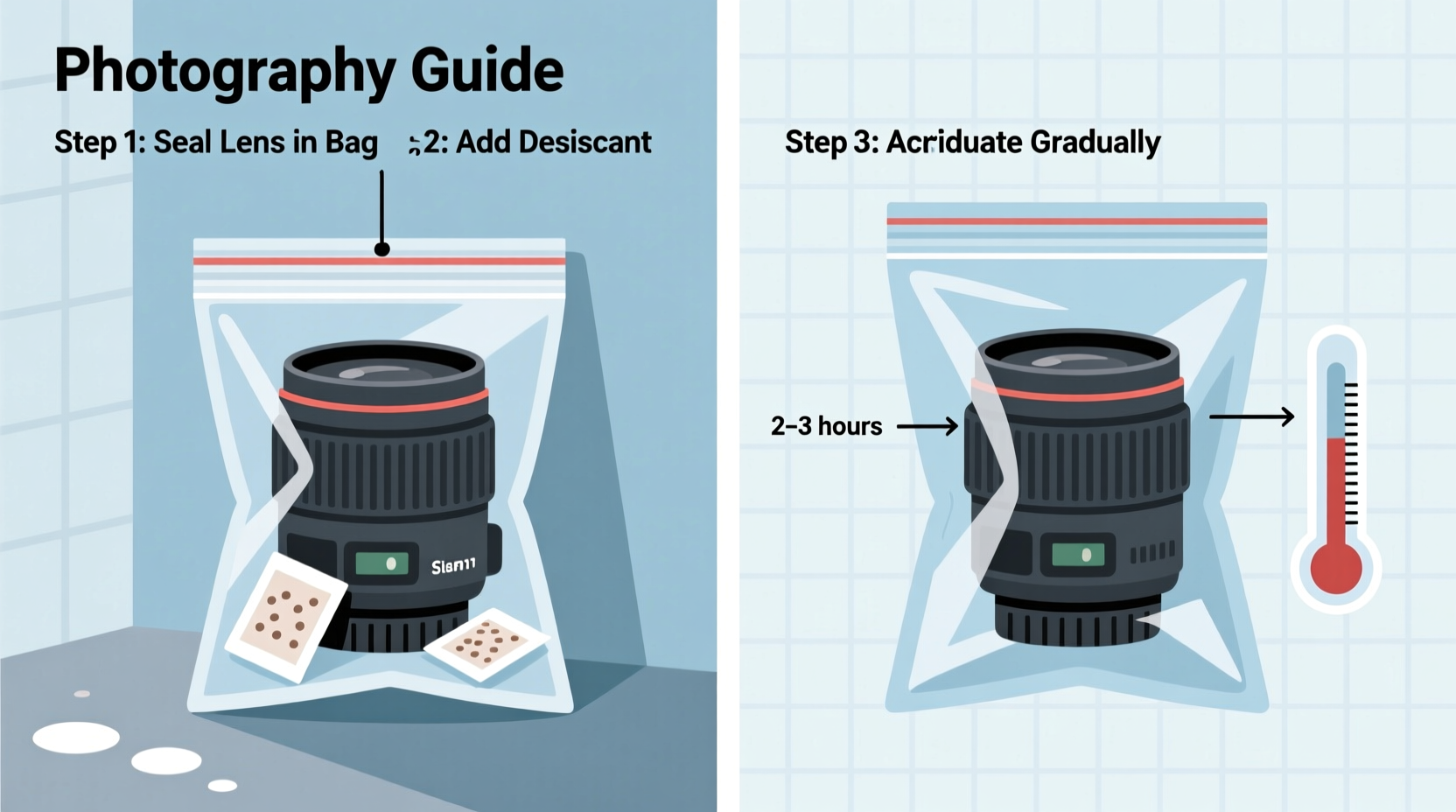
Condensation occurs when warm, moist air comes into contact with a colder surface. The air cools rapidly, reducing its capacity to hold water vapor. As a result, excess moisture condenses into liquid form. In photography, this commonly happens when:
- Moving from a hot, humid outdoor environment into a cool, air-conditioned space.
- Bringing cold camera gear into a warm room (e.g., after shooting in winter or at high altitudes).
- Traveling by plane where temperature and pressure fluctuate significantly.
Lens elements are particularly vulnerable because they are made of glass, which conducts temperature changes quickly. When the outer surface of the lens cools below the dew point of the surrounding air, condensation forms—sometimes on the exterior, but more dangerously, on internal lens elements if moisture penetrates seals.
While modern lenses are built with weather sealing, no optical system is completely immune to internal fogging if exposed to rapid temperature transitions without protection. Internal condensation is especially concerning because it cannot be wiped away and may require professional servicing to resolve.
“Many photographers don’t realize that internal lens fog isn’t just temporary—it can lead to fungal growth within weeks if left unchecked.” — Dr. Lena Park, Optical Equipment Preservation Specialist, Tokyo Institute of Imaging Technology
Step-by-Step Guide to Preventing Condensation During Travel
Preventing condensation isn't about avoiding climate changes—it's about managing them intelligently. Follow this timeline-based approach whenever transitioning between environments with significant temperature or humidity differences.
- Before Entering a Cooler Environment (e.g., entering an air-conditioned building):
Seal your camera and lenses in an airtight plastic bag while still in the warm zone. This traps the warm, moist air around the equipment. As the gear slowly acclimates to the cooler temperature inside the bag, any condensation will form on the outside of the bag—not on your lens. - Allow Gradual Acclimation:
Keep the sealed gear in the bag for at least 30–60 minutes, depending on the severity of the temperature shift. For extreme transitions (e.g., desert to freezing cabin), allow up to two hours. Do not open the bag until the interior has reached ambient temperature. - After Cold-to-Warm Transitions (e.g., returning indoors from snow):
The same principle applies. Before stepping into a heated room, place your camera setup in a sealed bag while still outside. Let it warm up gradually indoors, untouched, for at least 45 minutes. - Use Silica Gel Packs Strategically:
Store silica gel desiccants inside your camera bag regularly. They absorb ambient moisture and help maintain a dry microclimate. Replace or regenerate them monthly for continued effectiveness. - Avoid Sudden Exposure:
Never go straight from a cold car to a steamy jungle or vice versa. Plan transitions deliberately. If possible, wait in a transitional space (like a lobby or vehicle) to minimize shock.
Essential Gear and Storage Practices
Beyond immediate acclimation techniques, long-term prevention relies on consistent storage and protective accessories. Here’s what every traveling photographer should consider.
| Item | Purpose | Recommended Use |
|---|---|---|
| Silica Gel Desiccants | Absorb moisture in enclosed spaces | Place 2–3 packs in each camera bag; replace monthly |
| Airtight Dry Box or Case | Maintains low-humidity environment | Store lenses long-term in tropical or coastal areas |
| Neoprene Lens Sleeves | Provide insulation against temperature swings | Use when carrying lenses outside main bag |
| Climate-Controlled Storage Bag | Advanced solution with active dehumidification | Ideal for extended trips in monsoon or arctic zones |
| Ziplock Freezer Bags | Emergency condensation barrier | Keep several in your kit for sudden climate changes |
In addition to using these tools, store your camera bag in shaded, ventilated areas. Avoid leaving it in car trunks, under hotel beds, or near bathrooms where humidity accumulates. A well-ventilated closet or shelf is ideal.
Real-World Example: A Photographer’s Mistake in Nepal
During a high-altitude trek in the Himalayas, wildlife photographer Rafael Torres moved from Kathmandu’s warm, humid streets to a freezing guesthouse at 4,000 meters. Eager to capture sunrise over Annapurna, he brought his camera directly from the cold night air into the wood-heated lodge.
Within minutes, his 70–200mm f/2.8 lens fogged internally. Thinking it would clear like eyeglasses, he attempted to shoot—but the images were soft and hazy. Over the next few days, the condensation didn’t dissipate. By the time he returned to Kathmandu, a technician confirmed moisture had breached the lens seal, requiring a $400 repair and two-week turnaround.
Rafael later admitted he skipped the bag-sealing step, assuming his lens’s weather resistance was enough. “I learned the hard way,” he said. “Sealing the gear in a plastic bag would’ve taken two minutes and cost nothing. Instead, I paid heavily in both money and missed shots.”
This case underscores that even high-end, sealed lenses are not invincible. Environmental transitions demand proactive management, regardless of equipment grade.
Checklist: Prevent Condensation on Every Trip
Use this checklist before and during travel to safeguard your lenses:
- ✅ Pack multiple resealable freezer bags in various sizes
- ✅ Insert fresh silica gel packs into all camera compartments
- ✅ Check weather forecasts for destination and transit zones
- ✅ Plan at least 30–60 minutes for gear acclimation during major climate shifts
- ✅ Never rush unpacking after temperature changes
- ✅ Inspect lenses weekly for signs of internal fog or haze
- ✅ Store gear in a dry, stable environment when not in use
- ✅ Carry a small hygrometer to monitor humidity levels in your bag
Do’s and Don’ts of Managing Lens Moisture
| Do’s | Don’ts |
|---|---|
| Seal gear in a bag before entering a different climate | Bring cold gear directly into a warm, humid room |
| Use silica gel in your camera bag regularly | Store lenses in damp basements or bathrooms |
| Let equipment acclimate slowly (30+ minutes) | Blow dry or wipe internal fog with cloth |
| Inspect lenses periodically for haze or spots | Assume weather-sealed = condensation-proof |
| Keep your camera bag off the floor in humid areas | Leave gear in direct sunlight to “dry out” |
One common misconception is that wiping a fogged lens solves the problem. In reality, external fog can be gently wiped with a microfiber cloth, but internal condensation requires controlled drying—never disassemble a lens yourself. If moisture persists beyond 24 hours despite proper storage, consult a certified repair center.
Frequently Asked Questions
Can condensation damage my lens permanently?
Yes. While short-term internal fog may clear as temperatures stabilize, prolonged exposure to moisture increases the risk of fungal growth, coating lens elements and degrading image quality. In severe cases, corrosion of internal mechanics or electronics can occur, leading to costly repairs or permanent failure.
Is it safe to use a hairdryer to dry a fogged lens?
No. Household hairdryers produce uncontrolled heat and airflow that can damage lens coatings, melt adhesives, or force moisture deeper into the barrel. Instead, seal the lens in a dry environment with silica gel and allow it to dry naturally over 24–48 hours.
Do lens hoods help prevent condensation?
Lens hoods do not prevent condensation, but they can reduce the rate at which the front element cools by shielding it from wind and direct airflow. However, they offer minimal protection against internal fog. Rely on acclimation techniques and storage practices instead.
Final Thoughts and Action Plan
Condensation inside camera lenses is a preventable issue that hinges on awareness and discipline. The most advanced gear is only as reliable as the care it receives. By understanding how temperature and humidity interact with optical systems, you gain the power to protect your investment and maintain peak performance wherever you travel.
Start today: stock your kit with airtight bags and fresh desiccants, review your storage habits, and commit to the acclimation process—even when you’re in a hurry. These small actions compound into years of reliable service from your lenses.




 浙公网安备
33010002000092号
浙公网安备
33010002000092号 浙B2-20120091-4
Comments
No comments yet. Why don't you start the discussion?