
Foundation settling into fine lines—especially around the eyes, forehead, and mouth—is one of the most common frustrations in makeup wear. It not only disrupts a smooth finish but can emphasize aging signs rather than conceal them. This issue often stems from a combination of product choice, skin condition, and technique. The good news: with the right approach, you can achieve a flawless, long-lasting base that stays fresh from morning until evening.
The key lies in understanding your skin’s needs, preparing it properly, selecting compatible products, and applying them with precision. Whether you have dry, oily, or combination skin, the strategies below will help you maintain a seamless complexion without creasing, caking, or settling.
Understand Why Foundation Settles Into Fine Lines
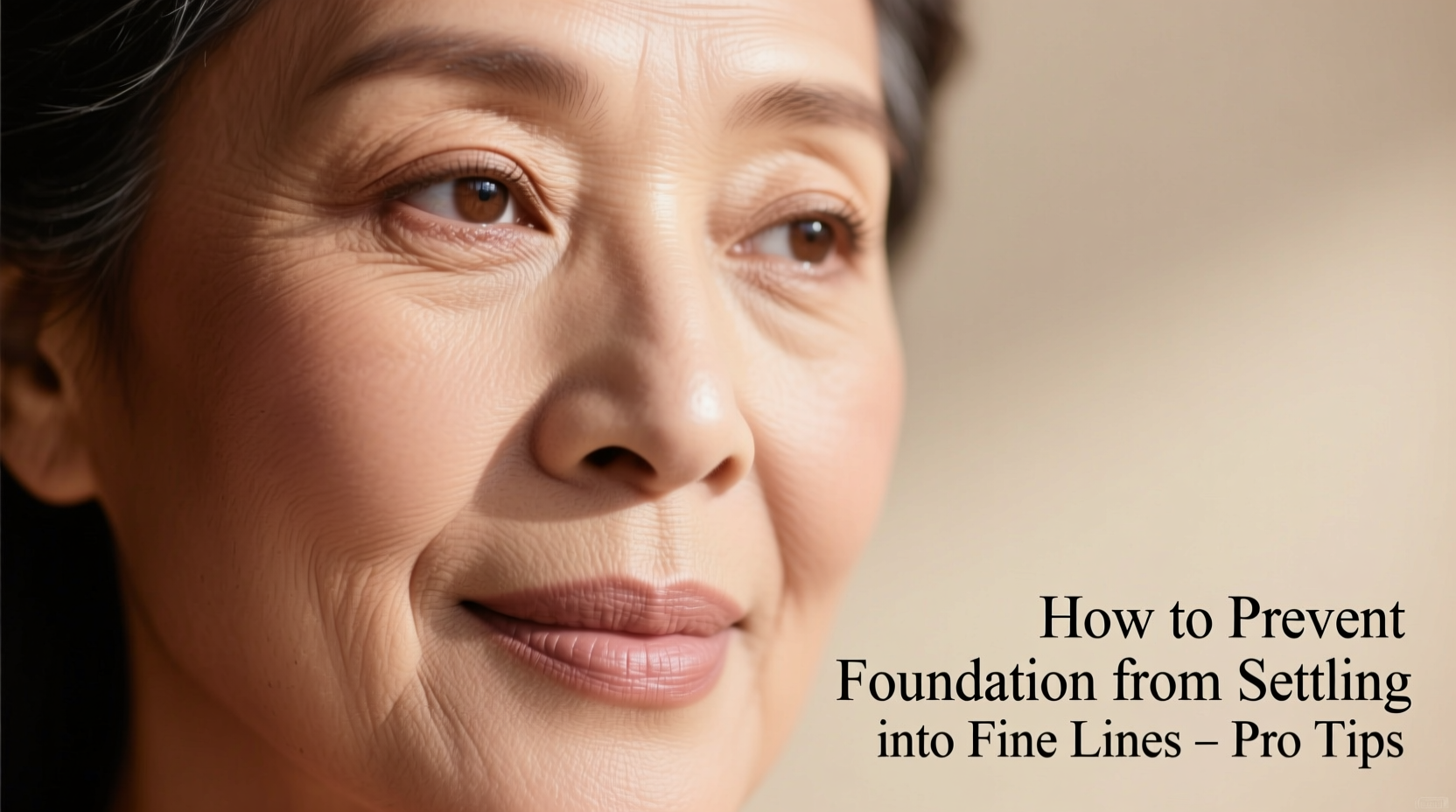
Fine lines are natural folds in the skin, often deepened by dehydration, sun exposure, or repetitive facial movements. When foundation sinks into these areas, it's typically due to:
- Dry patches or flakiness – Creates uneven texture where product clings and settles.
- Dehydrated skin – Lacks plumpness, making lines more visible and prone to catching makeup.
- Heavy or overly matte foundations – Lack slip and moisture, dragging into creases.
- Poor skincare prep – Skipping hydration or using incompatible products underneath.
- Excess powder use – Over-powdering can dry out the skin and accelerate settling.
Settling isn’t just a makeup failure—it’s often a sign of mismatched formulas or inadequate preparation. Addressing the root causes is essential for long-term improvement.
Skincare Prep: The Foundation of Flawless Makeup
Your makeup is only as good as the canvas beneath it. Skincare isn’t just about health—it directly impacts how makeup performs. A well-prepped face prevents migration, minimizes texture, and helps foundation adhere evenly.
Hydrate Deeply Before Applying Makeup
Use a hydrating serum containing hyaluronic acid or glycerin on damp skin. These ingredients attract water, plumping fine lines temporarily. Follow with a lightweight moisturizer suited to your skin type—avoid anything too greasy or occlusive unless you’re very dry.
Wait at least five minutes before applying makeup to allow full absorption. Rushing this step traps moisture under a barrier, leading to pilling or sliding.
Use a Primer Strategically
A primer isn’t optional if you struggle with settling. Look for formulas labeled “blurring,” “hydrating,” or “line-smoothing.” Ingredients like silicone (dimethicone) create a smooth surface by filling micro-imperfections without drying the skin.
“Primer acts as a buffer between skincare and makeup. It controls oil, evens texture, and extends wear—critical for preventing settlement.” — Lena Tran, Celebrity Makeup Artist
Apply primer only where needed—typically the T-zone, laugh lines, and forehead. Avoid overloading delicate eye areas unless using an eye-specific smoothing primer.
Nourish Long-Term with Active Ingredients
Prevent fine lines from worsening with consistent use of retinoids, peptides, and antioxidants like vitamin C. These support collagen production and improve skin elasticity over time, reducing the depth of lines that trap foundation.
Introduce actives gradually—especially retinol—to avoid irritation, which can worsen texture and lead to flaking. Use them at night so your skin recovers before makeup application.
Choosing the Right Foundation and Tools
Not all foundations behave the same way on mature or textured skin. The wrong formula can accentuate flaws instead of correcting them.
Opt for Lightweight, Hydrating Formulas
Creamy, dewy, or serum-based foundations glide smoothly and resist settling better than thick, matte ones. Look for terms like “luminous,” “natural finish,” or “sheer to medium coverage.”
For oily skin, avoid matte liquid foundations with alcohol—they dry quickly and cling to lines. Instead, choose a balanced formula with light control but added emollients.
| Skin Type | Best Foundation Type | Avoid |
|---|---|---|
| Dry/Mature | Hydrating liquid or cream-to-powder | Mattifying powders, full-coverage cakes |
| Oily | Water-based, buildable liquids | Heavy silicones, oil-rich creams |
| Combination | Lightweight serums or mousse | Overly drying or overly greasy bases |
Application Tools Matter
How you apply foundation affects its behavior throughout the day. Fingers provide warmth and blend seamlessly, ideal for dry areas. However, they can spread bacteria and may not offer even coverage.
A damp beauty sponge offers controlled blending and sheer buildup—perfect for avoiding excess product in creases. Stippling, rather than dragging, ensures minimal disturbance to the skin’s surface.
Brushes deliver precise placement but require skill. A flat-top kabuki brush works well for buffing in thin layers, while a smaller tapered brush targets specific zones like smile lines.
Step-by-Step Application Technique to Prevent Settling
Even the best products fail without proper technique. Follow this timeline each morning for optimal results.
- Cleanse gently – Use a non-stripping cleanser to preserve natural oils.
- Apply hydrating toner or essence – Replenishes moisture and preps skin for absorption.
- Layer hyaluronic acid serum – Press into damp skin, focusing on dry zones.
- Moisturize lightly – Wait 5 minutes for full penetration.
- Apply targeted eye cream – Use ring fingers to tap gently—never rub.
- Prime selectively – Smooth a pea-sized amount over nose, forehead, and marionette lines.
- Apply foundation with a damp sponge – Start in the center of the face and stipple outward.
- Conceal after foundation – Spot-conceal under eyes and blemishes to avoid overloading.
- Set strategically – Use a translucent powder only in oily zones (T-zone), avoiding dry areas.
- Finish with setting spray – Lock everything in place without adding dryness.
This method prioritizes hydration, minimal product use, and strategic setting—all critical for preventing midday breakdown.
Common Mistakes That Worsen Settling
Even experienced users fall into habits that undermine their efforts. Recognizing these pitfalls can make a dramatic difference.
- Skipping moisturizer – Especially in colder months, this leads to flaking and patchiness.
- Using expired or oxidized foundation – Old formulas separate, change color, and settle faster.
- Applying too much product – Excess foundation has nowhere to go but into lines.
- Touching your face throughout the day – Transfers oils, breaks down makeup, and pushes product into creases.
- Blotting with dry tissue – Removes oil but also lifts foundation; use blotting papers instead.
“I see clients every week who blame their foundation when the real issue is over-powdering. A little goes a long way—especially near the eyes.” — Marcus Lee, Professional MUA
Mini Case Study: Sarah’s Morning Routine Transformation
Sarah, a 48-year-old marketing executive, struggled daily with her foundation settling into laugh lines and under-eye creases by 10 a.m. She used a full-coverage matte foundation, applied with a brush, and set heavily with powder. Despite reapplying at lunch, her makeup looked tired by afternoon meetings.
After consultation, she adjusted her routine: switched to a hydrating serum foundation, began using hyaluronic acid every morning, applied primer only on her T-zone, and switched to a damp sponge for application. She reduced powder use to just her nose and forehead and finished with a hydrating mist.
Within three days, she noticed her foundation lasted significantly longer without settling. After two weeks, colleagues commented on her “well-rested” look. The change wasn’t in her skin—it was in her method.
Checklist: Daily Routine to Prevent Foundation Settling
✅ Daily Prevention Checklist
- Wash face with gentle cleanser
- Apply hydrating toner or essence
- Press in hyaluronic acid serum on damp skin
- Moisturize and wait 5 minutes
- Apply eye cream with ring finger
- Prime only on oily or textured zones
- Use lightweight, skin-like foundation
- Apply with damp sponge using stippling motion
- Conceal after foundation, not before
- Set lightly with powder—only where needed
- Finish with setting spray
- Carry blotting papers (not powder) for touch-ups
FAQ: Common Questions About Foundation Settling
Can I use silicone-based primers if I have sensitive skin?
Yes, dimethicone is generally non-comedogenic and hypoallergenic. However, if you’re acne-prone or experience congestion, opt for water-based alternatives. Always patch-test new products behind the ear or on the jawline.
Is powder always bad for fine lines?
No—but moderation is key. Heavy powder dries out skin and accelerates settling. Use a light dusting only in areas that get shiny, and consider using a hydrating setting spray instead for overall lock-in.
Should I exfoliate before makeup?
Gentle chemical exfoliation (like lactic acid) 2–3 times a week improves texture and prevents flakiness. Avoid physical scrubs before makeup—they can cause micro-tears and inflammation. Never exfoliate on the same morning if your skin feels raw or sensitive.
Conclusion: Achieve a Seamless, Lasting Base
Preventing foundation from settling into fine lines isn’t about finding a miracle product—it’s about creating a sustainable, intelligent routine. From skincare synergy to mindful application, every step plays a role in maintaining a fresh, even complexion.
You don’t need expensive tools or ten-step regimens. Focus on hydration, choose formulas that complement your skin, and refine your technique with patience. Small changes compound into dramatic improvements in how your makeup wears and how your skin feels.




 浙公网安备
33010002000092号
浙公网安备
33010002000092号 浙B2-20120091-4
Comments
No comments yet. Why don't you start the discussion?