
Curly hair is beautiful, dynamic, and full of personality—but it’s also prone to frizz, especially in humid conditions or when exposed to environmental stressors. Many people reach for thick creams, gels, and serums to tame the flyaways, only to find their curls weighed down, greasy, or stripped of their natural bounce. The good news? You don’t need heavy products to keep frizz at bay. With the right habits, tools, and understanding of your hair’s needs, you can maintain soft, defined curls that move freely and shine naturally.
The key lies not in masking frizz with product buildup but in addressing its root causes: moisture imbalance, cuticle disruption, and mechanical damage. By focusing on gentle care, hydration, and protective techniques, you can create a sustainable routine that supports healthy curls without residue or heaviness.
Understanding Why Curly Hair Gets Frizzy
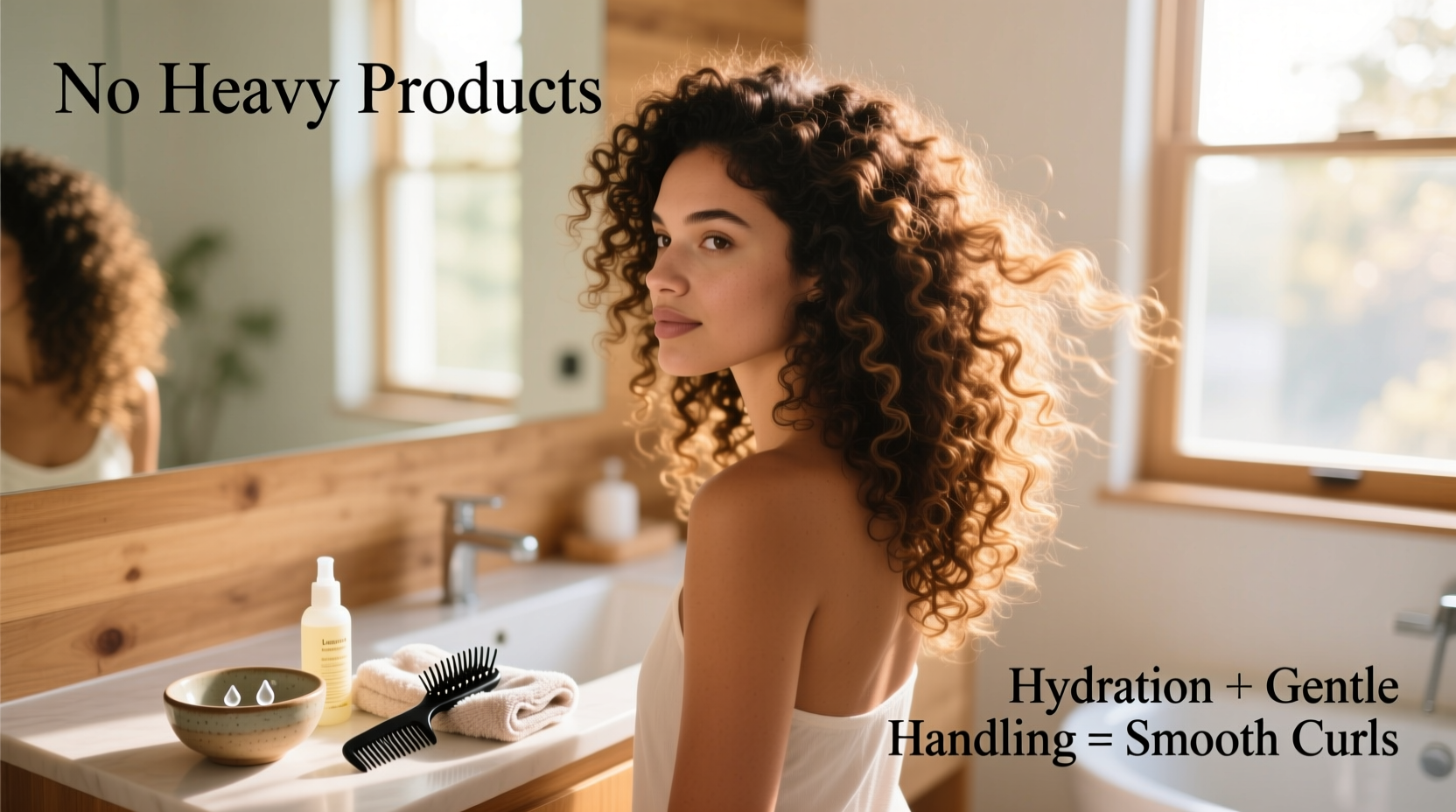
Frizz occurs when the hair’s outer layer—the cuticle—lifts, allowing moisture from the air to penetrate the cortex. Curly hair has a naturally raised cuticle structure due to its spiral shape, making it more porous and vulnerable to humidity. When the hair absorbs excess moisture, it swells, disrupting curl formation and creating a fuzzy, uneven texture.
Common triggers include:
- Drying shampoos with sulfates
- Towel drying with rough fabrics
- Brushing dry curls
- High humidity environments
- Lack of internal hydration (yes, drinking water matters)
- Sleeping on cotton pillowcases
Heavy styling products may temporarily smooth the surface, but they often clog the scalp, reduce breathability, and require harsh cleansers to remove—leading to a cycle of damage and dependency. A lighter, more holistic approach yields better long-term results.
Hydration Without Heaviness: Lightweight Moisture Techniques
Well-hydrated hair is less likely to seek moisture from the environment—meaning fewer frizz flare-ups. The goal is to lock in hydration using light, fast-absorbing ingredients that nourish without coating.
Start with a water-rich regimen:
- Pre-poo with aloe vera juice or rosewater – Spray or apply before shampooing to prime strands and reduce porosity-related swelling.
- Use a sulfate-free, low-lather cleanser – These preserve natural oils while still removing buildup. Look for formulas with glycerin or honey as humectants.
- Rinse with cool water – This helps seal the cuticle after conditioning, creating a smoother surface.
- Apply leave-in conditioner with a spray bottle – Mist diluted aloe vera or a lightweight herbal infusion (like chamomile or marshmallow root) onto damp hair instead of thick creams.
Avoid sealing with oils immediately after washing—they can block water absorption. Instead, layer smartly: hydrate first, then use a tiny amount of oil (like grapeseed or jojoba) only on ends if needed.
“Lightweight doesn’t mean ineffective. Some of the best anti-frizz solutions are invisible—like proper pH balance and consistent hydration.” — Dr. Lila Nguyen, Trichologist & Hair Scientist
Protective Styling and Handling Habits That Reduce Frizz
Mechanical friction is one of the biggest contributors to frizz. Every time you brush dry curls or rub them against fabric, you lift the cuticle and invite puffiness. Minimizing manipulation is essential.
Adopt these daily practices:
- Wash and style hair once per week – Overwashing strips moisture; under-washing leads to buildup. Find your balance.
- Use a wide-tooth comb only on soaking wet hair, starting from the ends and working upward gently.
- Diffuse on low heat or air-dry under a microfiber towel – Heat and terry cloth both disrupt the cuticle.
- Sleep on a satin pillowcase or use a satin bonnet – Reduces nighttime friction by up to 70% compared to cotton.
- Refresh curls with a water + flaxseed gel mix – Flaxseed creates flexible hold and shine without stiffness or residue.
When touching your hair throughout the day, use the “scrunch-up” method with clean hands to reactivate curl pattern—not smoothing, which encourages frizz.
Do’s and Don’ts of Daily Curl Maintenance
| Do | Don't |
|---|---|
| Touch curls minimally with clean hands | Run fingers through hair repeatedly |
| Use microfiber or cotton T-shirt to scrunch out dampness | Wrap hair in a regular towel |
| Store hair in loose pineapple style at night | Sleep with loose hair on cotton pillow |
| Refresh with water-based mist | Apply heavy cream to revive second-day curls |
| Trim ends every 10–12 weeks | Ignore split ends until breakage spreads |
Step-by-Step: A Light Anti-Frizz Wash Day Routine
This routine emphasizes hydration, definition, and protection—all without heavy products.
- Pre-wash (Optional): Apply a tablespoon of aloe vera gel to mid-lengths and ends 20 minutes before showering. This pre-hydrates and reduces swelling during cleansing.
- Cleanse: Use a low-pH, sulfate-free shampoo. Focus only on the scalp. Rinse thoroughly with lukewarm water.
- Condition: Apply a creamy but rinse-out conditioner from ears down. Leave for 5 minutes. Rinse with cool water to seal cuticles.
- Hydrate: While hair is dripping wet, spritz with a homemade mix: ¾ cup distilled water, ¼ cup aloe vera juice, 1 tsp vegetable glycerin, and 2 drops of rosemary essential oil. Gently detangle with fingers.
- Style: Scrunch in 1–2 teaspoons of flaxseed gel (recipe below) for definition. Avoid roots unless needed.
- Dry: Plop with a microfiber towel for 15–20 minutes, then diffuse on cool setting or let air-dry completely.
- Set: Once 100% dry, lightly scrunch with 1–2 drops of jojoba oil on palms to soften any crunch and add shine.
Simple Flaxseed Gel Recipe (Natural, Lightweight Hold)
- ¼ cup whole flaxseeds
- 2 cups filtered water
- Optional: ½ tsp vitamin E oil or 1 tsp aloe vera for added slip
Boil flaxseeds in water, stirring constantly until it gels (about 7–10 minutes). Strain through a fine mesh sieve. Cool and store in a glass jar in the fridge for up to 2 weeks.
Real Example: How Maya Transformed Her Curls in 6 Weeks
Maria, a 32-year-old teacher with 3C curls, struggled with constant frizz despite using a popular heavy curl cream daily. She found her hair limp by noon and required re-wetting and restyling every evening.
She decided to eliminate all heavy butters and silicones from her routine. Instead, she switched to a sulfate-free wash, used only a diluted aloe mist and flaxseed gel, plopped with a cotton T-shirt, and slept on a satin pillowcase. Within three weeks, her curls felt bouncier and held their shape longer. By week six, she no longer experienced midday frizz and reduced styling time by half.
“I was shocked,” she said. “I thought I needed thick products to ‘control’ my hair. But really, I just needed to stop fighting it and start supporting it.”
FAQ: Common Questions About Frizz-Free Curly Hair
Can I prevent frizz without using any styling product?
Yes—especially if your hair is low-porosity or fine. Focus on gentle cleansing, proper drying technique, and minimizing friction. Many people achieve great definition with just water, aloe mist, and air-drying. However, a minimal amount of natural gel (like flaxseed) can enhance curl clumping without weight.
Why does my hair get frizzy even when I don’t touch it?
This usually points to moisture imbalance. If your hair isn’t properly hydrated during wash day or if your environment is very dry or humid, the cuticle will react by lifting. It’s not about movement—it’s about internal condition. Try deep conditioning monthly and using a humidity-resistant sealant like monoi oil sparingly on ends.
Is there a way to fix frizz instantly without product?
Yes. On-the-go, lightly mist hair with a blend of water and a drop of argan oil in a spray bottle. Then, scrunch upward. Alternatively, press frizzy areas gently between palms dampened with a tiny bit of water. Avoid flat palms over entire head—that encourages puffiness.
Your Path to Lighter, Healthier Curls Starts Today
Frizz isn’t a flaw—it’s a signal. It tells you when your hair is dehydrated, stressed, or being handled too roughly. By shifting focus from suppression to support, you allow your curls to thrive in their natural state. You don’t need to coat them in product to feel confident. In fact, the freer they move, the more vibrant and alive they appear.
Start small: swap your towel for microfiber, try a flaxseed gel, or simply rinse with cooler water. These subtle changes compound into dramatic improvements. Healthy curls aren’t about perfection—they’re about resilience, rhythm, and respect for your hair’s unique nature.




 浙公网安备
33010002000092号
浙公网安备
33010002000092号 浙B2-20120091-4
Comments
No comments yet. Why don't you start the discussion?