
The holiday season brings joy, warmth, and festive decorations—but for many cat owners, it also introduces a familiar challenge: keeping your curious feline from turning the Christmas tree into their personal jungle gym. While cats are naturally drawn to vertical spaces, dangling ornaments, and shimmering lights, their playful instincts can quickly lead to toppled trees, broken baubles, and stressed-out pets.
The good news? You don’t have to choose between celebrating with a tree and living peacefully with your cat. With thoughtful preparation, environmental enrichment, and humane deterrents, you can protect your tree while respecting your cat’s natural behaviors. This guide offers practical, expert-backed strategies that prioritize safety, reduce stress, and preserve the spirit of the season—for both you and your pet.
Understand Why Cats Climb Trees (and How to Redirect It)
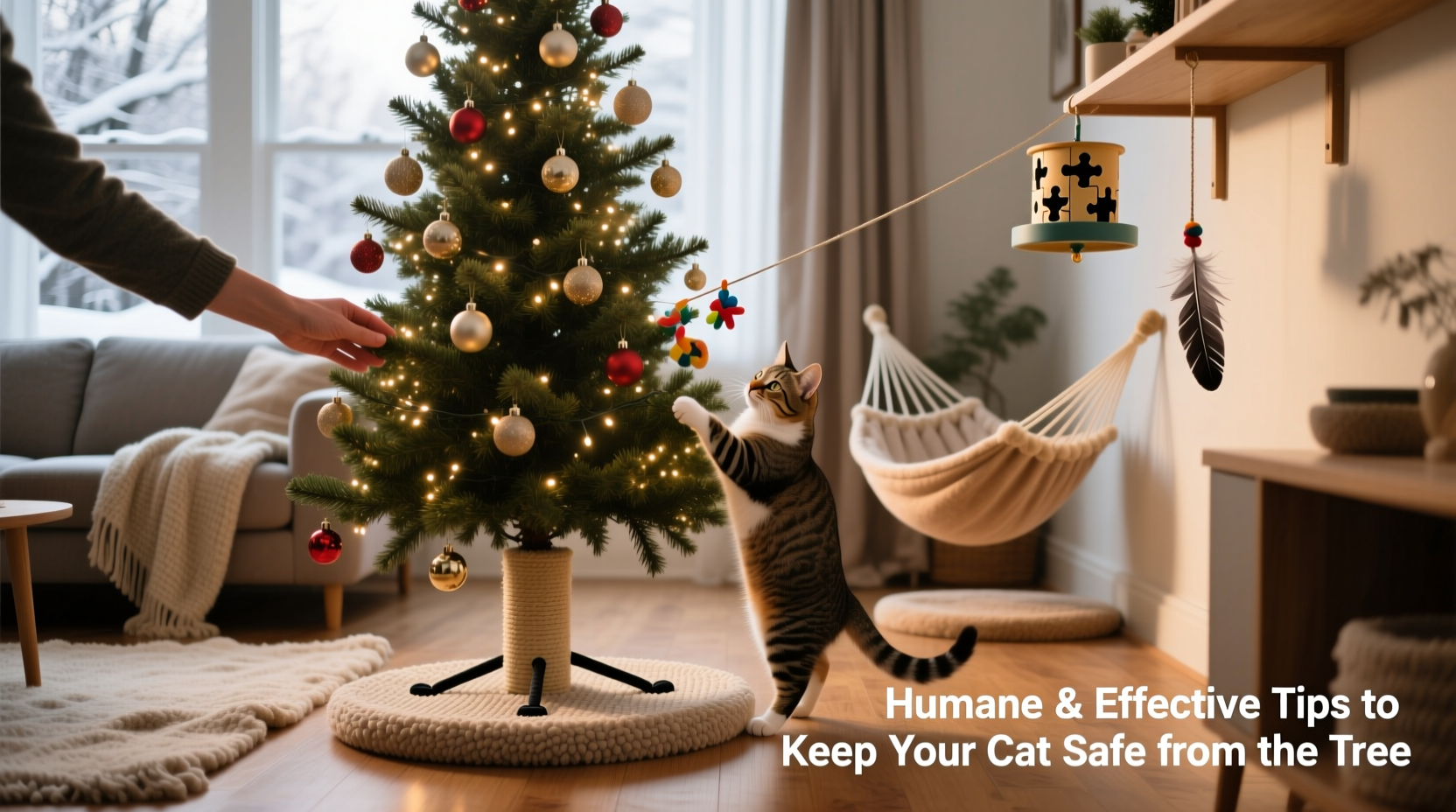
Cats climb for instinctual reasons: to survey their territory, escape perceived threats, seek warmth, or simply satisfy their curiosity. A Christmas tree, with its height, movement, and novel textures, checks all the boxes. The flickering lights mimic prey-like motion, tinsel resembles fast-moving insects, and ornaments dangle like toys. To a cat, the tree isn’t just decoration—it’s an invitation.
Attempting to punish or scold a cat for climbing is ineffective and counterproductive. Instead, focus on prevention through redirection. Provide alternative climbing structures that fulfill the same needs without endangering your decor.
Create a Cat-Safe Environment Around the Tree
Preventing tree climbing starts with modifying the environment. Make the area around the tree less tempting and more predictable for your cat, while ensuring their overall well-being isn’t compromised.
- Stabilize the tree securely. Use a heavy stand and anchor the top of the tree to a wall or ceiling hook. Even if your cat attempts to climb, a stabilized tree is far less likely to fall and cause injury.
- Clear the perimeter. Keep the floor around the tree free of toys, food bowls, or bedding that might encourage lingering. Cats are more likely to investigate areas they associate with activity or comfort.
- Use physical barriers. Place furniture out of reach so your cat can’t jump onto a nearby couch and then leap to the tree. Consider using baby gates or decorative fencing to create a low barrier around the base.
A stable, isolated setup reduces temptation and minimizes risk. Think of it as cat-proofing with empathy—your goal isn’t to restrict your cat unfairly, but to design a space where both of you can coexist safely during the holidays.
Humane Deterrents That Work Without Stress
Not all deterrents are created equal. Avoid anything that startles, punishes, or causes fear—such as loud noises, sprays with strong scents, or motion-activated air bursts—unless used sparingly and carefully. Instead, opt for gentle, consistent methods that teach your cat to avoid the tree without creating anxiety.
| Deterrent | How It Works | Effectiveness |
|---|---|---|
| Aluminum foil around the base | Cats dislike the texture and sound under paw | High (short-term), may wear off over time |
| Double-sided tape on lower trunk | Unpleasant sticky sensation discourages contact | Moderate to high |
| Citrus peels or essential oil (diluted, placed nearby) | Strong scent repels most cats (never apply directly to tree) | Moderate; use cautiously to avoid toxicity |
| Plastic carpet runner (nubby side up) | Uncomfortable texture deters walking near tree | High when combined with other methods |
Combine multiple deterrents for best results. For example, line the base with aluminum foil and place citrus peels in a small dish nearby (out of paw’s reach). Rotate methods weekly to prevent habituation.
“Cats respond best to consistency and environmental cues, not punishment. A well-managed space teaches them boundaries naturally.” — Dr. Lena Reyes, Feline Behavior Specialist
Redirect with Enrichment and Play
One of the most effective long-term solutions is to redirect your cat’s energy into appropriate outlets. A bored or under-stimulated cat is far more likely to treat the Christmas tree as entertainment.
- Schedule daily play sessions using wand toys to simulate hunting. Aim for 10–15 minutes twice a day.
- Introduce puzzle feeders or treat-dispensing toys near their usual hangouts.
- Rotate toys weekly to maintain novelty and interest.
- Add window perches or bird feeders outside to provide visual stimulation.
If your cat tends to climb the tree at night, engage in vigorous play right before bedtime to encourage rest. A tired cat is less likely to embark on midnight tree expeditions.
Step-by-Step Guide: Preparing Your Home for a Cat-Safe Holiday
Follow this timeline to set up a harmonious environment before the tree goes up—and maintain it throughout the season.
- Week 1: Assess your space. Identify jumping points, unstable furniture, and potential hazards. Remove any nearby items that could serve as launch pads.
- Week 2: Introduce alternative structures. Set up a cat tree, shelves, or perch in the same room. Encourage use with treats, catnip, or a favorite blanket.
- Week 3: Install the tree (unadorned). Let your cat investigate the bare tree for a few days. Use this time to apply deterrents and observe behavior patterns.
- Week 4: Decorate strategically. Once the cat shows reduced interest, add lights and decorations—but keep the bottom third bare.
- Ongoing: Monitor and reinforce. Continue daily play, refresh deterrents weekly, and praise your cat when they interact with alternatives.
This gradual approach allows your cat to adjust without feeling threatened or restricted. It builds new habits instead of relying solely on avoidance.
Mini Case Study: The Thompson Family’s Peaceful Holidays
The Thompsons had given up on Christmas trees for three years after their Bengal cat, Milo, knocked one over during Christmas Eve dinner. Each year, the tree became a target within hours of setup. After consulting a veterinary behaviorist, they implemented a multi-pronged strategy.
They purchased a 7-foot cat tree and placed it diagonally across from the planned tree location. They began daily 15-minute play sessions with a motorized mouse toy and installed a window perch overlooking their backyard birds. When they set up the Christmas tree, they wrapped the base in plastic carpet runner (nubs up) and secured the top to the ceiling with fishing line.
For the first two days, they left the tree undecorated while Milo sniffed and pawed at it. They redirected him to his own tower with treats. By day three, he lost interest. When ornaments were added, they kept the lower 24 inches clear and used only lightweight, break-resistant decorations above.
That December, the Thompsons enjoyed their first intact tree in years—Milo spent most of his time on his perch, watching snow fall outside.
What Not to Do: Common Mistakes
Avoid these counterproductive practices that can harm your cat or worsen the problem:
- Using water sprays as punishment. This damages trust and increases anxiety.
- Leaving dangerous decorations. Tinsel, ribbon, and small ornaments are choking hazards if ingested.
- Placing food or milk under the tree. This encourages prolonged visits and increases risk.
- Ignoring signs of stress. Hissing, hiding, or over-grooming may indicate your cat feels trapped or anxious.
Instead of reacting to misbehavior, proactively shape your cat’s experience. Prevention is always more effective than correction.
Frequently Asked Questions
Can I train my cat not to climb the tree?
Yes—through positive reinforcement and environmental management. Reward your cat for staying near their own perch or playing with approved toys. Consistency over several weeks builds reliable habits. Clicker training can help mark desired behaviors.
Are artificial trees safer than real ones?
Both have pros and cons. Artificial trees are reusable and shed-free, but some cats chew the branches, which can be a choking hazard. Real trees pose risks like sap ingestion, needle swallowing, and water contamination (if fertilizers are added). Whichever you choose, secure it properly and monitor your cat closely.
Is it okay to cover the tree with a net?
Tree nets can be effective if used correctly. Choose a lightweight, breathable mesh that doesn’t trap heat or obstruct airflow. Ensure it’s anchored well and doesn’t create a climbing surface itself. Remove the net during supervised times to allow full enjoyment of the tree’s appearance.
Checklist: Cat-Safe Christmas Tree Setup
- ✅ Choose a sturdy tree stand and anchor the tree to the wall or ceiling
- ✅ Place a cat tree or shelves nearby as an alternative climbing option
- ✅ Clear furniture and jumping points around the tree area
- ✅ Apply humane deterrents (foil, double-sided tape, carpet runner)
- ✅ Keep the bottom third of the tree decoration-free
- ✅ Use unbreakable, lightweight ornaments on upper branches
- ✅ Avoid tinsel, ribbons, and edible decorations
- ✅ Schedule daily interactive play sessions
- ✅ Monitor water bowl (real trees) or base (artificial) to prevent spills or chewing
- ✅ Supervise initial interactions and reinforce positive behavior
Conclusion: Enjoy the Holidays—Together
Preventing your cat from climbing the Christmas tree isn’t about winning a battle—it’s about creating harmony. With patience, understanding, and a few smart adjustments, you can enjoy a festive home that works for everyone. Your cat doesn’t need to be excluded from the celebration; they just need safe, engaging alternatives that honor their instincts.
By focusing on enrichment, stability, and gentle guidance, you protect your tree, your pet, and your peace of mind. This holiday season, let your traditions include not just lights and gifts, but also compassion and coexistence.




 浙公网安备
33010002000092号
浙公网安备
33010002000092号 浙B2-20120091-4
Comments
No comments yet. Why don't you start the discussion?