
Pothos (Epipremnum aureum) is one of the most popular houseplants due to its resilience, attractive foliage, and ease of care. Its ability to thrive in a wide range of conditions makes it ideal for beginners and experienced plant enthusiasts alike. One of the most rewarding aspects of owning a pothos is propagating it—multiplying your plants from a single vine. Two primary methods dominate: water propagation and soil propagation. But which method produces roots faster? And what are the long-term implications of each? This guide dives deep into both techniques, compares their effectiveness, and provides practical steps to ensure success.
Understanding Pothos Propagation Basics
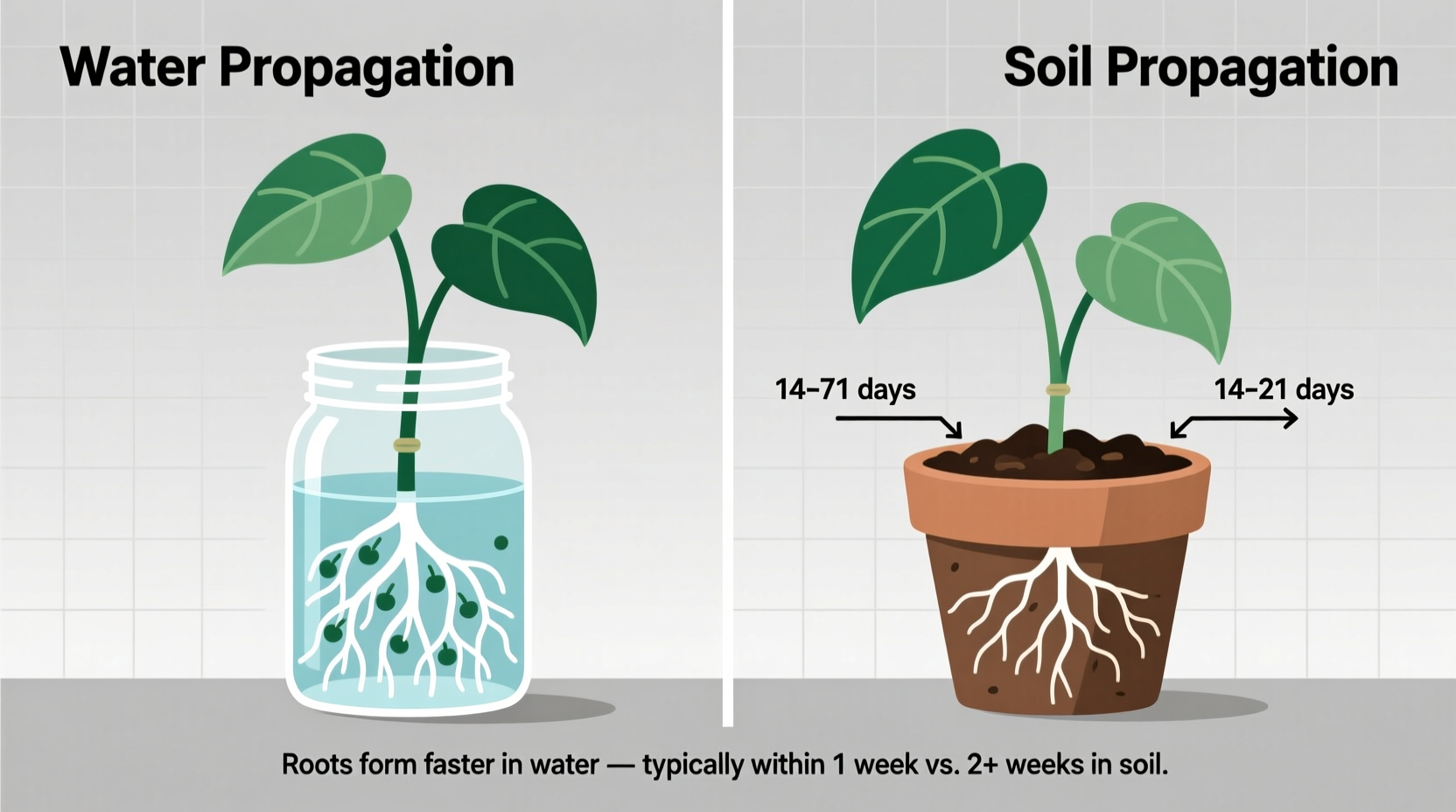
Propagation is the process of growing new plants from cuttings taken from a mature parent plant. With pothos, this involves cutting a section of vine that includes at least one node—the small bump on the stem where leaves and aerial roots emerge. Nodes are essential because roots develop from them, not from leaf tissue alone.
Once a cutting is made, it can be placed in water or directly into soil to initiate root growth. Both approaches have merit, but they differ significantly in speed, success rate, and post-rooting care. Understanding these differences helps gardeners choose the right method based on their goals and environment.
Water Propagation: Speed and Visibility
Water propagation is the most widely used method for pothos, largely because it’s simple and allows you to observe root development in real time. It's especially appealing for those who enjoy tracking progress visually.
To propagate pothos in water:
- Select a healthy vine with at least two to three leaves and one visible node.
- Cut just below the node using sterilized scissors.
- Remove the bottom leaf if it would sit below the waterline.
- Place the cutting in a clear container filled with room-temperature water, ensuring the node is submerged.
- Position the container in bright, indirect light.
- Change the water every 5–7 days to prevent stagnation and bacterial growth.
Roots typically begin to form within 7 to 10 days, with some vigorous varieties showing signs as early as day 5 under optimal conditions. Within 3 to 4 weeks, most cuttings will have developed a network of white, healthy roots measuring 1–2 inches long—ready for transplanting into soil.
“Water propagation offers unmatched visibility and control during early root formation. It’s ideal for diagnosing issues before transplanting.” — Dr. Linda Park, Urban Horticulturist, Brooklyn Botanic Garden
Soil Propagation: Direct Growth and Stability
Soil propagation skips the transition phase by rooting the cutting directly in its permanent growing medium. While less common than water propagation, it avoids the potential shock that occurs when moving water-rooted plants to soil.
The process involves:
- Taking a cutting with at least one node and two leaves.
- Allowing the cut end to callous over for 15–30 minutes (optional but helpful).
- Inserting the node into moist, well-draining potting mix.
- Placing the pot in a warm spot with bright, indirect light.
- Misting the leaves and keeping the soil lightly damp (not soggy).
Unlike water propagation, root development in soil is hidden. You won’t see physical evidence for several weeks. Signs of successful rooting include new leaf growth and resistance when gently tugged—indicating anchoring has occurred.
On average, soil-propagated pothos take 2 to 3 weeks longer to establish than those in water. Root initiation may begin around day 14, but functional root systems often require 4 to 6 weeks. However, once established, these plants tend to adapt more seamlessly to ongoing care without acclimation stress.
Which Method Roots Faster? A Direct Comparison
The central question—does pothos root faster in water or soil—has a clear answer based on observation and horticultural data: water propagation produces visible roots significantly faster.
In controlled indoor environments (70–75°F, 60% humidity, bright indirect light), water-rooted cuttings consistently show root emergence within 7–10 days. Soil-rooted cuttings, while biologically beginning the same cellular processes, do not display external signs until much later due to the opaque medium and slower metabolic activation in soil.
Beyond speed, consider the quality and function of the roots formed:
| Factor | Water Propagation | Soil Propagation |
|---|---|---|
| Time to First Roots | 5–10 days | 14–21 days |
| Visible Progress | Yes – easy monitoring | No – must infer from growth |
| Root Structure | Fine, adapted to water | Denser, built for soil |
| Transplant Shock Risk | Higher (roots re-adapt) | Negligible |
| Maintenance Needs | Weekly water changes | Consistent moisture checks |
| Success Rate | High (~85%) | High (~80%) |
While water wins in speed, soil offers structural advantages. Water-formed roots are specialized for absorbing nutrients from liquid environments and often need to regenerate secondary roots after being planted in soil. This transition period can cause temporary stalling in growth—a phenomenon known as \"transplant lag.\"
Real-World Example: A Home Gardener’s Experience
Sarah M., an apartment dweller in Portland, Oregon, decided to test both methods side by side using cuttings from her golden pothos. She took six identical cuttings, placing three in glass jars with filtered water and three in small pots with a standard indoor potting mix.
Within a week, tiny white roots appeared on the water cuttings. By day 10, roots reached nearly an inch long. The soil cuttings showed no visible change. After three weeks, the water group had robust root systems, so she transplanted them into soil. Meanwhile, the direct-soil group began showing new leaf growth at week four, indicating root establishment.
Over the next month, the originally water-propagated plants paused in growth for about 10 days post-transplant, then resumed. The soil-propagated plants grew steadily without interruption. By week eight, all plants were thriving, but the soil group had slightly thicker stems and earlier new growth.
Sarah concluded: “Water was faster to start, but soil felt more natural. I’ll use water for quick results and sharing with friends, but go straight to soil when I want low-maintenance expansion.”
Best Practices for Success: A Propagation Checklist
Regardless of method, following best practices increases your chances of success. Use this checklist before starting:
- ✅ Choose a healthy parent plant free of pests or discoloration.
- ✅ Use sterile tools to make clean cuts just below a node.
- ✅ Ensure each cutting has at least one node and 1–2 leaves.
- ✅ For water: use chlorine-free or dechlorinated tap water.
- ✅ For soil: use a light, well-draining mix with good aeration.
- ✅ Provide consistent bright, indirect light (no direct sun).
- ✅ Maintain temperatures between 68°F and 78°F (20–25°C).
- ✅ Avoid overhandling cuttings; minimize stress during setup.
- ✅ Label your containers if testing multiple methods.
- ✅ Be patient—rooting is a biological process that cannot be rushed.
Frequently Asked Questions
Can I leave pothos in water indefinitely?
Yes, pothos can grow in water permanently if properly maintained. Change the water weekly, add liquid houseplant fertilizer monthly (at ¼ strength), and ensure roots don’t become overcrowded. However, long-term water-grown pothos may exhibit slower growth and smaller leaves compared to soil-grown counterparts.
Why isn’t my pothos cutting rooting?
Lack of rooting is usually due to one of five causes: no node was submerged (or present), poor light conditions, old or chlorinated water, cold temperatures, or a diseased cutting. Double-check that the node is viable and in contact with water or moist soil, and ensure warmth and indirect light.
Should I use rooting hormone?
Not necessary, but it can accelerate root development—especially in soil. Dip the cut end in powdered or gel rooting hormone before planting. While pothos naturally produces auxins (root-promoting hormones), adding synthetic ones may reduce rooting time by 5–7 days in soil propagation.
Final Recommendations: Choosing the Right Method
If your priority is speed and visual feedback, water propagation is the superior choice. It delivers fast results, making it ideal for teaching children, sharing cuttings with friends, or quickly expanding your collection. The transparency allows early detection of rot or stagnation, enabling timely intervention.
However, if your goal is long-term plant health and minimizing future stress, soil propagation offers a more seamless integration. Though slower to show progress, it eliminates the need for adaptation and supports stronger root architecture from the start.
Many experienced growers use a hybrid approach: starting in water to confirm viability, then transferring to soil once roots are 1–2 inches long. This combines the benefits of early monitoring with eventual soil stability.
Conclusion: Take Action and Multiply Your Greenery
Propagating pothos is one of the most satisfying activities for any plant lover. Whether you choose water or soil, the outcome is the same—a new life sprouting from a simple snip. Water propagation roots faster, often within a week, giving you quick gratification and visible milestones. Soil propagation takes longer but fosters resilient, self-sufficient plants from the outset.
The best method depends on your goals, patience, and environment. Try both. Compare results. Learn what works in your space. Every cutting is a chance to deepen your understanding of plant biology and nurture your green thumb.




 浙公网安备
33010002000092号
浙公网安备
33010002000092号 浙B2-20120091-4
Comments
No comments yet. Why don't you start the discussion?