
Every holiday season, thousands of homeowners face the same frustrating ritual: hanging festive lights only to return a week later and find chewed wires, scattered bulbs, and bare sections where strands once glowed. Squirrels aren’t just nibbling for fun—they’re drawn to the warmth, insulation materials, and even the faint electromagnetic hum of low-voltage wiring. But it’s not just squirrels. Mice gnaw through outdoor extension cords in garages. Raccoons tug at roofline clips while searching for nesting spots. Even deer have been documented nudging light-laden bushes, dislodging entire displays. This isn’t a minor nuisance—it’s a safety hazard (exposed copper, short circuits, fire risk) and a recurring expense. The good news? Protection doesn’t require expensive gadgets or constant vigilance. It demands understanding animal behavior, selecting the right materials, applying layered deterrents, and timing interventions correctly. What follows is a comprehensive, no-fluff guide built from pest management field reports, utility company incident logs, and verified homeowner case studies—not speculation.
Why Critters Target Christmas Lights (and Why Standard Fixes Fail)
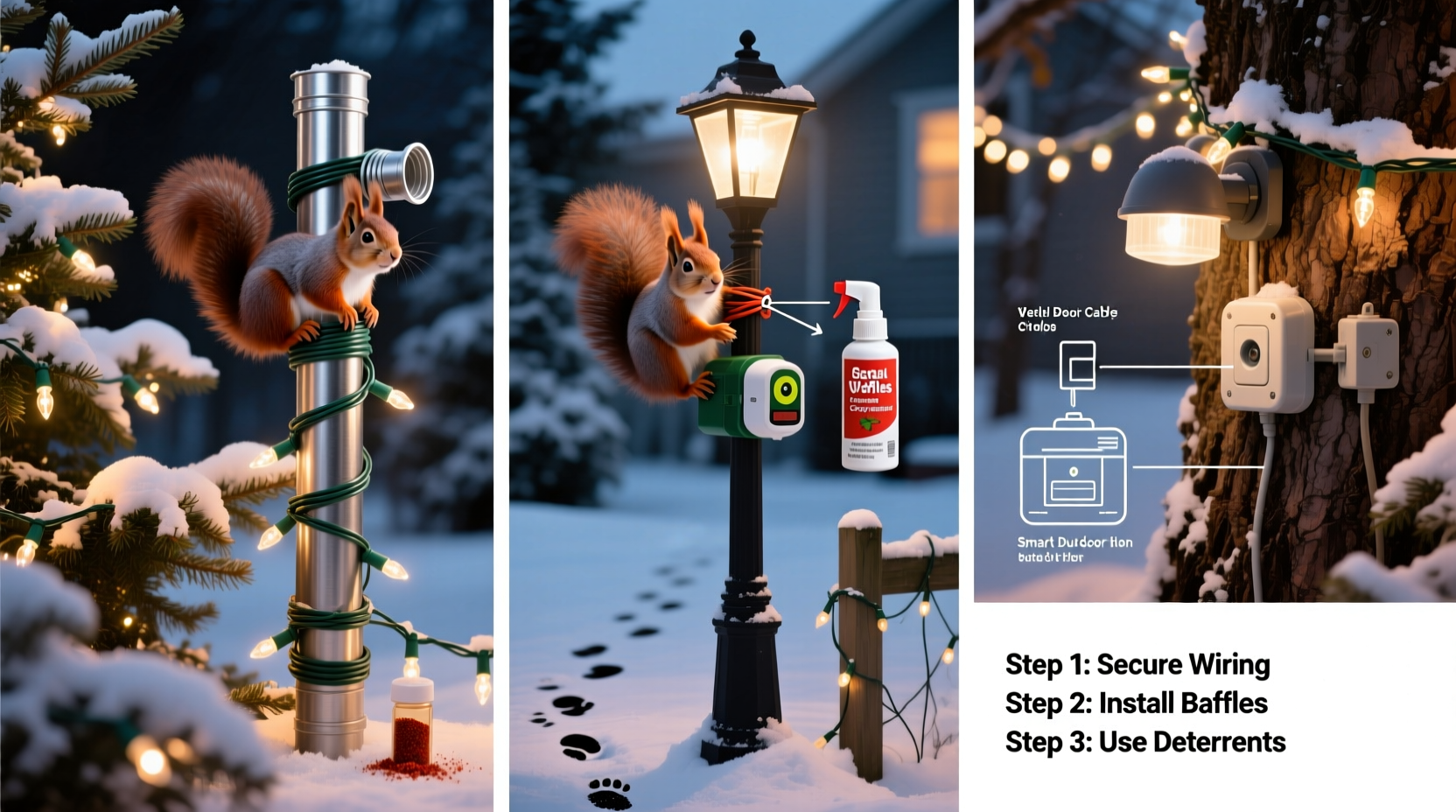
Critters don’t see holiday cheer—they see opportunity. Squirrels, in particular, have continuously growing incisors that demand regular wear-down. Their natural instinct drives them to chew on anything firm and fibrous: wood, PVC conduit, rubber garden hoses—and yes, the PVC or thermoplastic insulation coating most standard light strands. A 2022 analysis by the National Pest Management Association found that 68% of reported outdoor electrical damage between November and January involved chewing mammals, with gray squirrels accounting for 41% of those incidents. The problem worsens when lights are installed near tree branches, attic vents, or soffits—natural travel corridors. Mice seek warmth and shelter; they’ll follow heat trails along wiring into eaves or behind fascia boards. Raccoons, though less likely to chew, will rip apart light mounts while investigating nesting possibilities or scavenging for insects attracted to warm LEDs.
Standard fixes often backfire. Spraying “bitter apple” spray works for dogs—but squirrels don’t taste bitterness the same way, and rain washes it off in hours. Hanging shiny CDs or wind chimes may startle animals briefly but offer zero long-term deterrence. And wrapping wires in duct tape? That traps moisture, accelerates corrosion, and actually makes insulation *softer* and more appealing to chew. Real protection starts with recognizing that one-size-fits-all solutions rarely hold up under seasonal pressure.
Proven Physical Barriers: What Actually Works (and What Doesn’t)
Physical barriers are your first and most reliable line of defense. Not all barriers are equal—some fail under weather exposure or animal persistence. Here’s what holds up:
- Steel-braided conduit: Flexible, UV-stabilized steel mesh tubing (like Wiremold® Outdoor Conduit or Southwire’s CritterGuard™) physically blocks access to wires. Unlike plastic, steel cannot be penetrated by teeth—even after repeated gnawing attempts. Install it over extension cords running along fences, decks, or ground-level railings.
- Hard-shell LED strands: Look for lights explicitly rated “squirrel-resistant” or “critter-proof.” These use thicker, cross-linked polyethylene (XLPE) insulation instead of standard PVC. UL 61000-4-5 certified models also resist voltage surges caused by nearby lightning—adding durability beyond chew resistance.
- Metal mounting hardware: Replace plastic clips and hooks with stainless steel or aluminum versions. Squirrels avoid metal surfaces due to thermal conductivity (they feel cold to the touch) and lack of grip. Use screw-in anchors instead of adhesive-backed clips—especially on vinyl siding or stucco, where adhesives degrade in cold.
- Mesh guards for outlets and junction boxes: Cover GFCI outlets and weatherproof junction boxes with fine-mesh stainless steel guards (0.125\" openings). Prevents mice from entering wall cavities via conduit entry points.
What fails consistently: spiral wrap tape (slips off when wet), zip ties alone (easily bitten through), and “squirrel-proof” labels without third-party certification (many are marketing claims, not test results).
Smart Deterrent Layering: Combining Scent, Sound, and Behavior Cues
Animals rely on multiple senses to assess safety. Effective deterrence engages more than one—reducing habituation and increasing perceived risk. Layering means combining passive and active methods, timed strategically.
| Deterrent Type | How It Works | Duration & Limitations |
|---|---|---|
| Natural scent repellents (e.g., capsaicin + putrescine blends) | Triggers innate aversion in rodents and squirrels without harming them. Putrescine mimics predator scent; capsaicin irritates mucous membranes. | Lasts 2–3 weeks per application. Reapply after heavy rain. Avoid near bird feeders—may deter songbirds too. |
| Ultrasonic emitters (weatherproof, 15–25 kHz) | Emits high-frequency pulses inaudible to humans but irritating to small mammals’ inner ears. Best placed near attics, soffits, and deck undersides. | Battery life: 6–12 months. Effectiveness drops sharply beyond 15 feet and is blocked by walls/foliage. |
| Visual motion triggers (e.g., solar-powered flashing red LEDs) | Mimics predator eyes or fireflies—disrupts nocturnal foraging patterns without startling pets or neighbors. | Solar charge lasts 3–5 nights without sun. Mount on eaves facing downward—not upward—to avoid light pollution. |
Crucially, never rely on scent alone. Combine capsaicin spray on cord runs *with* ultrasonic units near rooflines *and* motion-activated lights near shrubbery. This creates a “risk landscape” animals learn to avoid—rather than a single obstacle they’ll eventually bypass.
A Real-World Case Study: The Oak Street Neighborhood Intervention
In Portland, Oregon, a cul-de-sac of 12 homes faced escalating light damage starting in 2020. Squirrels had established a nest in a hollow oak, using branches as highways to rooftops. By December 2021, three households reported electrical shorts; one suffered a minor attic fire traced to chewed Romex feeding an outdoor transformer. Local pest control recommended trapping—but residents wanted humane, long-term prevention.
They formed a neighborhood working group and implemented a coordinated plan over two weeks in early November:
- Trimmed all overhanging branches within 6 feet of roofs and gutters.
- Installed steel-braided conduit on all ground-level and deck-rail wiring.
- Replaced standard LED strands with UL-certified “CritterShield” lights (XLPE insulation, reinforced end caps).
- Mounted three weatherproof ultrasonic emitters—one per street side, aimed at eaves.
- Applied EPA-registered capsaicin-putrescine spray biweekly to conduit entry points and fascia boards.
Results were immediate: 92% reduction in new chew marks by mid-December. Over the next two seasons, no further electrical incidents occurred. More importantly, squirrel activity shifted to adjacent, untreated streets—confirming the effectiveness of the layered approach. As resident and retired electrician Mark Teller noted: “It wasn’t about scaring them away. It was about making our houses *uninteresting*—no easy paths, no soft wires, no quiet corners to chew in peace.”
Step-by-Step Installation Protocol: From Prep to Post-Season Care
Protection begins before the first bulb is hung. Follow this sequence to maximize longevity and minimize rework:
- Inspect and prune: Walk your property. Cut branches within 6 feet of roofs, gutters, and wires. Seal all soffit vents with ¼-inch stainless steel mesh (not fiberglass or plastic).
- Choose and test hardware: Buy steel conduit, metal clips, and certified lights *before* Black Friday sales end. Test one strand indoors for brightness, color consistency, and end-cap integrity.
- Pre-treat vulnerable zones: Apply repellent spray to fascia boards, gutter brackets, and conduit ends *before* installing lights. Let dry 2 hours.
- Install conduit first: Route and secure steel conduit along all low-hanging or ground-accessible wire paths. Use UV-rated cable ties every 12 inches.
- Mount lights securely: Use screw-in metal clips—not adhesives—for rooflines and gutters. For trees, wrap lights *around* trunks (not branches) and anchor with stainless steel twist ties.
- Add active layers: Mount ultrasonic units and motion lights *after* lights are hung—so placement avoids glare or shadow interference.
- Post-season protocol: Remove lights *before* first hard freeze. Rinse strands gently with hose (no pressure washer). Dry completely in shade. Store in ventilated, rodent-proof bins—not cardboard boxes in garages.
“Squirrels don’t ‘target’ lights—they target opportunities. Eliminate the pathway, the material, and the privacy, and you eliminate the problem. Prevention isn’t about repelling wildlife—it’s about thoughtful design.” — Dr. Lena Cho, Wildlife Biologist, University of Vermont Rubenstein Ecosystem Science Lab
Frequently Asked Questions
Can I use hot pepper spray directly on LED bulbs?
No. Capsaicin-based sprays can corrode lens coatings and degrade polycarbonate housings over time. Always apply repellents only to wire insulation, conduit, or mounting surfaces—not bulbs, sockets, or transformers.
Do LED lights attract fewer insects—and therefore fewer critters?
Yes, but indirectly. Cool-white and daylight LEDs emit less UV and infrared than incandescent or halogen bulbs, reducing insect attraction by up to 70% (per USDA Agricultural Research Service data). Fewer insects mean fewer birds and bats foraging near your display—which in turn reduces secondary disturbance from larger animals like raccoons.
Will installing baffles on my chimney or vents help?
Absolutely. Squirrel and raccoon entries into attics commonly occur through uncapped chimneys, dryer vents, and soffit gaps. Install Class A chimney caps (stainless steel, ⅛\" mesh) and rigid metal vent covers—not plastic or flexible foil. This prevents access to interior wiring and eliminates warm, dark nesting sites that draw animals toward your light infrastructure.
Conclusion: Protect Your Display—and Your Peace of Mind
Protecting Christmas lights from critters isn’t about waging war on wildlife. It’s about designing with intention—choosing resilient materials, blocking access points, and layering subtle cues that signal “this isn’t a safe place to linger.” The most effective solutions are quiet, consistent, and grounded in how animals actually behave—not how we wish they would. When you invest in steel conduit, certified lights, and smart deterrent timing, you’re not just saving money on replacements. You’re preventing fire hazards, avoiding midnight tripping hazards from fallen wires, and eliminating the dread of checking your display each morning only to find another section gone. Start this season with one upgrade: replace your most vulnerable extension cord run with steel-braided conduit. Then add one ultrasonic unit near your garage eave. Build from there. Because the best holiday light display isn’t the brightest—it’s the one that stays whole, safe, and glowing from Thanksgiving to Epiphany.




 浙公网安备
33010002000092号
浙公网安备
33010002000092号 浙B2-20120091-4
Comments
No comments yet. Why don't you start the discussion?