
In a world filled with distractions, constant notifications, and ever-growing to-do lists, staying productive can feel like an uphill battle. Yet, high performance isn’t reserved for the naturally disciplined or those who work 80-hour weeks. Real productivity is about working smarter—making small, consistent changes that compound into significant results. The good news? You don’t need a complete lifestyle overhaul to see dramatic improvements. With a few focused, practical adjustments, you can reclaim your time, reduce mental clutter, and accomplish more in less time.
1. Master Your First 90 Minutes
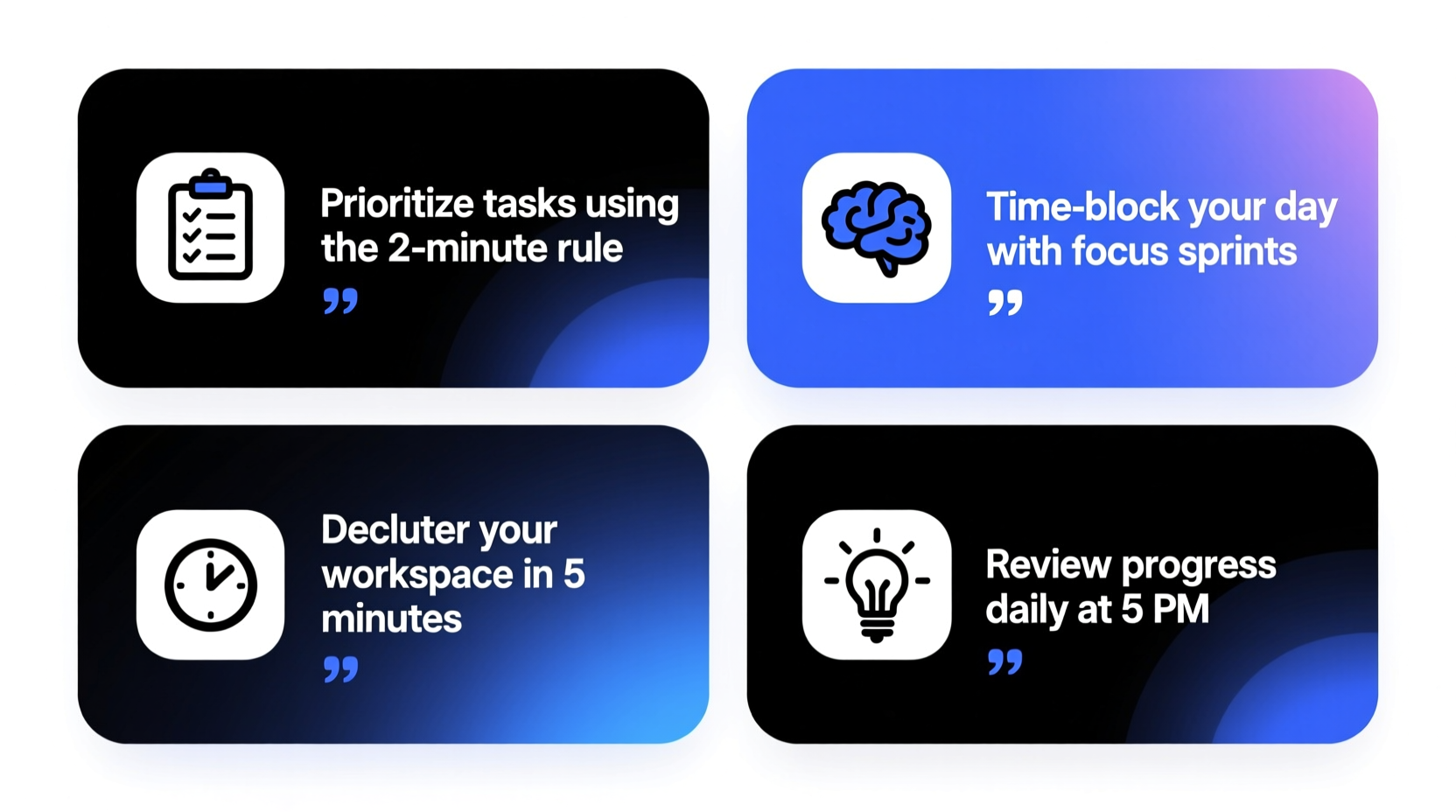
The way you start your day sets the tone for everything that follows. Research from the University of Southern California shows that decision fatigue begins almost immediately after waking. That means your willpower and focus are at their peak early in the morning—and this window should not be wasted on emails, social media, or reactive tasks.
Instead, dedicate your first 90 minutes to deep, meaningful work. This could be writing a report, planning a project, learning a new skill, or solving a complex problem. Avoid checking messages until this block is complete. By making progress on something important before distractions take over, you build momentum and confidence that carries through the rest of the day.
2. Apply the Two-Minute Rule to Reduce Task Overload
One of the biggest drains on productivity is the accumulation of small, unresolved tasks. These linger in your mind, creating low-level anxiety and reducing cognitive bandwidth. David Allen, author of *Getting Things Done*, introduced the two-minute rule as a powerful antidote: if a task takes less than two minutes, do it immediately.
This principle works because tiny tasks often take longer to manage than to complete. Responding to a quick email, filing a document, or scheduling a meeting may seem minor, but when left undone, they pile up and contribute to mental clutter.
“Your mind is for having ideas, not holding them.” — David Allen, Productivity Expert
By clearing micro-tasks in real time, you free up mental space for deeper thinking and prevent the backlog that leads to overwhelm.
3. Structure Your Day Using Time Blocking
Most people operate in reactive mode—responding to whatever comes next. High performers, however, plan their time proactively. Time blocking is the practice of assigning specific blocks of time to particular activities throughout your day. Instead of a chaotic to-do list, you create a visual map of where your attention goes.
For example:
| Time | Activity | Focus Type |
|---|---|---|
| 8:00–9:30 AM | Project Planning | Deep Work |
| 9:30–10:00 AM | Email & Messages | Shallow Work |
| 10:00–11:30 AM | Client Calls | Collaboration |
| 1:00–2:00 PM | Skill Development | Learning |
| 3:00–4:00 PM | Admin Tasks | Routine |
Time blocking reduces context switching—the cognitive cost of shifting between unrelated tasks—which studies show can reduce effective IQ by up to 10 points. When you protect your focus in scheduled blocks, you get more done with less effort.
4. Eliminate Distractions with the Phone-Out-of-Sight Rule
A study from the University of Texas found that even a silenced phone placed face-down on a desk reduces cognitive capacity. The mere presence of a smartphone consumes attentional resources, lowering available brainpower for other tasks.
To combat this, adopt a simple rule: keep your phone out of sight during work blocks. Place it in a drawer, another room, or use a timed lockbox. Replace the habit of reaching for your phone with a deliberate alternative—like taking a short walk, jotting down ideas, or reviewing your next task.
5. Use the Power of Weekly Review and Reset
One of the most overlooked yet transformative habits is the weekly review. This 30–60 minute ritual involves reflecting on the past week, clearing loose ends, and preparing for the week ahead. It prevents tasks from slipping through the cracks and ensures alignment with your priorities.
Follow this checklist every Friday afternoon or Sunday evening:
- Review completed tasks and celebrate progress
- Clean up your inbox and digital workspace
- Transfer unfinished items to the new week’s plan
- Check upcoming deadlines and schedule key tasks
- Clarify goals for the coming week
This practice creates closure and clarity, turning chaos into control.
Mini Case Study: From Overwhelmed to In Control
Sarah, a marketing manager, used to stay late at the office daily, convinced she wasn’t doing enough. Her days were a blur of meetings, last-minute requests, and forgotten deadlines. After learning about time blocking and the two-minute rule, she redesigned her routine.
She began waking up 45 minutes earlier to work on strategic projects before emails flooded in. She implemented a strict no-phone policy during deep work hours and started using a physical planner to track commitments. Within three weeks, she reduced overtime by 60%, met all her quarterly targets, and reported feeling calmer and more focused.
Her transformation wasn’t due to working harder—but to working with intention.
Step-by-Step Guide: Build Your Productive Morning Routine (7 Days)
Start small. Here’s a realistic 7-day plan to upgrade your mornings—the foundation of daily productivity:
- Day 1: Set your alarm 20 minutes earlier. Use the time to hydrate and write down your top priority for the day.
- Day 2: Add 5 minutes of light stretching or breathing exercises to wake up your body.
- Day 3: Prepare your clothes and breakfast the night before to reduce morning decisions.
- Day 4: Replace scrolling with 10 minutes of reading or journaling.
- Day 5: Begin working on your most important task within 30 minutes of waking.
- Day 6: Practice the two-minute rule—clear any small task as soon as it arises.
- Day 7: Reflect on what worked and refine your routine for sustainability.
By the end of the week, you’ll have built a personalized system that supports sustained focus and energy.
Do’s and Don’ts of Daily Productivity
| Do | Don’t |
|---|---|
| Plan your day the night before | Start the day without a clear focus |
| Break large tasks into small steps | Leave vague items like “work on project” |
| Take short breaks every 60–90 minutes | Work for hours without rest |
| Use tools like calendars and task managers | Rely solely on memory |
| Say no to low-priority requests | Overcommit out of guilt or habit |
Frequently Asked Questions
How do I stay productive when my environment is distracting?
Create boundaries. Use noise-canceling headphones, set status indicators (e.g., “Do Not Disturb”), and communicate your focus hours to colleagues or family. Even in noisy environments, rituals like starting with a deep breath or a cup of tea can signal your brain it’s time to concentrate.
What if I don’t have control over my schedule?
You likely have more control than you think. Identify small pockets of time—even 15-minute blocks—to tackle high-leverage tasks. Use waiting periods, commutes, or lunch breaks for quick wins. Over time, demonstrate reliability in these moments to earn trust for larger autonomy.
Can multitasking ever be effective?
True multitasking—performing two cognitively demanding tasks at once—is a myth. The brain switches rapidly between tasks, degrading performance in both. Reserve multitasking for low-effort combinations, like listening to music while organizing files. For anything requiring thought, single-tasking is always faster and better.
Final Thoughts: Small Shifts, Big Results
Productivity isn’t about doing more—it’s about doing what matters with clarity and consistency. The strategies outlined here require minimal time investment but deliver outsized returns. Whether it’s guarding your first 90 minutes, applying the two-minute rule, or committing to a weekly reset, each action builds upon the last to create a sustainable rhythm of accomplishment.
Start with one change. Master it. Then add another. Progress compounds quietly, but powerfully. In a month, you won’t just be more productive—you’ll feel more in control, more capable, and more aligned with your goals.




 浙公网安备
33010002000092号
浙公网安备
33010002000092号 浙B2-20120091-4
Comments
No comments yet. Why don't you start the discussion?