
Bread is one of the most commonly wasted foods in households, not because it spoils quickly, but because it turns stale. Within hours of baking, a loaf can lose its softness and become dry and chewy. While many assume that once bread goes stale, it's destined for the trash—or at best, breadcrumbs—this isn’t true. Stale bread isn't spoiled; its texture has simply changed due to moisture loss. The good news? You can reverse this process using everyday kitchen tools, even if you don’t have access to an oven.
Whether you're living in a dorm with limited appliances, traveling, or simply want to save time and energy, there are multiple effective ways to revive stale bread using only a microwave, stovetop, skillet, or steamer. These methods work across various types of bread—from baguettes and sandwich loaves to buns and rolls—restoring softness, warmth, and palatability in minutes.
Understanding Why Bread Goes Stale (And How to Reverse It)
Staling, scientifically known as “retrogradation,” occurs when the starch molecules in bread absorb water during baking and then begin to recrystallize as they cool. This process forces moisture out of the crumb and into the crust, making the interior dry and firm. Contrary to popular belief, staling isn’t just about drying out—it’s a structural change in the starch.
The key to reversing staling lies in reintroducing moisture and briefly heating the bread to allow starches to reabsorb water. When done correctly, this realignment restores much of the original texture. However, timing and technique matter. Too much heat or too little moisture leads to sogginess or toughness.
“Moisture redistribution through gentle reheating can restore up to 90% of fresh-baked quality in stale bread—even without an oven.” — Dr. Lena Torres, Food Scientist, Institute of Culinary Technology
Step-by-Step Methods to Refresh Stale Bread Without an Oven
Below are four proven techniques using common kitchen tools. Each method is tailored to different bread types and desired outcomes—whether you want soft sandwich bread or a crisp-crusted baguette.
1. Microwave + Damp Paper Towel (Best for Soft Breads)
This is the fastest method and ideal for sandwich loaves, buns, and dinner rolls.
- Take a paper towel and dampen it with water—wring out excess so it’s moist but not dripping.
- Wrap the bread completely in the damp paper towel.
- Place it in the microwave.
- Heat on medium power (50–70%) for 10–15 seconds.
- Check the bread. If still firm, add 5 more seconds.
- Unwrap immediately and enjoy while warm.
The steam generated from the wet towel gently rehydrates the crumb. Using medium power prevents overheating, which can create rubbery textures.
2. Stovetop Skillet Revival (Ideal for Crusty Breads)
Perfect for baguettes, ciabatta, or sourdough slices that need both soft interiors and crisp exteriors.
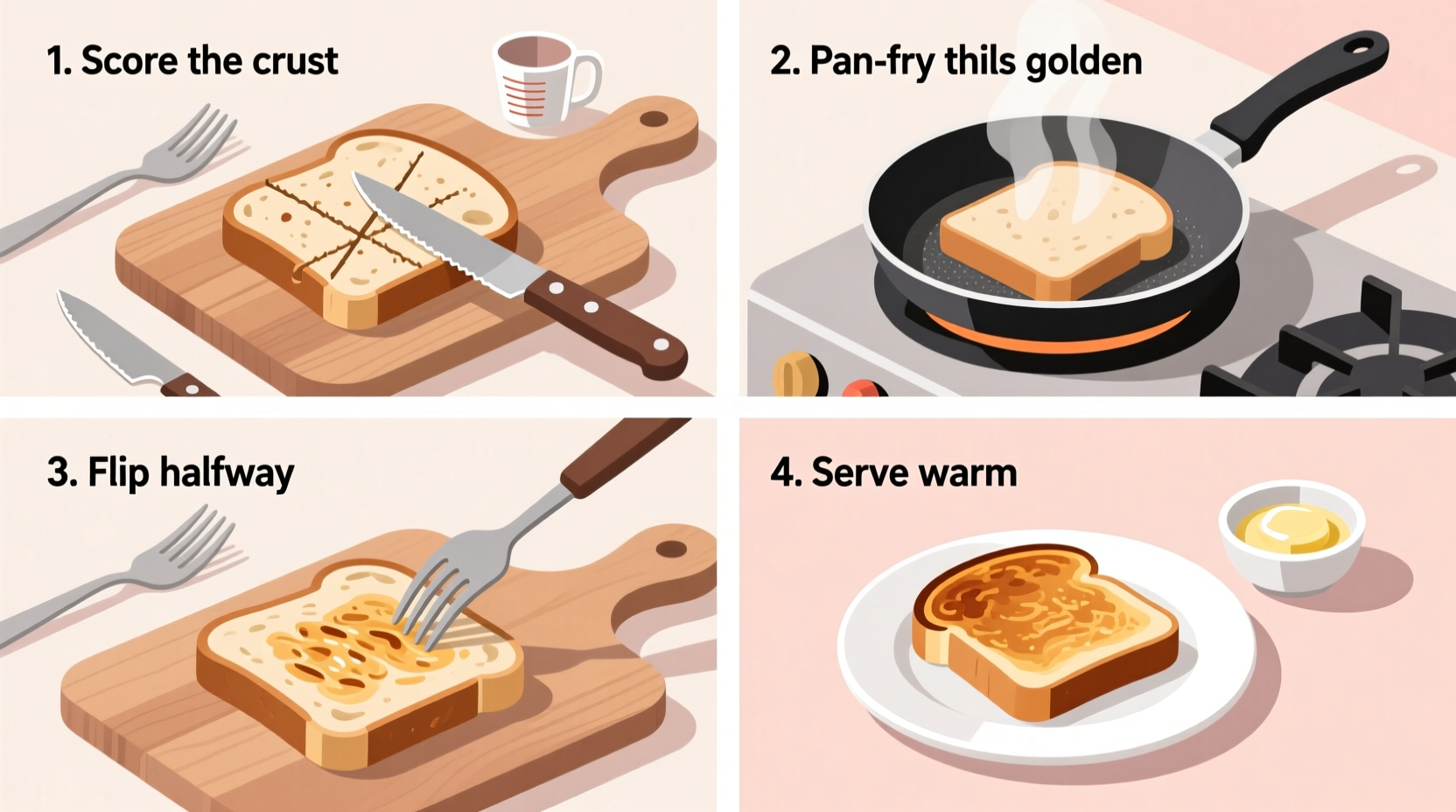
- Lightly sprinkle the surface of the stale bread with water—just enough to moisten the crust.
- Heat a non-stick or cast-iron skillet over medium-low heat.
- Place the bread directly in the pan.
- Cover with a lid to trap steam.
- Cook for 1–2 minutes per side.
The combination of direct heat and trapped steam mimics a mini oven environment. The result is a warm, flexible interior with a lightly toasted exterior.
3. Steaming Method (For Larger Loaves or Multiple Pieces)
If you have a bamboo or metal steamer basket, this method excels at evenly reviving larger quantities.
- Bring 1–2 inches of water to a simmer in a pot.
- Place the bread in the steamer basket—cut side down if sliced.
- Cover with a lid.
- Steam for 30–60 seconds for small pieces, up to 2 minutes for whole small loaves.
- Remove and let rest for 30 seconds before serving.
Steaming delivers consistent moisture without direct contact with water, preventing sogginess. It’s especially effective for artisanal breads where preserving structure matters.
4. Toaster with Water Spritz (Quick Fix for Slices)
Don’t own a toaster oven? A standard pop-up toaster can still help—if used carefully.
- Lay bread slices on a plate.
- Lightly mist each side with water using a spray bottle (or your fingers).
- Set the toaster to the lowest setting.
- Toast just until warm—do not let it brown excessively.
The added moisture prevents further dehydration during toasting, yielding a softer, less brittle result than dry toasting alone.
Do’s and Don’ts: Best Practices Table
| Action | Do | Don’t |
|---|---|---|
| Adding Moisture | Use a damp towel or light spritz | Soak bread or use wet hands excessively |
| Heating Power | Use medium or low settings | Microwave on high for long durations |
| Covering | Cover with lid or towel to trap steam | Leave bread exposed during heating |
| Timing | Start short, add time gradually | Guess and overheat |
| Storage After Revival | Eat immediately or store properly | Refrigerate revived bread |
Real Example: Reviving a Day-Old Baguette in a College Dorm
Jamal, a sophomore living in a dorm without an oven, bought a fresh baguette from a local bakery on Friday. By Sunday morning, it had hardened—too tough for sandwiches, seemingly useless. Instead of tossing it, he remembered a trick from his grandmother.
He ran the tap briefly over the crust, shook off droplets, and placed the loaf in a cold non-stick skillet. He covered it with a metal lid and turned the heat to medium-low. After two minutes, he flipped it and repeated on the other side. The result? A warm, pliable interior with a slightly crisp outer layer—perfect for a quick avocado toast. Jamal saved money, reduced waste, and enjoyed what felt like fresh bread.
This method took under five minutes and used only tools available in his dorm kitchenette.
Checklist: How to Successfully Refresh Stale Bread
- Assess the bread: Is it stale or moldy? If mold is present, discard it immediately.
- Choose the right tool: microwave for speed, skillet for texture, steamer for volume.
- Prepare moisture source: damp towel, spray bottle, or direct water mist.
- Apply gentle heat: avoid high temperatures that cause burning or rubberiness.
- Monitor closely: check every 10–15 seconds in microwave, 30 seconds on stove.
- Serve immediately: revived bread is best eaten right away.
- Store leftovers properly: keep in a paper bag or bread box, never in plastic unless freezing.
Frequently Asked Questions
Can I refresh bread that’s been frozen?
Yes. If bread was frozen while still fresh, thaw it at room temperature, then use any of the above methods to refresh. Do not microwave frozen bread directly without thawing first—this leads to uneven texture.
Why does my revived bread taste soggy?
Too much moisture or excessive heating time causes sogginess. Use a lightly damp towel—not soaked—and limit microwave time to 15 seconds initially. For stovetop methods, ensure the lid allows slight venting to prevent condensation buildup.
How long will refreshed bread stay good?
Only a few hours. Once revived, bread begins to stale again as it cools. For best results, consume immediately. Do not refrigerate, as cold temperatures accelerate retrogradation. If you must store it, freeze portions after revival and reheat later using the same techniques.
Expert Insight: The Science Behind the Steam
The effectiveness of moisture-based revival hinges on the physical behavior of starch and gluten networks. When heated in the presence of water, amylose and amylopectin—the two components of starch—undergo gelatinization reversal, allowing them to rebind water molecules.
“Steam is the unsung hero in bread revival. It penetrates quickly, softens the crumb, and temporarily resets the staling clock.” — Chef Rafael Nguyen, Culinary Instructor, National Baking Academy
This principle is why professional bakers use steam-injected ovens for baking crusty breads. At home, we replicate this with simple tools—proving that high-tech equipment isn’t always necessary.
Conclusion: Waste Less, Eat Better
Reviving stale bread without an oven isn’t just possible—it’s practical, sustainable, and deeply satisfying. With a microwave, skillet, or steamer, anyone can transform a rock-hard loaf into something soft, warm, and enjoyable. These methods require no special skills, minimal time, and nearly zero cost.
Beyond convenience, this knowledge empowers smarter food habits. Bread is a staple across cultures, yet millions of loaves go to waste daily due to misconceptions about staleness. By mastering these simple techniques, you reduce household waste, stretch your grocery budget, and enjoy better meals.




 浙公网安备
33010002000092号
浙公网安备
33010002000092号 浙B2-20120091-4
Comments
No comments yet. Why don't you start the discussion?