
Accidents happen. A child grabs a permanent marker and leaves a bold streak across the wall. Or perhaps someone uses the wrong pen during a home project. Regardless of how it happened, permanent marker on painted walls can feel like a disaster—especially when you're hoping to avoid repainting. The good news is that with the right techniques, most permanent marker stains can be removed safely, preserving your paint finish and saving time and money.
This guide walks through proven, non-damaging methods backed by cleaning experts and real-world testing. From household staples like rubbing alcohol to lesser-known tricks involving magic erasers and specialized cleaners, you’ll learn how to tackle even the toughest marks without harming your walls.
Understanding Permanent Marker and Paint Surfaces
Before attempting removal, it’s important to understand what you’re dealing with. Permanent markers contain pigments suspended in solvents like xylene or toluene, which allow the ink to adhere strongly to many surfaces. While this makes them durable, it also means they don’t wipe away with water alone.
Wall paint, especially latex-based finishes, has a delicate surface. Aggressive scrubbing or harsh chemicals can strip the top layer, dull the sheen, or cause discoloration. Glossy and semi-gloss paints are more resistant to stains and easier to clean than flat or matte finishes, which tend to absorb more and show damage more readily.
“Many people reach for bleach or acetone when they see permanent marker, but those can permanently damage paint. Always start with the gentlest option.” — Laura Simmons, Professional Home Organizer & Cleaning Consultant
The key is using a solvent strong enough to break down the ink but mild enough not to affect the paint. Testing any solution in an inconspicuous area first is essential.
Step-by-Step Guide: Removing Permanent Marker Safely
Follow this systematic approach to maximize effectiveness while minimizing risk to your walls.
- Assess the stain and location: Note the size, age, and depth of the mark. Fresh stains are easier to remove than dried ones. Also consider visibility—high-traffic areas may need extra care to avoid noticeable patches.
- Identify your paint type: Run a damp fingertip over a hidden spot (like behind a door). If the paint feels smooth and doesn’t leave residue, it’s likely semi-gloss or gloss. If it feels chalky, it’s probably flat or matte.
- Gather supplies: Choose one or more of the safe removers listed below based on availability and paint type.
- Test in an inconspicuous area: Apply a small amount of your chosen cleaner to a hidden section of the wall. Wait 30 seconds, then wipe gently. Check for color transfer, texture change, or dulling.
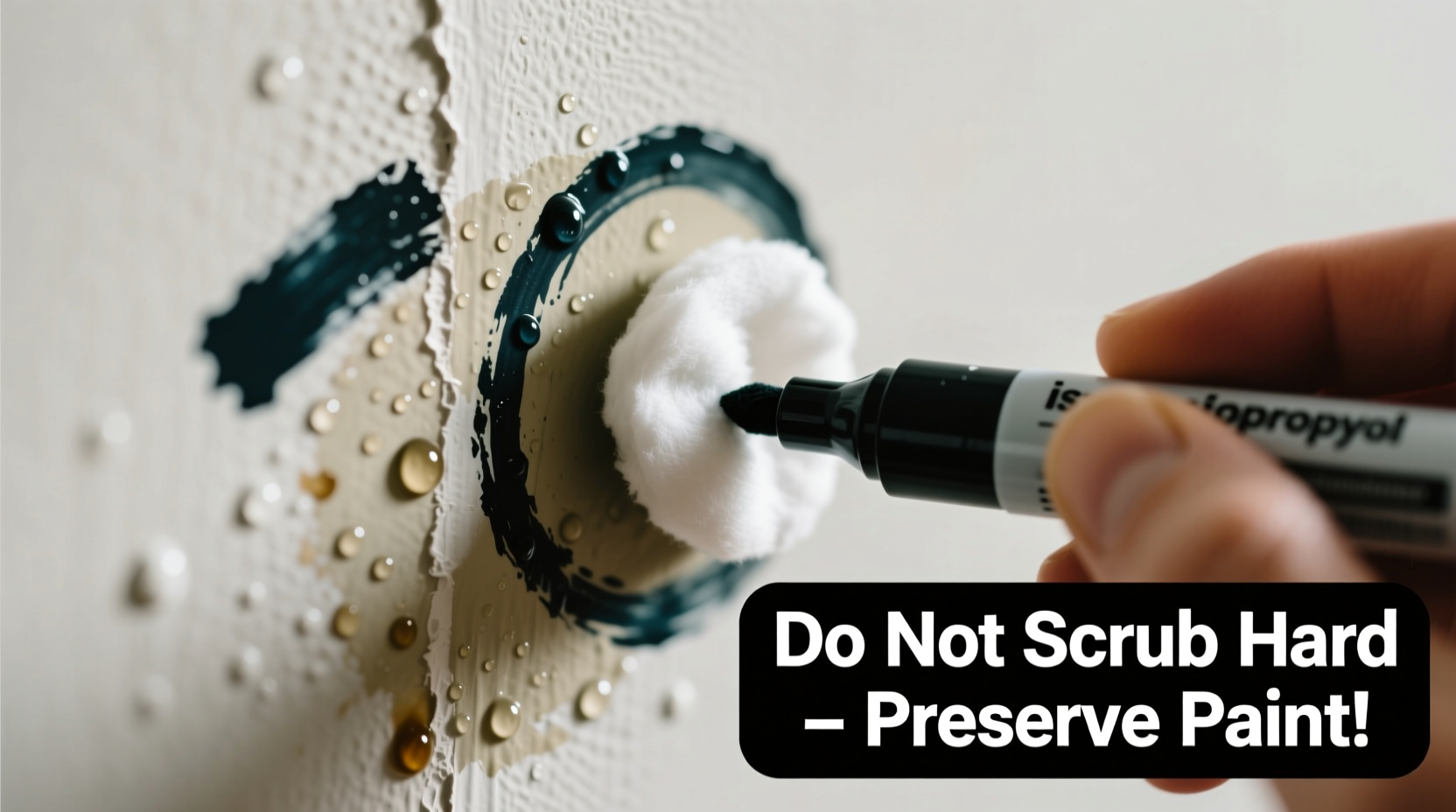
- Apply the cleaner: Dampen a cotton ball, soft cloth, or sponge with the solution. Gently dab or rub the stained area in circular motions—do not scrub aggressively.
- Rinse and dry: After removing the ink, wipe the area with a clean, damp cloth to remove residue. Dry immediately with a soft towel.
- Evaluate results: If the stain remains, repeat with a stronger method—but only after retesting.
Top 5 Safe and Effective Removal Methods
Not all cleaners work the same on every wall. Here are five reliable options, ranked by safety and effectiveness.
1. Rubbing Alcohol (Isopropyl Alcohol)
A go-to for breaking down permanent ink. Alcohol dissolves the solvent in marker ink without typically affecting latex paint. Use 70% or higher concentration.
- Dampen a cotton ball with alcohol.
- Gently rub the stain until it lifts.
- Wipe with water and dry.
Best for: Semi-gloss and glossy walls. Use cautiously on flat paint.
2. Magic Eraser (Melamine Foam)
Magic Erasers act like ultra-fine sandpaper at a microscopic level. They lift stains through abrasion rather than chemical action.
- Dampen the eraser slightly (it must be wet).
- Gently glide over the stain with light pressure.
- Rinse and dry the area.
Caution: Can dull flat paint or remove texture if overused. Not recommended for freshly painted walls (under 30 days old).
3. Hand Sanitizer
Most hand sanitizers contain alcohol and gel thickeners, making them ideal for controlled application on vertical surfaces.
- Apply a small amount directly to the stain.
- Let sit for 10–15 seconds.
- Wipe gently with a microfiber cloth.
Advantage: Less likely to drip than liquid alcohol.
4. Dry-Erase Marker “Trick”
An unconventional but often effective method. The solvent in dry-erase ink can loosen permanent marker ink, allowing both to be wiped away together.
- Cover the permanent mark completely with a dry-erase marker.
- Wait 10 seconds.
- Wipe off with a dry eraser or soft cloth.
Note: Works best on non-porous surfaces. May require multiple attempts on walls.
5. Commercial Stain Removers (e.g., Goo Gone Original or Krud Kutter)
Formulated to dissolve tough residues without damaging surfaces. Choose non-abrasive, paint-safe versions.
- Apply a small amount to a cloth—not directly on the wall.
- Blot the stain gently.
- Wipe clean with water afterward.
Avoid citrus-based or heavy-duty degreasers, which may etch paint.
Do’s and Don’ts: Wall-Safe Cleaning Table
| Do | Don’t |
|---|---|
| Use a soft microfiber cloth or cotton ball | Use paper towels—they can scratch or leave lint |
| Test any product in a hidden area first | Assume all “safe” products are safe for your specific paint |
| Work gently in circular motions | Scrub hard—this can remove paint or create shine spots |
| Use rubbing alcohol on gloss/semi-gloss paint | Use acetone or nail polish remover—these can melt paint |
| Rinse with water after using chemical cleaners | Leave residue on the wall—it can attract dirt |
Real Example: Removing Graffiti from a Child’s Bedroom
Sarah, a mother of two in Portland, discovered her 5-year-old had drawn a detailed “spaceship” across the bedroom wall using a black Sharpie. The wall was painted with flat latex paint—a notoriously difficult surface to clean without damage.
She started with hand sanitizer, wiping gently. Some fading occurred, but most of the ink remained. Next, she tried rubbing alcohol on a cotton pad. After two passes, the lines softened significantly. She followed up with a barely dampened magic eraser, using feather-light pressure. Within minutes, the spaceship vanished without a trace.
Crucially, Sarah tested each method behind the door first. She noticed the magic eraser slightly dulled the paint in the test area, so she minimized its use and finished by lightly dusting the cleaned spot with a dry cloth to blend the texture.
Her takeaway: “Patience matters. I could’ve ruined the wall rushing with the eraser. Going step by step saved me from repainting.”
Expert-Approved Checklist for Success
- ✅ Identify your wall paint finish (glossy, satin, flat, etc.)
- ✅ Gather supplies: rubbing alcohol, cotton balls, microfiber cloths, hand sanitizer, magic eraser
- ✅ Test every cleaner in an inconspicuous spot
- ✅ Start with the mildest method (hand sanitizer or dry-erase trick)
- ✅ Use gentle, circular motions—no aggressive scrubbing
- ✅ Rinse with water after using solvents
- ✅ Dry thoroughly with a soft towel
- ✅ Reassess and repeat if needed, escalating methods slowly
- ✅ Avoid acetone, bleach, and undiluted vinegar
- ✅ Consider touch-up paint as a last resort for stubborn spots
Frequently Asked Questions
Will vinegar remove permanent marker from walls?
Vinegar alone is generally ineffective against permanent marker ink due to its weak acidity. While white vinegar is safe for most painted walls, it lacks the solvent power to break down the ink’s binding agents. Mixing vinegar with baking soda or alcohol does not significantly improve results and may leave residue. Stick to proven solvents like isopropyl alcohol instead.
Can I use a magic eraser on freshly painted walls?
No. Walls painted within the last 30 days should not be cleaned with magic erasers. Fresh paint hasn’t fully cured and is more vulnerable to abrasion. Even light pressure can remove the top layer, leading to uneven sheen or visible patches. For new paint, stick to a damp microfiber cloth and minimal moisture. Wait at least four weeks before considering abrasive methods.
What if the marker has been on the wall for months?
Older stains are harder to remove because the ink has oxidized and bonded more deeply. Begin with rubbing alcohol and allow it to sit for 20–30 seconds before wiping. You may need two or three applications. If that fails, try a commercial stain remover labeled safe for painted walls. In extreme cases, a tiny amount of diluted denatured alcohol (mixed 1:1 with water) can help—but test rigorously first.
Conclusion: Preserve Your Walls Without Repainting
Removing permanent marker from walls doesn’t require drastic measures. With careful selection of cleaning agents and a methodical approach, most stains can be eliminated without repainting or damaging your paint. The foundation of success lies in understanding your wall’s finish, starting gently, and avoiding common pitfalls like harsh chemicals or excessive scrubbing.
By keeping simple tools like rubbing alcohol and microfiber cloths on hand, you can respond quickly to accidents before they set in. Remember: most mistakes are fixable when addressed with patience and the right technique.




 浙公网安备
33010002000092号
浙公网安备
33010002000092号 浙B2-20120091-4
Comments
No comments yet. Why don't you start the discussion?