
Pet ownership brings joy, companionship, and—inevitably—pet hair. Whether you have a long-haired cat or a double-coated dog, shedding is a natural part of life for many pet owners. While lint rollers are often the go-to solution, they’re not always available when needed. More importantly, frequent use can be wasteful and costly. The good news is that removing pet hair from furniture doesn’t require specialized tools. With everyday household items and a few smart techniques, you can keep your couches, chairs, and upholstery clean in minutes.
This guide explores practical, eco-friendly, and cost-effective methods to tackle stubborn pet hair—no lint roller required. From damp cloths to rubber gloves, we’ll walk through science-backed solutions that actually work on various fabric types and furniture materials.
Why Pet Hair Clings—and Why It’s So Hard to Remove
Pet hair isn’t just loose fur; it’s electrostatically charged and lightweight, allowing it to cling tightly to fabrics. Most upholstered furniture has a slightly textured surface—microfibers, nubs, or loops—that trap hair like Velcro. Over time, these hairs accumulate, forming layers that resist casual brushing or vacuuming.
Additionally, pet dander and oils from skin can increase adhesion, making hair stickier and more difficult to lift. This is why simply wiping with a dry hand or cloth often fails. Understanding this helps explain why moisture, friction, and static control are key elements in effective removal strategies.
“Pet hair removal is less about brute force and more about manipulating surface tension and static charge.” — Dr. Linda Harper, Textile Scientist at the Home Materials Research Institute
Effective Alternatives to Lint Rollers: What Works and Why
When a lint roller isn’t an option, turn to items already in your home. These alternatives rely on principles of moisture, adhesion, and electrostatic manipulation to lift and collect hair efficiently.
1. Damp Microfiber Cloth or Sponge
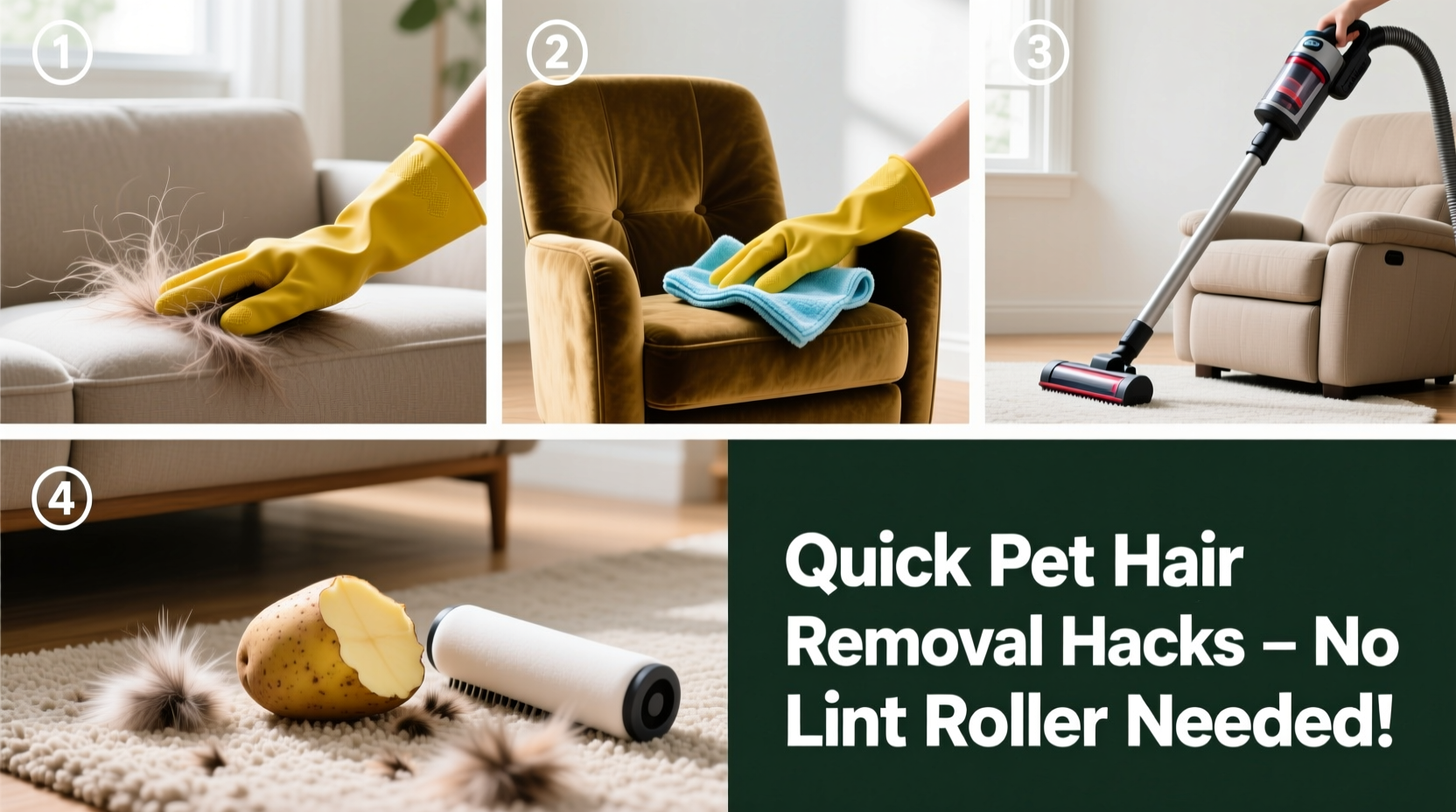
A slightly damp microfiber cloth is one of the simplest and most effective tools. The moisture neutralizes static charge, while the fine fibers of the cloth create a sticky surface that grabs hair. Use light pressure and wipe in one direction for best results.
2. Rubber Gloves (Kitchen or Cleaning)
Wearing rubber gloves and running your hands over the furniture creates friction that lifts hair into clumps. The rubber material generates slight static, attracting hair like a magnet. Once gathered, simply rinse the hair off under water.
This method is especially effective on sofas and loveseats with broad surfaces. Work section by section, using sweeping motions to concentrate hair into piles before collecting it.
3. Squeegee (Window or Shower)
A small window squeegee with a rubber blade can quickly clear pet hair from cushions and fabric. Glide it across the surface in overlapping strokes—the rubber edge traps hair and deposits it in front of the blade for easy disposal.
Works best on flat, tightly woven fabrics like cotton blends or synthetic microfiber. Avoid using on delicate or loosely woven materials where the edge might snag.
4. Dryer Sheet Wipe-Down
Used dryer sheets contain anti-static agents that reduce cling and loosen hair from fabric. Wipe the surface of your furniture with a fresh or used dryer sheet to repel hair and make it easier to gather.
For best results, follow up with a rubber glove or damp cloth to collect the loosened hair. This two-step process dramatically improves efficiency.
5. Vacuum with Upholstery Attachment (Optimized Technique)
If you own a vacuum, skip the standard brush roll and use the upholstery attachment. However, most people miss a critical step: lightly misting the area first. A quick spritz of water from a spray bottle reduces static and weighs down the hair, preventing it from being blown around.
Use slow, deliberate passes and overlap each stroke. Change the attachment angle to reach crevices between cushions.
Step-by-Step Guide: Quick 5-Minute Furniture Refresh
Follow this efficient routine to remove pet hair from any piece of furniture in under five minutes—no special tools needed.
- Prepare the Area: Remove cushions, blankets, or decorative pillows. This exposes hidden hair buildup in seams and corners.
- Loosen Hair with a Dryer Sheet: Wipe the entire surface with a dryer sheet to neutralize static and break the bond between hair and fabric.
- Use Rubber Gloves to Gather: Put on rubber gloves and run your hands firmly over the fabric in one direction. Hair will begin to ball up into clusters.
- Collect with Damp Cloth: Take a lightly damp microfiber cloth and sweep over the surface to pick up remaining stray hairs.
- Dispose and Repeat if Needed: Rinse collected hair down the sink or flushable toilet (if applicable). For heavy shedding days, repeat the process weekly.
Comparing Methods: Effectiveness by Fabric Type
| Method | Cotton/Blends | Microfiber | Fleece/Fabric | Leather/Vinyl | Notes |
|---|---|---|---|---|---|
| Damp Microfiber Cloth | ★★★★☆ | ★★★★★ | ★★★☆☆ | ★★★★☆ | Ideal for daily touch-ups; safe on most surfaces |
| Rubber Gloves | ★★★★★ | ★★★★☆ | ★★☆☆☆ | ★★★★★ | Best for large, flat areas; excellent grip on smooth fabrics |
| Squeegee | ★★★★☆ | ★★★★★ | ★☆☆☆☆ | ★★★★☆ | Highly effective on tight weaves; avoid on plush fabrics |
| Dryer Sheet | ★★★☆☆ | ★★★☆☆ | ★★★★☆ | ★★★★☆ | Great prep step; not sufficient alone but enhances other methods |
| Vacuum + Light Mist | ★★★★★ | ★★★★★ | ★★★★☆ | ★★★☆☆ | Most thorough; requires equipment but handles deep buildup |
Real-Life Example: Managing Shedding in a Multi-Pet Household
Sarah Thompson, a pet groomer and mother of two, lives in a 900-square-foot apartment with two cats and a golden retriever. “During spring shedding season, my beige sectional looked like a fur farm,” she says. “I used to buy lint rollers every week, but they’d run out fast and weren’t strong enough.”
After testing several alternatives, Sarah developed a simple nightly routine: she puts on dishwashing gloves and runs her hands over the sofa after dinner. Within three minutes, she gathers hair into balls and disposes of them. On weekends, she follows up with a damp microfiber cloth and a quick vacuum pass.
“It’s faster than the lint roller ever was,” she explains. “And I’m not wasting money or plastic. My furniture stays clean, and my guests stop asking if I own a yak.”
Pro Tips for Long-Term Hair Management
While removing existing hair is important, reducing future buildup is equally valuable. Combine cleaning techniques with preventive habits to minimize daily maintenance.
- Brush pets regularly: Daily brushing removes loose hair before it lands on furniture. Use a de-shedding tool for long-haired breeds.
- Designate pet zones: Use washable throws or pet-specific furniture covers on frequently used seats.
- Wash fabric covers weekly: Removable cushion covers should be laundered on high heat (if fabric allows) to eliminate embedded hair and dander.
- Use air purifiers: HEPA filters capture airborne pet hair and reduce overall allergen load in the home.
- Rotate seating areas: Alternate which sections of the sofa pets are allowed on to spread out shedding and allow recovery time.
Common Mistakes to Avoid
Even with the right tools, improper technique can worsen the problem or damage furniture. Steer clear of these common errors:
- Using too much water: Over-wetting fabric can lead to mildew, shrinking, or discoloration.
- Ignoring crevices: Hair accumulates between cushions and along seams—use a narrow tool like a ruler wrapped in a dryer sheet to reach tight spots.
- Relying solely on vacuums: Without pre-treatment, vacuums often blow hair deeper into fabric instead of lifting it.
- Skipping preventive care: Removing hair daily is harder than managing it weekly with proper grooming and barriers.
- Using adhesive tapes meant for gifts: Packing tape or masking tape lacks the gentle tackiness of lint rollers and may leave residue.
FAQ: Common Questions About Pet Hair Removal
Can I use baby wipes to remove pet hair?
Baby wipes are not recommended for fabric furniture. They contain moisturizers and fragrances that can stain or attract dirt over time. Stick to plain water or dryer sheets for safer cleaning.
Does a damp sponge really work better than a dry cloth?
Yes. Moisture reduces static electricity, which is what makes pet hair cling. A slightly damp sponge or cloth creates surface tension that pulls hair away more effectively than dry friction.
How often should I clean pet-prone furniture?
For homes with shedding pets, a quick wipe-down every 2–3 days prevents buildup. Deep cleaning with a vacuum or full wipe should happen weekly during peak shedding seasons (spring and fall).
Checklist: Quick Pet Hair Removal Routine
Keep this checklist handy for fast, consistent cleanups:
- ☐ Remove cushions and throw blankets
- ☐ Wipe surface with a dryer sheet to reduce static
- ☐ Use rubber gloves to gather hair into clumps
- ☐ Follow with a lightly damp microfiber cloth
- ☐ Vacuum crevices with upholstery attachment
- ☐ Wash removable covers (weekly)
- ☐ Brush pets to reduce loose hair (daily)
Conclusion: Take Control of Pet Hair—Without the Lint Roller
Dealing with pet hair doesn’t have to mean stocking up on disposable rollers or spending hours scrubbing furniture. With simple household items and a bit of know-how, you can maintain clean, hair-free upholstery in minutes. The key lies in understanding how pet hair adheres and using moisture, friction, and static control to your advantage.
Whether you choose rubber gloves, a squeegee, or a damp cloth, consistency matters more than perfection. Combine quick cleanups with preventive habits like regular grooming and designated pet zones, and you’ll spend less time fighting fur and more time enjoying your furry companions.




 浙公网安备
33010002000092号
浙公网安备
33010002000092号 浙B2-20120091-4
Comments
No comments yet. Why don't you start the discussion?