
Watermarks on wood furniture are a common household issue—caused by condensation from cold drinks, hot dishes, or humid environments. While many turn to sanding as a default fix, this method can damage finishes, alter the surface texture, and require refinishing. Fortunately, there are several non-invasive techniques that effectively lift watermarks without sanding. These solutions rely on gentle chemical reactions, moisture manipulation, and natural abrasives to restore the wood’s appearance while preserving its integrity.
Whether you’re dealing with a faint white ring under a coffee cup or a deeper blemish from a forgotten plant saucer, this guide provides practical, tested approaches using everyday household items. By understanding the science behind watermarks and applying the right technique at the right time, you can revive your furniture safely and affordably.
Understanding Watermarks on Wood
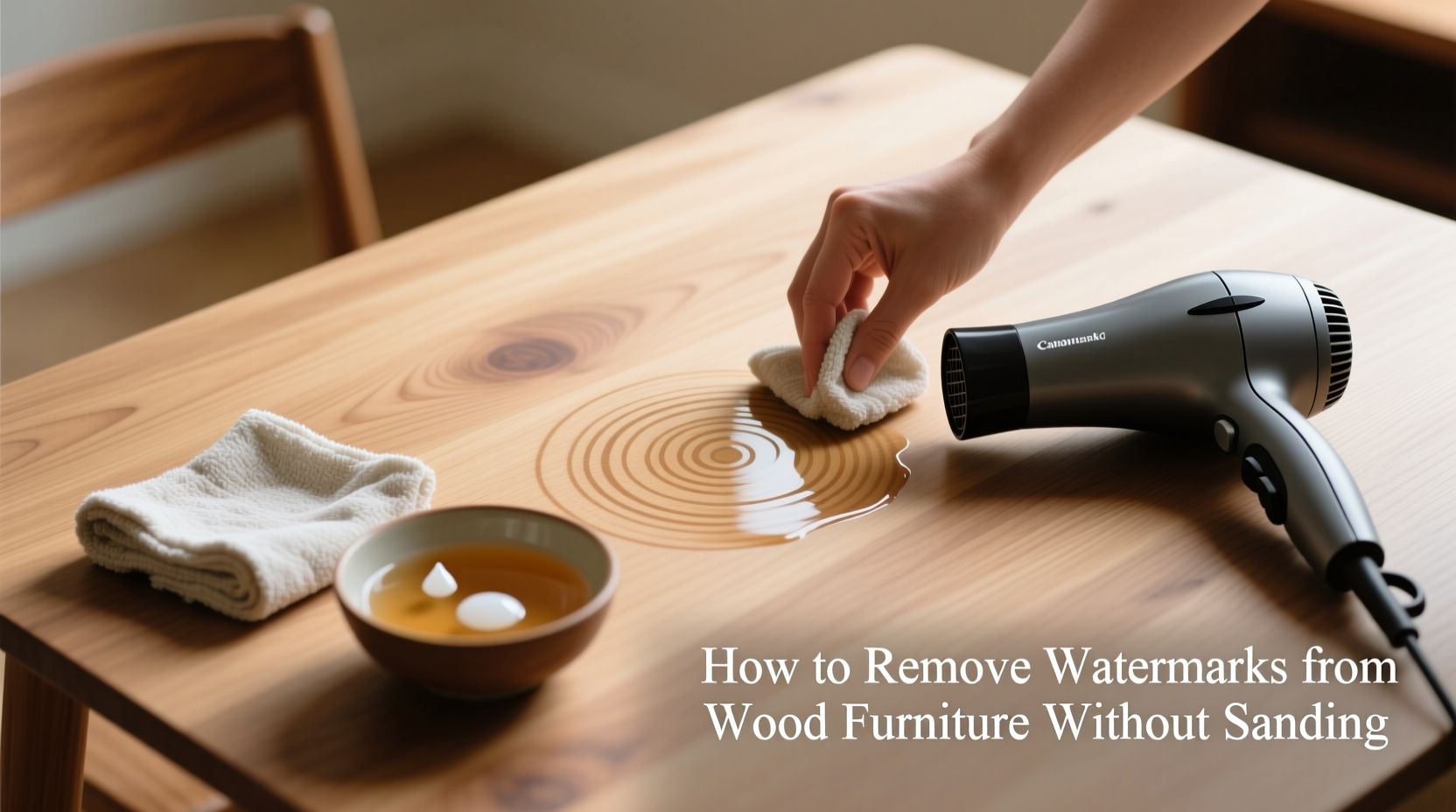
Watermarks form when moisture penetrates the finish of wood furniture but doesn’t fully soak into the wood itself. Instead, it gets trapped between the surface layer—typically varnish, lacquer, or polyurethane—and the wood beneath. This trapped moisture scatters light, creating a cloudy or white spot known as a “white ring.” In more severe cases, especially with prolonged exposure, the moisture may reach the wood fibers, causing swelling or dark staining.
Not all marks are the same. A fresh watermark is usually superficial and easier to treat. Older, darker stains may indicate deeper penetration and require more intensive care. The key is identifying the type early:
- White rings: Caused by trapped moisture under the finish; often removable with mild treatments.
- Dark spots: Indicate actual wood saturation; may need bleaching or professional attention.
- Blistered finish: If the finish has lifted or bubbled, repair may involve touch-up pens or professional refinishing.
“Surface-level watermarks are one of the most common yet misunderstood issues in wood care. Most can be resolved without damaging the original finish—if treated correctly.” — James Holloway, Master Furniture Restorer with 30+ years of experience
Effective Methods to Remove Watermarks Without Sanding
The following methods avoid sanding entirely, focusing instead on dissolving, displacing, or reversing the trapped moisture. Each technique varies in intensity, so start with the mildest option and progress only if necessary.
1. Mayonnaise or Petroleum Jelly Treatment
Mayonnaise works due to its oil content (usually soybean or olive oil), which helps break down the moisture barrier, while the acidity from vinegar gently lifts residues. Petroleum jelly (Vaseline) functions similarly by slowly penetrating the finish and softening trapped moisture.
How to apply:
- Clean the area lightly with a dry microfiber cloth.
- Apply a thin layer of mayonnaise or petroleum jelly directly over the watermark.
- Cover with plastic wrap to prevent drying and leave for 4–8 hours (overnight for stubborn marks).
- Wipe off thoroughly with a soft cloth.
- Buff gently with a clean, dry cloth.
2. Iron and Blotting Paper Technique
This method uses controlled heat to vaporize trapped moisture. It’s particularly effective for white rings where the finish remains intact.
Step-by-step process:
- Place a clean, absorbent cloth (like a tea towel or paper towel) over the watermark.
- Set an iron to low heat—no steam.
- Gently press the iron over the cloth for 5–10 seconds at a time.
- Lift and check frequently to avoid overheating.
- Repeat until the mark begins to fade.
- Finish by wiping with a dry cloth and applying furniture wax for protection.
This method works because heat expands the moisture, pushing it back out through microscopic pores in the finish. The cloth absorbs the vapor, preventing re-condensation.
3. Baking Soda and Toothpaste Paste
A mildly abrasive paste made from baking soda and non-gel toothpaste can polish away surface haze without scratching. This method is best for minor marks on finished surfaces.
Preparation and application:
- Mix 1 tablespoon of baking soda with 1 teaspoon of white toothpaste (avoid colored or gel types).
- Using a soft cloth, rub the paste in circular motions over the watermark.
- Continue for 30–60 seconds, then wipe clean with a damp cloth.
- Dry immediately and buff with a lint-free cloth.
This technique polishes the surface microscopically, reducing light scattering caused by the moisture film.
4. Denatured Alcohol and Oil Blend
Denatured alcohol evaporates quickly and can draw out moisture, while oil conditions the surrounding area to maintain balance.
Mix and use as follows:
- Combine equal parts denatured alcohol and linseed oil or mineral oil.
- Dip a cotton swab or soft cloth into the mixture.
- Gently dab (do not rub aggressively) onto the watermark.
- Let sit for 30 seconds, then wipe off.
- Repeat up to three times if needed.
Caution: Test on an inconspicuous area. Some finishes, especially shellac, may react negatively to alcohol.
Do’s and Don’ts When Treating Watermarks
| Do’s | Don’ts |
|---|---|
| Test any solution on a hidden area first | Use steam or high heat directly on the finish |
| Work in small, circular motions for even results | Rub aggressively, which can scratch or wear the finish |
| Allow treatments time to work—patience pays | Apply multiple strong chemicals at once |
| Protect the area after treatment with wax or oil | Leave wet treatments unattended for too long |
| Use soft, lint-free cloths for application | Use abrasive pads like steel wool (unless #0000 and expertly applied) |
Real Example: Reviving a Dining Table Ring
Sarah, a homeowner in Portland, noticed a persistent white ring on her oak dining table after hosting a dinner party. She had placed a chilled wine bottle directly on the surface, leaving a hazy oval about 3 inches wide. Concerned about damaging the factory finish, she avoided sanding and opted for the mayonnaise method.
She applied a thin layer before bed, covered it with plastic wrap, and left it overnight. The next morning, she wiped it clean and was surprised to see a 70% reduction. She repeated the process for two more nights, followed by a light buff with furniture wax. By day four, the watermark had vanished completely, and the table regained its uniform luster.
“I was ready to call a refinisher,” Sarah said later. “But saving $200 and doing it myself felt amazing. I now keep a jar of mayo in the pantry just in case!”
When to Seek Professional Help
While most surface watermarks respond well to home remedies, some situations require expert intervention:
- The finish is cracked, blistered, or peeling.
- The mark is dark brown or black, indicating deep water absorption or mold.
- The furniture is antique or has significant value.
- Multiple treatments have failed, suggesting deeper damage.
In such cases, a professional restorer can assess whether touch-up staining, localized refinishing, or French polishing is needed. Attempting aggressive DIY fixes on valuable pieces risks permanent damage.
Prevention Tips to Avoid Future Watermarks
Preventing watermarks is far easier than removing them. Simple habits can protect your investment for years.
- Use protective barriers: Felt pads, placemats, and glass tops shield surfaces from direct contact.
- Maintain humidity control: Indoor humidity above 60% increases condensation risk. Use a dehumidifier in damp seasons.
- Re-wax periodically: Beeswax or carnauba-based furniture waxes reinforce the finish’s moisture resistance.
- Avoid direct sunlight: UV exposure weakens finishes over time, making them more vulnerable to moisture intrusion.
Frequently Asked Questions
Can vinegar remove watermarks from wood?
Vinegar alone is not recommended. Its acidity can dull or etch certain finishes, especially on modern lacquers. However, when diluted and combined with oil (as in mayonnaise), it may help gently break down residues. Pure vinegar should be avoided.
Will toothpaste really work on a water ring?
Yes—but only non-gel, white toothpaste used sparingly. The mild abrasives in toothpaste can polish the surface and reduce the appearance of white haze. It won’t fix deep moisture, but for light surface marks, it’s a surprisingly effective kitchen hack.
How long does it take to remove a watermark naturally?
Natural evaporation can take weeks or months, depending on humidity and airflow. Active treatments typically yield visible results within hours to days. Waiting indefinitely is not advisable, as prolonged moisture can lead to permanent finish failure.
Final Checklist: Watermark Removal Without Sanding
- Identify the type of watermark (white ring vs. dark stain).
- Test any treatment on a hidden area first.
- Start with the mildest method (e.g., mayonnaise or petroleum jelly).
- Allow sufficient dwell time (4–24 hours).
- Wipe clean and assess results.
- If needed, try the iron-and-cloth method with caution.
- For stubborn marks, use a baking soda paste or alcohol-oil blend.
- After removal, apply furniture wax or oil to protect the surface.
- Implement preventive measures to avoid recurrence.
- Consult a professional if the damage appears structural or deep.
Conclusion: Preserve Your Furniture Naturally
Removing watermarks from wood furniture without sanding is not only possible—it’s often the smarter, safer choice. With simple household items and a bit of patience, you can restore your cherished tables, cabinets, and dressers to their former glory. The techniques outlined here prioritize preservation over alteration, ensuring that the character and craftsmanship of your furniture remain intact.
Every piece of wood furniture carries a story. Don’t let a single water ring become the final chapter. Try these proven methods, share your results, and pass on the knowledge to others who value timeless design and sustainable care.




 浙公网安备
33010002000092号
浙公网安备
33010002000092号 浙B2-20120091-4
Comments
No comments yet. Why don't you start the discussion?