
Many home cooks reach for curry powder as a convenient shortcut to add depth and warmth to stews, soups, and rice dishes. But what happens when the recipe calls for curry powder and all you have is curry paste—or vice versa? Understanding how to substitute one for the other isn’t just about measurement; it’s about respecting flavor balance, moisture content, and regional authenticity. Curry paste and curry powder are fundamentally different products: one is fresh, aromatic, and oil-based; the other is dry, shelf-stable, and often more muted in intensity. Replacing them without adjustment can lead to a dish that’s too spicy, too watery, or lacking in complexity. This guide breaks down everything you need to know—from flavor profiles and ratios to real-world applications—so you can confidently swap curry powder for curry paste (and back again) with professional results.
Definition & Overview
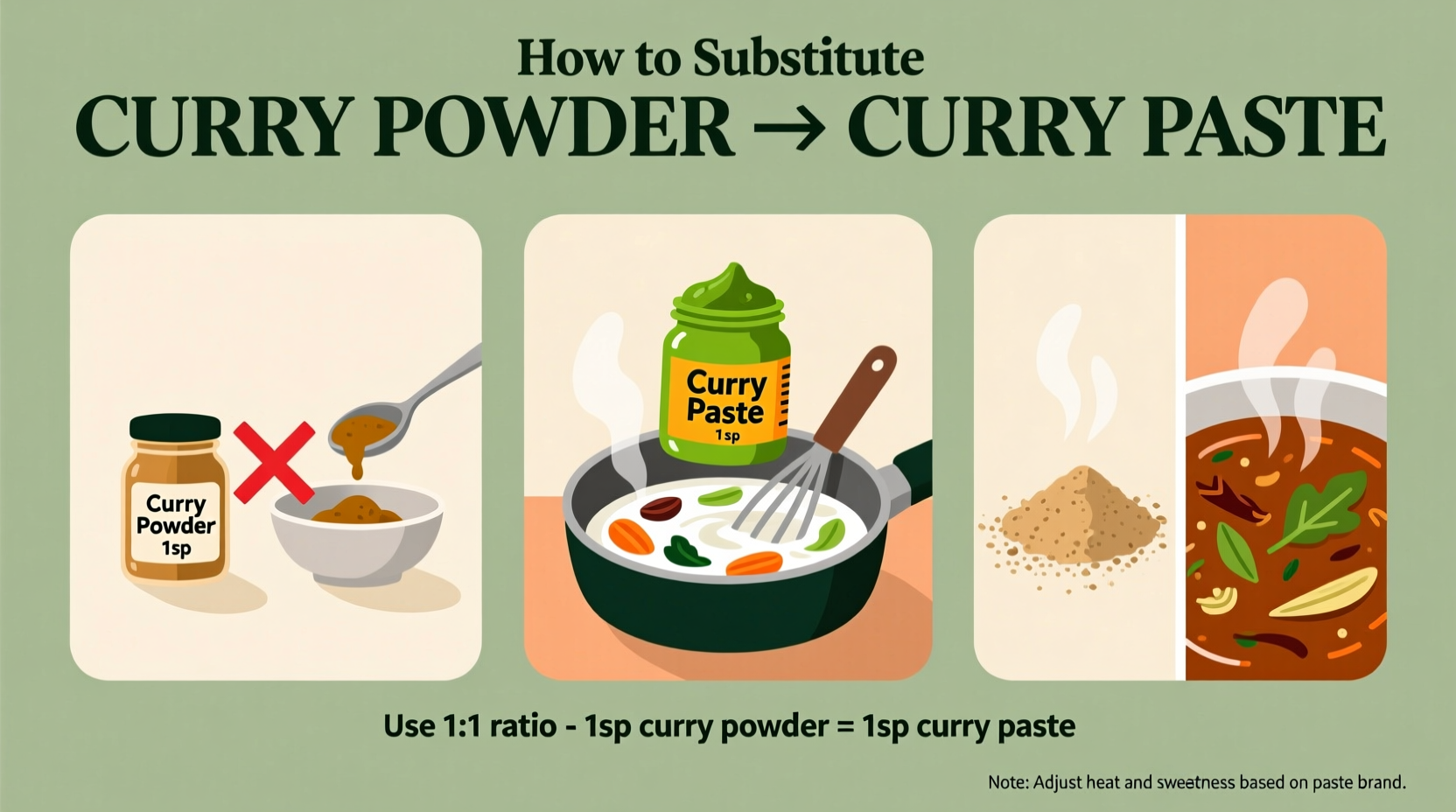
Curry powder is a Western-crafted spice blend typically composed of turmeric, coriander, cumin, fenugreek, mustard seed, and chili powder. Despite its name, it doesn’t originate from a single traditional cuisine but emerged during the British colonial era as an attempt to replicate Indian flavors using dried, ground spices. It is bright yellow-orange, earthy, and moderately warm, designed for long cooking times where it infuses into oils and liquids.
Curry paste, on the other hand, is a Southeast Asian staple—most famously Thai—made from fresh or rehydrated aromatics pounded into a thick, moist mixture. Common types include red, green, and yellow curry pastes, each featuring lemongrass, galangal, kaffir lime zest, garlic, shallots, chilies, and shrimp paste. Unlike curry powder, it delivers immediate pungency, brightness, and layered heat, and is meant to be fried briefly in coconut oil or cream before adding liquids.
While both aim to build flavor foundations, they differ in origin, texture, potency, and culinary role. Substituting one for the other requires more than a simple volume swap—it demands an understanding of how moisture, fat solubility, and ingredient synergy affect the final dish.
Key Characteristics
| Characteristic | Curry Powder | Curry Paste |
|---|---|---|
| Texture | Dry, fine powder | Thick, wet paste |
| Flavor Profile | Earthy, warm, slightly bitter (from turmeric), mild umami | Bright, pungent, citrusy, spicy, fermented (especially with shrimp paste) |
| Aroma | Subtle, dusty, warm spices | Sharp, herbal, aromatic (fresh lemongrass, garlic, ginger) |
| Heat Level | Mild to moderate (adjustable by brand) | Moderate to very hot (especially green curry paste) |
| Culinary Function | Seasoning agent; builds base flavor over time | Flavor catalyst; blooms quickly in fat, releases essential oils |
| Shelf Life | 6–12 months (if stored properly) | Fresh: 2 weeks refrigerated; up to 6 months frozen |
| Oil Solubility | Requires fat to release flavor fully | Already contains oil-soluble compounds; blooms instantly |
Practical Usage: How to Substitute Curry Paste for Curry Powder
When replacing curry powder with curry paste, the key challenge is balancing moisture, salt, and intensity. Because curry paste is wet and potent, simply using an equal amount will result in excess liquid and overwhelming heat. A thoughtful substitution accounts for these variables.
General Conversion Ratio
A reliable starting point:
- 1 teaspoon curry powder ≈ ½ to 1 teaspoon curry paste
The exact ratio depends on the type of curry paste used. For example, yellow curry paste is milder and closer in profile to standard curry powder, so use 1:1 cautiously. Red curry paste is spicier and more complex, so start with ½ teaspoon per teaspoon of curry powder. Green curry paste is the most aggressive—use only ¼ to ½ teaspoon per teaspoon of curry powder unless you want intense heat.
Step-by-Step Substitution Guide
- Reduce the liquid: Since curry paste adds moisture, reduce broth, water, or coconut milk by 1–2 tablespoons per tablespoon of paste used.
- Omit added salt temporarily: Many curry pastes contain fish sauce or shrimp paste. Taste before salting further.
- Bloom the paste in fat: Heat oil or butter in a pan, then fry the curry paste for 1–2 minutes until fragrant. This step mimics the “blooming” effect of toasting curry powder and unlocks deeper flavors.
- Add remaining ingredients gradually: Proceed with the recipe, adjusting seasoning at the end.
- Taste and balance: If the dish is too sharp, add a pinch of sugar or a splash of cream. If too mild, finish with a dash of ground cumin or coriander.
Pro Tip: For dishes like curried lentils or chicken stew where curry powder is traditionally used, blend ½ teaspoon of red curry paste with ¼ teaspoon of ground turmeric and a pinch of cumin. This hybrid approach preserves the intended color and warmth while introducing fresh aromatic depth.
Recipe Adaptation Example
Original recipe calls for: 2 tsp curry powder in a vegetable curry with coconut milk and potatoes.
Substitute with: 1 tsp red curry paste.
Method:
- Heat 1 tbsp coconut oil in a pot.
- Add 1 tsp red curry paste; stir 90 seconds until aromatic.
- Add vegetables and stir to coat.
- Pour in ¾ cup coconut milk (instead of 1 cup, to offset paste moisture).
- Simmer 20 minutes. Adjust salt and sweetness if needed.
The result is a richer, more aromatic curry with authentic Southeast Asian character—without straying too far from the original intent.
Variants & Types
Not all curry powders or pastes are created equal. Recognizing the variants helps refine substitutions.
Types of Curry Powder
- Madras Curry Powder: Hotter, with extra chili and tamarind notes. Best for robust dishes like chutneys or meat curries.
- Hot vs. Mild Curry Powder: Varies by brand. Always check labels—some contain up to 20% chili powder.
- Garam Masala (Not a True Substitute): Often confused with curry powder, garam masala is sweeter, warmer (cinnamon, cardamom, cloves), and used toward the end of cooking. Not interchangeable without reformulation.
Common Curry Pastes
- Thai Red Curry Paste: Made with dried red chilies, lemongrass, galangal, garlic, shallots, and shrimp paste. Medium heat, balanced flavor. Closest to curry powder in versatility.
- Thai Green Curry Paste: Uses fresh green chilies, giving it higher heat and grassy notes. Best in coconut-based dishes.
- Thai Yellow Curry Paste: Milder, often includes turmeric and cumin. Most similar in flavor profile to Western curry powder.
- Japanese Curry Paste (Roux-based): Thickened with flour and fat, often sweetened. Used in Japanese curry rice. Less suitable as a direct substitute unless melted into sauce.
- Indian-Based Pastes (e.g., Patak’s): Often blends of ground spices and oil, closer to a wet curry powder. Easier to substitute 1:1 with minor adjustments.
| Paste Type | Best For | Substitution Ratio (for 1 tsp curry powder) |
|---|---|---|
| Yellow Curry Paste | Mild curries, soups, rice dishes | 1:1 (start with ¾ tsp) |
| Red Curry Paste | Coconut curries, stir-fries, marinades | ½ to ¾ tsp |
| Green Curry Paste | Spicy Thai curries, seafood | ¼ to ½ tsp |
| Japanese Curry Paste | Stews, Japanese-style curry | 1 tsp (melted into sauce) |
| Indian-Style Wet Paste | Butter chicken, dals | 1 tsp (reduce liquid) |
Comparison with Similar Ingredients
Confusion often arises between curry powder, curry paste, and other spice blends. Clarifying distinctions prevents culinary missteps.
- Curry Powder vs. Garam Masala: Curry powder is earthy and turmeric-forward; garam masala is sweet and warming. They serve different roles—curry powder builds base flavor, garam masala finishes a dish.
- Curry Paste vs. Harissa: Both are wet pastes, but harissa is North African, based on roasted peppers and caraway, lacking the citrus and ginger notes of curry paste.
- Curry Paste vs. Doubanjiang: A Chinese fermented broad bean paste, used in mapo tofu. Salty and umami-rich but not aromatic in the same way as Thai curry paste.
- Store-Bought vs. Homemade Curry Paste: Commercial pastes often contain preservatives and less fresh herb content. Homemade versions are brighter and more nuanced but require effort. For substitution purposes, treat store-bought as slightly less potent due to lower volatile oil retention.
“The mistake most home cooks make is treating curry paste like a spice blend. It’s not—it’s a complete flavor system. When you use it, you’re not just adding heat; you’re introducing acidity, fermentation, and aromatic volatility that dried spices can’t replicate.” — Chef Anika Patel, Culinary Director at Spice Route Institute
Practical Tips & FAQs
Can I use curry paste in place of curry powder in slow cooker recipes?
Yes, but with caution. Add the curry paste during the last 30 minutes of cooking to preserve its volatile aromatics. Adding it at the beginning can cause bitterness or flatness due to prolonged simmering. Alternatively, bloom it in a pan first, then stir into the slow cooker near the end.
Is curry paste stronger than curry powder?
In terms of immediate impact, yes. Curry paste delivers concentrated, fresh flavors and higher capsaicin levels from whole chilies. However, curry powder integrates more evenly over long cooking and provides consistent color. The “strength” depends on context—paste wins in aroma and heat; powder in stability and hue.
How do I adjust for salt when substituting?
Always hold back added salt until the end. Curry pastes, especially Thai varieties, contain fish sauce or shrimp paste, contributing significant sodium. Taste after combining all ingredients before seasoning further.
Can I dry out curry paste to make my own curry powder?
Technically possible, but not recommended. Dehydrating curry paste destroys delicate essential oils and alters flavor balance. Instead, create a custom curry powder blend using individual spices: combine 2 parts coriander, 1 part cumin, 1 part turmeric, ½ part fenugreek, and a pinch of chili. Toast and grind for freshness.
What dishes work best with substitutions?
- Use curry paste instead of curry powder in: Coconut-based curries, stir-fries, marinades, soups, and rice pilafs where moisture isn’t an issue.
- Stick to curry powder when making: Dry rubs, spice blends, baked goods (like curry crackers), or dishes requiring minimal liquid (e.g., roasted vegetables).
How should I store leftover curry paste?
Transfer to an airtight container and refrigerate for up to two weeks. For longer storage, freeze in ice cube trays (1 tsp per cube) for easy portioning. Thaw as needed. Press plastic wrap directly onto the surface to prevent oxidation.
Does the brand of curry paste matter?
Significantly. Brands like Maesri, Mae Ploy, and Thai Kitchen vary in spice level, shrimp paste content, and authenticity. Maesri is spicier and more traditional; Thai Kitchen is milder and more accessible. Adjust quantities accordingly—what works with one may overwhelm with another.
Quick Reference Checklist: Substituting Successfully
- Identify the type of curry paste being used.
- Start with half the amount you think you need.
- Bloom the paste in oil before adding liquids.
- Reduce recipe liquid by 1–2 tbsp per tsp of paste.
- Hold off on salt until final tasting.
- Taste and adjust with sugar, acid, or cream if needed.
- Pair with complementary ingredients (coconut milk, lime, cilantro).
Summary & Key Takeaways
Replacing curry powder with curry paste is entirely feasible—but only with careful attention to form, flavor, and function. Curry paste is not a mere wet version of curry powder; it is a distinct ingredient with greater aromatic complexity, moisture content, and heat. A successful substitution hinges on three principles: adjust the ratio (typically ½ to 1 tsp paste per tsp powder), modify the liquid to maintain consistency, and bloom the paste in fat to maximize flavor release.
Yellow and red curry pastes offer the smoothest transition for Western-style curries, while green paste should be used sparingly. Always consider salt content, regional authenticity, and dish type before swapping. With practice, this substitution can elevate familiar recipes, introducing layers of freshness and depth that dried spices alone cannot achieve.
Next time you're mid-recipe and realize you're out of curry powder, don’t panic. Reach for that jar of curry paste—just wield it with precision and respect.




 浙公网安备
33010002000092号
浙公网安备
33010002000092号 浙B2-20120091-4
Comments
No comments yet. Why don't you start the discussion?