
Your body runs on a natural 24-hour internal clock known as the circadian rhythm. This biological system regulates when you feel awake, sleepy, hungry, and alert. When it’s disrupted—by late nights, irregular work shifts, screen exposure, or travel—your sleep quality, mood, and overall health can suffer. The good news: your circadian rhythm is not fixed. With consistent, intentional habits, you can reset it and reclaim a healthy sleep-wake cycle.
This guide provides actionable, evidence-based strategies to help you realign your internal clock, improve sleep consistency, and enhance daily performance.
Understanding Circadian Rhythm and Why It Matters
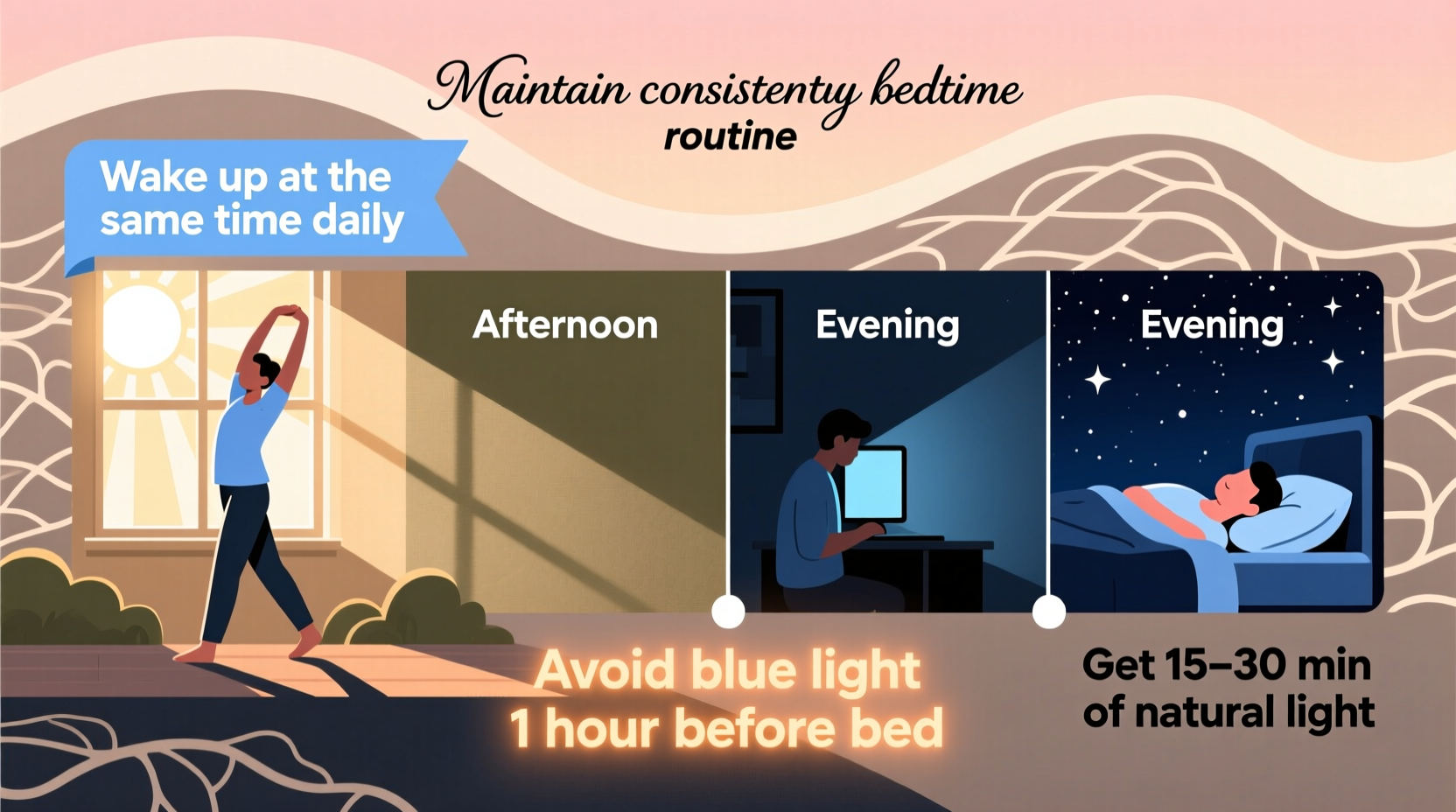
The circadian rhythm is primarily controlled by the suprachiasmatic nucleus (SCN) in the brain, which responds to environmental cues—especially light. When light enters your eyes in the morning, it signals the SCN to suppress melatonin (the sleep hormone) and increase cortisol, promoting wakefulness. As darkness falls, melatonin rises again, preparing the body for sleep.
Modern lifestyles often interfere with this process. Artificial lighting, blue light from screens, caffeine, and erratic schedules can misalign your internal clock. Consequences include:
- Difficulty falling or staying asleep
- Daytime fatigue and poor concentration
- Mood disturbances like irritability or anxiety
- Increased risk of chronic conditions such as obesity, diabetes, and cardiovascular disease
Resetting your circadian rhythm isn’t about quick fixes—it’s about re-establishing harmony between your biology and environment.
Key Strategies to Reset Your Circadian Rhythm
Resetting your internal clock requires a combination of behavioral, environmental, and lifestyle adjustments. The most effective changes are those that reinforce natural light-dark cycles and promote consistent bodily rhythms.
1. Prioritize Morning Light Exposure
Natural sunlight is the strongest signal for resetting your circadian rhythm. Exposure to bright light within 30–60 minutes of waking helps synchronize your internal clock with the external day.
Spending just 15–30 minutes outside in the morning—even on cloudy days—can significantly improve alertness and shift your sleep phase earlier. If outdoor access is limited, consider using a light therapy box that emits 10,000 lux of cool-white light.
“Morning light is the most powerful zeitgeber—external cue—for circadian entrainment. It sets the tone for your entire day.” — Dr. Jamie Zeitzer, Stanford Center for Sleep Sciences
2. Limit Evening Blue Light
Blue light emitted by smartphones, tablets, and LED screens suppresses melatonin production and delays sleep onset. To protect your rhythm, reduce screen use at least 1–2 hours before bedtime.
If you must use devices, enable night mode settings or wear blue-light-blocking glasses. Studies show that amber-tinted lenses worn in the evening can advance melatonin release by up to 1.5 hours.
3. Establish a Consistent Sleep Schedule
Going to bed and waking up at the same time every day—even on weekends—is one of the most effective ways to stabilize your circadian rhythm. Irregular sleep times confuse your internal clock, making it harder to fall asleep and wake up naturally.
Aim for a sleep window that aligns with your natural tendencies (chronotype), whether you're a morning lark or night owl. Over time, consistency trains your body to anticipate sleep and wakefulness.
4. Optimize Your Sleep Environment
Your bedroom should support darkness, cool temperatures, and quiet. Use blackout curtains, remove electronic lights, and keep the room between 60–67°F (15–19°C). A cooler core temperature supports deeper sleep and reinforces circadian signaling.
Step-by-Step Guide to Resetting Your Sleep Schedule
Whether you're adjusting after jet lag, recovering from shift work, or correcting years of poor sleep habits, follow this 7-day timeline to gradually shift your rhythm:
- Day 1: Record your current bedtime and wake time. Identify how far off they are from your target schedule.
- Day 2: Begin morning light exposure within 30 minutes of waking. Spend 20 minutes outside or near a bright window.
- Days 3–4: Reduce evening screen time by 30 minutes each night. Replace scrolling with reading or light stretching.
- Days 5–6: Adjust bedtime and wake time in 15–30 minute increments toward your goal. Never force yourself to sleep earlier than you’re ready.
- Day 7: Maintain your new schedule consistently, even on weekends. Track improvements in energy and sleep quality.
This gradual approach prevents resistance and increases long-term adherence. For severe misalignment (e.g., delayed sleep phase disorder), the adjustment may take 2–4 weeks.
Do’s and Don’ts for Circadian Health
| Do | Don't |
|---|---|
| Get morning sunlight within an hour of waking | Sleep in excessively on weekends |
| Go to bed and wake up at the same time daily | Use bright screens 1–2 hours before bed |
| Keep your bedroom dark, cool, and quiet | Consume caffeine after 2 p.m. |
| Eat meals at consistent times each day | Exercise vigorously within 2 hours of bedtime |
| Use dim, warm lighting in the evening | Take long or late afternoon naps |
Real-Life Example: Recovering from Shift Work Disorder
Mark, a 34-year-old nurse working rotating night shifts, struggled with insomnia during his days off and constant fatigue. After months of disrupted sleep, he consulted a sleep specialist who diagnosed him with shift work sleep disorder—a form of circadian misalignment.
Using a structured plan, Mark implemented the following changes:
- Wore blue-light-blocking glasses during his commute home after a night shift.
- Slept in a completely dark room with blackout curtains and a white noise machine.
- Used a dawn simulator lamp to simulate sunrise when waking for day shifts.
- Established a pre-sleep routine including herbal tea and journaling.
Within three weeks, Mark reported falling asleep faster, experiencing less daytime drowsiness, and improved mood. His case illustrates how targeted interventions can restore circadian balance, even in high-disruption environments.
Checklist: Daily Habits to Support Circadian Reset
Print or bookmark this checklist to track your progress each day:
- ☑ Expose yourself to natural light within 30 minutes of waking
- ☑ Avoid caffeine after 2 p.m.
- ☑ Stop using electronic devices 60–90 minutes before bed
- ☑ Go to bed and wake up at the same time (within 30 minutes)
- ☑ Eat dinner at least 2–3 hours before bedtime
- ☑ Keep your bedroom temperature between 60–67°F (15–19°C)
- ☑ Engage in relaxing activities before bed (reading, meditation, bath)
- ☑ Limit naps to 20–30 minutes and avoid them after 3 p.m.
Consistency is key. Aim to complete at least six of these actions daily for optimal results.
Frequently Asked Questions
How long does it take to reset your circadian rhythm?
For most people, noticeable improvements occur within 3–7 days of consistent changes. Full realignment typically takes 1–4 weeks, depending on the degree of disruption and adherence to healthy habits. Those with clinical conditions like delayed sleep phase disorder may require longer intervention and professional support.
Can melatonin supplements help reset my sleep schedule?
Yes, when used correctly. Low-dose melatonin (0.5–3 mg) taken 1–2 hours before desired bedtime can help shift your rhythm earlier. It’s particularly effective for jet lag or delayed sleep phase. However, it should complement—not replace—behavioral changes like light management and consistent scheduling. Consult a healthcare provider before starting supplementation.
What if I can’t get morning sunlight?
If you live in a region with limited daylight or work early shifts, a light therapy box can be an effective substitute. Use a 10,000-lux device for 20–30 minutes shortly after waking, positioned at eye level but not stared at directly. This mimics natural sunlight and helps regulate melatonin and cortisol cycles.
Conclusion: Take Control of Your Internal Clock
Resetting your circadian rhythm is one of the most impactful things you can do for your long-term health and daily well-being. By aligning your habits with your body’s natural design—leveraging light, timing, and consistency—you can transform restless nights into restorative sleep and sluggish days into productive, energized ones.
The journey begins with small, sustainable choices: stepping outside in the morning sun, powering down devices at night, and honoring a consistent sleep schedule. These actions compound over time, rewiring your internal clock and restoring balance.




 浙公网安备
33010002000092号
浙公网安备
33010002000092号 浙B2-20120091-4
Comments
No comments yet. Why don't you start the discussion?