
Wool sweaters are timeless wardrobe staples—warm, breathable, and naturally resilient. But when exposed to heat or improper washing, they can shrink dramatically, leaving you with a garment that fits more like a crop top than a cozy pullover. The good news: most shrunken wool sweaters can be restored at home using a simple, science-backed technique—the conditioner soak method. This guide walks you through every step, explains why it works, and shares pro tips to maximize your chances of success.
Why Wool Shrinks—and Why It Can Be Reversed
Wool fibers are made of keratin, the same protein found in human hair. These fibers have a scaly outer layer called the cuticle. When exposed to heat, moisture, and agitation (like a hot wash cycle), the scales interlock and tighten, causing the fabric to felt and contract—a process known as fulling. Unlike synthetic fibers, wool has natural elasticity, which means its fibers can be gently manipulated back into their original alignment under the right conditions.
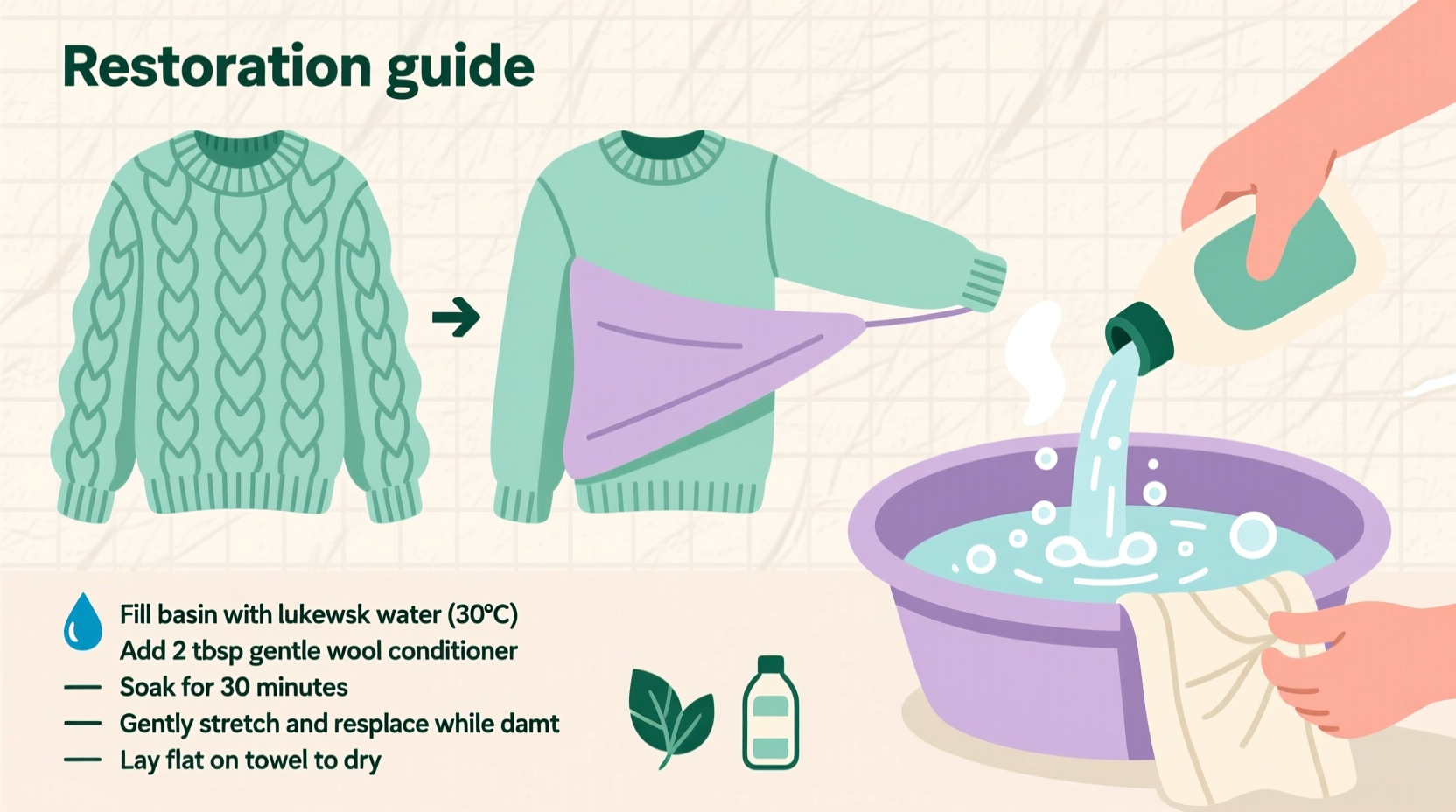
The conditioner soak method works by softening the wool’s fibers, relaxing their tension, and allowing them to be carefully stretched back toward their pre-shrunk dimensions. Hair conditioner contains emollients and lubricants designed to smooth and soften keratin-based structures—making it ideal for coaxing wool fibers back into shape.
“Conditioner doesn’t just detangle hair—it also reduces friction between protein-based fibers, which is exactly what we need when trying to reverse felting in wool.” — Dr. Lena Torres, Textile Scientist, Royal School of Needlework
Step-by-Step: Restoring a Shrunken Wool Sweater
Follow this detailed process to restore your sweater safely and effectively. Patience is key—rushing can damage fibers or lead to uneven stretching.
- Assess the Damage
Determine the extent of shrinkage. Is the sweater slightly smaller, or drastically reduced? Minor shrinkage is easier to fix. If the sweater is severely felted (dense and stiff), recovery may be partial but still worthwhile. - Gather Supplies
You’ll need:- Mild baby shampoo or hair conditioner (without alcohol or sulfates)
- A clean sink or basin
- Lukewarm water (not hot!)
- Towels (preferably clean, white, and absorbent)
- A flat drying surface (like a mesh rack or clean carpet covered with a sheet)
- Measuring tape
- Pins or blocking wires (optional, for precision shaping)
- Fill the Basin with Lukewarm Water
Use about 4–6 liters of water at approximately 30°C (86°F). Hot water will cause further shrinking; cold water won’t open the fiber scales enough for conditioning. - Add Conditioner
Use 1–2 tablespoons of hair conditioner per liter of water. Mix thoroughly until evenly dispersed. You can substitute with baby shampoo if preferred—both contain gentle surfactants and moisturizers. - Soak the Sweater
Submerge the shrunken sweater completely. Gently press it down to ensure full saturation. Let it soak for 20–30 minutes. During this time, the conditioner penetrates the fibers, softening and lubricating them. - Drain and Gently Squeeze
After soaking, drain the water. Do not wring or twist the sweater. Instead, press it against the side of the basin to remove excess liquid. Handle it like a delicate sponge—support its weight throughout. - Roll in a Towel to Remove Moisture
Lay a dry towel flat. Place the sweater on top, then roll the towel tightly around it. Step on the roll or press down gently to extract more water. Unroll and repeat with a second dry towel if needed. - Begin Reshaping on a Flat Surface
Spread the sweater out on a dry, clean surface. Use your hands to gently stretch the body, sleeves, and neck opening back to original dimensions. Refer to an identical sweater or label measurements if available. - Stretch Gradually and Evenly
Work symmetrically. Stretch one sleeve, then the other. Pull the hem down, then the shoulders. Don’t overstretch—wool can only return so far. Aim for gradual, consistent pressure rather than forceful tugging. - Let It Dry Completely
Leave the sweater undisturbed for 24–48 hours. Avoid direct sunlight or heat sources. Check periodically and re-stretch slightly if areas begin to retract.
Do’s and Don’ts of Wool Recovery
| Do | Don’t |
|---|---|
| Use lukewarm water (not hot or cold) | Wash or rinse with hot water |
| Opt for sulfate-free conditioner | Use detergents with enzymes or bleach |
| Support the sweater’s weight when wet | Hang a wet wool sweater (it will stretch) |
| Stretch slowly and evenly | Yank or pull aggressively on seams |
| Allow full air drying time | Use a dryer or heater to speed drying |
Real Example: Recovering a Hand-Knit Merino Sweater
Sophie, a knitter from Vermont, accidentally machine-washed her hand-knit merino wool cardigan in warm water. After drying, it fit her 10-year-old niece. Distraught, she researched restoration methods and tried the conditioner soak.
She filled her kitchen sink with lukewarm water and added two tablespoons of argan oil conditioner. After a 25-minute soak, she rolled the sweater in towels twice. On her guest bed (covered with a cotton sheet), she began reshaping. Using a tape measure, she matched the original chest width of 42 inches, pinned the edges, and left it overnight.
The next morning, the sweater had regained 90% of its size. The sleeves were slightly short but wearable. Two weeks later, after careful wear and proper storage, Sophie reported no further issues. “It’s not perfect,” she said, “but I saved a sentimental piece I thought was lost forever.”
Expert Tips for Maximum Success
- Act quickly. The sooner you treat a shrunken sweater, the better. Prolonged felting makes reversal harder.
- Choose the right conditioner. Look for ingredients like shea butter, coconut oil, or panthenol—these deeply penetrate and relax fibers.
- Never use a washing machine or dryer again. Always hand-wash wool in cold water and lay flat to dry.
- Test first. If the sweater is dark or dyed, spot-test conditioner on an inside seam to check for color bleeding.
- Block for precision. Serious knitters often use blocking mats and T-pins to achieve exact gauge and shape.
Frequently Asked Questions
Can this method work on 100% acrylic or blended fabrics?
No—not reliably. Acrylic isn’t protein-based, so conditioner won’t affect its structure. However, wool-synthetic blends with at least 50% natural fiber may respond partially. Focus on mechanical stretching after a warm water soak, but don’t expect full recovery.
What if my sweater doesn’t fully return to size?
Some shrinkage may be permanent, especially if the wool was heavily felted. In such cases, consider repurposing: turn it into a pillow cover, tote bag, or patchwork project. Alternatively, wear it as a fitted style—some shrunken sweaters become trendy cropped layers.
How often can I use this method on the same sweater?
Only when necessary. Repeated soaking and stretching stress fibers. Ideally, prevent future shrinkage by always washing wool in cold water and air-drying flat. One restoration per sweater is usually sufficient.
Preventing Future Shrinkage: A Maintenance Checklist
Once your sweater is restored, protect your effort with proper care. Follow this checklist to avoid repeating the problem:
- ✅ Always check garment labels before washing
- ✅ Wash wool items in cold water only
- ✅ Use a wool-safe detergent or mild shampoo
- ✅ Never use the spin cycle or wring out wool
- ✅ Lay flat on a drying rack away from heat
- ✅ Store folded—not hung—to preserve shape
- ✅ Mothproof with cedar blocks or lavender sachets
- ✅ Rotate wear to reduce fiber fatigue
“The secret to long-lasting wool isn’t just restoration—it’s prevention. Treat wool like a living material, and it will serve you for decades.” — Miriam Chen, Sustainable Fashion Consultant
Conclusion: Save Your Sweater, Save Money, Reduce Waste
Restoring a shrunken wool sweater isn’t magic—it’s chemistry, patience, and a little know-how. The conditioner soak method leverages the biology of wool fibers to reverse damage without harsh chemicals or special equipment. Whether it’s a beloved gift, a vintage find, or a winter essential, there’s real value in rescuing garments instead of replacing them.
By mastering this technique, you extend the life of your clothing, reduce textile waste, and save money. More importantly, you reclaim control over your wardrobe. Next time a sweater comes out too small, don’t toss it. Fill the sink, grab the conditioner, and give it a second chance.




 浙公网安备
33010002000092号
浙公网安备
33010002000092号 浙B2-20120091-4
Comments
No comments yet. Why don't you start the discussion?