
Melody is the soul of music. It’s what listeners hum after a song ends, what sticks in their minds long after the final note fades. A strong melody can elevate a simple chord progression into something unforgettable. Yet many musicians struggle to move beyond basic riffs or clichéd phrases when writing melodies. The truth is, crafting memorable and original melodies isn’t just about inspiration—it’s a skill that can be developed through deliberate practice and structured techniques.
Whether you're composing pop hooks, film scores, or experimental pieces, understanding how to shape pitch, rhythm, contour, and repetition will dramatically improve your melodic output. This guide breaks down actionable strategies used by professional songwriters and composers to consistently create compelling melodies.
Understand Melodic Contour and Shape
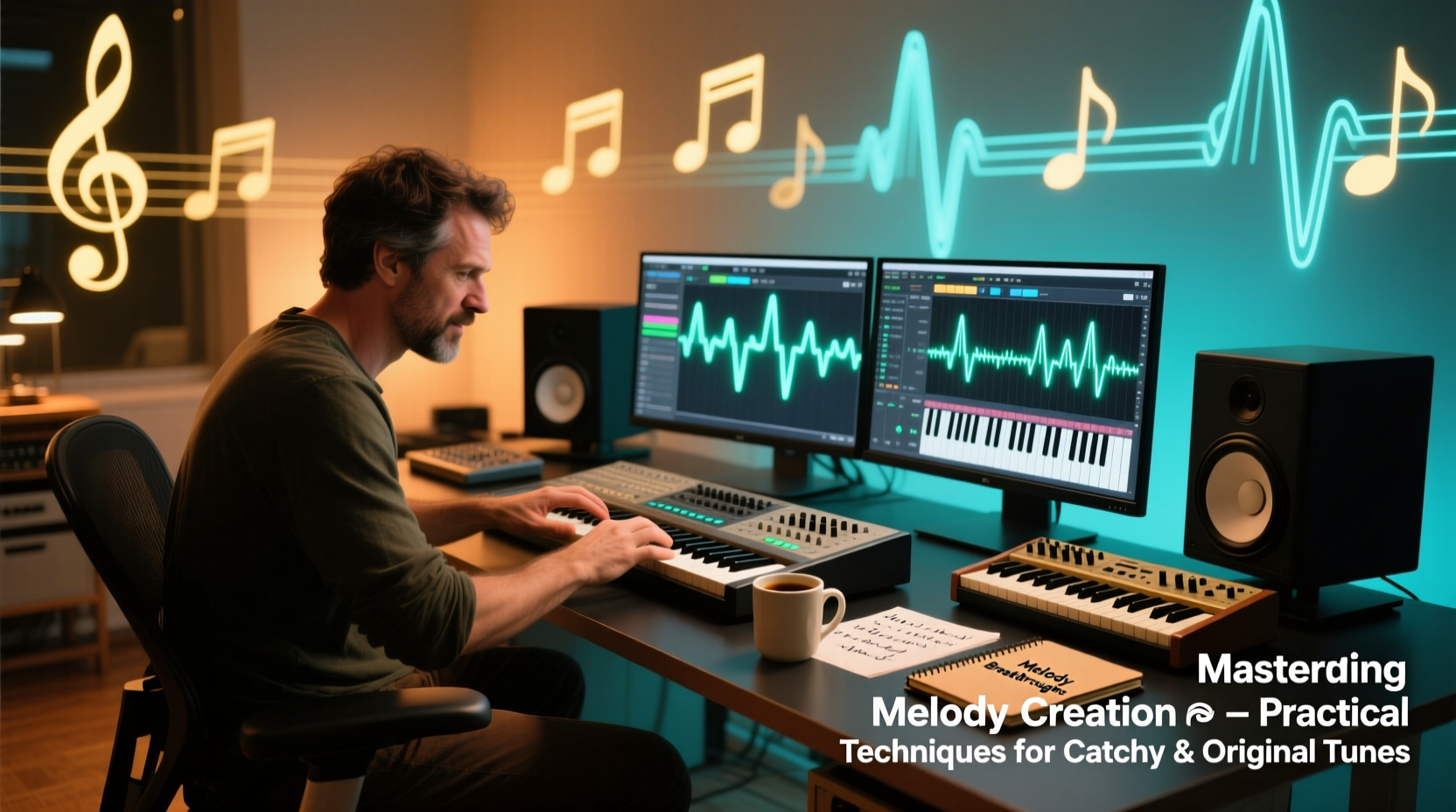
The contour of a melody refers to its overall direction—how it moves up, down, or stays level across time. Great melodies often follow expressive shapes that mirror emotional arcs. For example, a rising line can convey anticipation or triumph, while a descending phrase may suggest resolution or melancholy.
Consider Beethoven’s “Ode to Joy.” Its initial upward leap followed by a stepwise descent creates a sense of both energy and balance. Similarly, the verse melody of Adele’s “Someone Like You” descends gradually, reinforcing the lyrical theme of loss and reflection.
Use Limited Pitch Sets to Spark Creativity
Paradoxically, constraints enhance creativity. Instead of working with all twelve chromatic tones, limit your melody to a five-note pentatonic scale or a mode like Dorian or Mixolydian. These restrictions reduce decision fatigue and encourage inventive phrasing within a defined sonic palette.
For instance, the opening riff of “My Girl” by The Temptations uses only the G major pentatonic scale (G–A–B–D–E), yet it’s instantly recognizable and emotionally resonant. Limiting your options forces you to focus on rhythm, articulation, and intervallic variety rather than novelty of notes.
“Sometimes the most powerful melodies come from the simplest materials. It’s not about how many notes you use, but how meaningfully you place them.” — David Berkman, Jazz Composer and Educator
Apply Step-by-Step Melodic Development
Creating a strong melody often involves evolving a short musical idea—called a motif—through variation. Follow this sequence to develop motifs into full melodies:
- Start with a Motif (2–4 notes): Choose a brief rhythmic and pitch pattern. Example: three quarter notes ascending by step (C–D–E).
- Vary Rhythm: Stretch or compress the timing. Turn those quarter notes into triplets or syncopated eighth notes.
- Invert or Reverse: Flip the direction: turn an ascending line into a descending one.
- Transpose: Move the motif to a different part of the scale or register.
- Sequence: Repeat the motif at different pitch levels, creating momentum.
- Add Embellishments: Insert passing tones, neighbor notes, or appoggiaturas for expressiveness.
This process mirrors how classical composers like Mozart built entire themes from tiny cells. In modern contexts, think of Daft Punk’s “Get Lucky,” where a two-bar guitar motif repeats with subtle rhythmic shifts and tonal variations, building groove and familiarity.
Balance Repetition and Contrast
A catchy melody walks the line between predictability and surprise. Too much repetition feels monotonous; too much variation becomes confusing. The key is strategic repetition—repeating elements just enough to make them memorable, then introducing contrast to sustain interest.
An effective structure uses repetition in the first phrase, slight variation in the second, and a contrasting third phrase. This is known as the “Statement, Restatement, Departure” model:
- Phrase 1 (Statement): Present the core motif.
- Phrase 2 (Restatement): Repeat with small changes—different ending, shifted rhythm.
- Phrase 3 (Departure): Introduce new material or explore higher/lower registers.
Listen to the chorus of Billie Eilish’s “Bad Guy.” The deadpan delivery of “I’m the bad guy…” repeats with nearly identical rhythm and pitch, creating hypnotic catchiness. But the bridge introduces a sudden shift in vocal range and rhythm, preventing listener fatigue.
| Element | Do | Avoid |
|---|---|---|
| Repetition | Repeat motifs every 2–4 bars for memorability | Repeating the same phrase more than four times unchanged |
| Rhythm | Use syncopation or off-beat accents to add energy | Filling every beat—leave space for breath and impact |
| Pitch Range | Span 5–9 scale degrees for singability | Excessive leaps without preparation or resolution |
| Contrast | Change direction or register after two similar phrases | Introducing too many ideas at once |
Write Melodies Without Chords First
Many writers default to improvising melodies over chord progressions, which can lead to predictable note choices tied to chord tones. Try composing a standalone melody using only a drone tone or no harmony at all. This frees you to explore intervals and rhythms independent of harmonic expectations.
Once the melody stands strong on its own, test it against various chords. You might find it works over unexpected harmonies, leading to richer, more original arrangements. Radiohead’s “Karma Police” features a haunting vocal line that could fit multiple harmonic interpretations—its power lies in the melody’s independence from strict functional harmony.
Mini Case Study: Crafting a Pop Hook from Scratch
Jess, an emerging songwriter, wanted to write a summer anthem with a sticky chorus. She began by setting a constraint: use only the A minor pentatonic scale (A–C–D–E–G) and keep the entire melody within an octave.
She started with a rhythmic motif: a dotted eighth–sixteenth pattern on the word “run.” Over three days, she varied the pitch contour, tried inversions, and tested different syllabic stresses. The breakthrough came when she delayed the entrance of the word “now” by an eighth note, creating syncopation that gave the line urgency.
The final hook: “Run, run, run into the sun / Wait ‘til midnight, we’ll have our fun”—uses repetition, tight range, and rhythmic displacement. After pitching it to a producer, the song landed a placement in a streaming ad campaign.
Melody Writing Checklist
Before finalizing a melody, run through this checklist:
- ✅ Does the melody have a clear beginning, middle, and end?
- ✅ Is there a focal point (highest note, longest note, or rhythmic accent)?
- ✅ Can someone whistle or sing it after hearing it twice?
- ✅ Does it leave space? (Avoid overcrowding beats)
- ✅ Have I varied repetition with subtle changes in rhythm or ending?
- ✅ Does it complement—not compete with—the lyrics or mood?
- ✅ Would it still work if played on a single instrument with no harmony?
Frequently Asked Questions
How do I know if my melody is original?
Originality comes from unique combinations, not entirely new sounds. Compare your melody to others in your genre, but don’t obsess over similarity. Focus on personal expression. If it reflects your voice and intent, it has authenticity—even if it shares traits with existing work.
Should melodies always follow the chords?
No. While chord tones provide stability, non-chord tones (passing tones, suspensions, appoggiaturas) add tension and color. Some of the most memorable melodies emphasize non-chord tones or imply alternate harmonies. Trust your ear—if it sounds right, it likely works.
How long should a melody be?
In pop music, 4- or 8-bar phrases are standard for verses and choruses. Instrumental or cinematic themes can be longer. Prioritize completeness over length: a 2-bar idea can be powerful if it resolves satisfyingly.
Craft Your Voice, One Note at a Time
Melody creation is equal parts craft and intuition. The techniques outlined here—motivic development, contour awareness, strategic repetition, and pre-harmonic writing—are tools used by masters across genres. But technical skill alone won’t make a melody resonate. Emotional honesty does.
Keep writing, keep refining, and above all, keep singing your ideas out loud. The most unforgettable melodies often begin as quiet hums in the dark. When you combine disciplined method with genuine feeling, you unlock the ability to craft tunes that don’t just catch ears—they touch hearts.




 浙公网安备
33010002000092号
浙公网安备
33010002000092号 浙B2-20120091-4
Comments
No comments yet. Why don't you start the discussion?