
Dry shampoo is a staple in many people’s hair care routines—ideal for extending time between washes, adding volume, or quickly absorbing excess oil on busy mornings. But over time, users often notice that their once-reliable can no longer deliver the same freshness or lift. The texture may feel sticky, the scent fades faster, or the powder fails to blend into the scalp. When this happens, it’s natural to assume the product has expired or lost potency. While expiration plays a role, more often than not, the issue lies in usage habits, storage conditions, or buildup interference.
Reviving your dry shampoo doesn’t always mean replacing it. With a few strategic adjustments and targeted techniques, you can restore its performance and get back to effortlessly fresh hair. This guide explores the science behind dry shampoo degradation, practical revival methods, and long-term maintenance strategies so your favorite formula works as intended—every time.
Why Dry Shampoo Loses Its Effectiveness
Dry shampoo typically contains absorbent ingredients like rice starch, silica, or alcohol-based propellants designed to soak up sebum and sweat from the scalp. Over time, several factors can compromise its function:
- Product Buildup: Repeated use without proper cleansing leads to residue accumulation on the scalp and hair shafts, creating a barrier that prevents new applications from penetrating.
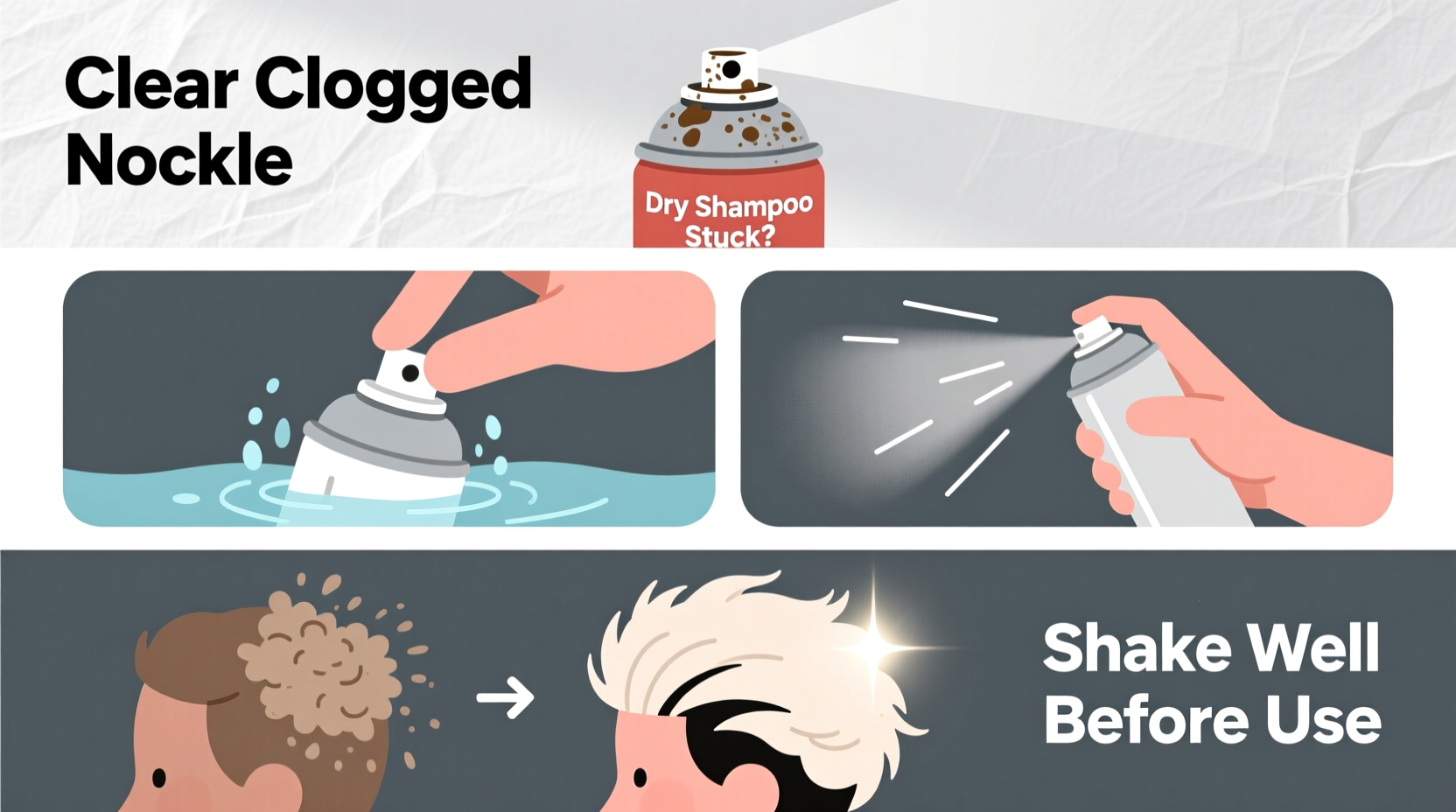
- Clogged Nozzles: Alcohol evaporates faster than solids, leaving behind a crusty residue inside the spray nozzle that disrupts even dispersion.
- Improper Storage: Exposure to heat, humidity, or direct sunlight accelerates ingredient separation and propellant loss, reducing spray power and consistency.
- Expired Formulas: Most dry shampoos last 12–24 months after opening. Beyond that, preservatives weaken, and active ingredients degrade.
- Scalp Adaptation: Some users report diminished results over time, possibly due to scalp microbiome shifts or increased oil production triggered by overuse.
“Dry shampoo isn’t a permanent substitute for washing. Without periodic deep cleansing, buildup dulls both hair and product performance.” — Dr. Lena Patel, Trichologist & Hair Wellness Specialist
Step-by-Step Guide to Revive a Failing Dry Shampoo
If your dry shampoo seems underperforming, don’t discard it yet. Follow this five-step process to assess, clean, and optimize its function:
- Inspect the Expiration Date
Check the packaging for a PAO (Period After Opening) symbol—usually an open jar with a number like “12M” or “24M.” If you’re past that window, replacement may be necessary. However, if within range, proceed to troubleshooting. - Clean the Nozzle Thoroughly
Remove the nozzle (if detachable) and soak it in warm, soapy water for 5–10 minutes. Use a toothpick or fine pin to dislodge any dried clumps inside the spray head. Rinse and let air-dry completely before reattaching. - Shake Vigorously Before Each Use
Many formulas separate over time. Shake the can for at least 10–15 seconds until you hear the mixing ball (if present) moving freely. Skipping this step results in uneven distribution of actives. - Test Spray Pattern
Hold the can 6–8 inches from a tissue and spray briefly. A healthy stream should be fine, mist-like, and consistent. If it sputters, sprays liquid, or releases only gas, internal clogs or propellant failure are likely. - Warm the Can Slightly (If Needed)
Cold temperatures reduce propellant pressure. Warm the can gently in your hands or near body heat for a minute—but never expose it to direct heat sources like radiators or hairdryers, which can cause bursting.
How to Remove Buildup That Blocks Dry Shampoo Action
Even a perfectly functioning product won’t work if your scalp is coated in layers of old dry shampoo, styling products, or natural oils. To clear the way for effective absorption:
- Wash your hair with a clarifying shampoo once every 1–2 weeks. These formulas contain chelating agents that strip mineral deposits and residue better than regular shampoos.
- Use a scalp scrub monthly. Gentle exfoliation removes dead skin cells and unclogs follicles, allowing dry shampoo to reach the root level.
- Massage your scalp during washing to stimulate circulation and ensure thorough cleansing beneath thick hair.
- Consider rotating dry shampoo brands periodically to prevent ingredient saturation—especially if using heavy starch-based formulas.
After deep cleaning, apply dry shampoo to fully dry hair, holding the can 6–8 inches from roots. Focus on oily zones (typically crown and hairline), then massage gently with fingertips to distribute powder evenly.
Do’s and Don’ts of Dry Shampoo Maintenance
| Do’s | Don’ts |
|---|---|
| Shake the can well before each use | Store in humid environments like showers or steamy bathrooms |
| Clean the nozzle monthly | Spray too close to the scalp (can cause clumping) |
| Use on second- or third-day hair, not daily | Replace washing entirely with dry shampoo (leads to buildup) |
| Alternate with different formulas to avoid saturation | Leave dry shampoo in overnight regularly (can irritate scalp) |
| Store upright at room temperature | Expose cans to extreme heat or cold (alters pressure and efficacy) |
Real Example: Sarah’s Dry Shampoo Turnaround
Sarah, a 32-year-old graphic designer, relied on her aerosol dry shampoo nearly every day to manage oily roots between workouts and long work hours. After six months, she noticed it left white flakes, failed to absorb oil, and gave her hair a stiff, dirty look. Assuming it was expired, she bought a new can—only to see identical issues within days.
She consulted a hairstylist who recommended a clarifying wash followed by a nozzle inspection. Sarah discovered her original can’s spray tip was partially blocked. After soaking it in rubbing alcohol and clearing the passage, she shook the can thoroughly and reapplied correctly—holding it farther from her head and massaging afterward. The difference was immediate: smoother application, invisible finish, and noticeable oil absorption.
The real fix? A combination of mechanical cleaning and behavioral adjustment. She now cleans the nozzle monthly and limits dry shampoo to two non-consecutive days per week, washing with a clarifying shampoo weekly. Her original can lasted another three months with renewed performance.
When to Replace vs. Repair Your Dry Shampoo
Not all dry shampoos can be revived. Knowing when to let go helps prevent scalp irritation or wasted effort. Consider replacement if:
- The can feels significantly lighter than when new (indicating propellant loss).
- There’s visible mold, discoloration, or rancid odor—signs of bacterial growth or ingredient breakdown.
- The formula sprays liquid instead of mist, suggesting emulsion failure.
- You’ve exceeded the expiration date by more than three months.
However, if the issue is clogging, improper technique, or buildup, revival is possible. Always try cleaning and optimizing usage first before purchasing a new product.
Frequently Asked Questions
Can I add anything to my dry shampoo to make it work better?
No. Altering the formula by adding essential oils, powders, or solvents can destabilize the chemical balance, damage the spray mechanism, or cause scalp irritation. Stick to manufacturer instructions and proper usage techniques instead.
Why does my dry shampoo leave white residue?
White cast usually occurs when too much product is applied, the formula isn’t blended properly, or the nozzle is clogged causing uneven spray. Try using less product, shaking well, and massaging thoroughly with fingertips. Some brands offer tinted versions for darker hair to minimize visibility.
Is it bad to use dry shampoo every day?
Regular daily use without washing can lead to scalp buildup, clogged follicles, and even hair thinning over time. Dermatologists recommend limiting dry shampoo to 2–3 times per week and always following up with a thorough shampoo within 48 hours to prevent long-term damage.
Expert-Backed Checklist for Optimal Dry Shampoo Performance
To keep your dry shampoo effective and your scalp healthy, follow this actionable checklist:
- ✅ Shake the can for 10–15 seconds before every use
- ✅ Clean the nozzle monthly with warm soapy water or rubbing alcohol
- ✅ Store the can upright in a cool, dry place (not the bathroom)
- ✅ Wash hair weekly with a clarifying shampoo to remove buildup
- ✅ Limit dry shampoo to 2–3 uses per week max
- ✅ Check expiration date and replace if outdated or compromised
- ✅ Apply to dry hair, hold 6–8 inches away, and massage thoroughly
- ✅ Rotate formulas seasonally or every few months to prevent saturation
“The key to maintaining any hair product’s longevity is consistency in care—not just application.” — Marcus Reed, Celebrity Stylist & Product Developer
Conclusion: Restore, Maintain, and Maximize Your Routine
Dry shampoo doesn’t stop working overnight—it degrades gradually due to neglect, misuse, or environmental stress. By understanding the causes of performance decline and applying targeted fixes, you can extend the life of your product and maintain healthier hair. Simple habits like cleaning the nozzle, storing properly, and preventing buildup make a dramatic difference.
Revival isn’t about reinvention; it’s about returning to best practices. Whether you’re dealing with a clogged spray, poor absorption, or lingering residue, the solution often lies in routine maintenance rather than replacement. Take control of your hair care regimen today—inspect your current can, implement the steps outlined here, and experience the full potential of your dry shampoo once again.




 浙公网安备
33010002000092号
浙公网安备
33010002000092号 浙B2-20120091-4
Comments
No comments yet. Why don't you start the discussion?