
Seasonal ornament rotation is a cherished tradition in many homes, bringing fresh energy and festive charm throughout the year. From delicate glass baubles at Christmas to hand-painted eggs at Easter or lanterns for Diwali, these decorations deserve careful handling. Yet, one of the most overlooked aspects of this process is protecting the hooks—those tiny metal loops, wires, or adhesive points that allow ornaments to hang. Over time, improper removal, storage, or re-hanging can weaken or break these fragile attachments, rendering even the most beautiful ornament unusable.
The good news is that with thoughtful technique and consistent care, you can rotate your ornaments every season without compromising their integrity. This guide provides actionable strategies for preserving hooks during storage, display, and transition between holidays—ensuring your collection lasts for generations.
Understanding Ornament Hooks: Types and Vulnerabilities
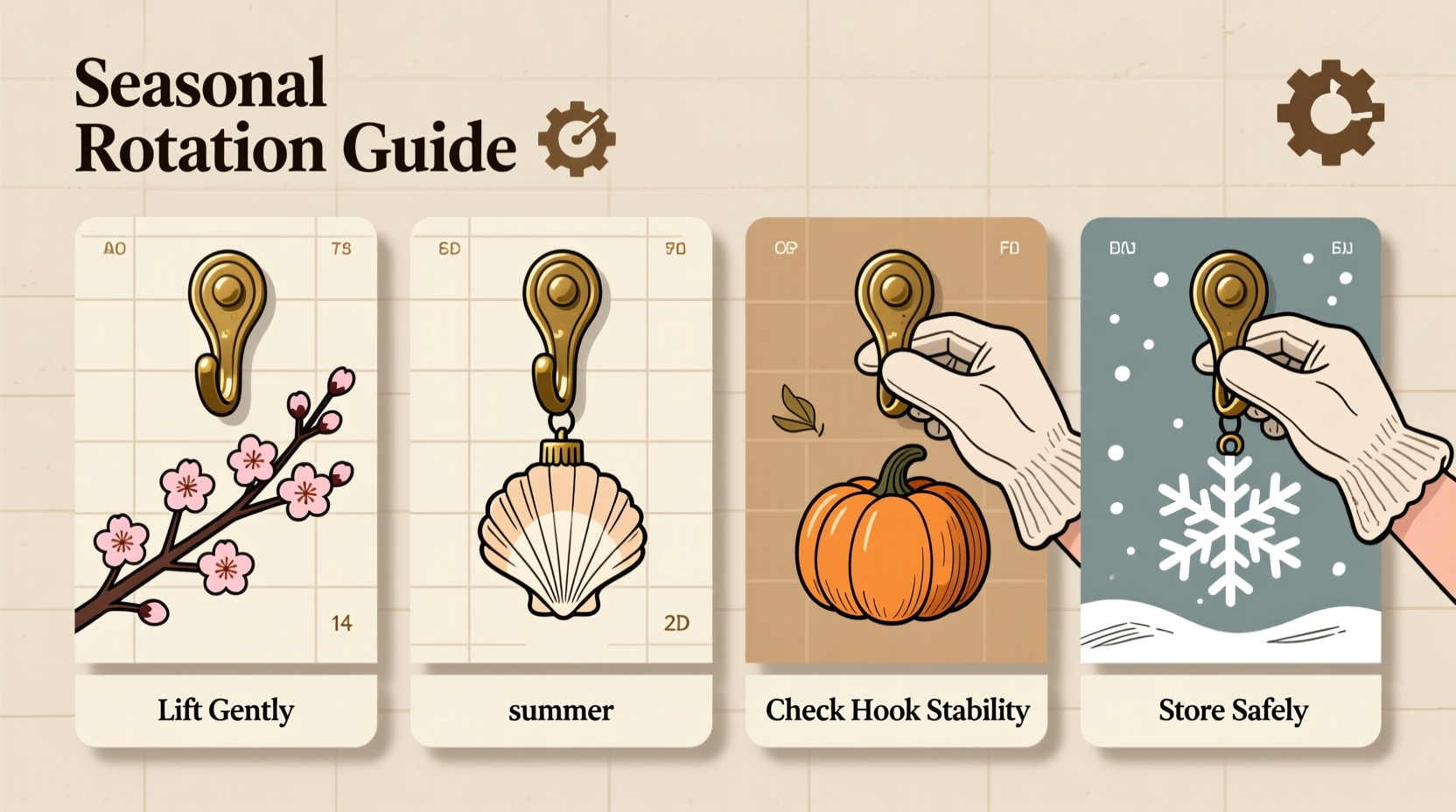
Before diving into best practices, it's essential to recognize the different types of hooks used on seasonal ornaments and what makes each susceptible to damage.
- Wire Loops (Bent Metal): Common on glass balls and heavier ornaments. These can bend, snap, or lose tension if pulled incorrectly.
- Plastic or Resin Clips: Often found on lightweight plastic or foam decorations. They become brittle over time, especially when exposed to temperature fluctuations.
- Adhesive Hooks: Used on wall-mounted or window ornaments. Repeated peeling damages both the hook and surface.
- Cord or Ribbon Hangers: Found on handmade or fabric-based ornaments. Fraying or knot tightening can make removal difficult.
- Suction Cup Attachments: Typically used for temporary displays. Lose grip after repeated use, especially in dry or dusty environments.
Each type responds differently to stress, so a one-size-fits-all approach increases the risk of breakage. The goal isn’t just to store ornaments safely—it’s to preserve the entire hanging mechanism as part of the ornament’s functional design.
Step-by-Step Guide: Rotating Ornaments Without Damaging Hooks
Rotating ornaments seasonally involves four key phases: removal, inspection, storage, and reinstallation. Following a structured process minimizes strain on hooks and prevents accidental damage.
- Remove Ornaments Gently from Display
Always support the ornament with one hand while detaching the hook. Never pull down by the hook alone—this concentrates force on the weakest point. For tree ornaments, work top-down to avoid knocking others loose. - Detach Without Twisting or Yanking
If using wire loops, gently lift upward rather than pulling sideways. Lateral pressure bends metal quickly. For suction cups or adhesives, peel slowly at a low angle to reduce shear stress. - Clean While Preserving the Hook
Use a soft microfiber cloth dampened with distilled water (never spray directly). Avoid submerging any ornament with glued-on hooks, as moisture weakens adhesive bonds. Let dry completely before packing. - Inspect Each Hook Individually
Look for signs of bending, corrosion, fraying, or loosening. Note which ones may need reinforcement before next use. - Pack Using Hook-Safe Methods
Use compartmentalized boxes where ornaments don’t touch. Place tissue paper around hangers to prevent snagging. Store corded ornaments with knots loosely tied. - Label Boxes by Season and Fragility Level
Clearly mark containers “Spring – Light Decorations” or “Winter – Glass & Heavy Hooks” so future handling is informed and cautious. - Reinstall with Controlled Motion
When redeploying, handle the body of the ornament—not the hook—to place it on stands, trees, or walls. Ensure hooks are fully seated but not forced.
This sequence reduces cumulative wear, especially important for families who reuse ornaments across decades.
Storage Solutions That Protect Hooks Year-Round
Improper storage causes more hook damage than active display. Temperature swings, overcrowding, and poor packaging degrade materials over time. Here’s how to store ornaments so their hangers remain intact:
Use Compartmentalized Containers
Rigid plastic boxes with individual cutouts prevent movement during storage. Soft-sided bags may compress and deform wire loops. Choose boxes slightly larger than the ornament to allow space for wrapping.
Wrap Hooks Separately
For wire-looped ornaments, cover the hook with a small piece of foam or rolled tissue before placing in compartments. This cushion absorbs pressure and prevents scratching other items.
Avoid Hanging Storage for Long Periods
Leaving ornaments suspended for months—even on racks—can stretch cords or weaken glued joints due to constant gravitational pull. Store them lying flat unless specifically designed for vertical suspension.
| Storage Method | Hook Protection Level | Best For |
|---|---|---|
| Compartmentalized Plastic Box | High | Glass, ceramic, metal-hooked ornaments |
| Tissue-Wrapped in Shoebox | Medium | Lightweight plastic, paper crafts |
| Hanging Closet Organizer | Low | Large, durable items with strong hangers |
| Vacuum-Sealed Bag | Dangerous | Not recommended for any hooked ornaments |
Expert Insight: What Conservation Specialists Recommend
Museums and heritage collections rotate decorative objects regularly, applying rigorous standards to preserve structural details—including hangers. Their methods offer valuable lessons for home collectors.
“Hooks are often the first point of failure because they’re subjected to repeated mechanical stress. The key is minimizing contact and distributing load through proper support.” — Dr. Lena Torres, Textile and Decorative Arts Conservator, National Museum of Holiday Traditions
Dr. Torres emphasizes using inert materials like acid-free tissue and polyethylene trays to prevent chemical degradation. She also recommends rotating display pieces so no single ornament bears frequent handling. Instead of using the same favorite item every year, alternate between duplicates or similar designs to extend lifespan.
Her team uses silicone-coated nylon thread for reattaching broken loops—a flexible yet durable solution that mimics original tension without adding rigidity. While not necessary for all households, the principle holds: choose repair materials compatible with the original construction.
Real Example: The Johnson Family’s 30-Year Ornament Collection
The Johnsons in Vermont have maintained a collection of hand-blown glass Christmas ornaments since 1994. Many were gifts from relatives abroad, making preservation emotionally significant. After losing three ornaments to broken hooks in 2015, they revamped their system.
They now use custom-made wooden crates with molded pulp inserts—one cavity per ornament. Each hook is wrapped in breathable cotton tape before storage. During rotation, two family members work together: one holds the ornament, the other handles the hook attachment.
They also implemented a “rest year” policy—no ornament appears two years in a row. This gives time for inspections and minor repairs. As a result, none of their original hooks have failed since 2016, despite annual use of other pieces.
Their success wasn’t about expensive equipment but consistency in gentle handling and proactive maintenance.
Checklist: Seasonal Rotation Without Hook Damage
Follow this checklist each time you rotate ornaments to ensure long-term protection:
- ✅ Support the ornament body—not the hook—when removing or installing
- ✅ Clean gently with non-abrasive cloths; never soak glued or wired parts
- ✅ Inspect all hooks for bends, cracks, or weakness before storage
- ✅ Wrap or cap exposed hooks to prevent snagging or deformation
- ✅ Store in rigid, compartmentalized containers with cushioning
- ✅ Label containers clearly by season and fragility level
- ✅ Allow climate acclimation before unpacking (especially after attic/basement storage)
- ✅ Rotate usage among similar ornaments to reduce repetitive stress
- ✅ Repair weakened hooks early using appropriate adhesives or reinforcements
- ✅ Recheck installation stability after first 24 hours of display
Frequently Asked Questions
Can I fix a bent wire hook myself?
Yes, carefully. Use needle-nose pliers to realign the loop, working slowly to avoid metal fatigue. If the wire shows kinks or thinning, consider replacing it with a new gauge-matched loop made from craft wire. Secure it with a drop of clear epoxy at the base for added strength.
Is it safe to leave ornaments on an artificial tree year-round?
No. Even though convenient, leaving ornaments up exposes hooks to dust, light, and potential shifting during storage. Over time, vibrations from closing closet doors or temperature changes can loosen connections. Remove them after each season to prolong both ornament and hook life.
What’s the best way to store ribbon-hung ornaments?
Lay them flat in a drawer-style box with acid-free tissue between layers. Untie knots completely to prevent fiber compression. If the ribbon is integral to the design, wrap it loosely around the ornament and secure with a second ribbon tied in a bow—never a tight knot that could weaken fibers.
Conclusion: Preserve Tradition Through Careful Handling
Rotating seasonal ornaments is more than decoration—it’s an act of memory, identity, and continuity. The hooks may seem insignificant, but they are the literal connection between sentiment and display. By treating them with intention, you protect not just the physical object, but the stories it carries.
Start small: this season, focus only on inspecting and properly storing hooks. Next year, add gentle removal techniques. Over time, these habits compound into lasting preservation. Whether your ornaments are heirlooms or recent finds, they deserve to be enjoyed without compromise.




 浙公网安备
33010002000092号
浙公网安备
33010002000092号 浙B2-20120091-4
Comments
No comments yet. Why don't you start the discussion?