
Every six months, the shift between seasons brings a familiar challenge: what to do with winter coats when spring arrives, or how to make room for sweaters when fall rolls around. For many, rotating seasonal clothing turns into a disorganized scramble—items get crumpled, forgotten, or lost under piles of off-season garments. But it doesn’t have to be that way. With a structured approach, the right tools, and consistent habits, you can transition your wardrobe smoothly, maximize closet space, and keep your clothes in excellent condition year-round.
Why Seasonal Rotation Matters
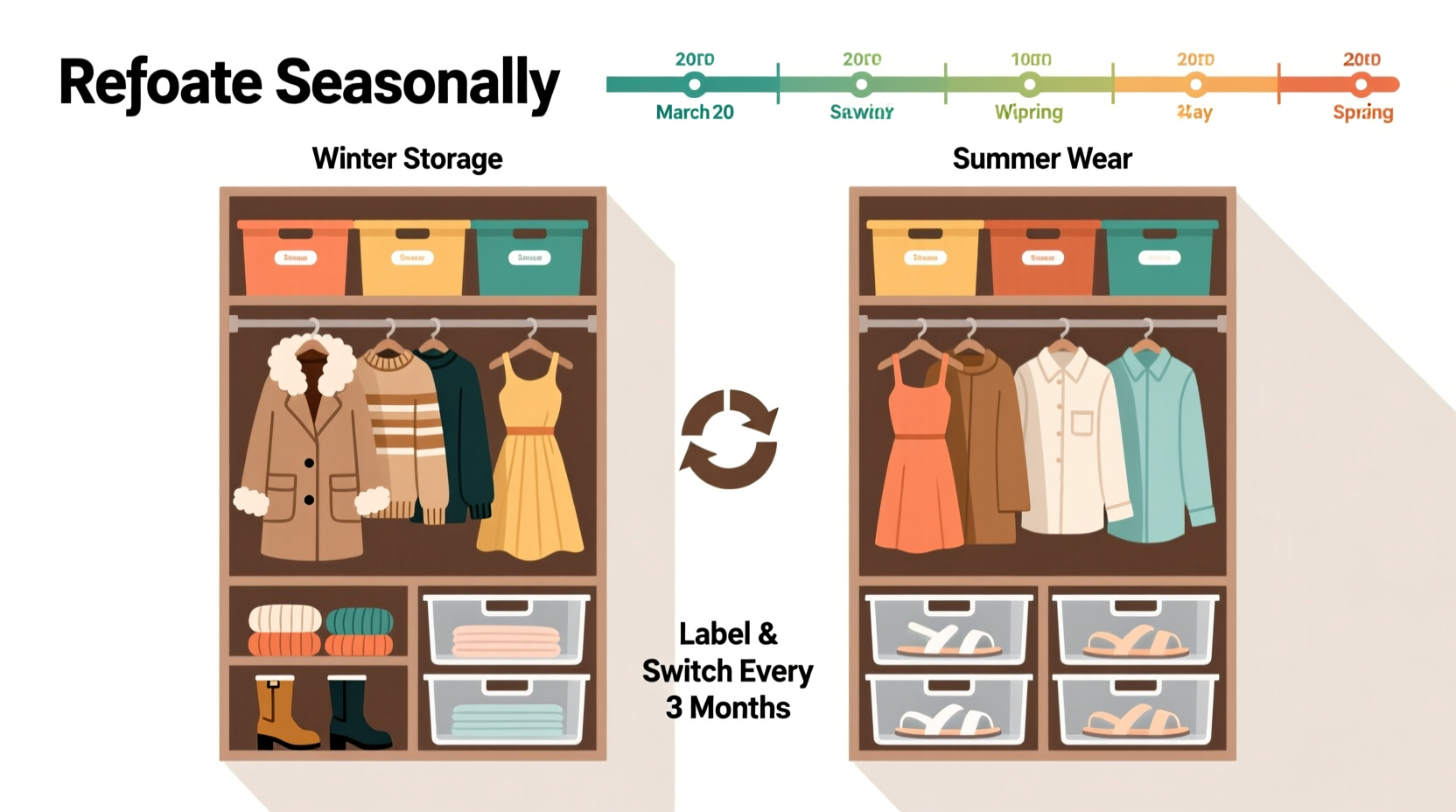
Rotating your clothes by season isn't just about making space—it’s about preservation, accessibility, and intentionality. When heavy wool coats clutter your closet in July, they take up room needed for lightweight linens and breathable fabrics. Conversely, storing summer dresses in vacuum-sealed bags might save space but risks damaging delicate fibers over time.
Proper rotation helps prevent fabric deterioration from moisture, moths, or prolonged compression. It also makes daily dressing easier. You’re more likely to wear clothes if they’re visible, accessible, and stored appropriately. According to textile preservation expert Dr. Lena Torres, “Clothing lasts significantly longer when rotated out of active use during off-seasons and stored under stable conditions.”
“Clothing lasts significantly longer when rotated out of active use during off-seasons and stored under stable conditions.” — Dr. Lena Torres, Textile Preservation Specialist
A Step-by-Step Guide to Seamless Seasonal Rotation
The key to avoiding chaos lies in preparation and process. Follow this five-step system twice a year—once before spring/summer and again before fall/winter—to maintain order and efficiency.
- Set a Rotation Date: Mark your calendar two weeks before the official start of the new season. This gives you time to act without last-minute pressure.
- Empty & Evaluate: Remove all clothes from the section you're rotating. Sort each item into one of four categories: Keep, Donate, Repair, Store.
- Clean Before Storing: Never store dirty clothes. Residual sweat, oils, or food stains attract pests and cause permanent discoloration. Wash or dry clean as needed.
- Pack Smartly: Use breathable cotton garment bags for structured pieces like blazers or dresses. Fold knits and jeans; hang only wrinkle-prone items.
- Reorganize Your Closet: Return in-season clothes first, grouping by category (tops, bottoms, outerwear) and color for visual clarity.
Smart Storage Solutions for Off-Season Clothes
Where you store off-season clothes matters as much as how you pack them. The ideal environment is cool, dark, dry, and well-ventilated. Basements and attics may seem convenient, but fluctuating temperatures and humidity levels can lead to mildew or insect infestations.
Consider these storage options based on your space and budget:
- Vacuum-Sealed Bags: Best for bulky items like comforters or down jackets. Avoid using them for wool, silk, or anything with natural fibers that need to breathe.
- Canvas Storage Bins: Durable, stackable, and breathable. Label clearly and place on high shelves or under beds.
- Garment Boxes: Ideal for suits, dresses, or vintage pieces. Use acid-free tissue paper to prevent creasing and yellowing.
- Hanging Garment Bags: Useful for long-term coat or suit storage. Choose ones with ventilation panels.
For small spaces, consider under-bed rolling drawers or ottomans with hidden compartments. These double as seating and storage while keeping clothes protected from dust.
Do’s and Don’ts of Seasonal Clothing Storage
| Do’s | Don’ts |
|---|---|
| Store clean, completely dry clothes | Leave clothes in plastic dry-cleaning bags |
| Use cedar blocks or lavender sachets for pest control | Use mothballs—they leave strong odors and are toxic |
| Fold sweaters to prevent shoulder stretching | Hang knitwear, which can lose shape |
| Label containers by season and contents | Assume you’ll remember what’s inside unmarked bins |
| Rotate stored items every 3–4 months to air them out | Forget about stored clothes until next season |
Real Example: How Sarah Transformed Her Closet Routine
Sarah, a working mother of two in Portland, used to dread seasonal changes. Every spring, she’d pull out her summer clothes only to find mildew spots on tank tops and holes in linen pants from unnoticed moths. Her closet was overcrowded, and she often bought duplicates because she couldn’t find what she already owned.
Last year, she implemented a new system. Two weeks before summer, she cleared half her closet and sorted everything. She donated three large bags of unworn items, repaired two favorite dresses, and packed the rest in labeled canvas bins with cedar blocks. She stored them in a climate-controlled closet on the second floor—away from damp basements.
When fall arrived, she repeated the process with winter layers. Now, she rotates seamlessly, saves money by avoiding duplicates, and spends less time deciding what to wear. “I finally feel in control of my wardrobe,” she says. “It’s not just cleaner—it feels intentional.”
Maximize Efficiency with a Seasonal Wardrobe Checklist
To ensure nothing slips through the cracks, use this checklist every time you rotate your clothes:
- ☐ Set a date on your calendar for rotation
- ☐ Remove all off-season clothes from active closet space
- ☐ Sort items into Keep, Donate, Repair, Discard
- ☐ Clean every piece before storing (wash, dry clean, spot treat)
- ☐ Mend loose buttons, hems, or zippers
- ☐ Choose appropriate storage method (bins, garment bags, etc.)
- ☐ Add natural repellents like cedar or lavender
- ☐ Label each container clearly (e.g., “Summer Tops – 2024”)
- ☐ Store in a dry, temperature-stable location
- ☐ Reorganize in-season clothes by type and color
- ☐ Take inventory of missing essentials to shop for
- ☐ Schedule a mid-season check-in to refresh storage
Common Mistakes That Create Chaos
Even with good intentions, people often undermine their efforts through avoidable errors. Watch out for these pitfalls:
- Skipping the purge: Holding onto clothes “just in case” leads to overcrowding and decision fatigue.
- Storing dirty garments: Invisible residues attract silverfish and carpet beetles, which feed on organic materials.
- Over-relying on vacuum bags: While compact, they compress fibers and can weaken fabrics like wool or cashmere over time.
- Ignoring climate conditions: Humid environments require silica gel packs or dehumidifiers to prevent mold.
- Not labeling containers: Without clear labels, you risk opening multiple bins to find one swimsuit.
Instead of viewing rotation as a burdensome task, reframe it as a semi-annual reset—a chance to reconnect with your wardrobe, assess what works, and let go of what doesn’t.
Frequently Asked Questions
How often should I rotate my seasonal clothes?
Twice a year is standard—once before summer (around March/April) and once before winter (around September/October). However, those in regions with milder climates may adjust based on local weather patterns rather than calendar dates.
Can I store clothes in the garage or attic?
Generally, no. Garages and attics are prone to temperature swings, humidity, and pests. If these are your only options, use sealed plastic bins with desiccants and elevate them off the floor. Better alternatives include under-bed storage, spare closets, or climate-controlled units.
What should I do with clothes I might wear in transitional months?
Keep a small “in-between” section in your closet for layering pieces like cardigans, light jackets, or long-sleeve tees. These bridge gaps between seasons and reduce the need for frequent full rotations.
Final Thoughts: Build a Sustainable Wardrobe Rhythm
Rotating seasonal clothes doesn’t have to be overwhelming. By treating it as a ritual rather than a chore, you create a sustainable rhythm that supports both your lifestyle and your belongings. Over time, this practice reduces clutter, extends garment life, and deepens your relationship with your wardrobe.
The goal isn’t perfection—it’s progress. Start small: pick one closet zone, follow the steps, and refine your method each season. Soon, you’ll move through transitions effortlessly, knowing exactly where everything is and why it matters.




 浙公网安备
33010002000092号
浙公网安备
33010002000092号 浙B2-20120091-4
Comments
No comments yet. Why don't you start the discussion?