
Google Chrome is one of the most widely used web browsers for good reason—its speed, versatility, and integration with Google services make it a favorite across devices. However, its efficiency can degrade over time if not properly managed. One often-overlooked practice that significantly impacts performance is how you close the browser. Simply clicking the 'X' may not fully terminate all background processes, leading to memory leaks, high CPU usage, or even sync conflicts. Learning how to safely and completely shut down Google Chrome ensures your system runs smoothly and avoids persistent errors.
Why Proper Shutdown Matters
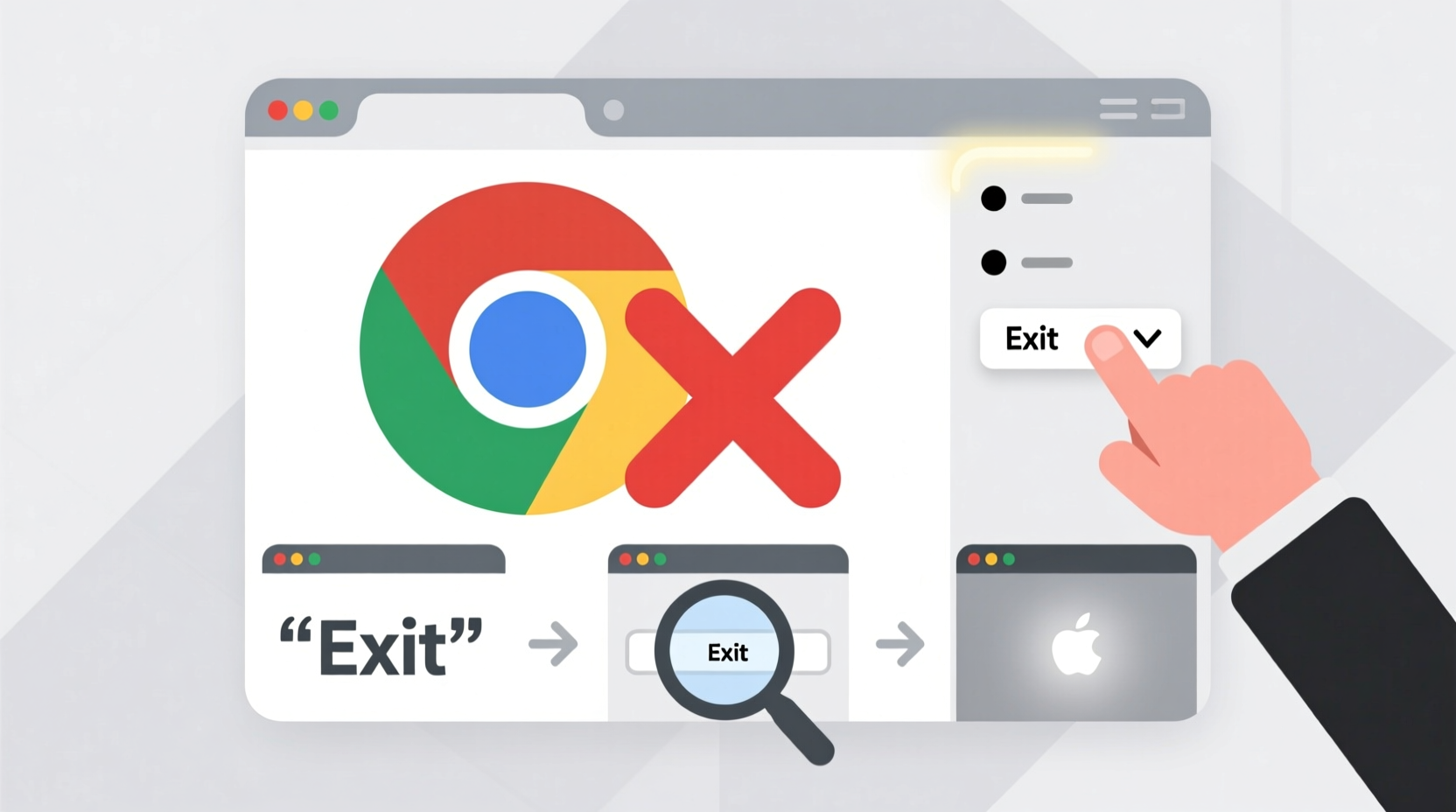
Unlike simpler applications, Chrome operates on a multi-process architecture. Each tab, extension, and plugin runs as a separate process. This design enhances stability—one crashing tab doesn’t bring down the whole browser—but it also means that closing the main window doesn't always stop every underlying task. Background processes such as push notifications, updates, or syncing may continue running unnoticed.
When these processes accumulate over time, they consume RAM and CPU resources, potentially slowing down your device. In some cases, corrupted or frozen processes can interfere with future Chrome sessions, causing error messages like “Chrome did not shut down correctly” or failure to load certain websites.
“Improper shutdowns are a leading cause of browser instability. Ensuring Chrome exits cleanly helps maintain data integrity and system performance.” — Dr. Lena Torres, Software Systems Analyst at TechReliability Labs
Step-by-Step: How to Fully Close Google Chrome
To guarantee Chrome shuts down completely, follow this structured approach:
- Save open work: Before closing, ensure all important documents, forms, and downloads are saved. Chrome does offer session recovery, but relying on it isn’t foolproof.
- Close all Chrome windows: Click the 'X' in each Chrome window. Do not assume one click closes everything—check your taskbar or dock for any remaining instances.
- Open Task Manager (Chrome’s built-in tool): Press Shift + Esc while in Chrome to launch the browser’s internal Task Manager. This shows every active process, including tabs, extensions, and background tasks.
- Identify lingering processes: Look for entries labeled “Background page,” “GPU Process,” or “Utility: Network Service.” These may persist after window closure.
- End unnecessary tasks: Select high-memory or suspicious processes and click “End Process.” Be cautious—do not terminate “Browser” unless you’re ready to force quit entirely.
- Exit via menu: Go to Chrome’s three-dot menu → Help → About Google Chrome. If Chrome detects it’s already running, this will prompt a clean shutdown. Alternatively, use File → Exit (Windows) or Quit Google Chrome (Mac).
- Verify shutdown using system tools: Open your operating system’s Task Manager (Ctrl+Shift+Esc on Windows, Activity Monitor on Mac). Search for “chrome.exe” or “Google Chrome.” If any remain, end them manually.
Common Mistakes That Prevent Full Shutdown
Many users unknowingly leave Chrome partially active due to common habits. Avoid these pitfalls:
- Minimizing instead of closing: Minimizing Chrome to the system tray or dock doesn’t stop processes. Always close the window or use Exit/Quit.
- Leaving pinned tabs or apps: Pinned apps (like Gmail or Calendar) often run background scripts even when hidden.
- Ignoring startup settings: Chrome may be set to “Continue where you left off,” which can trigger auto-restart and conflict with manual shutdowns.
- Forgetting about Chrome on mobile or other devices: Sync issues can arise if Chrome remains active elsewhere, especially during profile changes or password updates.
Do’s and Don’ts: Best Practices Summary
| Do | Don’t |
|---|---|
| Use Chrome’s Task Manager to monitor processes | Assume closing the window ends all activity |
| Use File → Exit (Windows) or Command+Q (Mac) | Rely solely on clicking the X button |
| Check system Task Manager after closing | Leave multiple profiles open simultaneously without logging out |
| Disable unnecessary background apps in Settings | Allow all sites to run background notifications |
| Restart Chrome regularly, especially after updates | Ignore “Did Not Shut Down Correctly” warnings repeatedly |
Real-World Example: The Office Worker’s Performance Fix
Sarah, a project manager, noticed her laptop was sluggish every morning despite restarting her computer. Chrome consistently launched with 15+ tabs, and she frequently saw “He’s dead, Jim” crash screens. After investigation, she discovered that although she closed Chrome nightly, several background processes remained active—particularly from Slack and Google Meet extensions.
By implementing a routine shutdown process—using Chrome’s Task Manager, ending background pages, and quitting via Command+Q—she reduced startup time by 40% and eliminated random freezes. She also disabled auto-launch for Chrome in macOS Settings, opting to open it only when needed. Within a week, her battery life improved, and system responsiveness returned.
Optimize Chrome Settings to Support Clean Shutdowns
Prevention is better than correction. Adjusting a few key settings reduces the likelihood of incomplete shutdowns:
- Disable background app refresh: Go to Chrome Settings → System → Turn off “Continue running background apps when Google Chrome is closed.”
- Manage site permissions: Navigate to Settings → Privacy and security → Site Settings. Limit “Notifications” and “Background sync” to trusted sites only.
- Clear browsing data periodically: Accumulated cache and cookies can corrupt session files. Use Ctrl+Shift+Del to clear data weekly.
- Update Chrome regularly: Outdated versions may have bugs affecting shutdown behavior. Ensure auto-updates are enabled.
chrome.exe --disable-background-networking for a lighter, more controllable browsing session.
Frequently Asked Questions
Why does Chrome say it didn’t shut down correctly even when I closed it properly?
This message appears when Chrome detects an abnormal termination in its previous session. It could be due to a system crash, forced quit, or lingering background process. To resolve it, fully close all Chrome instances via Task Manager, then restart. If the issue persists, clear the BrowserMetrics file in Chrome’s user data folder (advanced users only).
Can Chrome run in the background after I close it?
Yes. By default, Chrome continues running background processes for features like push notifications, updates, and sync. You can disable this under Settings → System → “Continue running background apps when closed.” Turning this off ensures a complete shutdown.
Is it harmful to force quit Chrome?
Occasional force quits (via Task Manager or Force Quit on Mac) are safe, but frequent use may lead to profile corruption or lost form data. Reserve force quitting for unresponsive situations. For regular use, always attempt a graceful exit first.
Final Checklist: Complete Chrome Shutdown Routine
- Save all open work in tabs.
- Close all Chrome windows manually.
- Launch Chrome Task Manager (Shift+Esc).
- End any non-essential processes.
- Exit Chrome using File → Exit (Windows) or Command+Q (Mac).
- Verify no Chrome processes remain in system Task Manager or Activity Monitor.
- Adjust settings to prevent unwanted background activity.
Conclusion: Take Control of Your Browser Experience
Shutting down Google Chrome properly isn’t just about closing a window—it’s about ensuring system stability, protecting your data, and maintaining optimal performance. A few extra seconds spent verifying a complete exit can save minutes—or even hours—of troubleshooting later. Whether you're a casual user or a power multitasker, adopting disciplined shutdown habits transforms how Chrome behaves on your device. Start today: close Chrome with intention, and feel the difference in your digital workflow.




 浙公网安备
33010002000092号
浙公网安备
33010002000092号 浙B2-20120091-4
Comments
No comments yet. Why don't you start the discussion?