
In today’s digital world, the ability to locate an address from a mobile phone is both powerful and potentially sensitive. Whether you’re trying to meet a friend, verify a business location, or reconnect with someone, it's essential to approach location-based searches responsibly. Misuse of tracking tools or unauthorized access to personal data can violate privacy laws and damage trust. This guide outlines a clear, ethical, and legal process for finding an address using only your mobile device—without overstepping boundaries or risking legal consequences.
Understanding Legal and Ethical Boundaries
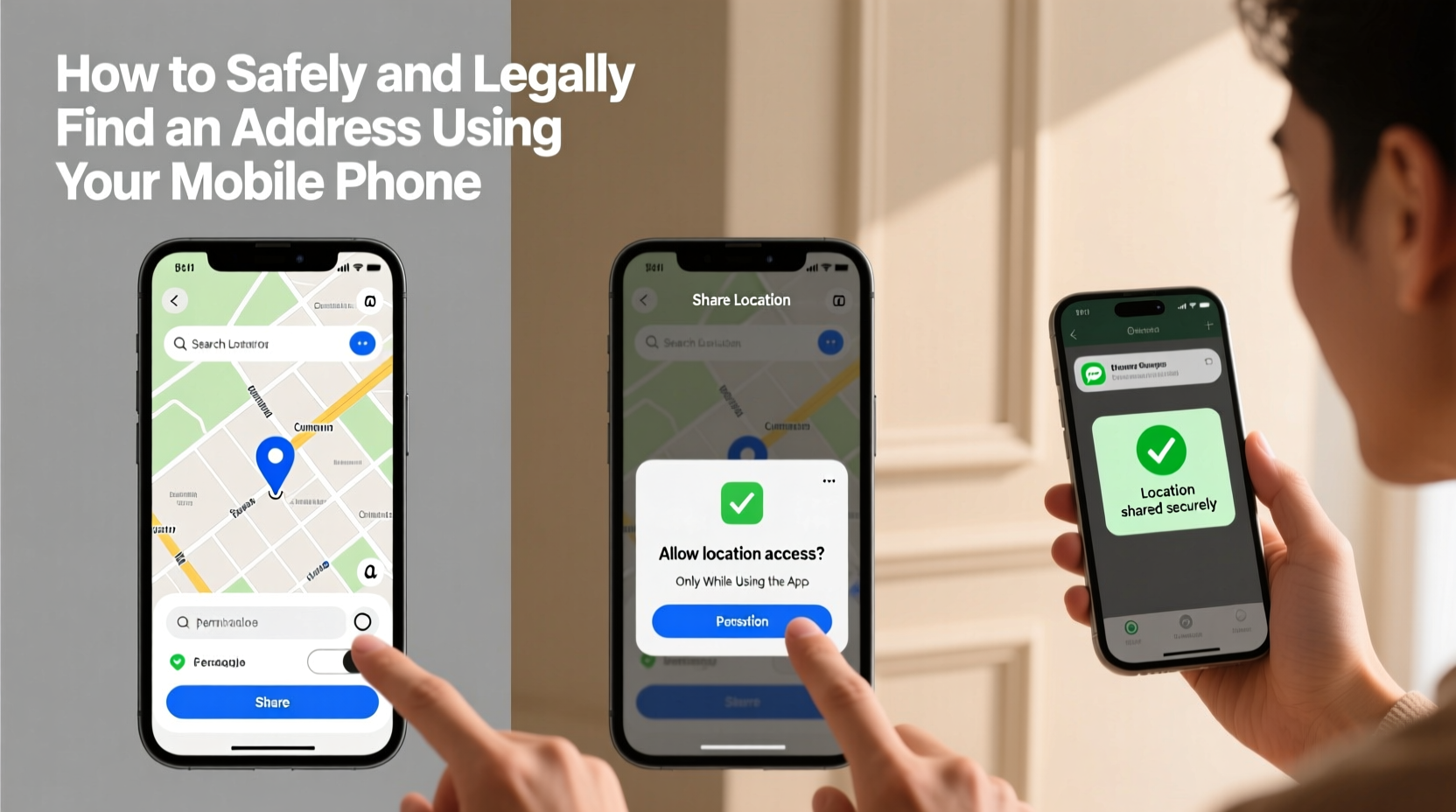
Before attempting to locate any individual or property, it's critical to understand that not all methods are lawful or appropriate. In many countries, including the U.S., Canada, and members of the EU, tracking someone without their knowledge may violate privacy statutes such as the Electronic Communications Privacy Act (ECPA) or the General Data Protection Regulation (GDPR).
Legally permissible scenarios include:
- Finding public business addresses (e.g., stores, clinics)
- Locating your own lost device via built-in tools
- Using shared location services with explicit consent
- Verifying delivery addresses through authorized platforms
What is not allowed: secretly installing spyware, accessing someone else’s phone without permission, or using third-party apps to track individuals who haven’t agreed to share their location.
“Location data is among the most sensitive types of personal information. Consent isn’t just ethical—it’s required by law.” — Sarah Lin, Digital Privacy Advocate at the Center for Responsible Technology
Step-by-Step Guide to Finding an Address Safely
The following sequence outlines a responsible method to identify an address using only your smartphone and approved tools.
- Determine the purpose: Ask yourself why you need the address. Is it for navigation, package delivery, or reconnecting with someone? Clear intent helps ensure ethical use.
- Use public directories or maps: Open Google Maps or Apple Maps and search using available details like a business name, landmark, or partial address.
- Leverage official communication channels: If contacting a person or company, request the address directly via email, text, or verified social media.
- Enable location sharing (with consent): If coordinating with someone, use WhatsApp, Find My (Apple), or Google’s Location Sharing feature—with mutual agreement.
- Verify through trusted sources: Cross-check the address with official websites, public records, or government databases if applicable.
Tools You Can Use Legally on Mobile
| Tool | Purpose | Legal Use Case | Requires Consent? |
|---|---|---|---|
| Google Maps | Search public locations | Finding businesses, landmarks | No |
| Apple Find My | Locate devices or contacts | With user-added contacts who accept sharing | Yes |
| WhatsApp Live Location | Share real-time position | Temporary coordination (rides, meetups) | Yes |
| Public Property Records (via mobile browser) | Find owner info by address | Researching home values or ownership history | No (public data) |
| Reverse Phone Lookup Services | Get address linked to number | Only with services that comply with data laws | Varies |
Avoiding Common Pitfalls
Many people unintentionally cross legal lines when searching for addresses. Here are frequent mistakes and how to avoid them:
- Mistake: Installing tracking apps without disclosure.
Solution: Never install software on a device you don’t own or control. - Mistake: Using fake profiles to extract location from social media.
Solution: Be transparent; impersonation violates platform policies and sometimes criminal law. - Mistake: Assuming GPS coordinates from photos are fair game.
Solution: Metadata in images may reveal location—respect privacy by not exploiting it without permission.
Mini Case Study: Reconnecting After Years
Jamal wanted to surprise his childhood friend Maya for her birthday. They hadn’t spoken in a decade, but he found her on LinkedIn. Instead of searching for her home address online, he sent a message explaining his intention and asked if she’d be open to reconnecting. She responded warmly and offered to share her city and availability. When they decided to meet, Maya used WhatsApp to send a temporary live location to the café where she’d be waiting. Jamal arrived on time, respecting boundaries every step of the way. The reunion was meaningful because trust was preserved.
This example shows how patience and transparency lead to better outcomes than covert methods ever could.
Checklist: Safe & Legal Address Search Protocol
Follow this checklist before attempting to locate any address:
- ☑ Define a legitimate reason for needing the address
- ☑ Confirm the person or entity is publicly listed (business, organization)
- ☑ Seek direct consent when involving individuals
- ☑ Use only native, reputable apps (Google, Apple, WhatsApp)
- ☑ Avoid third-party “stalker” or “spy” apps—they often harvest data illegally
- ☑ Delete shared location data after its purpose ends
- ☑ Document verbal or written consent if needed for accountability
Frequently Asked Questions
Can I find someone’s home address using their phone number?
Not reliably or legally without consent. While some reverse lookup services claim to provide addresses, most consumer numbers are protected under privacy regulations. Carrier data is not public. Law enforcement may access this information with warrants, but individuals cannot. Attempting to bypass these protections risks violating federal laws.
Is it legal to track my child’s phone?
Yes, parents or legal guardians may monitor minors’ devices as part of supervision. However, transparency is recommended—especially as children grow older. Most parental controls (like Apple’s Screen Time or Google Family Link) require setup during initial device configuration and should be disclosed to promote trust.
What should I do if I accidentally see someone’s private address online?
Do not save, share, or act on it. Close the page and avoid revisiting. If the exposure occurred due to a website flaw, consider reporting it anonymously. Respecting unintended disclosures reinforces ethical digital behavior.
Final Thoughts and Responsible Action
Technology gives us unprecedented access to information, but with that comes responsibility. Finding an address via mobile phone doesn’t have to involve invasive tactics. By relying on consent, public resources, and built-in tools designed for safety, you protect both yourself and others.
The most effective searches aren’t those done in secrecy—they’re the ones rooted in honesty, clarity, and respect. Whether you're planning a visit, verifying a service provider, or rekindling a relationship, let integrity guide your actions.




 浙公网安备
33010002000092号
浙公网安备
33010002000092号 浙B2-20120091-4
Comments
No comments yet. Why don't you start the discussion?