
Decorating for the holidays brings joy, but installing Christmas lights on a metal roof introduces unique challenges. Unlike shingle roofs, metal surfaces conduct electricity and are sensitive to physical alterations. A single misstep can lead to electrical hazards, roof damage, or even the loss of your manufacturer’s warranty. Yet with proper planning and adherence to best practices, you can achieve a festive display that’s both safe and non-invasive.
This guide walks you through every critical aspect—understanding your roof warranty, selecting compatible materials, avoiding dangerous installation methods, and using proven techniques that protect both your home and your family.
Understand Your Metal Roof Warranty First
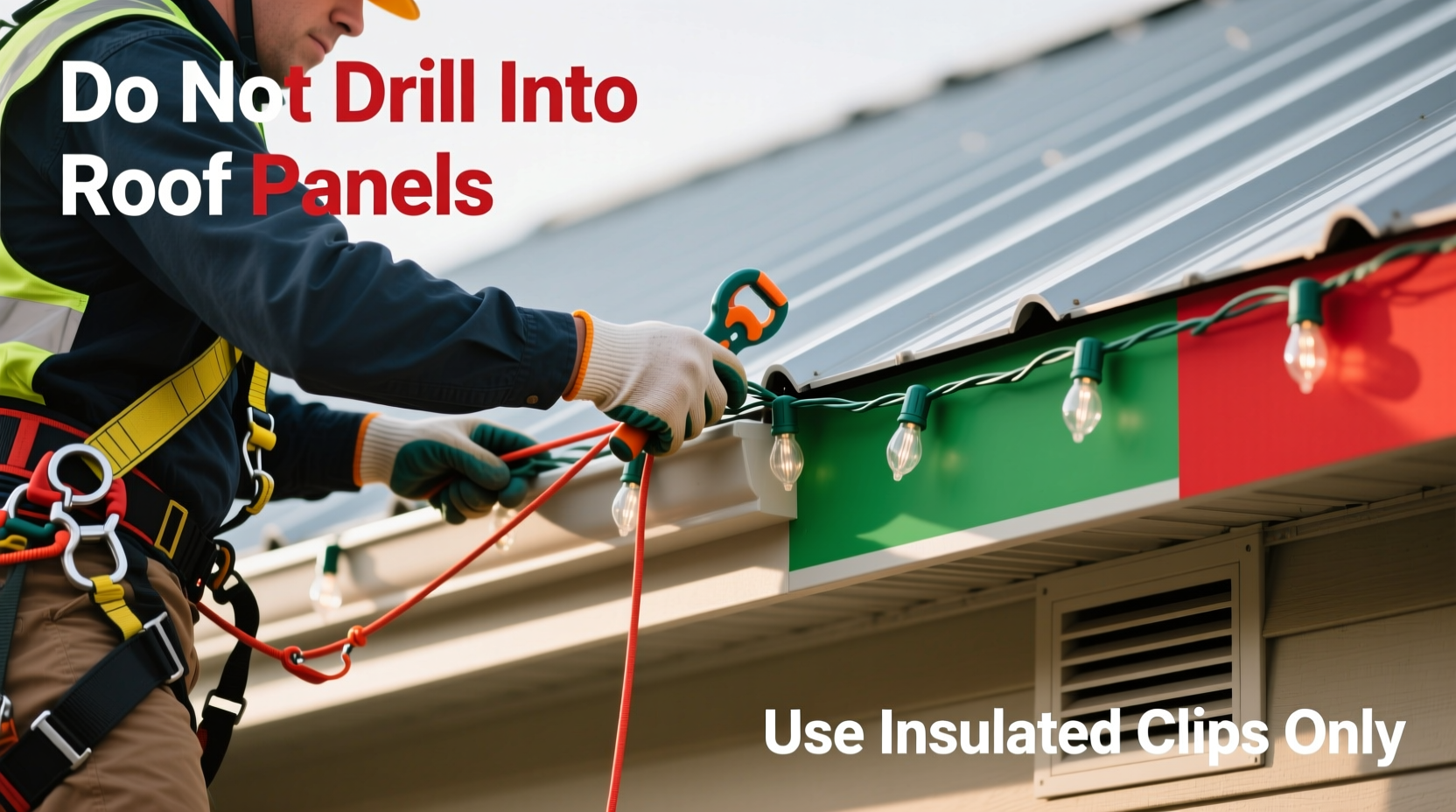
Before any decoration touches your roof, review your metal roofing warranty documentation. Most manufacturers explicitly state whether mechanical fasteners (like screws or nails) used for hanging lights will void coverage. Some warranties allow limited penetration if done in designated areas, while others prohibit it entirely.
Many modern metal roofs use interlocking panels designed to shed water efficiently. Drilling into seams or ridges disrupts this system, potentially leading to leaks and corrosion. Even small punctures can expand over time due to thermal expansion, especially in climates with freezing winters.
“Metal roofs are built for longevity, but their integrity depends on maintaining a sealed surface. Any unauthorized penetration is typically grounds for voiding the warranty.” — James Ralston, Senior Roofing Engineer at Northern Climate Building Solutions
Choose the Right Installation Method: Avoid Penetration
The safest way to hang Christmas lights on a metal roof is without drilling, screwing, or stapling. Traditional methods used on asphalt shingles don’t apply here. Instead, rely on non-penetrative solutions that respect the roof’s design and electrical safety standards.
Three primary options exist:
- Gutter-mounted clips – Attach to existing gutters rather than the roof itself.
- Rain gutter hangers with adjustable arms – Extend upward to rest gently along roof edges.
- Magnetic or adhesive-based light holders – Designed specifically for smooth metal surfaces.
For standing seam metal roofs, magnetic clips are ideal. These attach securely to vertical seams without scratching or bonding permanently. For exposed fastener roofs (with visible screws), adhesive hooks rated for outdoor metal use may work—but only if the surface is clean, dry, and free of coatings that inhibit bonding.
Do’s and Don’ts of Light Attachment Methods
| Method | Safe for Metal Roof? | Warranty-Safe? | Risk Level |
|---|---|---|---|
| Plastic gutter clips | Yes | Yes | Low |
| Magnetic seam clips | Yes (on steel roofs) | Yes | Low |
| Adhesive hooks | Sometimes | Conditional | Medium |
| Staples or nails | No | No | High |
| Screws with washers | No | No | High |
| Tape (duct, packing) | No | No | Medium-High |
Note: Magnetic systems only work on ferrous (iron-containing) metals like galvanized steel. They won’t adhere to aluminum roofs. Always verify your roof material before purchasing.
Step-by-Step Guide to Safe Light Installation
Follow this sequence to decorate your home safely and effectively.
- Inspect your roof and gutters – Ensure they’re secure, undamaged, and capable of supporting lightweight fixtures. Loose gutters must be repaired first.
- Determine your roof type – Identify whether it's steel or aluminum, standing seam or corrugated. This dictates which mounting method works.
- Select UL-listed, outdoor-rated LED lights – Use only lights labeled for exterior use. LEDs run cooler, draw less power, and reduce fire risk.
- Plan your layout on the ground – Lay out strands to test connections, check for dead bulbs, and measure total length needed.
- Install gutter or magnetic clips – Space evenly (every 12–18 inches). On standing seams, slide magnetic clips vertically into place by hand.
- Attach light strands gently – Hook each section into clips without pulling taut. Allow slight sag to accommodate wind and snow load.
- Connect to a GFCI-protected outlet – Never plug holiday lights into standard outlets. Ground Fault Circuit Interrupter (GFCI) outlets cut power instantly if moisture causes leakage.
- Test the circuit before finalizing – Turn on lights during daylight to spot flickering or gaps. Address issues immediately.
- Secure cords away from foot traffic – Use cord covers on walkways and avoid running cables across doors or driveways.
- Schedule periodic checks – Inspect weekly for dislodged clips, damaged wires, or signs of overheating.
Electrical Safety: Preventing Shock and Fire Hazards
Metal conducts electricity. If a damaged wire comes into contact with the roof surface and there’s a fault in the circuit, the entire roof could become energized—posing a lethal risk to anyone touching it, especially during wet conditions.
To minimize danger:
- Use only insulated tools when handling wiring near the roof.
- Never work on the roof during rain, snow, or high humidity.
- Keep all connectors elevated and off the roof surface using plastic risers or clips.
- Unplug lights during storms or when leaving home for extended periods.
LED string lights operate at low voltage (typically 12–24V for some models), significantly reducing shock risk compared to older incandescent sets (which run at 120V). However, even low-voltage systems can overheat if overloaded or covered in snow.
“We’ve seen cases where homeowners used indoor lights outdoors, leading to short circuits when snow melted and pooled around base connections. Always use lights rated for outdoor use—and inspect them annually.” — Sarah Lin, Electrical Safety Inspector, National Fire Protection Association (NFPA)
Real Example: The Johnson Family Near Minneapolis
The Johnsons loved holiday decorating and had recently replaced their old shingle roof with a standing seam steel system. Eager to continue their tradition, they initially planned to staple lights along the ridge line as they once did. After consulting their contractor, they learned this would void their 50-year warranty.
Instead, they purchased magnetic clips designed for standing seams and paired them with commercial-grade LED rope lights. Installation took under two hours, required no tools, and left zero marks. During a winter storm with heavy snowfall, one section came loose—but because the lights were plugged into a GFCI outlet, no hazard occurred when the strand touched a wet fascia board. They reattached it safely after the storm passed.
Two years later, their display remains a neighborhood favorite—and their roof warranty is intact.
Checklist: Pre-Installation Safety Review
- Reviewed roof warranty terms regarding attachments
- Confirmed roof material (steel vs. aluminum)
- Selected non-penetrative mounting method (magnets, clips, etc.)
- Verified all lights are UL-listed for outdoor use
- Ensured extension cords are rated for outdoor/wet conditions
- Planned circuit path to GFCI-protected outlet
- Checked weather forecast—no precipitation expected during install
- Prepared insulated ladder mat to prevent scratching roof
- Tested all strands for continuity and brightness
- Arranged for someone to assist with ladder stability
Frequently Asked Questions
Can I use suction cups on a metal roof?
No. Suction cups fail quickly in cold temperatures and on textured or coated metal surfaces. They often leave residue and provide unreliable support, increasing the risk of falling decorations.
Will adhesive hooks damage my roof coating?
Possibly. Many metal roofs have Kynar or PVDF finishes that can be compromised by strong adhesives. Residue left behind may trap moisture and accelerate corrosion. If you must use adhesives, choose products labeled as “roof-safe” and remove them within 90 days.
How do I remove ice dams without damaging lights or roof?
Never use sharp tools or salt-based ice melt on metal roofs. Instead, install heated cables *above* the gutter line (not attached to the roof panel) to prevent dam formation. Keep light strands clear of these zones to avoid interference.
Final Recommendations and Year-Round Care
Installing Christmas lights on a metal roof doesn’t have to mean choosing between beauty and safety. By respecting the roof’s structural and electrical properties, you preserve both its function and your peace of mind.
At season’s end, remove lights carefully. Coil them loosely and store in climate-controlled containers. Clean magnetic clips of debris before storing to maintain grip strength. Inspect all components annually for frayed wires, cracked insulation, or weakened connectors.
Consider investing in permanent, low-profile lighting solutions such as recessed soffit LEDs or pathway markers. These offer seasonal ambiance without annual reinstallation risks.
Conclusion: Decorate Smart, Stay Safe
The holidays should be about celebration—not emergency repairs or warranty disputes. With thoughtful preparation, you can create a dazzling display that enhances your home’s curb appeal while protecting your investment. Choose non-invasive methods, prioritize electrical safety, and always consult your roofing professional when in doubt.




 浙公网安备
33010002000092号
浙公网安备
33010002000092号 浙B2-20120091-4
Comments
No comments yet. Why don't you start the discussion?