
Whiteboards are essential tools in classrooms, offices, and homes—offering a clean, reusable surface for brainstorming, teaching, and planning. But when permanent marker mistakenly ends up on the board, panic can set in. Unlike dry-erase ink, permanent marker doesn’t wipe away with a standard eraser. Worse, improper removal techniques often leave behind ghosting: faint stains or residue that dull the board’s surface and compromise future visibility.
The good news is that permanent marker doesn’t have to spell disaster. With the right approach, you can remove it completely—without damaging the board or inviting ghosting. This guide provides tested, safe methods backed by material science and practical experience, helping you restore your whiteboard to pristine condition.
Why Permanent Marker Stains Are Tricky
Permanent markers contain alcohol-based solvents and pigments designed to bond strongly with surfaces. When applied to a whiteboard, the ink quickly adheres to microscopic imperfections in the glossy coating. While dry-erase markers use a similar solvent base, their ink is formulated to sit atop the surface so it wipes off easily. Permanent ink, however, penetrates slightly deeper, especially if left unattended.
Ghosting occurs not only from incomplete removal but also from residual chemicals or micro-abrasions caused by aggressive scrubbing. Using harsh cleaners or abrasive pads may strip the protective layer of the whiteboard, creating spots that attract future ink buildup. Therefore, the goal isn’t just removal—it’s preserving the integrity of the surface while eliminating all traces of ink.
“Many people reach for the strongest cleaner they can find, but that’s often what ruins the board. The key is targeted solvents and gentle action.” — Dr. Alan Pierce, Materials Scientist at EduSurface Labs
Safe and Effective Removal Methods
Below are five reliable methods to remove permanent marker from a whiteboard. Each has been evaluated for effectiveness, safety, and long-term impact on the board's finish. Always test any method on a small, inconspicuous area first—especially on older or textured boards.
1. The Dry-Erase Overlap Method (Best for Fresh Marks)
This clever technique uses the chemistry of dry-erase ink to lift permanent marker. It works best when the stain is recent and hasn’t fully cured.
- Cover the permanent marker stain completely with a fresh layer of dry-erase marker.
- Wait 15–30 seconds to allow the solvents in the dry-erase ink to interact with the permanent ink.
- Erase normally with a clean, soft eraser or microfiber cloth.
- If residue remains, repeat once more.
The alcohol solvents in the dry-erase ink loosen the permanent ink’s bond, allowing it to be wiped away. Because no foreign chemicals are introduced, this method poses zero risk to the board’s surface.
2. Isopropyl Alcohol (70% or Higher)
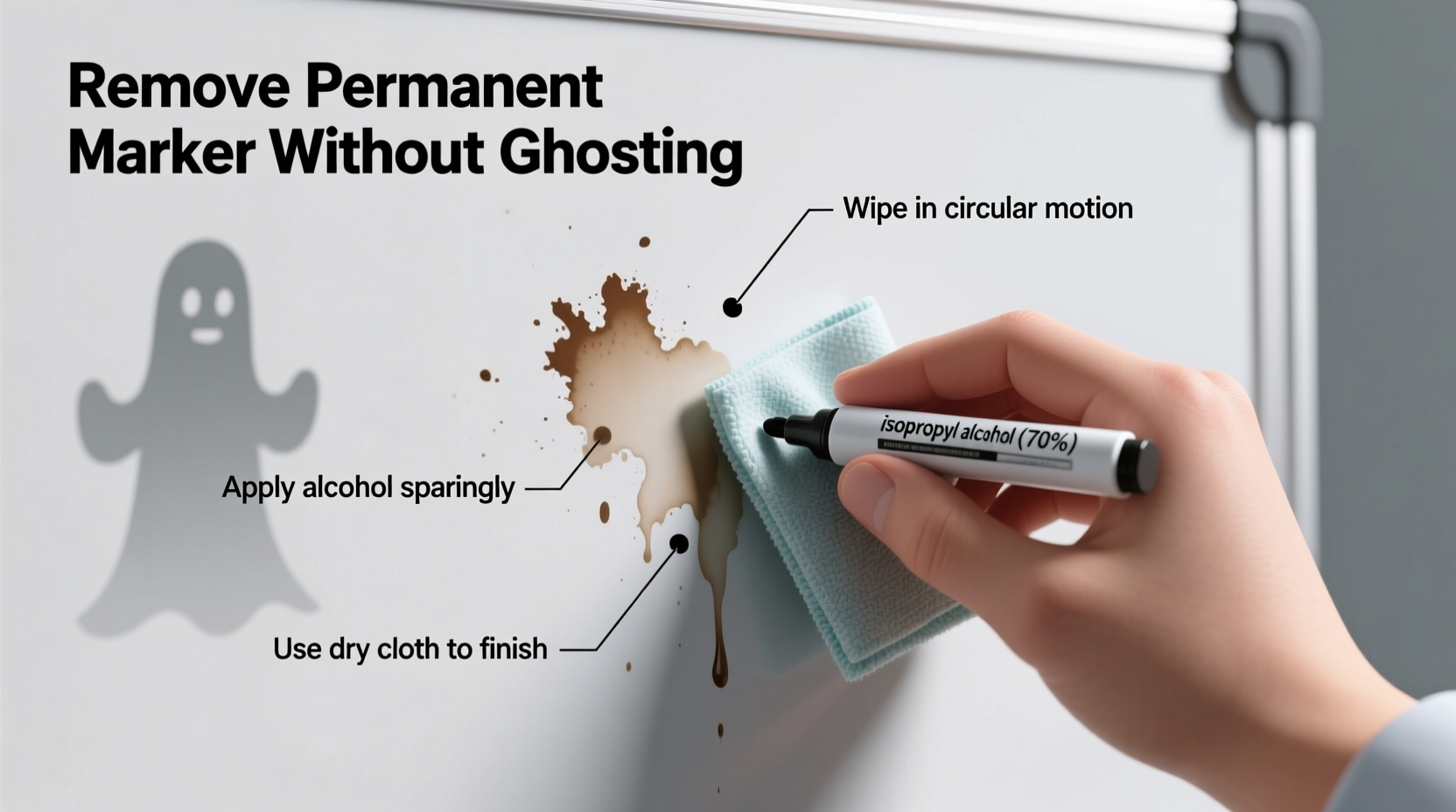
Isopropyl alcohol (rubbing alcohol) is a widely available, effective solvent that breaks down permanent marker ink without harming most whiteboard surfaces.
- Dampen a cotton ball or soft cloth with 70% isopropyl alcohol. Do not soak it—excess liquid can seep into edges and damage backing.
- Gently rub the stained area in circular motions, applying minimal pressure.
- Wipe clean with a dry microfiber cloth.
- Follow up by writing and erasing a full board of dry-erase ink to recondition the surface.
This method works quickly and leaves no odor or residue. However, avoid repeated or excessive use, as prolonged exposure may degrade the board’s coating over time.
3. Whiteboard Cleaner with Denatured Alcohol
Commercial whiteboard cleaners often contain denatured alcohol and surfactants specifically engineered for deep cleaning without scratching.
- Spray a small amount directly onto the stain—never spray aerosol near the edges.
- Let sit for 10–15 seconds.
- Wipe gently with a lint-free cloth.
- Rinse the area with a water-dampened cloth if the cleaner is heavy-duty, then dry immediately.
Choose products labeled “non-abrasive” and “safe for melamine and porcelain boards.” Brands like Expo Professional and Quartet Premium are trusted in educational and corporate settings.
4. Hand Sanitizer (In a Pinch)
Most hand sanitizers contain at least 60% alcohol, making them surprisingly effective for emergency ink removal.
- Apply a pea-sized amount to the stain.
- Use a soft cloth to rub in small circles for 20–30 seconds.
- Wipe clean and follow with a dry-erase pass to restore luster.
Note: Avoid gel-based sanitizers with added moisturizers or dyes, which may leave behind a film. Stick to clear, alcohol-dominant formulas.
5. Magic Eraser (With Caution)
Melamine foam erasers (commonly known as Magic Erasers) can lift stubborn stains through micro-abrasion. However, they should be used sparingly and carefully.
- Cut a small piece of the eraser—only what you need.
- Dampen it lightly with water; squeeze out excess.
- Test on a corner first. If the surface appears to dull, stop immediately.
- If safe, gently buff the stain in short strokes.
- Wipe thoroughly with a damp cloth, then dry.
Porcelain whiteboards handle melamine foam better than melamine resin boards, which are more prone to scratching. Never use dry—always moisten—and never press hard.
What Not to Do: Common Mistakes That Cause Ghosting
Avoid these practices—they increase the risk of permanent damage and ghosting.
| Don't | Why It’s Harmful |
|---|---|
| Use acetone or nail polish remover | Too harsh; strips protective coating and yellows plastic trim. |
| Scrub with paper towels or rough sponges | Creates micro-scratches that trap ink and promote ghosting. |
| Leave permanent marker unattended for days | Ink sets deeper over time, increasing removal difficulty. |
| Use window cleaners with ammonia | Can degrade certain board types and leave streaks. |
| Apply heat (e.g., hair dryer) | May warp plastic boards or bake ink into the surface. |
Preventing Ghosting After Cleaning
Even successful ink removal can lead to ghosting if post-cleaning steps are skipped. Follow this checklist to ensure your board stays clear and functional.
- Wipe the entire board with a dry microfiber cloth after treatment.
- Perform a \"reconditioning pass\": write over the cleaned area with a dry-erase marker and erase it.
- Inspect under bright light for any lingering haze.
- Repeat cleaning only if necessary—overcleaning increases wear.
- Store markers separately: keep permanent and dry-erase in different containers.
Reconditioning is crucial. The fresh layer of dry-erase ink fills in microscopic pores exposed during cleaning, restoring the slick, non-porous surface that resists future staining.
Real-World Example: Classroom Recovery
In a middle school math classroom in Portland, a substitute teacher accidentally used a permanent black marker during a lesson. By the end of the day, the ink had dried across half the board. The regular teacher, Ms. Linda Tran, tried regular erasing and water wiping—no success.
She applied the dry-erase overlap method first. After two rounds, most of the ink lifted, but faint gray smudges remained. She then used 70% isopropyl alcohol on a soft cloth, gently working the areas in small circles. Within minutes, the board was clean. She finished by writing and erasing a full grid of equations to recondition the surface.
“The next day, students didn’t even notice anything had happened,” she said. “The key was not rushing and avoiding anything abrasive. I’ve seen boards ruined by janitors using bleach wipes.”
Frequently Asked Questions
Can I use vinegar to remove permanent marker from a whiteboard?
Vinegar is mildly acidic and generally safe, but it’s less effective than alcohol-based solutions. It may require multiple applications and vigorous rubbing, increasing scratch risk. For best results, stick with isopropyl alcohol or commercial whiteboard cleaner.
Will ghosting go away on its own?
No. Ghosting is either residual ink or physical damage to the surface. If it’s residue, proper cleaning may still fix it. If it’s micro-scratches or coating loss, the damage is permanent and will worsen over time. Prevention is far more effective than correction.
How can I tell if my whiteboard is porcelain or melamine?
Porcelain boards are heavier, have a high-gloss, glass-like finish, and are magnetic across the entire surface. Melamine boards are lighter, slightly textured, and often have a visible seam or edge where the laminate meets the frame. Porcelain is more durable and resistant to ghosting.
Expert Insight: Choosing the Right Board for High-Use Environments
While removing permanent marker is important, selecting the right whiteboard from the start reduces long-term issues.
“For high-traffic environments like schools or conference rooms, I recommend porcelain steel boards. They resist staining, don’t ghost easily, and withstand strong cleaners when needed. Melamine boards are affordable but degrade faster under frequent use.” — Karen Liu, Educational Facility Consultant
Investing in a higher-quality board pays off in longevity and lower maintenance. Pair it with color-coded marker trays—red lids for permanent, blue for dry-erase—to prevent future accidents.
Final Tips for Long-Term Whiteboard Care
Keeping your whiteboard in top condition goes beyond stain removal. Integrate these habits into your routine:
- Erasing daily with a clean, dry microfiber cloth.
- Cleaning weekly with a dedicated whiteboard spray.
- Replacing worn erasers and avoiding marker caps left off.
- Storing markers horizontally to prevent drying.
- Conducting monthly deep cleans using isopropyl alcohol if needed.
Labeling permanent markers with tape or storing them in a separate drawer can eliminate accidental misuse. In shared spaces, a quick team reminder can prevent costly mistakes.
Conclusion
Accidentally using permanent marker on a whiteboard doesn’t have to result in permanent damage. By acting quickly and choosing the right method—starting with the safest options like dry-erase overlap or isopropyl alcohol—you can remove the ink completely without ghosting. The real secret lies not in strength, but in precision and care.
Preserving your whiteboard’s surface ensures clarity, professionalism, and longevity. Whether in a classroom, office, or home, a clean board supports better communication and productivity. Apply these methods today, share your experience, and help others avoid the same mistake.




 浙公网安备
33010002000092号
浙公网安备
33010002000092号 浙B2-20120091-4
Comments
No comments yet. Why don't you start the discussion?