
Fragile heirloom glass ornaments are more than decorations—they’re family history suspended in glass. Passed down through generations, these delicate pieces often carry emotional value far beyond their physical form. Yet, storing them year after year presents a unique challenge: how to protect them from breakage, moisture, dust, and chemical degradation without causing unintended harm during the wrapping process.
Unlike modern holiday decor, vintage glass ornaments were not designed with long-term durability in mind. Many were hand-blown in Europe in the late 19th and early 20th centuries, using techniques that prioritized beauty over resilience. Their thin walls, metallic finishes, and intricate detailing make them vulnerable to pressure, temperature shifts, and even improper materials used in storage. A single misstep—like wrapping in newspaper or stacking too tightly—can lead to irreversible damage.
This guide provides a comprehensive, practical approach to preserving these treasures. From selecting the right materials to creating an ideal storage environment, every decision matters when safeguarding irreplaceable items.
Understanding the Risks to Heirloom Glass Ornaments
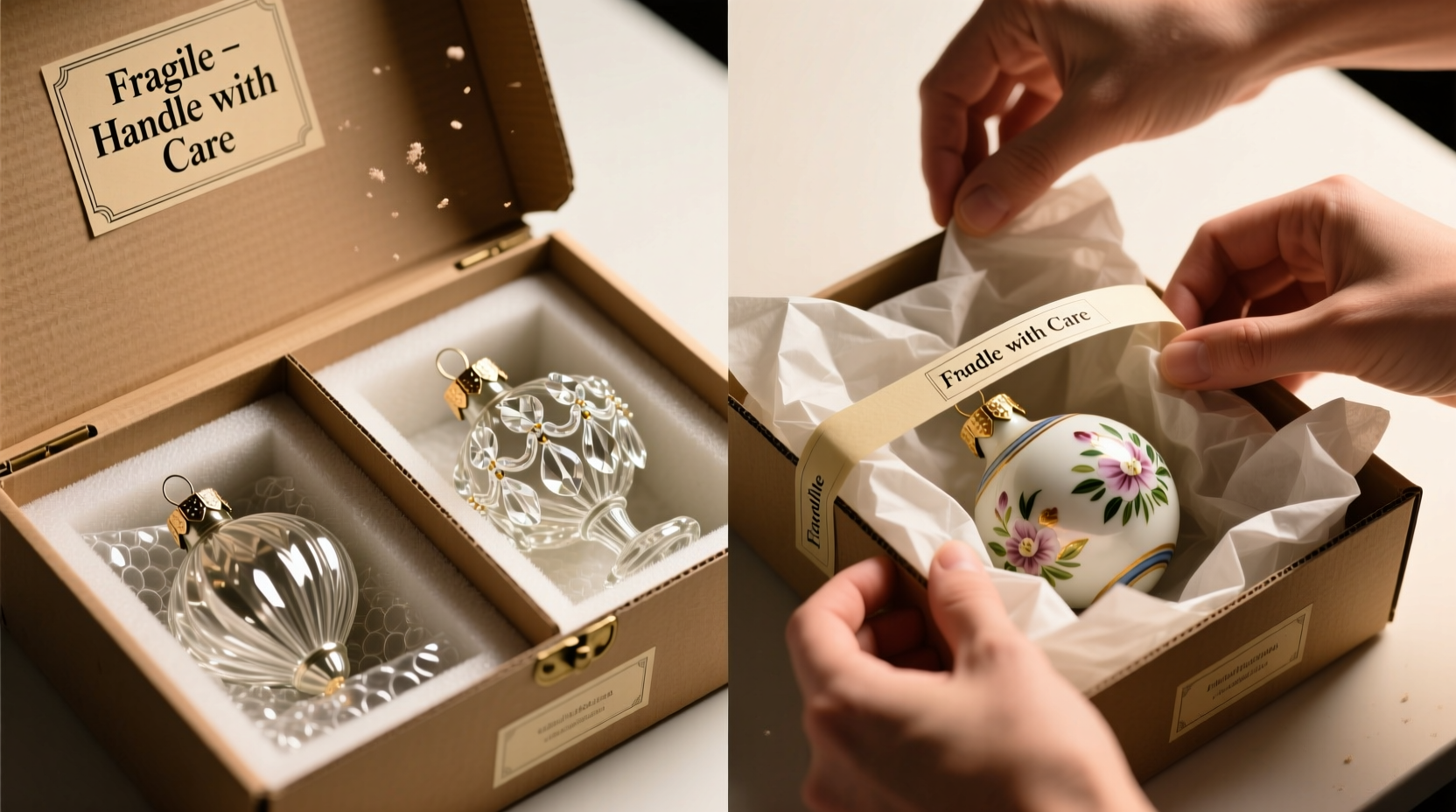
Before handling any ornament, it’s essential to understand what threatens its integrity. Damage doesn’t always come from obvious sources like dropping or crushing. Subtle environmental factors can be just as destructive over time.
- Physical Impact: Even minor bumps during storage can cause hairline fractures or complete shattering, especially if ornaments are touching each other.
- Mercury Tarnish (Silvering Deterioration): Older ornaments often have a silvered interior coating made from a mercury-based solution. Exposure to air, humidity, or sulfur compounds can cause this layer to oxidize, turning black or cloudy—a condition sometimes called “mercury sickness.”
- Chemical Reactions: Acidic papers, adhesives, or plastic materials can degrade paint or metal finishes on the ornament’s surface.
- Temperature and Humidity Fluctuations: Extreme changes cause expansion and contraction of both glass and internal coatings, increasing the risk of cracking or delamination.
- Light Exposure: Prolonged exposure to sunlight or artificial UV light can fade painted details and weaken structural integrity.
“Glass ornaments from the 1880s to 1930s are among the most chemically sensitive holiday items we conserve. Proper isolation from reactive materials is non-negotiable.” — Dr. Lydia Chen, Museum Conservator, National Decorative Arts Preservation Society
Step-by-Step Guide to Safe Wrapping and Storage
The key to successful preservation lies in a methodical approach. Follow these steps carefully to minimize risk at every stage.
- Inspect Each Ornament Before Handling
Examine under soft, natural light. Look for existing cracks, flaking paint, loose hooks, or signs of silvering deterioration. Note any issues for future reference or conservation. - Clean Gently (Only If Necessary)
Most heirloom ornaments should not be cleaned unless visibly soiled. If needed, use a soft artist’s brush (like a makeup brush) to remove dust. Never wipe with liquids or cloths, which can abrade surfaces or leave residues. - Prepare Individual Wrapping Materials
Use acid-free tissue paper or unbleached, pH-neutral cotton cloth. Avoid newsprint, colored paper, or regular tissue, which contain acids and dyes that transfer over time. - Wrap Loosely but Securely
Place the ornament in the center of a sheet of acid-free tissue. Gently cradle it, folding the paper around it without pressing. The goal is cushioning, not compression. For added protection, double-wrap with a second layer. - Use Compartmentalized Storage Boxes
Select rigid boxes with individual cells—such as original German cardboard insert trays or custom-cut foam dividers. These prevent movement and contact between ornaments. Never allow wrapped ornaments to touch one another. - Label Outside the Box
Use archival labels affixed to the box exterior. Never write directly on wrapping or attach sticky notes, which may leave residue or degrade. - Store Horizontally in Climate-Controlled Space
Keep boxes flat on shelves in a cool, dry area. Ideal conditions: 60–70°F (15–21°C) and 40–50% relative humidity. Avoid attics, basements, garages, or near heating vents.
Do’s and Don’ts: Material Comparison Table
| Material | Do’s | Don’ts |
|---|---|---|
| Acid-Free Tissue Paper | Use as primary wrapping layer; safe for long-term contact | Do not reuse if torn or soiled |
| Newsprint or Newspaper | None recommended | Avoid completely—ink and acid damage finishes |
| Plastic Bags (Polyethylene) | Acceptable only if breathable and archival-grade | Never use PVC or vinyl—emits harmful gases over time |
| Bubble Wrap | Use only as outer cushioning, never direct contact | Avoid pressing bubbles against glass—can imprint or crack |
| Cardboard Boxes | Use only acid-free, lignin-free archival boxes | Avoid standard moving boxes—they off-gas and attract pests |
Checklist for Safe Ornament Storage
Follow this checklist annually before putting ornaments away:
- ☐ Inspect each ornament for new damage or deterioration
- ☐ Confirm all wrapping is intact and acid-free
- ☐ Verify storage box has no mold, pests, or warping
- ☐ Ensure compartments are sized correctly—no crowding
- ☐ Store boxes flat, never stacked more than two high
- ☐ Keep away from direct sunlight, radiators, and water pipes
- ☐ Label boxes clearly with contents and year stored
- ☐ Record inventory in a digital log or notebook for tracking
A Real Example: Preserving a 1910 Dresden Star
In 2018, Margaret H., a collector from Ohio, inherited a set of six Dresden paperweight glass stars from her great-aunt. Each was approximately 3 inches wide, with gold leaf trim and hand-painted floral motifs. One had already lost its hook, and another showed slight cloudiness in the silvering.
She initially stored them in a gift box lined with crumpled newspaper, tucked inside a plastic tote in her basement. By the next holiday season, two ornaments had developed dark spots along the seams—the telltale sign of advancing silvering corrosion.
After consulting a local museum conservator, she transferred them to a new system: each star was double-wrapped in acid-free tissue, placed in a custom-cut egg carton tray made from recycled archival board, and housed in a lidded wooden box with a silica gel packet to regulate moisture. The box now rests on a closet shelf in her climate-controlled bedroom.
Three years later, no further deterioration has occurred. The investment in proper materials—totaling under $40—prevented the loss of irreplaceable family artifacts.
Advanced Tips for Long-Term Preservation
For collectors with extensive or particularly valuable sets, additional precautions can extend longevity even further.
- Use Oxygen Absorbers or Silica Gel: Place desiccant packets in the storage container to maintain low humidity. Replace or recharge them annually.
- Create a Microclimate: Seal boxes with breathable, archival tape and store inside larger containers with monitoring strips that change color if humidity exceeds safe levels.
- Limit Handling: Wear cotton gloves when touching ornaments. Skin oils can accelerate tarnishing on metallic finishes.
- Rotate Display: Instead of displaying all ornaments each year, rotate them in groups. This reduces cumulative exposure to light and handling stress.
- Document Provenance: Attach a small, sealed archival envelope to the outside of the box containing a handwritten note about the ornament’s origin, maker (if known), and family history.
“Preventive care is the most effective conservation strategy. Once silvering fails, restoration options are limited and costly.” — Institute of Conservation, UK Holiday Artifact Division
Frequently Asked Questions
Can I use baby wipes to clean my glass ornaments?
No. Baby wipes contain alcohol, fragrances, and surfactants that can strip protective coatings and accelerate tarnishing. Even “gentle” formulas are unsuitable for antique glass. Use only dry, soft brushes for cleaning.
Is it safe to store ornaments in vacuum-sealed bags?
No. While vacuum sealing removes air, it also applies pressure that can crack thin glass. Additionally, some plastics used in these bags emit volatile organic compounds (VOCs) harmful to metal finishes. Avoid entirely.
What should I do if an ornament’s silvering is already tarnished?
Do not attempt home remedies like baking soda or polishing cloths. These can permanently scratch the glass. Consult a professional conservator. In some cases, controlled atmospheric treatment may slow further decay, but reversal is rarely possible.
Conclusion: Honor the Past by Protecting It Thoughtfully
Heirloom glass ornaments are fleeting in their fragility but enduring in meaning. How they survive depends not on luck, but on deliberate, informed care. Every choice—from the paper you wrap them in to the corner of the house where you store them—shapes their fate.
By applying the principles outlined here, you ensure that these luminous fragments of family tradition remain intact for future generations. Start this season with intention. Wrap each piece with reverence, store it with precision, and document its story. Your attention today becomes their legacy tomorrow.




 浙公网安备
33010002000092号
浙公网安备
33010002000092号 浙B2-20120091-4
Comments
No comments yet. Why don't you start the discussion?