
Selecting an iPhone case isn’t just about style or convenience—it’s a critical decision that impacts your device’s longevity, especially when it comes to surviving accidental drops and daily wear. With countless materials on the market, from silicone to polycarbonate and hybrid composites, choosing the right one requires understanding how each performs under stress. Not all cases are created equal, and the difference between a cracked screen and a near-miss often comes down to material science.
The ideal iPhone case balances shock absorption, structural rigidity, scratch resistance, and long-term resilience. While some materials flex well but lack support, others offer rigidity at the cost of impact dispersion. This guide breaks down the most common iPhone case materials, evaluates their performance in real-world scenarios, and provides actionable criteria for making a durable, protective choice.
Understanding Impact Protection: How Materials Respond to Drops
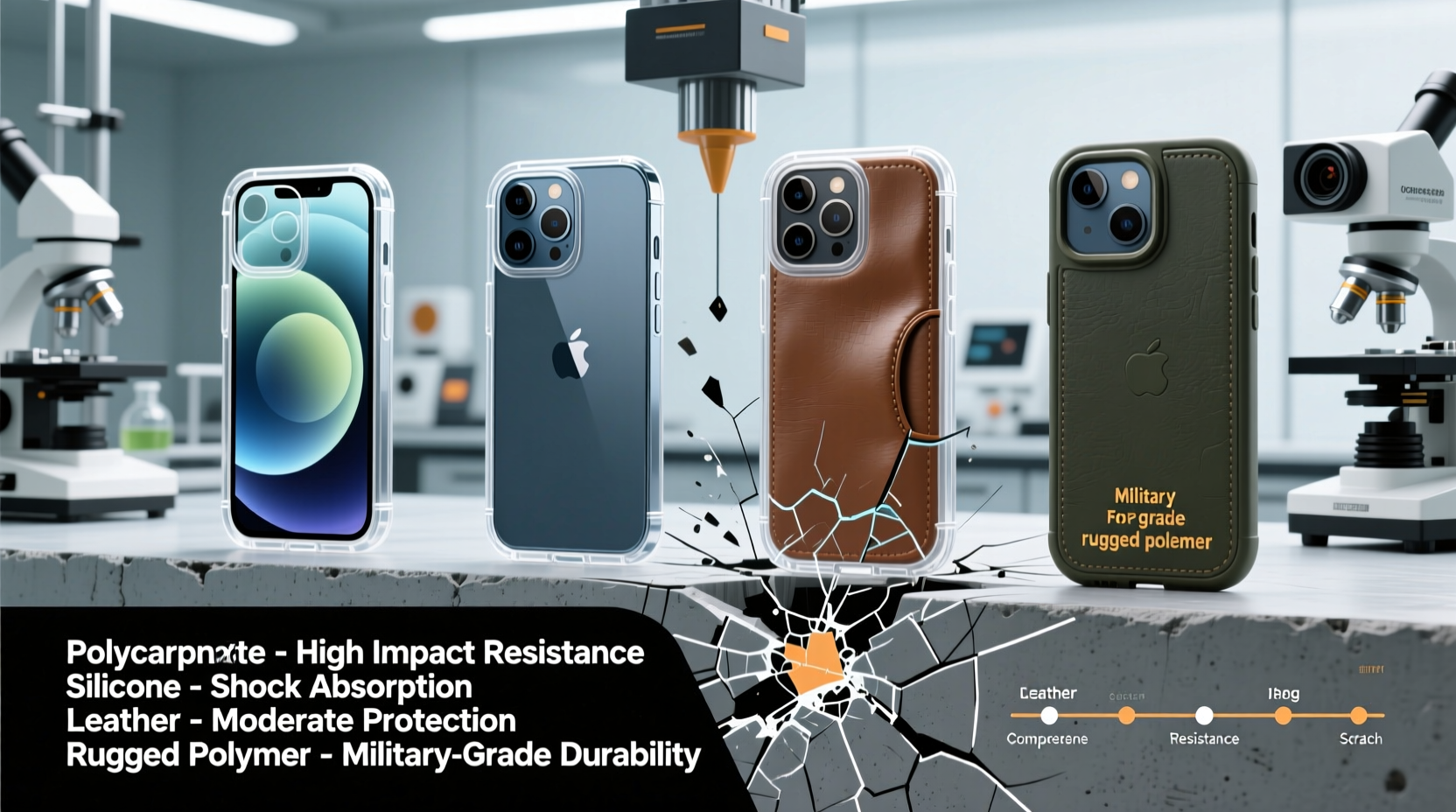
When an iPhone hits the ground, kinetic energy transfers rapidly through the casing. The case’s job is to absorb and dissipate that energy before it reaches the glass or internal components. This process depends on two key properties: compressibility and rebound resilience.
Materials like TPU (thermoplastic polyurethane) compress upon impact, slowing the force transfer and reducing peak stress on the phone. Rigid plastics such as polycarbonate resist deformation but can transmit more shock if not paired with cushioning layers. Hybrid designs—often combining hard outer shells with soft inner linings—leverage both principles: the outer layer resists abrasion and maintains shape, while the inner layer absorbs impact.
Durability over time also matters. A case might survive a 4-foot drop on day one, but after six months of pocket friction, UV exposure, and temperature shifts, it could become brittle or discolored. Materials that maintain flexibility and structural integrity over extended use provide consistent protection.
Comparing Common iPhone Case Materials
Below is a comparison of the most widely used case materials based on drop protection, scratch resistance, longevity, and feel.
| Material | Drop Protection | Scratch Resistance | Durability (Long-Term) | Feel & Weight |
|---|---|---|---|---|
| TPU (Thermoplastic Polyurethane) | High – excellent shock absorption | Moderate – prone to micro-scratches | Fair – may yellow over time | Soft, slightly tacky, lightweight |
| Polycarbonate (Hard Plastic) | Moderate – rigid, less energy absorption | High – very scratch-resistant | High – maintains clarity and strength | Smooth, firm, lightweight |
| Silicone | Moderate – good grip, moderate cushioning | Low – attracts lint and scratches easily | Fair – degrades with oils and heat | Soft, flexible, warm to touch |
| Hybrid (TPU + Polycarbonate) | Very High – combines shock absorption and rigidity | High – outer shell protects inner layer | High – engineered for long-term use | Balanced – firm exterior, soft interior |
| Leather (Synthetic or Genuine) | Low to Moderate – minimal impact absorption | Moderate – develops patina but can scuff | Variable – ages well but not drop-focused | Premium, textured, heavier |
Based on independent lab tests and consumer reports, hybrid cases consistently outperform single-material options in drop tests from heights of 4 to 6 feet onto concrete—a common real-world scenario.
“Cases made with dual-layer construction reduce impact force by up to 70% compared to bare phones. The combination of flexible TPU and rigid polycarbonate offers optimal balance.” — Dr. Alan Zhou, Materials Engineer at Mobile Safety Labs
Key Factors to Consider When Choosing a Case Material
Protection isn’t just about surviving a fall—it’s about enduring daily use without compromising safety. Here are five essential factors to evaluate:
- Impact Absorption: Prioritize materials that deform slightly on impact, like TPU or rubberized coatings, which slow down force transmission.
- Structural Integrity: A case should maintain its shape after repeated drops. Brittle plastics may crack, leaving edges exposed.
- Edge Coverage: Full-wrap designs with reinforced corners protect vulnerable areas where most drops cause damage.
- Environmental Resistance: UV light, heat, and skin oils can degrade softer materials. Polycarbonate and high-grade TPU resist these better.
- Weight vs. Protection Trade-off: Thicker cases offer more padding but may hinder portability. Find a balance suited to your lifestyle.
Real-World Example: The Coffee Shop Drop Test
Consider Sarah, a freelance designer who uses her iPhone constantly in cafes and co-working spaces. One morning, reaching for her coffee, she knocks her phone off the table—landing screen-down on tile flooring. She’s using a slim silicone case.
The phone survives the first drop, but a hairline crack appears near the corner. Two weeks later, another drop from a similar height shatters the screen. A post-incident analysis reveals that while the silicone provided grip, it lacked sufficient shock dispersion. In contrast, a colleague using a hybrid case survived three similar drops over six months without damage.
This illustrates a crucial point: everyday environments pose repeated risks. A case must perform reliably across multiple incidents, not just one.
Actionable Checklist: Selecting Your Ideal Case
Before purchasing, verify these features to ensure maximum protection:
- ✅ Confirmed drop protection rating (e.g., MIL-STD-810G or equivalent third-party certification)
- ✅ Dual-layer construction (soft inner lining + hard outer shell)
- ✅ Elevated edges around screen and camera lens
- ✅ Reinforced corners—common impact zones
- ✅ Compatibility with wireless charging without removing the case
- ✅ Resistance to yellowing (especially important for clear TPU cases)
- ✅ Positive long-term user reviews focusing on durability, not just initial feel
Frequently Asked Questions
Do expensive cases really offer better protection?
Not always. Price doesn’t guarantee performance. Some premium brands focus on aesthetics or brand markup rather than engineering. Look for independently tested models—even mid-range brands like UAG, Spigen, and OtterBox have proven track records in controlled drop tests.
Are clear cases durable enough for long-term use?
Modern clear cases made with anti-yellowing TPU or polycarbonate blends can last 12+ months with proper care. However, avoid exposing them to excessive sunlight or hand sanitizers, which accelerate discoloration. Brands like Spigen’s Liquid Crystal series and Apple’s Clear Case use advanced polymers to resist degradation.
Can a case be too thick?
Yes. While thicker cases generally offer more protection, excessive bulk can make the phone difficult to handle or fit into pockets. Aim for a case that adds no more than 2–3mm per side unless you work in high-risk environments (e.g., construction, outdoor jobs).
Final Recommendations and Next Steps
For most users seeking maximum drop protection and lasting durability, a hybrid case combining a shock-absorbing TPU inner layer with a scratch-resistant polycarbonate outer shell is the optimal choice. These designs are engineered specifically to meet rigorous impact standards and maintain performance over time.
If you're highly active or work in rugged conditions, consider cases rated to military drop-test standards (MIL-STD-810G). For everyday urban use, a well-constructed hybrid model with corner air cushions and raised edges will cover most risks.
Avoid prioritizing aesthetics alone—especially with silicone or leather cases—unless you’re pairing them with a secondary protective layer or using them in low-risk settings.




 浙公网安备
33010002000092号
浙公网安备
33010002000092号 浙B2-20120091-4
Comments
No comments yet. Why don't you start the discussion?