
A well-chosen brooch can transform a simple sweater into a statement of elegance, personality, or sophistication. More than just an accessory, it acts as a focal point that draws attention, adds texture, and personalizes an otherwise understated garment. Yet, selecting the right brooch isn’t merely about picking something eye-catching—it’s about harmony, proportion, and intention. The wrong choice can overwhelm, clash, or appear haphazard. The right one elevates.
Whether you're dressing for a winter brunch, a professional meeting, or a quiet evening out, pairing a brooch with a sweater requires thoughtful consideration of fabric, color, neckline, and occasion. This guide breaks down the art of brooch selection with practical strategies, real-world applications, and timeless principles to help you make confident, stylish choices.
Understand the Role of Fabric and Texture
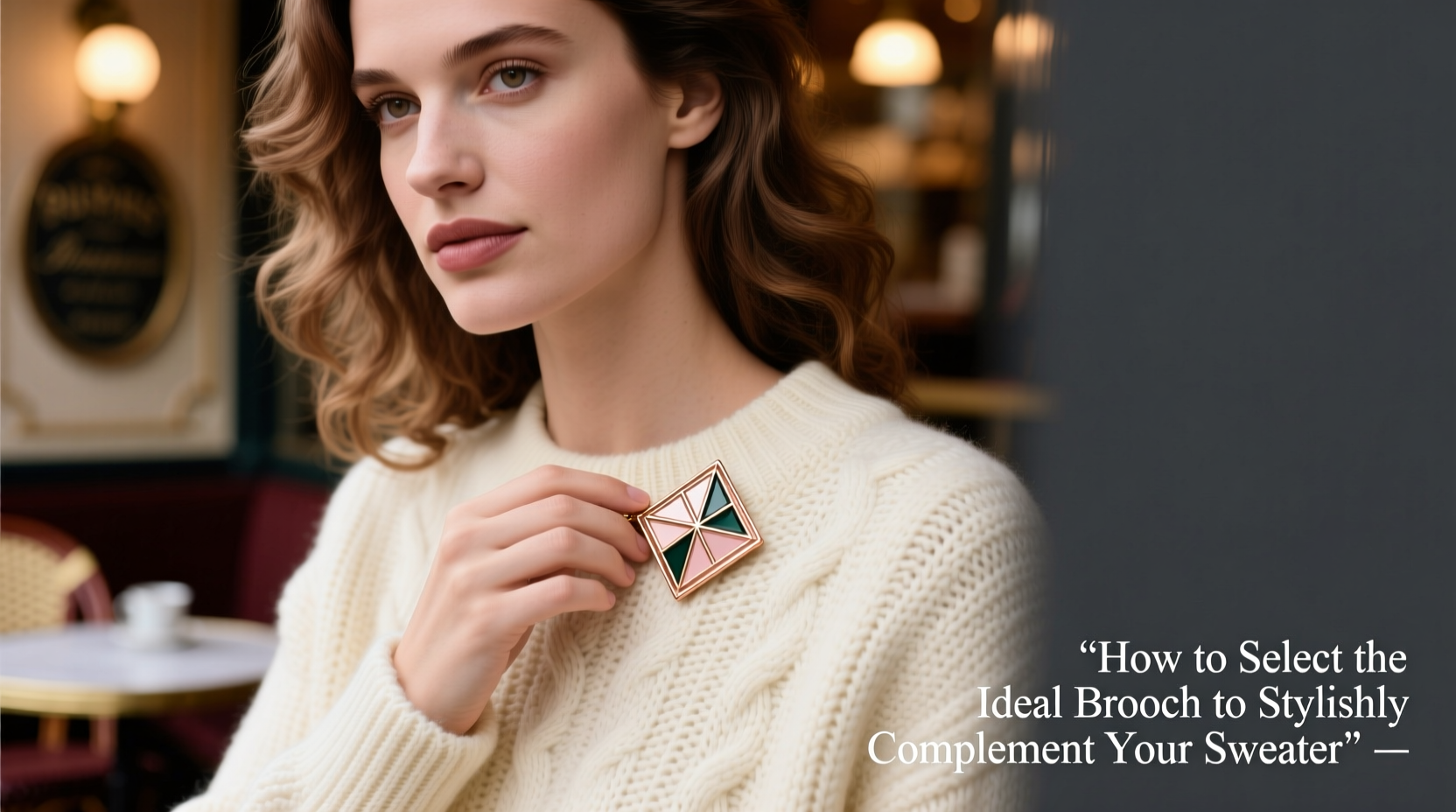
The foundation of any successful brooch-sweater pairing begins with the sweater’s material. Thick knits like cable wool or chunky turtlenecks demand bolder, more substantial brooches—think large vintage pins, sculptural metal designs, or pieces with dimensional elements. These fabrics provide a sturdy canvas that can support weight and visual impact without distortion.
In contrast, delicate knits such as merino wool, cashmere, or fine-gauge cotton require subtler accessories. A dainty floral enamel pin or a minimalist geometric design works best here. Delicate fabrics risk being stretched or damaged by heavy clasps, so prioritize lightweight metals and secure but gentle fasteners.
Match Brooch Style to Sweater Neckline and Cut
Placement matters as much as design. The neckline of your sweater dictates where the brooch will be most effective—and flattering.
- Turtlenecks: Ideal for vertical accents. Consider a long pendant-style brooch pinned at the center front, cascading slightly down the neck. Alternatively, cluster two small brooches symmetrically near the shoulders for balance.
- V-necks: Perfect for central focal points. A single ornate brooch placed just above the deepest point of the V draws the eye inward and elongates the torso.
- Round or crew necks: Offer flexibility. Place a brooch off-center near the shoulder for asymmetry, or use multiple small pins arranged in a subtle arc along the collarbone.
- Cardigans: Provide dual opportunities—on the lapel if present, or aligned with the button line. A vintage Art Deco brooch centered on the chest creates a retro-inspired look.
“Accessories should enhance, not compete. A brooch on a sweater is like punctuation in a sentence—it gives rhythm and emphasis.” — Clara Bennett, Fashion Stylist & Curator
Coordinate Color and Theme Thoughtfully
Color coordination is where personal expression meets sartorial intelligence. While contrasting colors can create drama, harmonious tones often deliver sophistication.
If your sweater is a solid neutral—charcoal, camel, ivory—use the brooch to introduce a pop of color. A deep emerald cloisonné piece on a beige cashmere sweater offers richness without clutter. For patterned sweaters (fair isle, stripes, or abstract motifs), choose a brooch that echoes one of the secondary hues rather than the dominant one. This creates cohesion without redundancy.
Thematic consistency also plays a role. A nautical-themed sweater pairs beautifully with a brooch shaped like an anchor or sailboat. A rustic cable-knit from the Scottish Highlands? A Celtic knot or thistle motif enhances authenticity.
| Sweater Type | Recommended Brooch Style | Color Strategy |
|---|---|---|
| Chunky cream turtleneck | Large brass floral brooch | Warm gold tone complements ivory |
| Gray V-neck merino | Geometric silver pin | Monochrome metallic accent |
| Red fair isle cardigan | Small pine tree enamel brooch | Green brooch picks up pattern detail |
| Black cropped sweater | Art Deco rhinestone piece | Sparkle contrasts matte fabric |
Step-by-Step Guide to Choosing Your Ideal Brooch
Selecting the perfect brooch doesn’t need to be overwhelming. Follow this sequence to make intentional, stylish decisions:
- Evaluate the sweater’s formality. Is it casual, work-appropriate, or evening-ready? Match the brooch’s material accordingly—enamel or wood for casual, pearls or crystals for formal settings.
- Identify the visual weight. Hold the sweater up and imagine where your eye naturally lands. That’s the optimal zone for placement.
- Limit competing accessories. If wearing earrings or a necklace, opt for a simpler brooch. Let one element lead.
- Test proportions. Larger brooches (over 2 inches) suit oversized sweaters; smaller ones (under 1 inch) work best on fitted or delicate knits.
- Secure safely. Use a brooch with a locking clasp to prevent slippage, especially on slippery fabrics like silk-blend knits.
Real Example: Elevating a Work Wardrobe Staple
Sophie, a museum archivist in Toronto, owns a collection of neutral-toned sweaters she wears weekly. Her go-to oatmeal-colored cardigan began to feel monotonous. Inspired by her workplace’s art deco gallery, she selected a vintage-inspired triangular brooch with black onyx and silver detailing. She positioned it just above the left breast pocket—aligned with the button line. The result was immediate: colleagues complimented her “polished yet creative” look. The brooch didn’t just accessorize; it communicated identity.
This example illustrates how a single, well-chosen piece can recontextualize an everyday garment, turning repetition into refinement.
Common Mistakes to Avoid
Even seasoned dressers can misstep. Here are frequent errors and how to correct them:
- Over-accessorizing: Pairing a bold brooch with a statement necklace creates visual conflict. Choose one hero piece.
- Mismatched scale: A tiny butterfly pin on a bulky fisherman knit disappears. Ensure size correlates with garment volume.
- Ignoring fastener quality: Flimsy clasps can damage fabric or fall off. Invest in brooches with secure, smooth closures.
- Poor placement: Avoid pinning too high (near the chin) or too low (below the bust). Aim for eye-level or slightly below.
Frequently Asked Questions
Can I wear a brooch on a delicate sweater like cashmere?
Yes, but with caution. Choose lightweight brooches with smooth, blunt pins and secure locking mechanisms. Always insert the pin gently, avoiding excessive pulling on fibers. Consider using a small fabric patch on the inside to distribute pressure.
Is there a rule for brooch placement on asymmetric sweaters?
Asymmetry calls for intentional imbalance. Place the brooch on the lower side of the hemline or along the diagonal seam to echo the design. The goal is to enhance, not correct, the asymmetry.
Are vintage brooches suitable for modern sweaters?
Absolutely. Vintage pieces add character and uniqueness. Pair a 1950s diamante brooch with a minimalist black turtleneck for a striking contrast of eras. Just ensure the color palette and finish (matte vs. shiny) align with the sweater’s aesthetic.
Final Thoughts: Make It Meaningful
Selecting the ideal brooch isn’t just about aesthetics—it’s about storytelling. Whether it’s a family heirloom, a souvenir from travels, or a modern design that speaks to your taste, the brooch becomes a signature. When paired thoughtfully with a sweater, it bridges function and artistry.
Start with one piece. Try it on different sweaters, adjust the placement, observe reactions. Refine your approach over time. Soon, you’ll develop an instinct for what works—not because you followed rules, but because you learned how to express yourself with precision and grace.




 浙公网安备
33010002000092号
浙公网安备
33010002000092号 浙B2-20120091-4
Comments
No comments yet. Why don't you start the discussion?