
Selecting the right mini building blocks isn’t just about color or brand—it’s a strategic decision that impacts structural integrity, design flexibility, and long-term enjoyment. Whether you're crafting intricate dioramas, educational models, or custom display pieces, the size of your bricks plays a pivotal role in the success of your build. With countless options on the market—from generic sets to premium-compatible systems—knowing how to navigate size specifications ensures your project aligns with both vision and functionality.
Understanding Mini Building Block Sizes and Standards
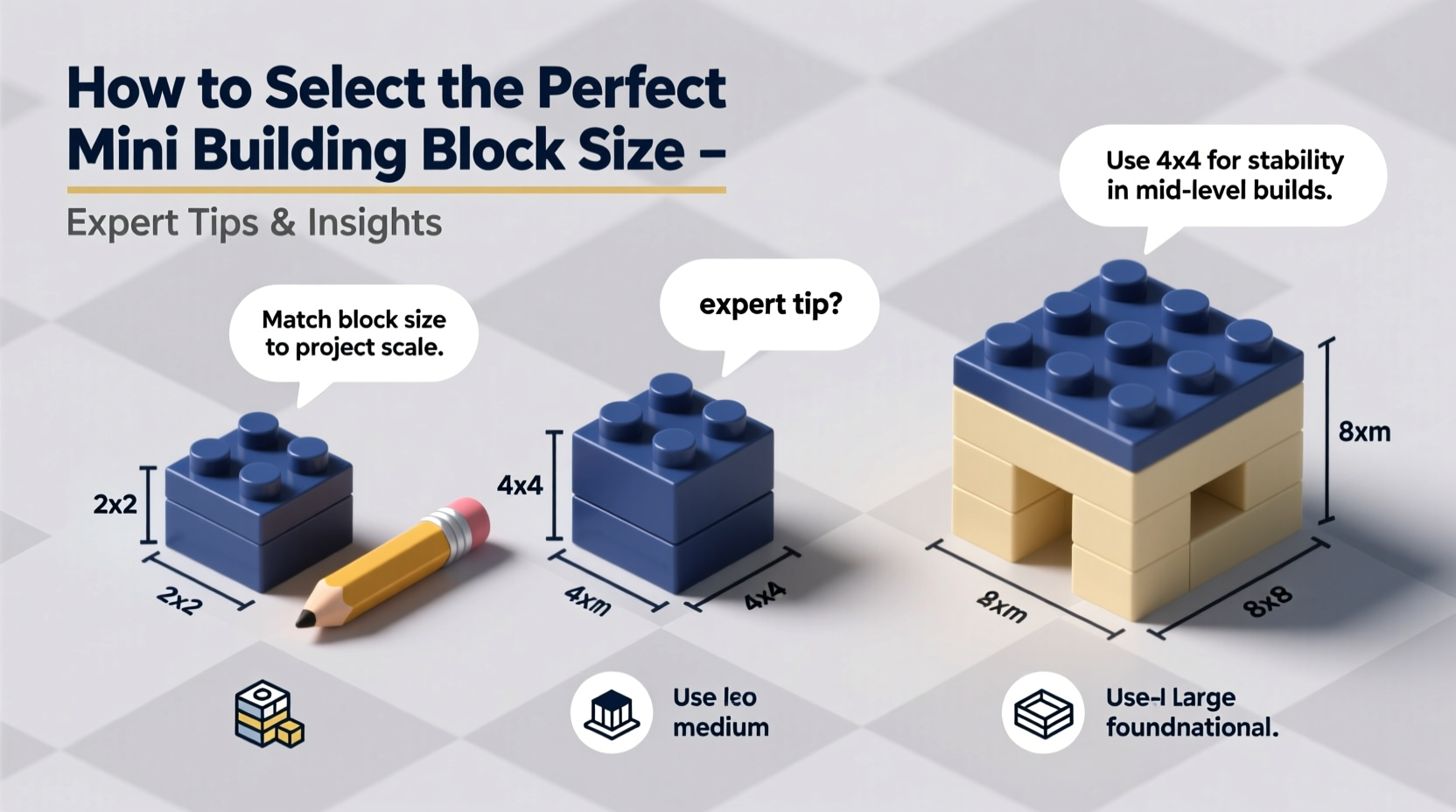
Mini building blocks are typically categorized by stud count, height, and dimensional tolerance. The most common unit of measurement is the \"stud,\" which refers to the small cylindrical top of a brick. A standard full-sized block measures 8 mm per stud with a height of 9.6 mm. Mini blocks, however, are often scaled down to 50%, 75%, or micro-scale equivalents depending on the system.
For example:
- Micro scale: ~3–4 mm per stud (used in keychain builds or tiny displays)
- Half-scale: ~4–5 mm per stud (popular for compact cityscapes)
- Nano blocks: Marketed as ultra-small but vary significantly between brands
Crucially, not all mini blocks adhere to universal sizing standards. While some third-party manufacturers reverse-engineer dimensions for compatibility with leading brands, others prioritize cost over precision, resulting in poor fit or breakage.
“Precision in miniature construction starts with consistent proportions. Even a 0.2 mm deviation can compromise interlocking strength over time.” — Daniel Reeves, Toy Engineering Consultant
Key Factors When Choosing Mini Block Size
Selecting the ideal size involves balancing multiple practical concerns. Consider these core criteria before purchasing any set:
Project Complexity and Detail Level
Highly detailed builds—such as architectural replicas or character models—benefit from smaller bricks that allow tighter curves and finer textures. However, excessive miniaturization increases assembly difficulty and fragility. For beginners or functional builds (e.g., moving parts), slightly larger mini blocks offer better handling and stability.
Age and Dexterity of the Builder
Smaller bricks demand greater hand-eye coordination. Children under 8 may struggle with nano-sized pieces, increasing frustration and risk of ingestion. Always match block size to the user’s developmental stage. ASTM safety guidelines recommend avoiding components under 26 mm in diameter for children under 3.
Compatibility Across Systems
Many builders mix brands. If you plan to integrate mini blocks with existing collections, verify cross-compatibility through independent testing reports or community forums. Some brands publish tolerance charts showing how their bricks align with industry leaders.
Comparison Table: Popular Mini Block Types by Size and Use Case
| Type | Avg. Stud Size | Best For | Limitations |
|---|---|---|---|
| Nano Blocks (Generic) | ~3.8 mm | Compact displays, desktop art | Inconsistent fit; brittle material |
| MicroBricks Pro Series | 4.5 mm | Educational kits, school projects | Limited color range |
| BrickLAB Mini | 5.0 mm | STEM learning, modular classrooms | Slightly bulky for fine detail |
| Cuusoo MicroForm | 4.2 mm | Fan-made collectibles, MOCs | Premium pricing |
Step-by-Step Guide to Selecting the Right Mini Blocks
Follow this structured approach to ensure optimal selection for your next build:
- Define Your Project Goal: Is it decorative, educational, or mechanical? This determines required durability and precision.
- Assess Builder Skill Level: Match piece size to comfort and experience. Larger mini blocks suit younger or novice builders.
- Check Scale Requirements: If integrating into an existing layout (e.g., adding a shed to a LEGO® town), measure adjacent structures to maintain proportional accuracy.
- Verify Material Quality: Look for ABS plastic or equivalent—avoid PVC-heavy blends that yellow or crack over time.
- Test Compatibility: Order sample packs to check clutch power (how well bricks stay connected) and alignment consistency.
- Evaluate Color Availability: Smaller formats often have limited palettes. Confirm essential colors are offered before scaling up orders.
- Review Safety and Certification: Ensure compliance with CPSIA (U.S.) or EN71 (EU) standards, especially for child-focused builds.
Real-World Example: Building a Museum-Quality Diorama
When museum modeler Lena Tran was commissioned to recreate a 1920s Parisian café interior at 1:24 scale, she faced a challenge: standard bricks were too large to capture delicate details like café chairs and croissants. After testing several micro-block systems, she chose a 4.2 mm stud-size line known for high-tolerance molding.
The precise dimensions allowed her team to construct curved counters and miniature signage legible at close range. By prioritizing size accuracy over brand familiarity, they completed the exhibit without structural warping or visual disproportion—earning praise from curators for its authenticity.
This case underscores a vital principle: project goals should drive size selection, not marketing claims.
Essential Checklist Before Buying Mini Building Blocks
Use this checklist to avoid costly mismatches:
- ✅ Determine the desired scale of the final model
- ✅ Confirm brick dimensions in millimeters (not just “mini” or “nano”)
- ✅ Verify clutch power through reviews or sample tests
- ✅ Check availability of baseplates and specialty pieces (hinges, slopes)
- ✅ Review return policy for defective or misaligned bricks
- ✅ Ensure non-toxic materials and age-appropriate labeling
- ✅ Cross-reference with existing collections if mixing systems
Frequently Asked Questions
Can I mix different brands of mini building blocks?
Yes, but only if they adhere to similar dimensional tolerances. Brands like Cuusoo and BrickLAB engineer their mini lines for partial compatibility with major systems. However, mixing low-cost generics with premium bricks often leads to weak connections or misalignment. Always test first.
Are smaller blocks more fragile?
Generally, yes. As block size decreases, wall thickness shrinks, reducing impact resistance. High-quality mini blocks use reinforced internal structures to offset this. Avoid dropping builds made with sub-4 mm studs, and consider internal support frames for tall models.
What’s the smallest safe size for children?
The U.S. Consumer Product Safety Commission advises against toys with parts smaller than 1.25 inches (31.75 mm) for children under 3. In practice, this means avoiding mini blocks with stud sizes below 4.5 mm for preschoolers. Supervised use is recommended even beyond that age.
Final Recommendations and Next Steps
Choosing the perfect mini building block size hinges on thoughtful planning and informed comparison. Don’t be swayed by flashy packaging or vague terms like “ultra-small.” Instead, focus on measurable specs: stud dimension, material type, clutch performance, and safety certification. Invest in sample kits before bulk ordering, and document your findings for future reference.
Whether you're designing a classroom activity, a collector’s item, or a personal hobby project, precision in size translates directly to satisfaction in outcome. The right mini block doesn’t just fit together—it fits your purpose.




 浙公网安备
33010002000092号
浙公网安备
33010002000092号 浙B2-20120091-4
Comments
No comments yet. Why don't you start the discussion?