
A cluttered workspace doesn’t just look chaotic—it actively undermines concentration, slows decision-making, and drains mental energy. In contrast, a minimalist desk setup removes visual noise, streamlines workflow, and creates an environment where deep work can thrive. Minimalism in workspace design isn’t about austerity; it’s about intentionality. Every object on your desk should serve a purpose or bring value. When done right, this approach fosters clarity, reduces stress, and significantly improves focus. This guide walks through the principles, practical steps, and real-world strategies for building a minimalist desk that supports peak productivity.
The Psychology of a Clean Desk
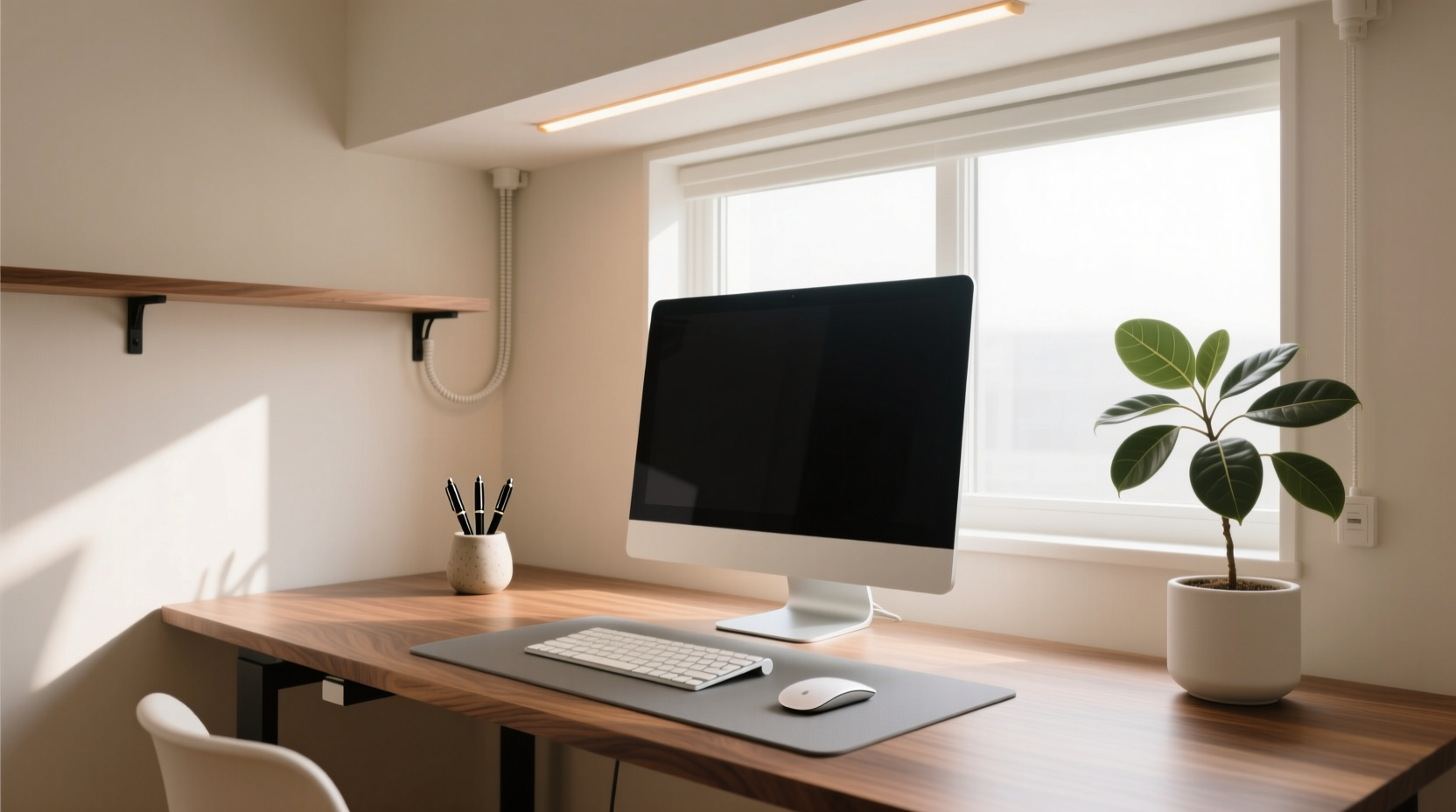
Research consistently shows that physical surroundings influence cognitive performance. A study published in the Journal of Environmental Psychology found that individuals in cluttered environments experienced higher stress levels and reduced task persistence compared to those in tidy spaces. Visual clutter competes for attention, activating the brain’s “attentional load” and making it harder to concentrate on a single task.
Minimalist desks reduce cognitive overload by limiting stimuli. When only essential tools are present, the mind isn’t distracted by unused items, mismatched colors, or tangled cords. The result is a calmer mental state conducive to flow—a psychological state where focus is effortless and output is high.
“Your environment is a silent influencer. Design it to support the behaviors you want to cultivate.” — Dr. Sophie Thompson, Environmental Psychologist
By curating a space that reflects simplicity and order, you signal to your brain that it’s time to work—not browse, not procrastinate, but engage deeply with meaningful tasks.
Step-by-Step Guide to Building Your Minimalist Desk
Creating an effective minimalist desk isn’t just about removing items—it’s about designing a system tailored to your work style. Follow these seven steps to build a functional, distraction-free workspace.
- Clear everything from your desk. Start with a blank surface. Remove all items—laptops, notebooks, chargers, pens, even decorations. This reset allows you to evaluate each object objectively.
- Categorize your belongings. Group items into categories: digital devices, writing tools, reference materials, personal accessories, and decor. This helps identify redundancies and non-essentials.
- Apply the “90/90 rule.” Ask: Have I used this in the last 90 days? Will I use it in the next 90? If both answers are no, remove it. This rule, popularized by decluttering expert Peter Walsh, prevents emotional hoarding of rarely used items.
- Select one primary work tool. Choose a single device as your main workstation—usually a laptop or desktop. Avoid dual monitors unless absolutely necessary for your role. Simplicity trumps multitasking when focus is the goal.
- Limit writing tools to three. Keep only what you use daily: one pen, one notebook, and one highlighter or pencil. Store backups in a drawer, not on the desk.
- Integrate cable management. Use adhesive clips, sleeves, or under-desk trays to bundle cords. Exposed cables create visual chaos and subconsciously signal disorganization.
- Add one element of calm. Introduce a single calming item: a small plant, a textured coaster, or a framed quote. It should be meaningful, not decorative filler.
Essential vs. Non-Essential: A Practical Table
Not all items belong on a minimalist desk—even if they seem useful. The key is distinguishing between tools that enable action and objects that merely occupy space.
| Essential Items | Purpose | Non-Essential Alternatives |
|---|---|---|
| Laptop or desktop computer | Primary work tool | Dual monitors, secondary screens |
| One notebook + pen | Quick notes, brainstorming | Multiple notebooks, sticky notes everywhere |
| Desk lamp (warm, adjustable) | Task lighting without glare | Decorative lamps, colored lights |
| Water bottle or mug | Hydration during work | Snack containers, extra cups |
| Phone stand (if used for calls or timers) | Hands-free access | Chargers lying flat, multiple devices |
| Small plant (e.g., succulent) | Biophilic touch, air quality | Framed photos, figurines, trinkets |
The goal isn’t deprivation but precision. Each remaining item earns its place by supporting focus, efficiency, or well-being.
Real Example: From Chaos to Clarity
Mark, a freelance copywriter based in Portland, struggled with constant distractions despite working from home. His desk held two monitors, five notebooks, a stack of books, coffee mugs, headphones, chargers, and assorted office gadgets. He often started work late, switched tasks frequently, and felt mentally drained by noon.
After reading about minimalist workspaces, he decided to redesign his setup. He removed one monitor, donated old notebooks, stored reference books on a nearby shelf, and placed only his laptop, a Moleskine notebook, a black pen, and a small potted snake plant on his desk. He routed all cords through a fabric sleeve and used a simple wooden phone stand.
Within three days, Mark noticed a shift. He began work promptly, stayed on task longer, and completed projects faster. “It’s like my desk stopped yelling at me,” he said. “Now it’s quiet. And in that quiet, I actually hear my own thoughts.”
Checklist: Your Minimalist Desk Setup in Action
Use this checklist to ensure your minimalist desk is optimized for productivity:
- ✅ Desk surface is completely clear before setup
- ✅ Only essential tools are present (computer, notebook, pen)
- ✅ All cords are bundled and secured out of sight
- ✅ No more than one decorative or personal item is displayed
- ✅ Storage solutions (drawers, shelves) are nearby but not overflowing
- ✅ Lighting is focused and glare-free
- ✅ Daily-used items are within arm’s reach; others are stored away
- ✅ Surface is wiped clean at the end of each day
Revisit this list weekly. Minimalism requires maintenance. Over time, small additions creep in. Regular audits keep the space aligned with your goals.
Avoid These Common Mistakes
Even with good intentions, people often undermine their minimalist efforts. Watch out for these pitfalls:
- Misunderstanding minimalism as emptiness. A bare desk isn’t inherently better. If you need a second monitor for coding or design, include it—but justify its presence with function, not habit.
- Keeping items “just in case.” This mindset leads to accumulation. If it’s not used regularly, store it elsewhere or let it go.
- Neglecting ergonomics. Minimalism shouldn’t compromise comfort. Ensure your chair, desk height, and screen position support healthy posture.
- Over-investing in “minimalist” products. Buying expensive wooden organizers or designer trays defeats the purpose. Function should drive form, not aesthetics alone.
“The most productive spaces aren’t the prettiest—they’re the most intentional.” — Lena Patel, Workspace Designer & Author of *Focused Spaces*
FAQ: Common Questions About Minimalist Desks
Can I have a minimalist desk if I do creative work?
Absolutely. Creativity thrives on clarity, not clutter. Many artists and writers use minimalist setups to avoid distraction. Keep only the tools you use daily—sketchpad, stylus, tablet—and store the rest. Rotate supplies weekly if needed, but keep the desk surface clean.
What if I need frequent reference materials?
Use digital references whenever possible. For physical materials, keep a single binder or folder in a drawer. Retrieve it only when needed, then return it. Avoid leaving books or printouts open on the desk long-term.
How do I maintain motivation to keep it minimal?
Tie minimalism to outcomes. Track your focus duration, task completion rate, or mental fatigue before and after the change. Seeing measurable improvements reinforces the habit. Also, photograph your desk monthly—visual progress is motivating.
Conclusion: Design Your Environment, Then Let It Work for You
A minimalist desk isn’t a trend—it’s a strategic choice to align your environment with your highest work. By removing excess, organizing intentionally, and maintaining discipline, you create a space where focus flows naturally and productivity rises without effort. The goal isn’t perfection but sustainability: a desk that supports your best work, day after day.
Start today. Clear your surface. Keep only what serves you. Notice the difference in your attention, your mood, your output. Then refine, repeat, and protect that space like the asset it is. Your mind will thank you.




 浙公网安备
33010002000092号
浙公网安备
33010002000092号 浙B2-20120091-4
Comments
No comments yet. Why don't you start the discussion?