
Ancient Egypt stands as one of the most influential civilizations in human history. Flourishing for over 3,000 years along the Nile River, it laid the foundation for advancements in art, science, governance, and spirituality that continue to shape our world. Its monumental architecture, sophisticated writing system, and complex religious beliefs have fascinated scholars and laypeople alike for centuries. But beyond the pyramids and pharaohs lies a deeper significance—Egypt’s enduring legacy is embedded in modern language, medicine, engineering, and even philosophy.
The importance of ancient Egypt is not confined to archaeology or museum exhibits. It lives on in the way we organize societies, understand time, and seek meaning in life and death. From hieroglyphics inspiring modern typography to early medical practices foreshadowing contemporary healthcare, Egypt’s contributions are both foundational and far-reaching.
Architectural Mastery and Engineering Innovation
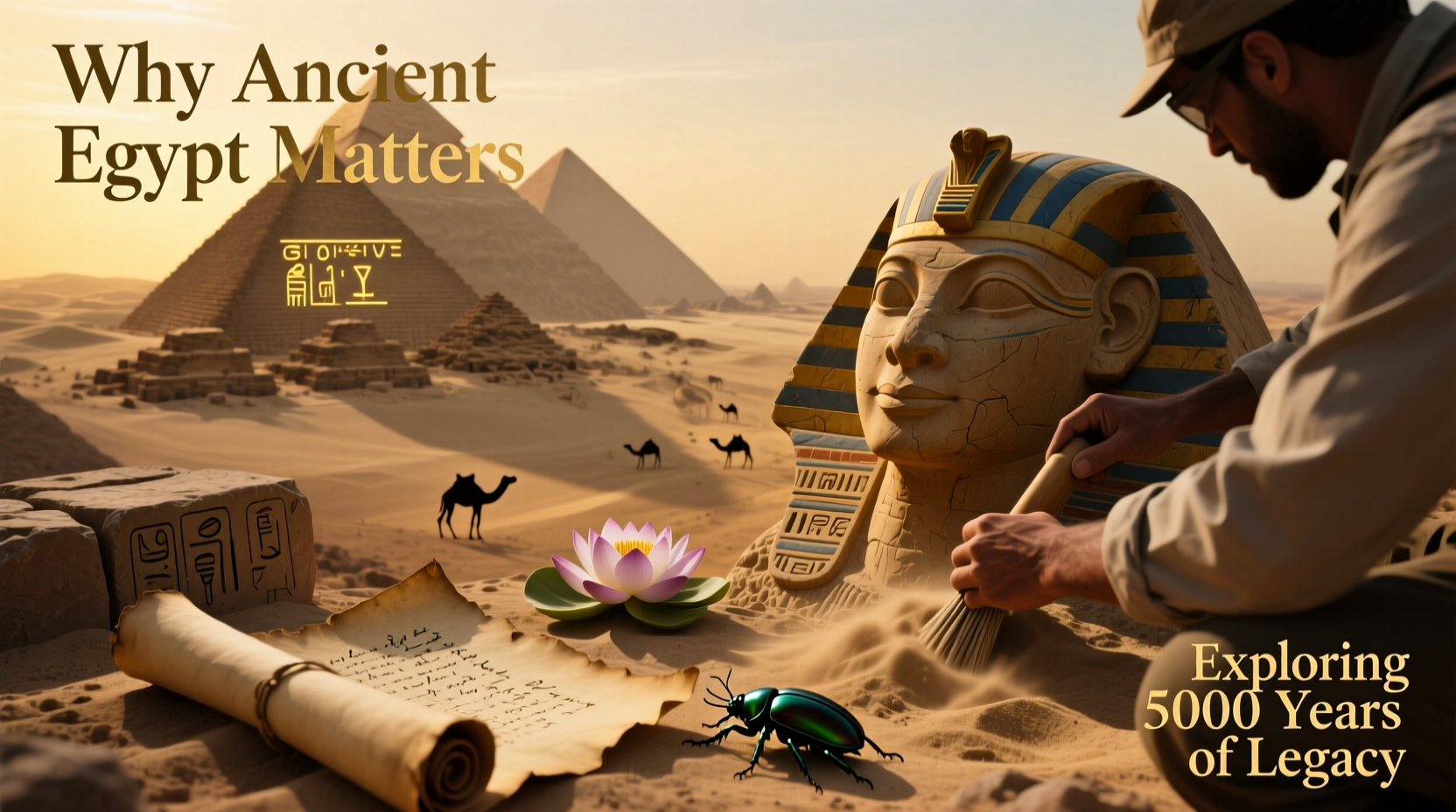
The architectural achievements of ancient Egypt remain among the most awe-inspiring in human history. The Great Pyramid of Giza, built around 2580–2560 BCE, was the tallest man-made structure in the world for over 3,800 years. Constructed with precision-engineered limestone blocks weighing several tons each, it exemplifies advanced knowledge of mathematics, astronomy, and logistics.
Egyptians developed techniques for quarrying, transporting, and aligning massive stones with remarkable accuracy. Their understanding of geometry and celestial alignment allowed them to orient temples and tombs to specific stars or solstices—demonstrating an early fusion of science and spirituality.
The use of columns, obelisks, and hypostyle halls influenced later Greek and Roman architecture. Even today, neoclassical buildings around the world echo Egyptian design principles, from government edifices to university campuses.
Linguistic Legacy: The Birth of Writing and Decipherment
One of Egypt’s most profound contributions was the development of writing. Hieroglyphics—a system combining logographic and alphabetic elements—emerged around 3200 BCE, making it one of the earliest known scripts. This written language enabled record-keeping, religious texts, legal codes, and literary expression.
The Rosetta Stone, discovered in 1799, became the key to unlocking this lost script. Inscribed with the same text in Greek, Demotic, and hieroglyphic scripts, it allowed Jean-François Champollion to decode Egyptian writing in 1822, revolutionizing the field of linguistics and launching modern Egyptology.
“Champollion didn’t just translate symbols—he resurrected a civilization’s voice.” — Dr. Katherine Bennell, Historian of Ancient Languages
This breakthrough demonstrated that no culture is truly lost if its language can be recovered, setting a precedent for studying other extinct civilizations like the Maya and Sumerians.
Medicine and Scientific Thought Ahead of Its Time
Ancient Egyptian medicine was surprisingly advanced. Medical papyri such as the Edwin Smith Papyrus (c. 1600 BCE) reveal systematic approaches to diagnosis, treatment, and surgical procedures. It includes detailed anatomical observations and classifications of injuries—some resembling modern trauma assessments.
Physicians in ancient Egypt specialized in areas like dentistry, ophthalmology, and gastroenterology. They used natural remedies derived from herbs, minerals, and honey—an early form of pharmacology. While magic and religion played roles in healing, empirical observation was also valued.
| Medical Practice | Ancient Egyptian Method | Modern Parallel |
|---|---|---|
| Wound Care | Honey and moldy bread (natural antibiotics) | Antiseptics and penicillin |
| Dentistry | Tooth fillings with resin; oral hygiene tools | Cavity treatment and brushing |
| Surgery | Treatment of fractures and dislocations | Orthopedic medicine |
| Diagnosis | Pulse monitoring and symptom categorization | Clinical assessment |
This blend of practical knowledge and ritual reflects a holistic view of health—one that resonates with integrative medicine today.
Religious Beliefs and Cultural Influence on Modern Thought
Egyptian religion centered on concepts of the afterlife, divine justice, and moral accountability. The Book of the Dead, a collection of funerary texts, guided souls through the underworld, emphasizing ethical conduct. The “Weighing of the Heart” ceremony judged a person’s deeds against the feather of Ma’at—truth and balance—long before similar ideas appeared in Abrahamic faiths.
These beliefs influenced later religious traditions. Concepts such as resurrection, judgment after death, and spiritual purification found echoes in Judaism, Christianity, and Islam. Osiris, the god who died and was reborn, prefigures later messianic figures in Near Eastern religions.
Moreover, Egyptian deities like Isis gained widespread worship across the Greco-Roman world. Her image as a protective mother goddess may have influenced depictions of the Virgin Mary in Christian iconography.
Timeline of Key Contributions and Lasting Impacts
Understanding Egypt’s influence requires placing its innovations within a broader historical context. The following timeline highlights pivotal developments and their long-term effects:
- c. 3100 BCE: Unification of Upper and Lower Egypt under King Narmer—establishes first nation-state in history.
- c. 2600 BCE: Development of pyramid construction—introduces large-scale urban planning and labor organization.
- c. 1900 BCE: Invention of papyrus scroll—precursor to books and mass communication.
- c. 1350 BCE: Akhenaten’s monotheistic experiment with Aten—early challenge to polytheism.
- 332 BCE: Conquest by Alexander the Great—spreads Egyptian knowledge into Hellenistic world.
- 1799: Discovery of the Rosetta Stone—unlocks linguistic access to ancient records.
- 1922: Tutankhamun’s tomb discovery—ignites global fascination with Egyptology.
Each milestone marks not just an internal achievement but a ripple effect across cultures and eras.
Mini Case Study: The Global Fascination with King Tut
In 1922, British archaeologist Howard Carter uncovered the nearly intact tomb of Tutankhamun in the Valley of the Kings. Though not the most powerful pharaoh, Tutankhamun became a global icon due to the opulence of his burial goods—golden masks, chariots, jewelry, and ceremonial artifacts.
The subsequent “Tutmania” tour of his treasures in the 1960s and 1970s drew millions worldwide. Museums reported surges in attendance, fashion designers incorporated Egyptian motifs, and Hollywood produced films inspired by the “curse of the pharaohs.”
This phenomenon illustrates how ancient Egypt continues to capture the public imagination. More than historical curiosity, it represents humanity’s enduring quest for meaning, beauty, and immortality.
Frequently Asked Questions
Why did ancient Egypt last so long compared to other civilizations?
Its geographic isolation protected it from invasions, while the predictable flooding of the Nile ensured agricultural stability. Strong centralized rule, religious continuity, and a resilient bureaucracy allowed it to endure through dynastic changes and foreign influences.
Did ancient Egyptians invent the calendar?
They developed one of the earliest solar calendars—365 days divided into 12 months of 30 days plus five festival days. This structure heavily influenced the Julian and later Gregorian calendars used today.
How did slavery fit into ancient Egyptian society?
While forced labor existed, especially during major construction projects, most workers on monuments were skilled laborers paid in food and goods. The biblical narrative of Hebrew slavery has been debated by historians, with limited direct archaeological evidence supporting mass enslavement as described.
Actionable Checklist: How to Engage With Egypt’s Legacy Today
- Visit a local museum with Egyptian artifacts to observe craftsmanship firsthand.
- Read translated excerpts from the Book of the Dead or medical papyri.
- Study basic hieroglyphs using online resources or apps.
- Explore how Egyptian motifs appear in your city’s architecture.
- Support preservation efforts for endangered archaeological sites in Egypt.
Conclusion: Honor the Past, Inform the Future
Ancient Egypt’s importance cannot be overstated. It was not merely a civilization of grand monuments but a crucible of innovation that shaped the trajectory of human progress. Its legacy persists in our languages, laws, scientific methods, and spiritual beliefs. By studying Egypt, we gain insight into what it means to build enduring societies grounded in knowledge, order, and purpose.




 浙公网安备
33010002000092号
浙公网安备
33010002000092号 浙B2-20120091-4
Comments
No comments yet. Why don't you start the discussion?