
A cluttered nightstand can silently sabotage your sleep quality and morning mindset. When surfaces are crowded with books, gadgets, cords, and forgotten items, the space meant to support rest becomes a source of visual noise. Minimalism isn’t about deprivation—it’s about intentionality. By curating only what you truly need on your nightstand, you create a calming micro-environment that promotes relaxation, reduces anxiety, and streamlines your daily routines. This guide walks through the philosophy, practical steps, and real-life benefits of building a minimalist nightstand grounded in function and peace.
The Philosophy Behind a Minimalist Nightstand
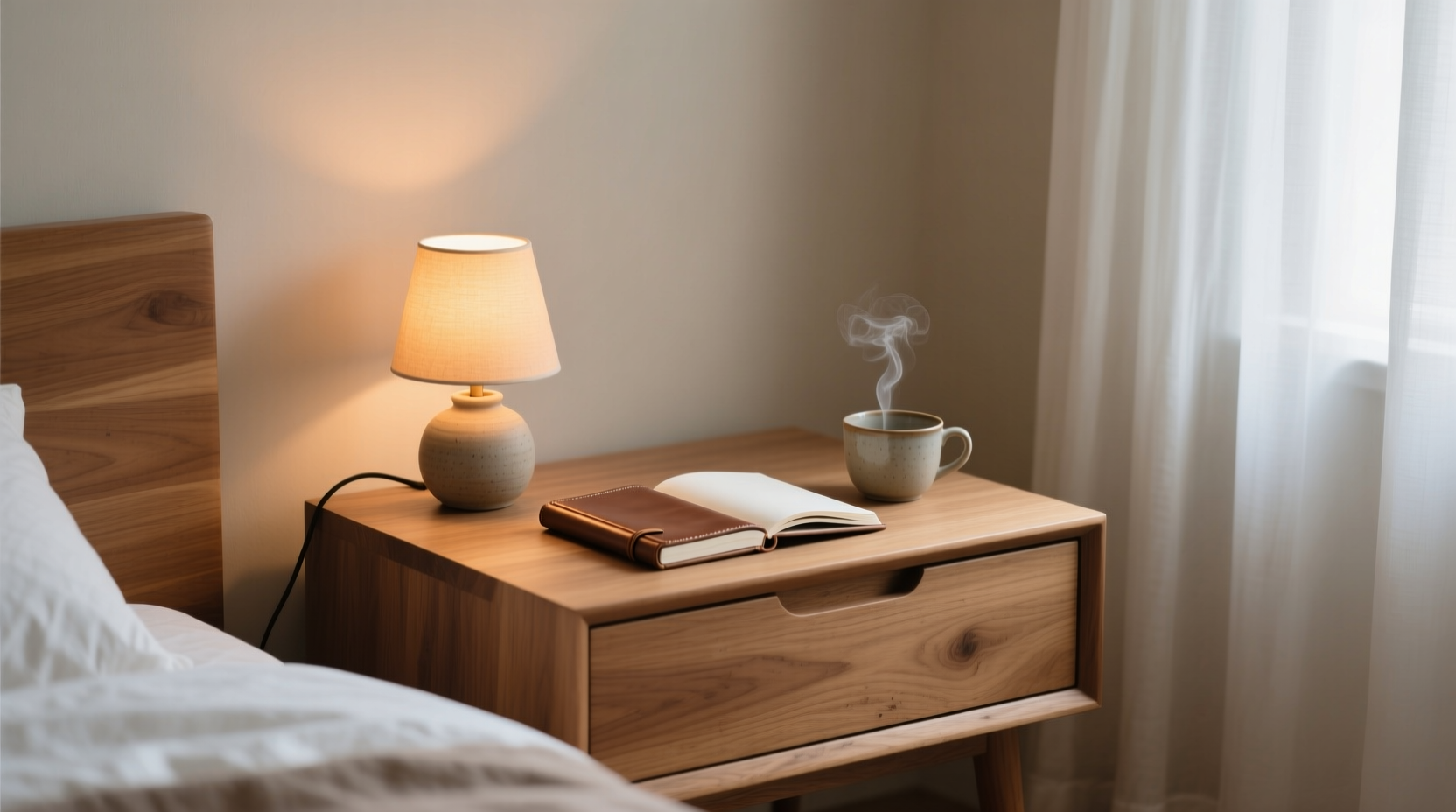
Minimalism in bedroom design stems from the idea that less visual stimulus leads to greater mental clarity. The nightstand, positioned within arm's reach during both wakefulness and sleep, plays a critical role in this equation. It’s often the last thing you see at night and the first thing you notice in the morning. If it’s chaotic, your brain registers that disarray even subconsciously, making it harder to wind down or start the day with focus.
Marie Kondo, renowned organizer and author, emphasizes that “the space around you should serve you, not weigh you down.” A minimalist nightstand embodies this principle by stripping away excess and preserving only what adds value. This doesn’t mean sacrificing comfort or convenience. On the contrary, it means being deliberate about what stays—ensuring each item has a clear purpose and contributes to your well-being.
Consider this: if your nightstand holds three books you haven’t opened in weeks, a half-charged power bank, and an empty water glass, none of these items are serving you in the moment. They occupy physical and mental space without benefit. Replacing them with a single lamp, a journal, and a glass of water transforms the surface into a functional sanctuary.
Step-by-Step Guide to Building Your Minimalist Nightstand
Creating a minimalist nightstand is more than just removing clutter—it’s about designing a system that supports your nighttime and morning rituals. Follow this five-step process to build a clean, intentional setup.
- Empty everything out. Remove every item from your nightstand. Place them on the bed or floor. This creates a blank slate and forces you to evaluate each object individually.
- Categorize and assess. Group items into categories: lighting, reading, hydration, tech, health, and decor. For each item, ask: Do I use this daily? Does it improve my sleep or routine? Would I miss it if it were gone?
- Keep only the essentials. Limit yourself to 3–5 items max. Prioritize functionality and emotional value. If something doesn’t meet both criteria, store it elsewhere or donate it.
- Choose cohesive, compact containers. If you need storage (e.g., for medication or charging cables), use small, neutral-toned trays or drawers that blend into the background.
- Arrange with balance and accessibility. Position items so they’re easy to reach but don’t overcrowd the surface. Leave open space—this visual breathing room is essential to minimalism.
What Qualifies as an Essential?
Not all \"useful\" items belong on your nightstand. True essentials are those you interact with regularly and immediately before sleep or upon waking. Here’s a breakdown of common candidates and whether they make the cut.
| Item | Justified for Minimalist Use? | Notes |
|---|---|---|
| Lamp or Bedside Light | Yes | Essential for reading or navigating at night. Choose warm, dimmable lighting. |
| Water Glass or Bottle | Yes | Prevents midnight dehydration. Use a simple, spill-proof design. |
| Journal and Pen | Yes | Supports gratitude practice or thought dumping before sleep. |
| Smartphone | No (unless necessary) | Encourages screen time. Charge in another room when possible. |
| Books or Magazines | Limited | One book max. Store others on a nearby shelf. |
| Medication | Yes (if nightly) | Only keep what you take daily. Use a small pill organizer. |
| Aromatherapy Diffuser | Optional | If used nightly for sleep, keep it. Otherwise, store it. |
| Decorative Objects | Rarely | Only if deeply meaningful. Avoid dust-collecting knickknacks. |
Real Example: Sarah’s Transformation
Sarah, a graphic designer from Portland, struggled with insomnia and morning grogginess. Her nightstand held her phone, tablet, two novels, a tangle of charging cables, a coffee mug, and a framed photo. She admitted she’d scroll through social media until she fell asleep and wake up disoriented.
After adopting a minimalist approach, she cleared everything except a small ceramic lamp, a refillable glass of water, and a lined notebook for jotting down dreams or to-dos. She moved her phone to charge in the kitchen and began reading one novel—kept on a wall shelf beside the bed. Within two weeks, she reported falling asleep faster, waking up clearer, and feeling less anxious at bedtime. “It sounds simple,” she said, “but having that clean surface made me feel like I was giving myself permission to rest.”
Common Mistakes to Avoid
Even with good intentions, people often fall into traps that undermine a minimalist nightstand. Awareness of these pitfalls helps maintain long-term success.
- Keeping items “just in case.” If you haven’t used something in the past month, it doesn’t belong on your nightstand. Store backups in a dresser drawer.
- Using the nightstand as a catch-all. Resist placing mail, keys, or random objects there temporarily. That habit quickly turns into permanent clutter.
- Over-accessorizing with “minimalist” decor. A candle, plant, and sculpture may seem simple, but together they create visual noise. Stick to function-first choices.
- Ignoring cable management. Even one charging cord should be neatly routed. Use adhesive clips or a small cord wrap to prevent tangles.
“Your bedside environment should signal safety and simplicity. Every object either enhances that message—or detracts from it.” — Dr. Lena Torres, Sleep Environment Researcher, Stanford Center for Sleep Sciences
Checklist: Building Your Ideal Minimalist Nightstand
Use this checklist to ensure your setup aligns with minimalist principles while meeting your personal needs.
- ✅ Cleared all items from the nightstand
- ✅ Assessed each object for daily utility
- ✅ Limited total items to 3–5 maximum
- ✅ Chosen a soft, warm light source (lamp or candle)
- ✅ Included a water vessel (glass, carafe, or bottle)
- ✅ Added only one reading material (book or journal)
- ✅ Stored phone and electronics elsewhere
- ✅ Used discreet storage for necessary extras (e.g., medication tray)
- ✅ Ensured cords are hidden or neatly managed
- ✅ Created balanced, uncluttered visual composition
Frequently Asked Questions
Can I keep my phone on the nightstand if I use it as an alarm?
You can, but it’s not ideal. Phones emit blue light and notifications that disrupt sleep. A better solution is to use a dedicated alarm clock and charge your phone in another room. If you must keep your phone nearby, enable grayscale mode at night and place it face-down.
What if I love reading before bed and have multiple books?
Limit yourself to one book on the nightstand—the one you’re currently reading. Store others on a nearby shelf or basket. Rotate them weekly. This keeps the surface clean while still supporting your habit.
Is a plant too much for a minimalist nightstand?
A small, low-maintenance plant like a succulent or peace lily can enhance calmness, but only if it doesn’t crowd other essentials. Choose one with a simple pot and place it only if it brings genuine joy and fits your care routine.
Final Thoughts: Simplicity as a Daily Ritual
A minimalist nightstand is more than an aesthetic choice—it’s a ritual of self-respect. Each night, when you turn off the light and see a clean, intentional surface, you reinforce a mindset of order and presence. You’re not just organizing furniture; you’re cultivating a habit of mindful living.
The benefits extend beyond the bedroom. A simplified nightstand often sparks broader changes: tidier spaces, reduced digital consumption, and improved sleep hygiene. Over time, these small decisions compound into a calmer, more focused life.
Start tonight. Clear the surface. Ask what truly belongs. Keep only what serves you. In that quiet act, you reclaim not just space, but peace.




 浙公网安备
33010002000092号
浙公网安备
33010002000092号 浙B2-20120091-4
Comments
No comments yet. Why don't you start the discussion?