
Purchasing concert tickets online should be exciting—not frustrating. Yet for many fans, the thrill quickly fades when they reach the final checkout screen and see a price that’s 30%, 40%, or even 50% higher than the original listing. What happened? Hidden fees.
These unlisted charges—often labeled as “facility fees,” “service charges,” or “delivery costs”—are quietly added during the purchase process, turning an affordable ticket into a budget-breaking expense. While not always illegal, these fees are frequently misleading and can feel deceptive. The good news: with the right knowledge and strategy, you can identify and minimize them before clicking “buy.”
Why Hidden Fees Exist (And Why They’re So Common)
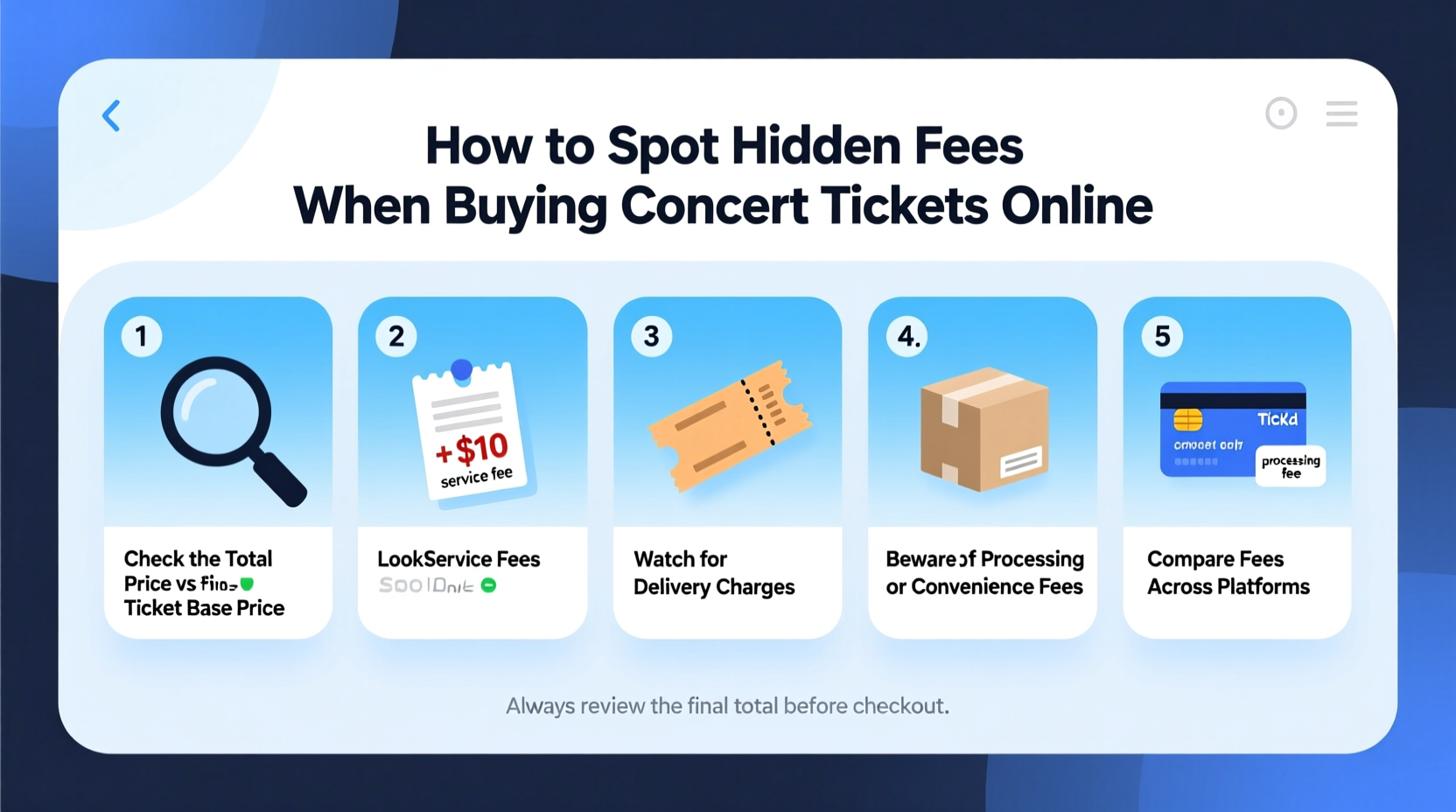
Ticket pricing is intentionally complex. Major platforms like Ticketmaster, Live Nation, AXS, and others use layered pricing models that separate the base ticket cost from numerous add-ons. This practice, known as “drip pricing,” allows sellers to advertise lower initial prices while deferring additional costs until later in the checkout process.
The logic is simple: a lower headline price attracts more buyers. Once users invest time selecting seats and entering payment details, they're less likely to abandon the cart—even if the final price shocks them.
According to a 2023 report by the U.S. Government Accountability Office (GAO), service and facility fees often account for 15% to 35% of the total ticket price. In some high-demand events, these extras can exceed the face value of the ticket itself.
“Consumers are being misled by incomplete pricing disclosures. Full transparency should be required at the first point of display.” — Senator Richard Blumenthal, Chair of the Senate Judiciary Subcommittee on Competition Policy
While lawmakers continue pushing for legislation like the Ticketer Transparency Act, which would mandate all-in pricing, consumers must currently protect themselves.
Common Types of Hidden Fees—and How to Recognize Them
Not all fees are inherently bad. Some cover legitimate operational costs. But when they’re buried or poorly labeled, they become problematic. Here are the most common types of hidden charges to watch for:
- Service Fee: Charged by the ticket platform for processing the transaction. Often a percentage of the ticket price.
- Facility Fee: Collected by the venue, usually per ticket. Can vary widely between locations.
- Order Processing Fee: A flat fee per order, regardless of the number of tickets.
- Delivery Fee: Applies if tickets are shipped physically or via email. Sometimes avoidable with mobile delivery.
- Convenience Fee: A vague charge that may simply pad profits under the guise of “ease of use.”
- Parking or Add-on Bundles: Optional extras like parking passes or VIP upgrades automatically selected during checkout.
Step-by-Step: How to Uncover Hidden Fees Before You Pay
Avoiding surprise costs requires diligence at every stage of the purchase. Follow this timeline to shop smarter:
- Start with Official Sources
Always begin your search on the artist’s official website or the venue’s box office page. These sources often link directly to primary vendors and list known fee structures. - Compare Total Price Early
Use tools like SeatGeek, Gametime, or TicketSmarter, which are legally required (under New York’s All-In Pricing Law) to show total prices upfront, including all fees. Compare these totals with what Ticketmaster or others initially display. - Select Your Tickets—but Don’t Check Out Yet
Navigate through seat selection to the final review screen. Only here will the full breakdown appear. Write down or screenshot the total cost and each individual fee. - Check Alternate Vendors
Visit competing platforms or resale markets. Sometimes secondary sellers absorb fees or offer bundled deals that end up cheaper overall. - Look for Promo Codes or Waived Fees
Search for “[Event Name] + promo code” or check fan clubs and credit card partner sites (e.g., Citi Presale). Some offers include waived service fees. - Consider Box Office Pickup
If available, choosing “Will Call” can eliminate delivery fees. It also reduces fraud risk and gives you physical control immediately. - Review the Entire Receipt
Before confirming payment, ensure no optional add-ons (like parking or merchandise) have been pre-checked. Deselect anything unnecessary.
Do’s and Don’ts When Buying Tickets Online
| Do | Don’t |
|---|---|
| Compare total prices across multiple platforms | Assume the first price you see is the final price |
| Use incognito mode to avoid dynamic pricing based on browsing history | Save tickets to cart for long periods—prices and availability change fast |
| Enable price-tracking alerts via apps like TodayTix or Songkick | Buy from third-party resellers without checking seller ratings |
| Verify mobile delivery compatibility with your device | Enter payment info on public Wi-Fi networks |
| Contact customer support if fees seem excessive or unclear | Click on ads promising “no fees” unless verified |
Real Example: Sarah’s Near-Miss at the Taylor Swift Concert
Sarah, a college student from Nashville, was thrilled when presale tickets for Taylor Swift’s Eras Tour went live. She had saved for months and budgeted $150 per ticket. On Ticketmaster, she found a pair listed at $139 each—within her range. Without hesitation, she clicked “Buy.”
But as she progressed through checkout, the price climbed. First came a $19.50 service fee per ticket. Then a $12.75 facility fee. Then a $7.99 order processing charge. Delivery via email added another $4.99. By the final screen, two tickets totaled $378.36—nearly $90 over her limit.
Luckily, Sarah paused. She remembered reading about all-in pricing laws and decided to compare. She visited SeatGeek and searched for the same event. Every listing there showed the full price upfront—including fees. One comparable pair was listed at $185 total each, but with better seat location and no additional checkout surprises.
She also checked the venue’s official site and discovered a limited number of tickets were available for pickup at Will Call with no delivery fee. After careful comparison, Sarah chose a slightly higher-tier package that included no convenience fees and mobile delivery—totaling $178 per ticket. She saved over $20 and avoided last-minute stress.
Sarah’s experience highlights a crucial truth: the cheapest advertised price isn’t always the best deal. The real cost only becomes clear when you examine the entire transaction.
Expert Tips to Minimize or Avoid Fees Altogether
While eliminating all fees is rarely possible, you can significantly reduce them with smart strategies:
- Join Fan Clubs or Artist Memberships: Artists like Bruce Springsteen, Pearl Jam, and Harry Styles offer exclusive presales with reduced or zero service fees for verified fans.
- Use Preferred Credit Cards: Some issuers partner with ticket platforms. For example, Citi cardholders often get early access and waived fees for select tours.
- Opt for Mobile Tickets: Choosing digital delivery instead of physical shipping can save $5–$15 per order.
- Buy Direct from Box Office: Visiting in person eliminates third-party platform fees entirely. Many venues don’t charge service fees for walk-up purchases.
- Monitor Last-Minute Listings: Some platforms reduce fees on unsold inventory 24–48 hours before the event to move inventory.
“The most effective way to fight hidden fees is competition. Use multiple platforms, demand transparency, and vote with your wallet.” — Lisa Grant, Consumer Rights Advocate at Public Citizen
Frequently Asked Questions
Are hidden fees legal?
Yes, in most cases. As long as the final price is disclosed before payment, platforms can itemize fees separately. However, several states—including New York, California, and Connecticut—now require all-in pricing in advertisements. Misleading pricing can result in fines under consumer protection laws.
Can I get a refund if I feel misled by the pricing?
Refunds depend on the seller’s policy, not the pricing model. Most ticket vendors offer no refunds for buyer’s remorse. However, if a fee was added incorrectly or without disclosure, you may dispute the charge with your credit card company under the Fair Credit Billing Act.
Why do some websites show fees upfront while others don’t?
Websites based in states with strict advertising laws (like New York) must display total prices including fees. National platforms may still hide fees for users outside those regions. Using a VPN or searching from different locations can reveal discrepancies.
Final Checklist: Your Hidden Fee Defense Plan
Before completing any ticket purchase, run through this checklist to ensure you’re not overpaying:
- ✅ Verified the total price (including fees) on at least two platforms
- ✅ Reviewed the full fee breakdown before payment
- ✅ Deselected any pre-checked add-ons (parking, insurance, etc.)
- ✅ Confirmed delivery method and associated costs
- ✅ Checked for active promo codes or member discounts
- ✅ Considered Will Call or box office pickup to avoid delivery fees
- ✅ Screenshot the final price for reference in case of disputes
Stay Smart, Stay Informed, Enjoy the Show
Concerts are meant to be joyful experiences—from the first note to the final encore. Don’t let predatory pricing practices steal the excitement before you even arrive. By understanding how hidden fees work, knowing where to look, and taking proactive steps, you can enjoy live music without financial regret.
Next time you’re ready to buy, take a breath, slow down the process, and scrutinize every line item. Share this knowledge with friends and family—they’ll thank you when their tickets cost less than expected. And if you’ve ever been burned by surprise fees, consider leaving feedback on vendor sites or contacting your state attorney general. Collective awareness drives change.




 浙公网安备
33010002000092号
浙公网安备
33010002000092号 浙B2-20120091-4
Comments
No comments yet. Why don't you start the discussion?