
A well-chosen short coat does more than shield you from the elements—it defines your silhouette, elevates your everyday look, and withstands years of seasonal wear. Yet not all short coats deliver on both style and longevity. With so many options flooding the market, from fast fashion knockoffs to heritage craftsmanship, knowing what separates a truly high-quality piece from the rest is essential. The difference lies in subtle details: fabric composition, construction techniques, lining quality, and thoughtful design. Investing in a superior coat means paying attention not just to appearance, but to structure, materials, and functionality.
1. Evaluate the Fabric: The Foundation of Quality
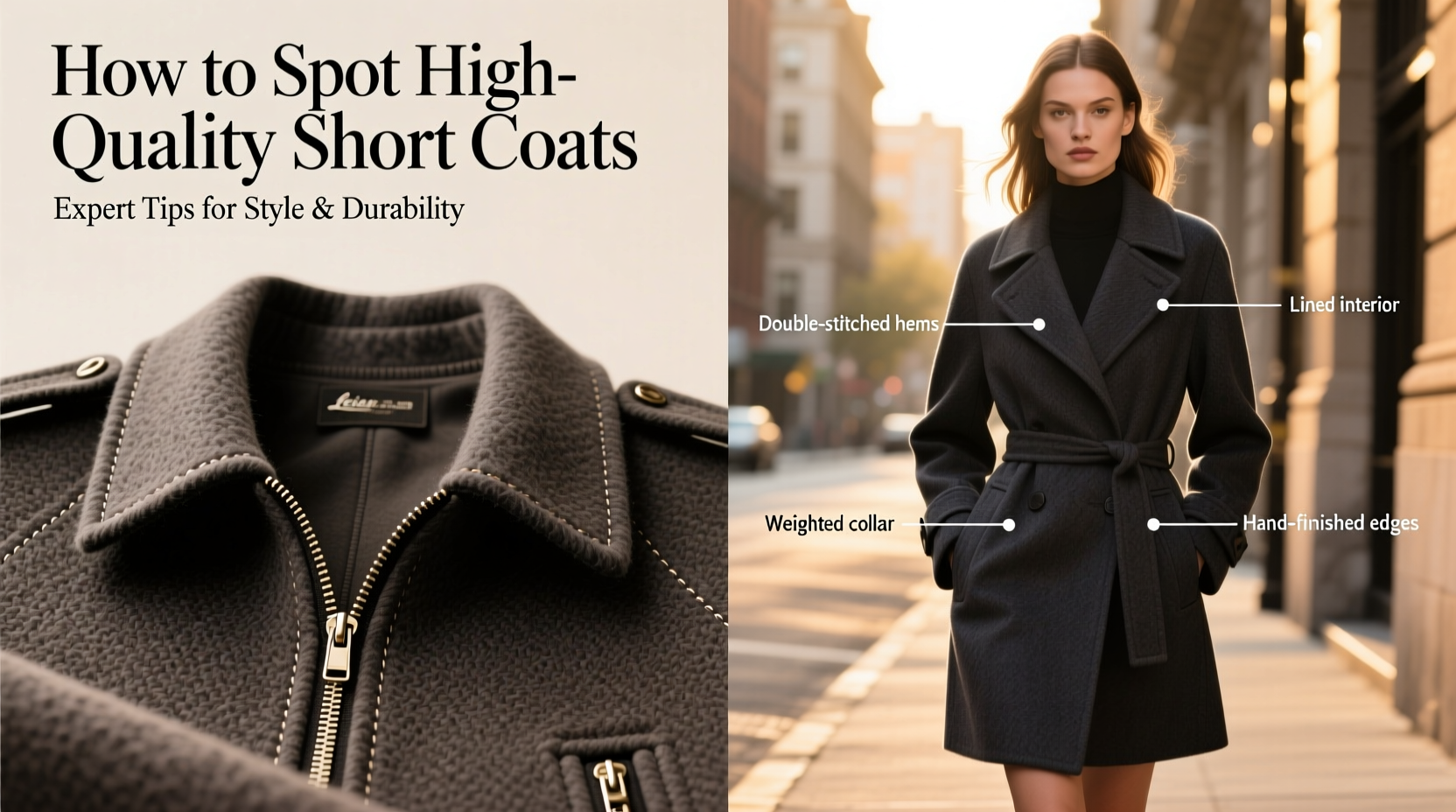
The fabric is the first indicator of a coat’s potential lifespan and comfort. High-quality short coats are typically made from natural or premium blended fibers that balance durability, weather resistance, and breathability. Wool, cashmere, cotton twill, and melton wool are hallmarks of enduring outerwear. Look for tightly woven textiles that feel substantial without being stiff. A lightweight coat doesn’t have to mean flimsy—many premium fabrics use advanced weaving techniques to maintain strength while reducing bulk.
Synthetic blends can be acceptable if they serve a functional purpose, such as adding water resistance or stretch. However, beware of coats dominated by polyester unless explicitly designed for technical performance. Overuse of synthetic materials often leads to pilling, static buildup, and poor breathability.
Fabric Weight Guide for Short Coats
| Fabric Type | Weight (oz/yd²) | Ideal For | Durability Rating |
|---|---|---|---|
| Melton Wool | 18–24 | Cold, dry climates | ★★★★★ |
| Cotton Twill | 10–14 | Spring/Fall wear | ★★★★☆ |
| Wool Blend | 14–18 | All-season versatility | ★★★★☆ |
| Polyester Shell | 6–9 | Rain protection | ★★★☆☆ |
| Cashmere Blend | 8–12 | Luxury layering | ★★★☆☆ |
2. Inspect the Construction and Stitching
Beyond fabric, how a coat is built determines its resilience. Begin by examining the seams. Double-stitched or reinforced seams, especially along stress points like shoulders, side seams, and pockets, signal durability. A single row of stitching may suffice for light jackets, but high-quality coats often feature bar tacks—tight, reinforced stitches—at corners and attachment points.
Check whether the coat is fully lined. A full canvas or half-canvas interlining adds structure and helps the coat hold its shape over time. Coats without internal structure tend to sag or wrinkle easily. Also, assess the collar attachment: it should lie flat and be securely anchored, not flopping or gapping when buttoned.
“Stitch density matters—look for 10–12 stitches per inch. Fewer than 8 suggests rushed production.” — Daniel Reeves, Outerwear Designer & Tailoring Consultant
What to Look for in Seam Quality
- Even, straight stitching with no skipped or loose threads
- Seams finished with binding or serging to prevent fraying
- No puckering around buttons or zippers
- Reinforced stress zones (e.g., underarms, pocket corners)
3. Assess the Lining and Internal Details
The inside of a coat reveals more about its quality than the exterior. Lift the hem and sleeves to inspect the lining. High-end coats use Bemberg, cupro, or silk linings—materials that glide smoothly over clothing and resist tearing. Avoid polyesters that crackle or cling; these degrade faster and trap moisture.
Internal construction cues include:
- Pocket bags made from durable fabric, not flimsy mesh
- Functional inner pockets with secure closures
- Neatly finished edges and concealed seam allowances
- Shoulder pads that are soft, balanced, and non-lumpy
If the coat has a vent at the back, ensure it’s properly tailored and stitched down only where intended. A floating vent indicates poor tailoring.
4. Fit, Function, and Design Intelligence
A high-quality coat must perform as well as it looks. Try it on with layers typical of your winter wardrobe. Does it allow free movement? Can you comfortably button it over a sweater? The shoulders should align with your own—no drooping or pulling. Sleeve length should end at the base of your thumb, leaving room for gloves.
Functional design elements separate luxury investment pieces from fashion novelties:
- Storm flaps over zippers or buttons to block wind and rain
- Adjustable cuffs or waist tabs for custom fit
- Durable hardware: horn buttons, heavy-duty zippers (YKK is a trusted brand), and metal snaps
- Deep, structured pockets that don’t bulge when filled
Do’s and Don’ts When Evaluating Fit
| Do | Don't |
|---|---|
| Try the coat on with mid-layers | Assess fit over a thin t-shirt only |
| Move your arms and sit down to test mobility | Ignore shoulder tightness because “it’ll break in” |
| Check for clean collar alignment when closed | Overlook gaping at the chest or back |
| Verify zipper glides smoothly under tension | Accept stiff zippers “that might loosen later” |
5. Real-World Example: Choosing Between Two Similar Coats
Consider Sarah, a city commuter who needed a reliable short coat for unpredictable fall weather. She found two wool-blend pea coats online: one priced at $120, the other at $280. At first glance, both looked nearly identical—navy blue, double-breasted, same cut.
Upon closer inspection, the $280 coat had a full Bemberg lining, hand-stitched lapels, horn buttons, and double-layered front panels for wind resistance. The cheaper option used polyester lining, plastic buttons, single stitching, and showed visible seam puckering in product images. Sarah chose the pricier coat. Three winters later, it still looks sharp, requires minimal maintenance, and retains its shape. The alternative would have likely faded, pilled, and lost buttons within a year.
This scenario illustrates that price isn’t always the best judge—but scrutiny of materials and construction usually reveals value.
Step-by-Step Guide: How to Evaluate a Short Coat Before Buying
- Feel the fabric: Press and stretch it slightly. It should rebound, not sag or crease permanently.
- Inspect the seams: Hold the coat up to light to see if stitching is even and reinforced.
- Check the lining: Pull back the hem—look for smooth, durable material and clean finishes.
- Test the hardware: Zip, unbutton, and snap each closure multiple times. They should operate smoothly and feel sturdy.
- Assess the drape: Hang the coat on a hanger. It should hang straight, with collar and lapels lying flat.
- Try it on with layers: Simulate real-world use to confirm fit and range of motion.
Frequently Asked Questions
How can I tell if a coat is worth the investment?
A coat is worth investing in if it uses premium materials, shows meticulous construction, fits well across seasons, and comes from a brand known for garment longevity. If care instructions are clear and repair services offered, that’s another sign of long-term value.
Are short coats less durable than long ones?
Not inherently. Durability depends on materials and construction, not length. In fact, short coats often experience less strain from dragging or sitting, which can extend their usable life compared to longer styles exposed to more abrasion.
Can I machine wash a high-quality short coat?
Rarely. Most premium coats require professional dry cleaning or careful hand-washing. Always follow the label. Machine washing can damage delicate linings, shrink wool, and weaken bonded seams. When in doubt, air out and spot-clean instead.
Final Checklist: 7 Signs of a High-Quality Short Coat
- ✅ Dense, natural-based fabric with a substantial hand-feel
- ✅ Even, tight stitching with no loose ends or puckering
- ✅ Full or partial canvas structure for shape retention
- ✅ High-grade lining (Bemberg, cupro, or silk)
- ✅ Durable, branded hardware (e.g., YKK zippers, horn/metal buttons)
- ✅ Functional design features (storm flaps, adjustable hems, deep pockets)
- ✅ Clean internal finishing and reinforced stress points
“A great coat should feel like armor—protective, confident, and built to last.” — Clara Nguyen, Fashion Editor at *Urban Style Review*
Take Action: Build a Timeless Wardrobe One Coat at a Time
Spotting a high-quality short coat isn’t about chasing logos or price tags—it’s about developing an eye for detail. By learning to read fabrics, seams, and silhouettes, you empower yourself to make smarter purchases that save money and reduce waste over time. Next time you’re shopping, take a moment to turn the coat inside out, tug a seam, zip the closure, and imagine wearing it for years to come. That mindset shift—from impulse to intention—is what defines true style.




 浙公网安备
33010002000092号
浙公网安备
33010002000092号 浙B2-20120091-4
Comments
No comments yet. Why don't you start the discussion?